In 2012, a seismic shift occurred in technology markets: Samsung overtook Apple as the world’s largest smartphone seller by volume, a position Samsung has largely maintained since. This wasn’t supposed to happen. Apple had defined modern smartphones with the 2007 iPhone launch, creating a category where it seemed unbeatable. Steve Jobs’ vision of premium hardware and software integration appeared to be winning strategy that would dominate indefinitely. But Samsung, a Korean conglomerate many Westerners barely knew, studied Apple’s strategy and chose a different path that ultimately captured larger global market share despite Apple’s innovations and brand prestige.
Today, Samsung smartphone strategy holds approximately 20-22% of global smartphone market share compared to Apple’s 17-18%, shipping 270+ million devices annually versus Apple’s 230+ million. Samsung’s mobile division generates over $200 billion revenue, part of Samsung Electronics’ $300+ billion total revenue making it among the world’s largest technology companies. This victory wasn’t about making better phones than Apple (subjective debate) but about strategic choices: serving all market segments versus just premium, partnering with Android versus controlling everything, investing massively in R&D and manufacturing versus outsourcing, and accepting lower per-device margins for higher volume.
The Multi-Segment Strategy: Phones for Everyone
Samsung overtook Apple by rejecting the premium-only approach. While Apple offers 3-4 iPhone models starting around $800, Samsung smartphone strategy produces 50+ smartphone models annually spanning $150 entry-level to $1,200 Ultra flagships. This portfolio strategy captures customers across all price points and geographies. In emerging markets where $800 is prohibitive, Samsung sells millions of A-series and M-series phones at affordable prices. In developed markets, Samsung’s S-series and Z-series foldables compete directly with iPhones on features and prestige.
This breadth required complex supply chain management, fragmented R&D across price tiers, and brand consistency despite vastly different products sharing Samsung name. But it delivered market share advantages Apple cannot match without abandoning its premium positioning. Samsung captured first-time smartphone buyers in India and Southeast Asia with $200 devices, building brand relationships that could upgrade to premium over time. Apple, targeting only affluent consumers, left entire market segments unserved.
The portfolio advantages:
- 50+ smartphone models annually vs. Apple’s 3-4 models
- Price range: $150 entry-level to $1,200 Ultra flagships
- A-series and M-series: affordable emerging market focus
- S-series and Z-series foldables: premium developed markets
- First-time buyers in India and Southeast Asia at $200
- Building brand relationships for future upgrades
- Complex supply chain management across tiers
- Brand consistency despite vastly different products
The Samsung smartphone strategy also provided hedging against market shifts. When premium demand slowed during economic downturns, Samsung’s budget and mid-range sales compensated. When emerging markets grew rapidly, Samsung already had products and distribution ready. Apple’s concentrated premium focus made it vulnerable to economic cycles and geographic limitations, while Samsung’s diversity stabilized revenues across conditions.
Samsung positioned phones at every $50-100 increment from $150 to $1,200, ensuring whenever customers decided their budget, a Samsung option existed. Apple’s gaps between models created opportunities for Samsung to capture customers who couldn’t afford iPhones but wanted more than cheapest Android alternatives. This psychological pricing coverage ensured Samsung never lost customers to competitors because price was wrong.
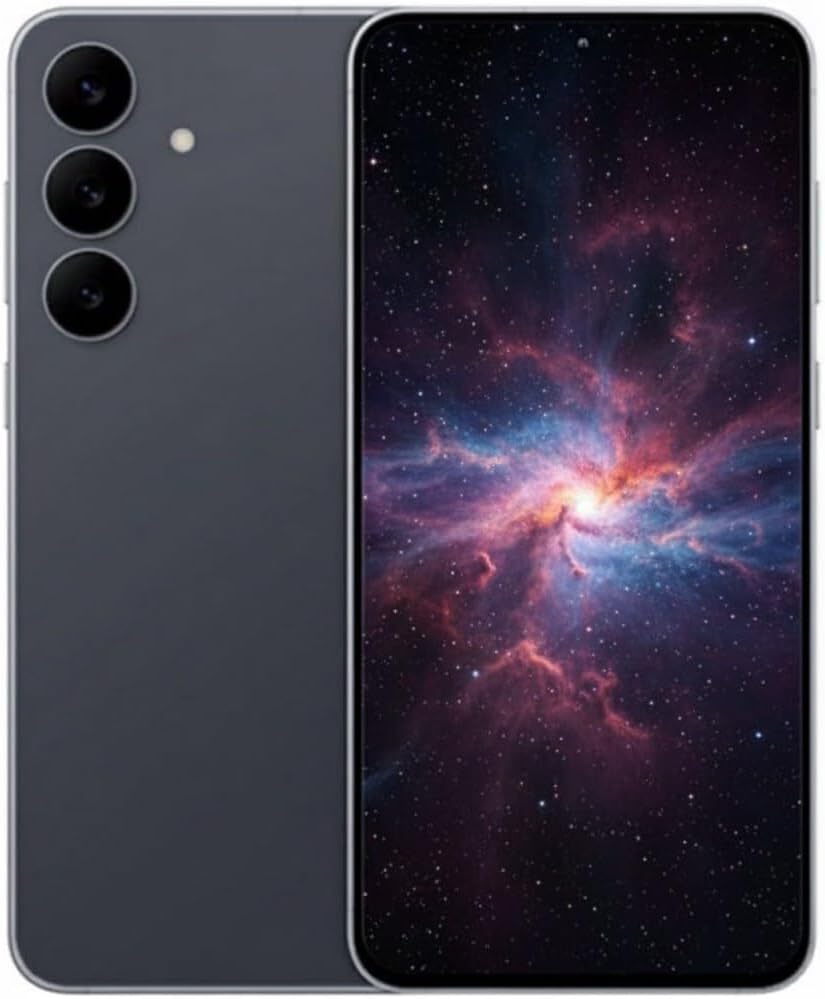
Samsung Galaxy S25 FE Cell Phone (2025), 256GB AI Smartphone, Unlocked Android, Large Display, 4900mAh Battery, JetBlack
🛒 Shop Now on AmazonAndroid Partnership and Ecosystem Flexibility
Samsung overtook Apple partly by embracing Android rather than developing proprietary OS. This seemed risky initially, Google controlled Android’s future, and Samsung competed with other Android manufacturers like Huawei, Xiaomi, and Oppo. But Android provided crucial advantages. Samsung could customize hardware and software for local markets: adding dual-SIM support where needed, optimizing for local apps and services, and adapting UI for regional preferences.
Android also enabled Samsung to leverage Google’s ecosystem (Maps, Search, Gmail, Play Store) that worked globally, while adding Samsung’s own services (Samsung Pay, Bixby, Galaxy Store) where it could differentiate. This hybrid approach gave Samsung best of both worlds: Google’s proven global services and Samsung’s custom features. Apple’s complete control of iOS provided consistent experience but required Apple to serve all user needs globally, a challenge for single company.
The ecosystem approach:
- Embraced Android vs. developing proprietary OS
- Competed with Huawei, Xiaomi, Oppo on same platform
- Customized hardware and software for local markets
- Dual-SIM support where needed
- Optimized for local apps and services
- Adapted UI for regional preferences
- Leveraged Google ecosystem: Maps, Search, Gmail, Play Store
- Added Samsung services: Samsung Pay, Bixby, Galaxy Store
- Hybrid approach: Google global services + Samsung differentiation
- Benefited from Google’s Android development, security, AI investments
- Without bearing full costs like Apple funds entire iOS
The China Challenge
Samsung smartphone strategy faced challenges in China where Google services are banned, forcing Samsung to partner with Chinese app developers and services. This fragmentation hurt Samsung, allowing local brands like Xiaomi, Oppo, and Vivo to surpass Samsung in China with better-integrated local ecosystems. Samsung’s China market share plummeted from 20%+ to under 2%, demonstrating that Android flexibility also created dependencies and vulnerabilities that Apple’s controlled ecosystem avoided.
Vertical Integration and Manufacturing Scale
Samsung overtook Apple through massive manufacturing investments that Apple’s asset-light outsourcing model couldn’t match. Samsung produces many components internally: OLED displays (Samsung supplies Apple’s iPhone displays), memory chips, processors, and camera sensors. This vertical integration provides cost advantages, quality control, and innovation speed. When Samsung develops new display technology, it can integrate immediately into Galaxy phones, while competitors wait for supply or pay premium prices.
Samsung’s manufacturing scale is extraordinary. The company operates factories globally producing hundreds of millions of devices annually alongside televisions, appliances, and semiconductors. This scale generates economies of scale reducing per-unit costs below what specialized manufacturers achieve. Samsung can price phones competitively while maintaining margins because manufacturing efficiency exceeds competitors including Apple, despite Apple’s volume advantages.
The vertical integration also enables faster innovation. When Samsung’s display division develops foldable screen technology, Galaxy Fold and Flip phones launch immediately, establishing category leadership before competitors access the technology. Apple’s reliance on suppliers means innovations require partner coordination, slowing time-to-market. Samsung smartphone strategy turns internal R&D directly into market products, critical advantage in fast-moving technology markets.
Manufacturing advantages:
- Produces components internally: OLED displays, memory chips, processors, camera sensors
- Supplies Apple’s iPhone displays
- Cost advantages, quality control, innovation speed
- Immediate integration of new display technology into Galaxy phones
- Factories globally: hundreds of millions of devices annually
- Alongside televisions, appliances, semiconductors
- Economies of scale reducing per-unit costs
- Competitive pricing while maintaining margins
- Foldable screen technology: Galaxy Fold and Flip immediate launch
- Category leadership before competitors access technology
Samsung invests over $20 billion annually in R&D, among the highest globally and significantly more than Apple’s $26 billion despite Apple’s larger revenues. This R&D fuels innovations across semiconductors, displays, batteries, and AI that benefit entire Samsung ecosystem. The company can afford massive R&D because its conglomerate structure diversifies risk: phone R&D might benefit TV and appliance divisions, making investments justifiable even if single product fails.

Samsung Galaxy Z Fold7 Cell Phone, 256GB AI Smartphone, Unlocked Android, AI Photo Edits, Large Screen, 2025, Silver Shadow
🛒 Shop Now on AmazonMarketing and Brand Building Globally
Samsung overtook Apple through aggressive marketing spending exceeding $10 billion annually, far surpassing Apple’s estimated $2-3 billion. Samsung advertises everywhere: television, digital, social media, billboards, sports sponsorships, and celebrity partnerships. This omnipresence builds brand awareness in markets where Apple has limited presence and makes Samsung feel ubiquitous and accessible.
Samsung’s marketing strategy also directly challenged Apple, particularly in US market where Apple dominates. Samsung ads famously mocked iPhone users waiting in lines for features Samsung already offered (bigger screens, widgets, stylus support). These comparative ads positioned Samsung as innovative alternative to increasingly iterative iPhones, resonating with consumers seeking differentiation.
The marketing adapted locally: in India, Samsung sponsored cricket and Bollywood; in Europe, Samsung partnered with football clubs; in Latin America, Samsung focused on music festivals and local influencers. This localized marketing built emotional connections that generic global campaigns couldn’t achieve.
Global marketing execution:
- Marketing spending: $10+ billion annually vs. Apple’s $2-3 billion
- Television, digital, social media, billboards, sports, celebrity partnerships
- Omnipresence building brand awareness
- Direct challenges to Apple in US market
- Mocked iPhone users waiting for Samsung features (bigger screens, widgets, stylus)
- Comparative ads positioning Samsung as innovative alternative
- Localized adaptation: India cricket and Bollywood, Europe football clubs, Latin America music festivals
- Regional customization vs. Apple’s consistent global branding
- Emotional connections through local resonance
The Bottom Line
Samsung smartphone strategy overtook Apple by choosing volume over margins, breadth over focus, and flexibility over control. While Apple perfected premium smartphone experience and maintained higher per-device profits, Samsung’s strategy of serving every market segment with tailored products captured larger global market share. The 270+ million smartphones Samsung ships annually exceed Apple’s 230+ million because Samsung recognized that globally, most consumers cannot or will not pay premium prices, and the company that serves everyone wins market share race.
The volume leadership:
- 270+ million smartphones shipped annually (Samsung)
- 230+ million smartphones shipped annually (Apple)
- 20-22% global market share (Samsung) vs. 17-18% (Apple)
- Mobile division: $200+ billion revenue
- Samsung Electronics: $300+ billion total revenue
- 2012: Samsung overtook Apple as world’s largest smartphone seller by volume
Different strategic philosophies:
- Samsung: serving all market segments with tailored products
- Apple: premium-only approach starting around $800
- Samsung: 50+ models annually spanning $150 to $1,200
- Apple: 3-4 iPhone models
- Samsung: Android partnership and ecosystem flexibility
- Apple: complete iOS control and consistent experience
- Samsung: vertical integration producing OLED displays, memory chips, processors
- Apple: asset-light outsourcing model
- Samsung: $20 billion annual R&D
- Apple: $26 billion annual R&D despite larger revenues
What the numbers reveal:
- Samsung’s volume provides ecosystem scale, manufacturing leverage, brand ubiquity
- Apple generates more profit despite lower volume
- Market share leadership influences industry direction, sets expectations
- App developers, accessory makers, carriers cannot ignore volume leader
- Volume and value are distinct measures of success
- Samsung’s conglomerate structure diversifies R&D risk
- Phone R&D benefiting TV and appliance divisions
- Justifiable investments even if single products fail
The strategies reflect different philosophies: Apple believes in creating perfect products that pull customers toward premium, while Samsung believes in meeting customers wherever they are with appropriate products. Both approaches succeed commercially, Apple generates more profit despite lower volume, but Samsung smartphone strategy built market share leadership that provides strategic advantages compounding over time.
For businesses, Samsung versus Apple demonstrates that no single winning strategy exists. Apple’s premium focus works magnificently for its brand and margins. Samsung’s volume approach works for its manufacturing scale and conglomerate structure. The key is choosing strategy aligned with company strengths and consistently executing it. Samsung couldn’t replicate Apple’s premium focus without decades building that brand equity. Apple couldn’t match Samsung’s manufacturing scale without fundamentally restructuring.
Samsung’s overtaking of Apple also reveals that market share leadership doesn’t guarantee profitability or brand prestige. Apple remains more valuable company despite selling fewer phones, proving that volume and value are distinct measures. But Samsung’s volume provides foundation for ecosystem growth, market power with suppliers, and brand recognition that creates sustainable competitive position. The company that sells most phones influences industry direction, sets expectations, and cannot be ignored by app developers, accessory makers, and carriers.