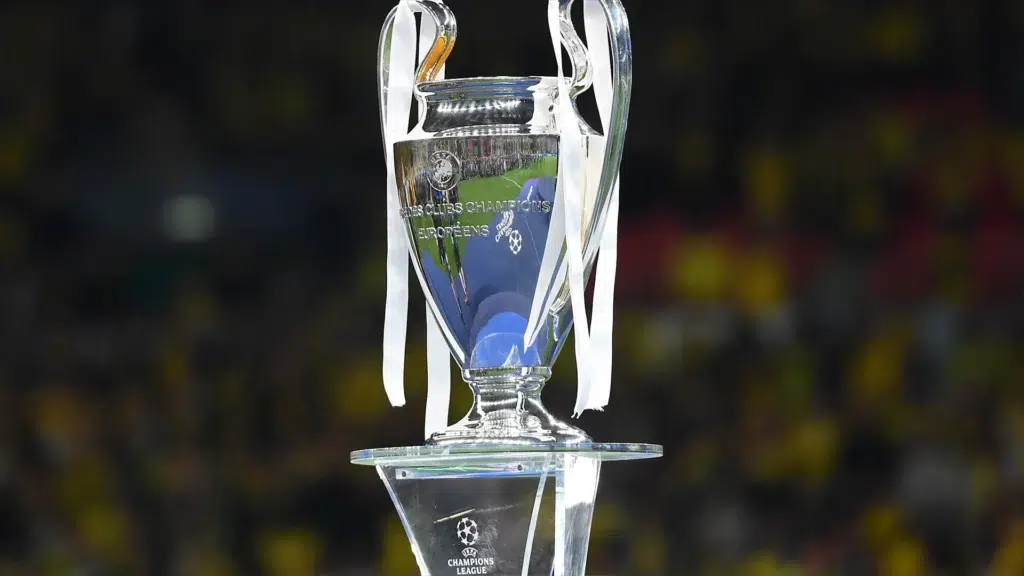
On June 16, 2025, UEFA published its official circular letter for the 2025-26 Champions League distribution, confirming the gross revenue threshold for the competition at €4.4 billion. The document detailed how that money would flow: €2.458 billion to Champions League clubs, split into three distinct pillars that each measure something different about a club’s value to UEFA’s commercial model.
The 2024-25 season was the first full cycle under the new Swiss model format. Instead of 32 clubs playing 96 group stage matches across six matchdays, 36 clubs played 189 league-phase matches across eight matchdays, producing a 40-match volume increase before the knockout rounds even began. UEFA had projected a 33% rise in television money from the new format and delivered on that projection, with the three European competitions combined generating €400 million more than the previous season according to ESPN’s January 2026 report on the official UEFA financial figures.
The structure was sold to clubs as a fairer system: more matches, more revenue opportunities, and more money for clubs that performed well across a longer competition window. The reality is more nuanced. Performance matters, but two other pillars, historical coefficient rankings and broadcast market share, determine the majority of what a club actually earns, regardless of what happens on the pitch in any given season.
The new format generates more total revenue than the old one. But who captures that extra revenue, and how, reveals a distribution system built as much for commercial protection of elite clubs as for sporting reward.
The Three-Pillar System Explained
How Revenue Is Split Before a Ball Is Kicked
UEFA’s 2024-27 cycle distribution model divides Champions League revenue into three components. Every club entering the league phase receives the same guaranteed payment. Beyond that, two additional pillars reward very different things: in-season performance, and historical status.
The guaranteed payment for 2025-26 is €18.62 million per club, regardless of results. This is the floor. A club can lose every league-phase match and still collect this fee. Slovan Bratislava collected it in 2024-25 on top of their match-specific earnings even after going winless through eight games.
The three pillars for 2025-26 Champions League revenue:
- Pillar 1, Guaranteed Payments: €670 million split equally across all 36 league-phase clubs (€18.62 million each)
- Pillar 2, Performance: €914 million distributed by results: €2.1 million per win, €750,000 per draw, plus league-phase ranking bonuses and knockout round progression fees
- Pillar 3, Value Pillar: €853 million split by each club’s TV market share contribution and UEFA coefficient over 10 and 5-year periods
The value pillar is the most consequential and least visible part of the system. It replaced the old market pool and coefficient bonus that existed in the previous cycle, combining them into a single mechanism. A club from the Premier League, which contributes the largest share of UEFA’s overall broadcast revenue, starts the value pillar calculation with a structural advantage over a club from Slovakia or Cyprus that no amount of winning in the current season can overcome.
Why Historical Coefficient Changes Everything
The UEFA coefficient system ranks clubs based on their cumulative performance in European competition over the previous 10 years, weighted more heavily toward the most recent five. Real Madrid, Barcelona, Manchester City, Bayern Munich, and Liverpool sit at the top of these rankings, and their coefficient positions directly translate into revenue irrespective of how they perform in any given season.
In 2024-25, Inter Milan earned €36 million from the value pillar compared to Sturm Graz receiving €3.16 million, according to salaryleaks.com’s breakdown of the official UEFA figures. Both clubs played in the same competition under the same rules. The gap reflects 10 years of European performance history, not the 2024-25 season alone.
How coefficient rankings affected 2024-25 earnings:
- Top coefficient clubs (Real Madrid, Bayern, Manchester City): Received €36-40 million from value pillar before earning a single point in the league phase
- Mid-table coefficient clubs (Aston Villa, Benfica, Lille): Received €15-25 million from value pillar, reflecting recent improvement but limited historical depth
- Low coefficient clubs (Slovan Bratislava, Pafos, Kairat): Received under €10 million from value pillar, capped by limited European pedigree
- New qualifiers (clubs entering UCL for the first time or after long absences): Structural ceiling on value pillar earnings regardless of current domestic performance
This creates an explicit virtuous cycle. Clubs with historic European success earn more from the value pillar. That additional revenue funds better squads. Better squads produce more wins. More wins improve the coefficient. Higher coefficient generates more value pillar revenue in the next cycle.
What the New Format Actually Changed
More Matches, More Money, More Jeopardy
The Swiss model’s most visible commercial change is the increase in guaranteed home matches. Under the old group stage format, clubs played three home matches. Under the new league phase, every club plays four home matches at minimum. For elite clubs with large stadiums and premium ticketing, that additional home game represents significant matchday revenue beyond what UEFA distributes.
Real Madrid’s Santiago Bernabéu generates approximately €120 million in matchday revenue annually, according to UEFA’s annual club finance benchmarking reports. A fourth home Champions League group match against a marquee opponent adds tens of millions to that figure directly. For clubs like Manchester City, Liverpool, and Barcelona, the league-phase expansion was worth more in local matchday revenue than the increase in UEFA prize distributions.
Financial impact of the additional league-phase home match:
- Matchday revenue per home UCL game (top six clubs): €8-15 million from tickets, hospitality, and concessions
- Broadcast bonuses from additional matches: Domestic broadcasters pay per-match fees to UEFA that flow back through the value pillar
- Knockout play-off round fee: €4.29 million for clubs eliminated in the new playoff round, which did not exist in the old format
- Direct performance bonus for top-8 finish: Additional payments for clubs finishing in the top eight of the league phase, rewarding the best performers beyond simply qualifying for the round of 16
The Group Stage Exit Problem Is Gone
Under the old format, clubs eliminated in the group stage dropped into the Europa League knockout playoff round. Bayern Munich, Real Madrid, and Barcelona (happened in 2021/22 and 2022/23) could theoretically finish third in their group and continue competing in European football. That safety net has been removed.
From 2024-25, clubs finishing in the bottom eight of the league phase are eliminated from European competition entirely with no Europa League lifeline. This has direct financial consequences. A club budget built around projected Europa League prize money after a group-stage exit can no longer count on that fallback. The new format rewards success and removes the cushion.
Manchester City, the 2022-23 Champions League winners, finished in the knockout playoff position in the 2024-25 league phase, according to Swiss Ramble’s analysis published in January 2025. They eventually qualified for the round of 16 but the jeopardy was real. The financial gap between making the knockout rounds and elimination in the league phase is now dramatically larger because there is no secondary competition offering a partial revenue recovery.
The Rich Get Richer: Elite Club Economics
How PSG Earned €144 Million in One Season
Paris Saint-Germain’s €144.4 million Champions League earnings in 2024-25 broke the previous record for UEFA club competition earnings. The figure combines all three pillars: guaranteed starting fee, performance bonuses across the league phase and knockout rounds, value pillar allocation from PSG’s French market broadcast contribution and coefficient standing, and the €25 million winner’s bonus plus €6.5 million additional for lifting the trophy.
PSG’s value pillar allocation benefited from Ligue 1’s position as one of Europe’s top broadcast markets, despite France having fewer clubs consistently competing in Champions League knockout stages compared to England, Spain, or Germany. The French broadcast market’s contribution to UEFA’s overall revenue translated directly into PSG’s value pillar share.
What PSG’s €144.4 million in 2024-25 came from:
- League phase starting fee: €18.62 million guaranteed
- League phase match performance: Win bonuses (€2.1 million each) plus league ranking bonus based on final position
- Knockout round progression: Round of 16, quarterfinals, semifinals, final, winner bonus: cumulative €44+ million
- Value pillar: PSG’s coefficient ranking plus France’s broadcast market contribution
- UEFA Super Cup: Finalist payment
Real Madrid, who lost in the quarterfinals to Arsenal, earned under €102 million, a drop of €37 million compared to their 2023-24 title-winning season. That €37 million gap between winning and losing in the quarterfinals illustrates exactly how performance-weighted the new system is in its upper tiers, while the value pillar provides a floor that protects elite clubs even in poor seasons.
The Bottom Eight’s Commercial Reality
The clubs at the lower end of the 2024-25 league phase earnings reveal the structural limits of the new format’s redistribution ambitions. Slovan Bratislava received under €22 million despite participating in all eight league-phase matches. That payment included the €18.62 million guaranteed fee plus loss-based match fees, with minimal value pillar allocation due to limited European history and a small Slovak broadcast market.
For Slovan, €22 million represents significant revenue. Slovakia’s entire top-flight football economy operates at a fraction of Premier League club budgets. But within the context of the Champions League’s commercial structure, the bottom club earns approximately one-sixth of what the winner receives. That ratio has not changed substantially between the old format and the new one.
Estimated value pillar allocation for 2024-25 by club tier:
- Top Premier League clubs (Manchester City, Arsenal, Liverpool): €37-45 million from value pillar alone
- Top La Liga clubs (Real Madrid, Barcelona): €35-42 million from value pillar
- Top Bundesliga/Serie A clubs (Bayern, Inter): €30-40 million from value pillar
- Clubs from smaller leagues (Slovan, Pafos, Galatasaray): Under €10 million from value pillar
Solidarity Payments and Non-Participating Clubs
UEFA’s distribution system includes solidarity payments for clubs that did not qualify for European competition at all. From the €4.4 billion gross revenue pool in 2024-25, €308 million was allocated as solidarity payments to non-participating clubs through their national associations. The purpose is to prevent the financial gap between Champions League clubs and the rest of domestic football from widening without limit.
In practice, solidarity payments have not kept pace with the growth in prize money for participating clubs. The gap between a Champions League club’s earnings and a club outside European competition continues to widen with each cycle, because the prize pool grows faster than the solidarity allocation.
UEFA revenue allocation from the €4.4 billion gross (2024-25):
- Participating clubs across UCL, UEL, and UECL: €3.548 billion (93.5% of net revenue)
- Solidarity payments to non-participating clubs: €308 million
- Qualifying round clubs: €132 million
- UEFA administrative and organisational costs: €387 million
- UEFA Youth League and Women’s Champions League: €25 million (approx.)
The Bottom Line
The Champions League’s Swiss model delivered on its financial promise. Total distribution to clubs increased by approximately €390 million in its first season, and PSG’s €144.4 million earnings in 2024-25 set a new record. UEFA projected a 33% increase in television money from the expanded format, and the numbers confirmed it.
What the new format did not change is the structural architecture of who benefits most. The three-pillar system rewards historical European success through the coefficient component, rewards commercial scale through the broadcast market component, and rewards current performance through match bonuses. Elite clubs benefit from all three simultaneously. Clubs from smaller markets benefit primarily from the guaranteed starting fee and performance bonuses.
Key takeaways from the new Champions League revenue model:
- Performance matters more per match: €2.1 million per win creates direct incentive across all eight league-phase games
- Historical coefficient is a permanent structural advantage: It cannot be overcome in one season regardless of results
- The floor rose for everyone: €18.62 million guaranteed for every league-phase club is substantially higher than the old group-stage minimum
- Elimination is more punitive: No Europa League fallback means clubs plan budgets without a secondary income safety net
- The value pillar widens the gap: Clubs from England’s Premier League, Spain’s La Liga, and Germany’s Bundesliga earn structurally more than equivalent performers from smaller markets
The new format created a better product: more matches, more competitive jeopardy on final matchdays, and more total revenue. Whether it created a fairer distribution system depends on what fairness means in European football’s commercial reality. For UEFA and its biggest clubs, the answer appears to be working exactly as designed.