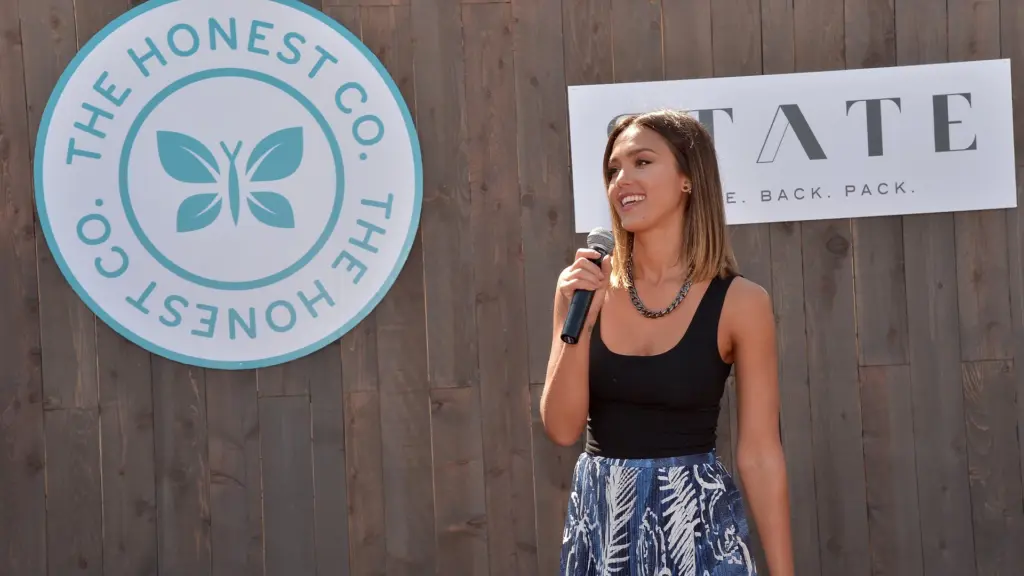
In 2008, Jessica Alba washed baby shower gifts with a mainstream laundry detergent and broke out in hives. That allergic reaction sent her down a research path that led to Washington DC lobbying for safer ingredient legislation, years of product development, and ultimately the founding of one of the most watched clean consumer goods companies in the United States. The Honest Company launched on January 17, 2011, went public on Nasdaq in May 2021 at a $1.44 billion valuation, and posted record revenue of $378 million in 2024, its highest annual revenue and first full year of positive Adjusted EBITDA as a public company.
The Honest Company Jessica Alba built is not a celebrity label attached to someone else’s supply chain. Alba co-founded the business from scratch with attorney Brian Lee, Sean Kane, and Christopher Gavigan, contributed $6 million in initial seed capital alongside Lee, and served as Chief Creative Officer for thirteen years until stepping down from that role in April 2024. She remains a board member and a public face of the brand. What she built in that time is one of the most commercially credible founder-led consumer goods businesses in celebrity entrepreneurship history.
Why Jessica Alba Founded The Honest Company
A Personal Problem That Became a Market Opportunity
Jessica Alba was born on April 28, 1981 in Pomona, California. She grew up dealing with chronic illness including severe asthma and allergies that put her in the hospital repeatedly as a child, giving her an early and personal understanding of how the body responds to environmental triggers. When she became pregnant with her first daughter, Honor, in 2008 and an allergic reaction to a supposedly baby-safe laundry detergent revived those memories, she started investigating what was actually in the products lining supermarket shelves.
What she found was alarming. Mainstream baby products contained petrochemicals, formaldehyde, flame retardants, and synthetic fragrances that no independent regulatory framework required to be disclosed on product labels. She spent three years researching, meeting with scientists, lobbying in Washington DC for updates to the 1976 Toxic Substances Control Act, and building relationships with the ingredient and formulation experts who would eventually help her build The Honest Company’s product line. By the time she co-founded the business in 2011 with Brian Lee, the idea was fully formed: a subscription-based, direct-to-consumer brand offering genuinely clean household and personal care products at accessible prices.
- Personal trigger: An allergic reaction to baby laundry detergent in 2008 sparked three years of ingredient research and Washington DC lobbying before the company was founded
- Co-founder Brian Lee: Attorney and serial entrepreneur who had previously co-founded LegalZoom.com and ShoeDazzle.com, contributing operational and startup expertise alongside Alba’s brand and mission credibility
- Seed capital: $6 million contributed by Alba and Lee provided the initial funding to build the product formulation process and launch infrastructure before external venture capital
- Launch model: Digitally native from day one, launching as a subscription e-commerce platform rather than a retail brand, which gave the company direct consumer data and recurring revenue before the wider DTC movement made that approach mainstream
- Product mission: Every Honest Company product is formulated without a published list of restricted substances, a publicly accountable standard that differentiated it from competitors that used vague “natural” or “gentle” claims without ingredient transparency
The Growth From Startup to Billion-Dollar Brand (2011 to 2021)
The Honest Company raised venture capital through multiple rounds across its first decade, building from a subscription diaper and wipes service into a full personal care and household brand. It achieved a $1 billion valuation by 2014 after raising capital at that level, becoming one of the first celebrity-founded consumer brands to reach that threshold. By 2015, private revenue estimates placed the company in the $200 to $300 million range. Target became a retail partner in 2014, giving the brand physical shelf presence at national scale alongside its DTC channel.
The road was not clean. In 2016 the company faced lawsuits alleging its sunscreen was ineffective and its laundry detergent contained sodium lauryl sulfate, an ingredient it had pledged to avoid. Both controversies led to product reformulations and settlements, and they dented the company’s reputation at a critical growth moment. A potential $1 billion acquisition by Unilever in 2016 fell through. By 2017 the valuation had dropped below $1 billion, the company cut 80 jobs, and leadership transitioned as Brian Lee stepped down as CEO and was replaced by Nick Vlahos, a former Clorox brand executive. Through all of this, Alba remained as Chief Creative Officer and continued driving the brand’s product vision and public identity.
- $1 billion valuation: Achieved in 2014 after a funding round at that threshold, making The Honest Company one of the earliest celebrity-backed consumer brands to reach unicorn status
- Target partnership (2014): National retail distribution through Target stores gave The Honest Company physical presence in thousands of US locations alongside its subscription DTC model
- 2016 controversies: Lawsuits over sunscreen efficacy and an ingredient in the laundry detergent line led to reformulations, settlements, and significant press coverage that tested the brand’s integrity positioning
- Unilever acquisition talks: A potential acquisition valuing the company at approximately $1 billion in 2016 did not close, removing what would have been an early exit at a favorable valuation
- 2017 restructuring: Brian Lee stepped down as CEO, 80 jobs were cut, and the company shifted its strategic focus from DTC subscription toward wholesale retail partnerships as its primary growth channel
- Series E funding (October 2017): Raised a further round of capital despite the difficulties, maintaining investor backing through the transition period
The IPO: Taking The Honest Company Public in 2021
The Path to Nasdaq
By 2020 and into early 2021, The Honest Company had rebuilt its financial foundation. The company had moved its revenue mix decisively toward higher-margin beauty and personal care products alongside its core diapers and wipes business. The shift improved gross margins and reduced the company’s dependence on the lower-margin household cleaning segment that had been a drag on profitability. When the company filed for an IPO in April 2021, it was entering a market where clean beauty and consumer wellness were among the highest-conviction investment themes among institutional investors.
The Honest Company began trading on Nasdaq under the ticker HNST on May 5, 2021. The IPO raised $412.8 million at $16 per share. On its first day of trading, the stock rose 43.75% to close at $23, giving the company a market capitalization of approximately $1.44 billion. Alba’s 5.6 million shares were worth approximately $130 million at the IPO price, and she also received a $2.6 million dividend as part of the pre-IPO capital distribution. The IPO established The Honest Company as one of the most successful celebrity-founded public companies in the United States at that moment.
- IPO date: May 5, 2021 on Nasdaq with ticker symbol HNST, raising $412.8 million in gross proceeds
- IPO price and performance: Priced at $16 per share, rose 43.75% on the first day to close at $23, implying a market cap of approximately $1.44 billion
- Alba’s IPO value: 5.6 million shares worth approximately $130 million at the $23 first-day close, plus a $2.6 million pre-IPO dividend
- 2021 revenue: $319 million in full year 2021 sales, the baseline from which the company’s subsequent turnaround would be measured
- Post-IPO challenges: Supply chain disruptions, rising input costs, and increased competition from private label and specialty natural brands caused the stock to fall significantly from IPO highs, with the market cap declining to approximately $337 million at its lowest point in 2022
The Turnaround: From Post-IPO Decline to Record 2024
Between 2022 and 2023, The Honest Company went through a disciplined operational restructuring. Carla Vernón, one of the first Afro-Latina CEOs of a US publicly traded company, took over as CEO and implemented what the company internally called its three transformation pillars: product innovation focused on higher-margin beauty and personal care, operational efficiency to drive gross margin expansion, and distribution gains through strategic retail partnerships. The approach was clear, measurable, and executed consistently over eight quarters.
In April 2024, Jessica Alba stepped down from her role as Chief Creative Officer while remaining on the board. The transition marked a clear shift from founder-led brand building to professionally managed growth, with Vernón owning the strategic direction fully. By Q3 2024 the company was posting record results. Q3 revenue was $99 million, up 15% year-over-year with a 39% gross margin. The full year 2024 delivered $378 million in revenue, 10% growth, 38.2% gross margins, and the company’s first full year of positive Adjusted EBITDA as a public company at $26 million. Q4 2024 alone hit $100 million in quarterly revenue for the first time in company history.
- CEO Carla Vernón: Took over leadership and drove the three-pillar transformation strategy: product innovation, operational efficiency, and distribution expansion that delivered eight consecutive quarters of improving fundamentals
- Alba’s transition (April 2024): Stepped down as Chief Creative Officer after 13 years in the role, remaining on the board while Vernón assumed full strategic leadership
- Full year 2024 revenue: $378 million, up 10% year-over-year and the highest annual revenue in company history per the February 2025 earnings release
- Gross margin expansion: 38.2% full year 2024 gross margin, a 900 basis point expansion from 2023 levels, reflecting the shift toward higher-margin beauty and personal care products
- First profitable year: $26 million in positive Adjusted EBITDA for full year 2024, the first such achievement since the May 2021 IPO
- Balance sheet strength: $75 million in cash and zero debt at year-end 2024, providing significant financial flexibility for investment and growth initiatives
The Business Model: How The Honest Company Makes Money
Three Product Categories, One Mission
The Honest Company operates across three core product categories: diapers and wipes, skin and personal care, and household cleaning products. Diapers and wipes remain the largest revenue contributor and the most competitive category, with Pampers and Huggies as the dominant mass market players and a growing set of premium natural competitors. Skin and personal care is the highest-margin segment and the strategic growth priority, covering baby lotion, sunscreen, shampoo, body wash, and the expanding adult beauty range. Household cleaning covers laundry detergent, dish soap, surface cleaners, and multi-purpose sprays.
The company distributes through an omnichannel model. Retail partners including Target, Walmart, Costco, Buy Buy Baby, and major natural grocery chains provide the majority of revenue through wholesale. The company’s own e-commerce site supplements that with direct-to-consumer sales at higher margins. This shift toward retail-led distribution, executed in 2017 following the move away from the subscription model, ultimately proved strategically correct even if the transition was painful at the time. Retail shelf presence built the brand’s mainstream consumer awareness in a way that subscription DTC alone could not have achieved at scale.
- Diapers and wipes: The largest category by revenue, facing direct competition from Pampers and Huggies at mass market and a growing set of natural-positioned competitors at premium price points
- Skin and personal care: The highest-margin category and strategic growth priority, covering baby and adult skin care, sunscreen, shampoo, and body wash products
- Household cleaning: Laundry detergent, dish soap, and surface cleaners, the category at the center of the 2016 controversies that has since been reformulated and repositioned
- Retail distribution: Target, Walmart, Costco, and major natural grocery channels provide the primary revenue engine through wholesale distribution across thousands of US locations
- International markets: Revenue from the United States, Canada, China, and Europe, with international expansion cited as a long-term growth lever in multiple investor communications
The 2025 Financial Outlook
For full year 2025, The Honest Company has guided for revenue growth of 4% to 6% and Adjusted EBITDA of $27 to $30 million. Q1 2025 results, reported in May 2025, came in ahead of expectations with revenue of $97 million, up 13% year-over-year, and net income of $3 million compared to a net loss of $1 million in Q1 2024. Gross margin in Q1 2025 expanded 170 basis points to 39%.
The company noted in its Q1 2025 earnings release that its diapers are currently USMCA-compliant and exempt from the March 2025 tariffs on Mexican imports, a meaningful positive given that diaper manufacturing has supply chain exposure to Mexico. The tariff exemption provides near-term protection, though the company flagged it as an area of ongoing monitoring given the evolving trade policy environment in 2025. With $75 million in cash and no debt on the balance sheet, The Honest Company enters the second half of 2025 with more financial flexibility than it has held at any point since its IPO.
- 2025 full year guidance: Revenue growth of 4% to 6% and Adjusted EBITDA of $27 to $30 million, reaffirmed following the Q1 2025 results in May 2025
- Q1 2025 performance: Revenue of $97 million, up 13% year-over-year, net income of $3 million, and gross margin of 39% per the May 7, 2025 SEC earnings filing
- Tariff position: Diapers confirmed as USMCA-compliant and currently exempt from March 2025 tariffs on Mexican goods, protecting the largest revenue category from near-term cost increases
- Balance sheet: $75 million cash and zero debt as of year-end 2024, the strongest financial position since the company went public
- Long-term algorithm: Management has guided for 4% to 6% annual revenue growth and continued Adjusted EBITDA margin expansion as the company’s long-term financial framework
The Strategy: What Makes The Honest Company Different
Clean Formulation as a Structural Commitment
The Honest Company’s core differentiator is its published restricted substances list: a transparent, publicly available inventory of ingredients the company commits never to use. This is not the same as claiming products are “natural” or “gentle,” labels that carry no regulatory definition and are widely used by conventional brands. The Honest Company’s approach requires ongoing reformulation work as new research identifies additional ingredients of concern, and it creates accountability that typical CPG brands do not face.
This commitment is what Alba meant when she wrote “you shouldn’t have to choose between what works and what’s good for you” in her IPO founder letter. It is also what created the 2016 controversy: because the company had made a specific, public, verifiable claim about an ingredient, when testing showed that claim was incorrect it became a genuine scandal rather than a marketing nuance. The controversy was damaging in the short term but ultimately strengthened the company’s credibility standard, since it demonstrated that the restricted substances commitment was taken seriously enough to generate real accountability.
- Restricted substances list: Publicly available list of ingredients The Honest Company commits never to use across its entire product range, a standard of ingredient transparency that most consumer goods companies do not match
- Clean formulation standard: Products are designed to be free from petrochemicals, synthetic fragrances, formaldehyde, and other ingredients the company’s research identifies as concerning
- Sustainability positioning: Sustainably designed packaging and materials alongside clean formulation, addressing both what is in the product and what it is made of
- Premium accessible pricing: Positioned above mass market natural brands but below luxury clean beauty, targeting the mainstream consumer who wants cleaner products without paying specialty retailer prices
The Shift from DTC to Retail and What It Unlocked
The Honest Company launched as a subscription DTC platform in 2011, a model that was ahead of its time but ultimately could not generate the brand awareness and trial rates that physical retail creates. The shift toward wholesale retail partnerships, painful as it was in 2017, proved to be the right strategic call. Placement in Target, Walmart, and Costco put Honest products in front of consumers who would never have found a subscription website, and it gave the brand a physical presence that reinforced its commercial credibility.
By 2024, retail wholesale was generating the majority of the company’s $378 million in annual revenue. The strength of the wipes and diapers portfolio through Costco, the beauty and personal care range through Target, and the household cleaning line through Walmart created a distribution foundation that the company continues to build on. The Q1 2025 revenue growth of 13% was specifically attributed in the earnings release to strong performance in the wipes portfolio and baby personal care, both of which benefit from the retail distribution infrastructure built over the prior seven years.
- Retail-led model: Target, Walmart, Costco, and natural grocery chains generate the majority of the company’s $378 million annual revenue through wholesale distribution
- DTC complement: The company’s own e-commerce platform provides a direct channel for higher-margin sales and consumer data, running alongside the retail channel rather than as the primary engine
- Category concentration strategy: Q1 2025 growth driven by wipes and baby personal care, the two segments where The Honest Company has the deepest retail distribution and most established consumer brand recall
- International expansion: Revenue from China, Canada, and Europe provides incremental growth beyond the US market, with international distribution cited as a long-term lever in company investor communications
The Numbers: Alba’s Honest Company Wealth
What the IPO Delivered and Where the Stock Stands
Jessica Alba’s 5.6 million shares at the May 2021 IPO were worth approximately $130 million at the $23 first-day close. She also received a $2.6 million pre-IPO dividend. As the stock declined from its IPO highs through 2022 and into 2023, the paper value of her stake fell significantly. As of July 2025, The Honest Company had a market capitalization of approximately $513 million, substantially below its $1.44 billion IPO valuation but recovering from the 2022 lows. The market cap does not fully reflect the operational improvement the company has delivered, with $378 million in revenue and $26 million in positive Adjusted EBITDA in 2024 suggesting the business is materially stronger than the stock price implies.
Institutional investors collectively own over 61% of the company’s shares as of July 2025, with major holders including BlackRock, Vanguard, and Renaissance Technologies. Alba continues to hold a board seat and a founder stake, though the exact size of her current position following years of potential sales has not been recently disclosed. Her net worth from Honest Company is not the $130 million paper figure from IPO day, but whatever portion of that stake she has retained, valued at the current market price against the company’s improving fundamentals.
- IPO day stake value: Approximately $130 million based on 5.6 million shares at the $23 first-day close in May 2021, plus a $2.6 million pre-IPO dividend
- Market cap (July 2025): Approximately $513 million per MatrixBCG, below the $1.44 billion IPO valuation but recovering as the company’s fundamentals have improved
- Institutional ownership: Over 61% of shares held by institutional investors including BlackRock, Vanguard, and Renaissance Technologies as of July 2025
- 2024 financial position: $378 million revenue, $26 million Adjusted EBITDA, $75 million cash, zero debt, and 38.2% gross margin represent the strongest financial profile in the company’s public history
- 2025 guidance: Revenue growth of 4% to 6% and Adjusted EBITDA of $27 to $30 million, suggesting continued profitability expansion through the second year of positive EBITDA
The Bottom Line
Jessica Alba turned a personal experience with a baby detergent into a publicly traded company generating $378 million in annual revenue. The Honest Company Jessica Alba built is the longest and most thoroughly tested proof in celebrity entrepreneurship that genuine founder motivation, backed by a real product standard and serious operational partners, can outlast controversy, stock market cycles, and the inevitable gap between a brand’s ideals and its execution.
Why The Honest Company Jessica Alba Built Succeeded:
- Genuine founding story: Alba’s personal experience with illness, toxic ingredients, and the inadequacy of existing baby products gave the company an authentic origin that no amount of marketing could manufacture
- Structural product standard: The public restricted substances list created accountability that differentiated Honest from every “natural” competitor using that label as marketing rather than as a verified commitment
- Retail pivot discipline: The painful 2017 shift from subscription DTC to wholesale retail proved strategically correct, building the mainstream distribution foundation that drives $378 million in annual revenue today
- Turnaround execution: CEO Carla Vernón’s three-pillar transformation delivered eight consecutive quarters of improving margins, culminating in $26 million Adjusted EBITDA and the first profitable full year as a public company in 2024
- Resilience through controversy: The 2016 ingredient lawsuits, the failed Unilever acquisition, and the post-IPO stock decline would have ended most celebrity brands, but Honest Company survived each one and emerged with its brand intact
- Balance sheet strength: Entering 2025 with $75 million in cash and no debt gives the company options for investment, acquisition, or return of capital that it has never previously held
The April 2024 leadership transition, with Alba stepping back from daily creative operations and Vernón running the business full time, is the moment that defines what The Honest Company is becoming. It started as a founder’s mission and a celebrity’s brand. It is now a professionally managed, publicly traded consumer goods company with improving fundamentals, institutional shareholders, and a product line that genuinely delivers on the clean formulation promise Alba made when she founded it in 2011. The founding story got people to listen. The product quality and the operational turnaround are what made them stay.