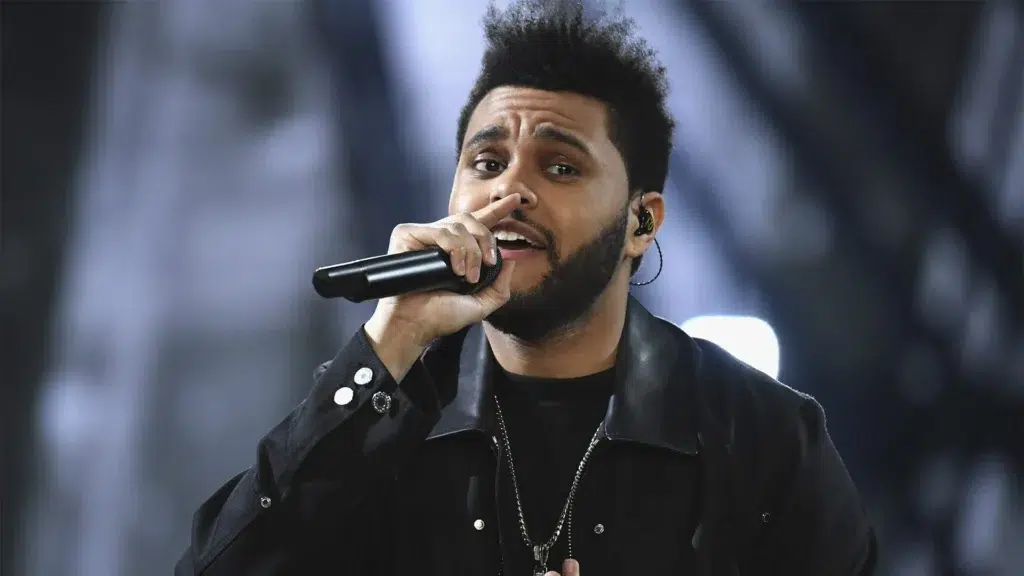
In 2016, The Weeknd was the most streamed artist on Spotify globally. Starboy had debuted at number one on the Billboard 200 with 348,000 album-equivalent units, the third-largest opening week of the year behind only Drake and Beyoncé. Every major brand in music, fashion, and entertainment wanted a piece of that moment.
H&M moved first and fastest.
The Swedish retailer announced a collaboration with The Weeknd in November 2016, before Starboy had even completed its first chart run. What followed was not a single campaign drop but a two-part collection across Spring and Fall 2017 that turned XO branding into globally distributed fashion merchandise and gave H&M its most culturally visible menswear moment in years.
This is how music culture and fast fashion built something bigger than either could have built alone.
The Timing That Made Everything Work
Starboy, streaming records, and the right moment to move
The Weeknd released Starboy on November 25, 2016. The album set a streaming record at the time, generating 175.2 million on-demand streams in its first week, the second-largest streaming week for an album ever recorded at that point, behind only Drake’s Views. All 18 tracks charted simultaneously on the Billboard Hot 100. The title single reached number one. Starboy was certified six-times platinum by the RIAA by December 2024.
H&M’s collaboration announcement came within days of that release. The brand had been watching The Weeknd’s cultural ascent across Beauty Behind the Madness in 2015 and the transition into the Starboy era. The timing was not coincidental. It was a calculated entry into the window when his commercial value was at its absolute peak before the next album cycle began.
What made 2016 to 2017 the right window for H&M:
- Number one album: Starboy debuted at number one on the Billboard 200, giving H&M a co-sign from music’s most commercially dominant artist of that moment
- Streaming dominance: 175.2 million on-demand streams in week one made him the defining figure of music’s shift to streaming-first consumption
- Visual identity at peak: The Starboy-era aesthetic, dark, cinematic, XO-branded, was fully formed and globally recognizable, giving H&M a coherent visual language to work with
- World tour: The Starboy Legend of the Fall tour, which ran through 2017 across North America, Europe, and beyond, kept him in front of mass audiences across the entire collaboration window
- Fan community scale: His global XO fanbase represented exactly the young, style-conscious, music-driven demographic that H&M most needed to reach
The Weeknd announced the partnership directly on his own Instagram, posting a campaign image of an XO bomber jacket. That single post reached his entire global fanbase before H&M had distributed a single press release.
Spring 2017: How the First Drop Worked
Selected by The Weeknd and what it actually meant
The first collection, officially titled Spring Icons Selected by The Weeknd, launched on March 2, 2017, across all H&M stores carrying menswear globally and online. The format was specific: The Weeknd did not design pieces from scratch. He curated existing H&M menswear, selecting pieces that reflected his personal aesthetic, with some items co-branded with his XO insignia.
The Spring collection centered on wardrobe staples, bomber jackets, oversized t-shirts, hoodies, sweatshirts, and a standout motorbike jacket, each featuring XO branding or Asia-inspired graphic elements that aligned with the Starboy visual world. The campaign was shot by photographer Federico Pestilli with a campaign video directed by Keith Kandell.
What the Spring 2017 drop established for the collaboration:
- Curation model: The “Selected by” format positioned The Weeknd as a taste-maker rather than a designer, making the collection feel authentic to who he actually is rather than forcing him into a design role
- XO brand extension: Co-branding pieces with XO insignia transformed the collection into accessible merchandise for his fanbase at a fraction of traditional concert merch prices
- Global retail distribution: Available across all H&M menswear locations worldwide, the collection reached markets where a standalone Weeknd merch drop would never have penetrated
- Price accessibility: H&M’s price architecture made the Weeknd aesthetic available to fans who could not afford luxury streetwear, widening the commercial audience significantly
- Merch-fashion crossover: The collection was simultaneously fashion campaign and artist merchandise, collapsing the distinction between the two in a way that neither industry had fully operationalized before
The Weeknd spoke directly about why the format worked for him. “Abel’s taste and style perfectly fits the menswear mood of the season at H&M,” H&M confirmed in launch materials. His own framing was about community: “When people follow me on Instagram, they become part of this global community of people around the world who share the same point of view. It’s the same as when they wear a piece from this collection.”
Sellout response and the demand signal
The Spring 2017 collection sold quickly enough across markets to confirm that the cultural demand was real, not manufactured. By summer 2017, The Weeknd was publicly reflecting on the response. “It was so great to see how people around the world responded to my collection with H&M,” he said to The Fader. “All summer long, I’ve seen people come to my shows wearing pieces from the collection. It’s that feeling of community that I love about fashion.”
That feedback loop, tour audiences wearing H&M pieces to Weeknd concerts, was the most efficient brand activation H&M could have engineered. It placed co-branded product in front of live event audiences who had self-selected as the exact target demographic, without any additional media spend required.
Fall 2017: Doubling Down on What Worked
The second collection and the XO streetwear identity
Rather than treating the Spring collaboration as a one-off, H&M returned with a full Fall 2017 follow-up. The second drop, an 18-piece collection, launched September 28, 2017. This time the brief moved beyond curation into more deliberate co-design. The collection was built around The Weeknd’s XO branding throughout, and the pieces reflected a more defined Starboy-era streetwear identity.
Standout pieces included a burgundy and black varsity jacket with XO branding on the chest and a roaring tiger head with snake motif embroidered across the back, priced at $59.99. Additional pieces included graphic tees, crewneck sweatshirts, pullover hoodies, a parka, and a maroon baseball jacket with a black tiger and snake on the back. All pieces featured bold XO or Weeknd co-branding.
The Fall 2017 collection in product terms:
- Varsity jacket: Burgundy and black with XO chest branding and tiger-snake back motif, the hero piece of the collection at $59.99
- Baseball jacket: Maroon with a black roaring tiger head and snake embroidery on the back, paired in campaign imagery with white t-shirt and slim black jeans
- XO hoodie: Black cotton hoodie with white XO detailing, directly translating his concert merchandise aesthetic into H&M’s distribution network
- Crewneck sweatshirts and graphic tees: Core volume pieces with XO or Weeknd branding driving accessible entry-level price points
- Parka and parker: Outerwear pieces extending the collection’s practical wearability into the full fall season
The Weeknd explained his own favorite piece: “I really like the varsity jacket, because it plays with the idea of Americana. It’s great to put my own twist on pieces and give them some edge.” That framing, taking a traditional American garment and giving it a dark, XO-inflected edge, was exactly the cultural translation the collaboration had been built to achieve.
How H&M used the collaboration to fight a harder year
The Fall 2017 Weeknd collection landed in a commercially difficult period for H&M. Full-year fiscal 2017 results showed H&M Group gross sales including VAT of SEK 231.7 billion, up 4% year on year, but the Q4 2017 period, which covered September to November 2017, saw sales excluding VAT fall 4% compared to the prior year quarter. Management acknowledged publicly that “mistakes” had been made in inventory and in responding to the market’s shift toward faster trend cycles.
In that context, a high-visibility cultural collaboration with a globally dominant music artist served a dual commercial purpose. It drove genuine sales of the collection itself, and it generated the kind of earned media and cultural conversation that H&M’s standard seasonal campaigns could not produce at the same cost. Celebrity collaborations functioned for H&M as both product and marketing simultaneously.
The business logic of the Weeknd collaboration for H&M in 2017:
- Earned media multiplier: A single Weeknd Instagram post reached his fanbase directly, generating coverage that H&M’s paid media budget would have cost significantly more to replicate
- Demographic access: The collaboration gave H&M credible access to the young, urban, music-driven male consumer who was not engaging with standard H&M menswear campaigns
- Differentiation from Zara: Artist collaborations gave H&M a cultural positioning that pure product competitors like Zara and Uniqlo could not easily replicate
- Global simultaneity: The worldwide release across H&M’s store network turned a music artist’s cultural moment into a globally coordinated retail event in a single day
- Tour halo effect: The Starboy Legend of the Fall world tour ran through 2017, keeping The Weeknd in public view across every market where H&M’s collection was on shelves
What the XO Aesthetic Brought to Fast Fashion
Dark streetwear at mass market scale
Before The Weeknd’s H&M collaboration, the dominant music-fashion crossover model was hip-hop-influenced streetwear, which typically meant bold logos, bright colorways, and maximalist graphics. The Weeknd’s aesthetic was different: dark, cinematic, cross-referencing 80s new wave and Americana through a distinctly R&B lens.
The Spring and Fall 2017 collections translated that specific visual language into H&M’s distribution network. Bomber jackets with Asia-inspired motifs, motorbike jackets, varsity jackets with dark graphic embroidery, XO-branded basics. The aesthetic was coherent and consistent across both drops in a way that most fast fashion celebrity collaborations are not, because the talent’s visual identity was actually well-defined enough to translate.
What the Weeknd collaboration introduced to H&M’s design vocabulary:
- Dark graphic language: Tiger, snake, and cross motifs gave H&M menswear an edge it had not carried in its own seasonal campaigns
- XO co-branding as fashion: Treating an artist’s brand insignia as a fashion graphic rather than pure merchandise elevated the collaboration above standard tour-merch aesthetics
- Americana reinterpreted: Varsity jackets and baseball jackets filtered through a dark, R&B-inflected sensibility gave traditional American forms a contemporary music-culture identity
- Film-influenced campaign imagery: The dark, cinematic campaign photography by Federico Pestilli reflected The Weeknd’s music video aesthetic, making the fashion campaign feel like an extension of his creative universe
The blueprint it created for music-fashion crossovers
The Weeknd H&M collaboration was not the first time a music artist had worked with a fast fashion retailer. But the two-season structure, the curation-plus-co-design model, and the direct integration of the artist’s visual world into the product made it one of the most commercially and creatively coherent executions of the format to that point.
The model proved that the right artist, at the right moment in their career, could give a fast fashion brand access to cultural conversations that no amount of traditional campaign spend could buy. It also proved that artist merchandise and fashion retail were not separate categories. When the right talent was involved, they were the same product reaching the same consumer through different channels.
The Bottom Line
The Weeknd H&M collaboration across Spring and Fall 2017 was a case study in timing, cultural alignment, and the commercial logic of music-fashion crossovers done properly. H&M did not hire The Weeknd to endorse its existing product. It built a curated and co-designed collection around an aesthetic that he already owned, distributed it through a global retail network that his own merch operation could never have reached, and activated the whole thing through his organic social presence at the exact peak of his Starboy-era cultural dominance.
For The Weeknd, the partnership extended XO branding into a mass-market fashion context without compromising the dark, cinematic visual identity he had spent years building. Fans could buy into the aesthetic for $20 to $60 rather than hundreds of dollars on luxury streetwear, which expanded his cultural reach across income demographics that premium fashion does not touch.
For H&M, the collaboration addressed a specific competitive problem in a difficult trading year. In a market where Zara was setting the pace on trend speed and Supreme was demonstrating that scarcity and cultural credibility could command premium prices within mass-market contexts, the Weeknd partnership gave H&M a version of both: cultural heat from a credible music figure and global retail availability that neither Zara nor Supreme could match simultaneously.
The Starboy era is now almost a decade behind The Weeknd. Starboy itself was certified six-times platinum by the RIAA in December 2024, a testament to the album’s enduring cultural weight. The H&M collaboration was a product of that specific cultural moment, built around an artist at the absolute peak of his commercial and critical standing, which is exactly the condition under which music-fashion crossovers generate something worth remembering.