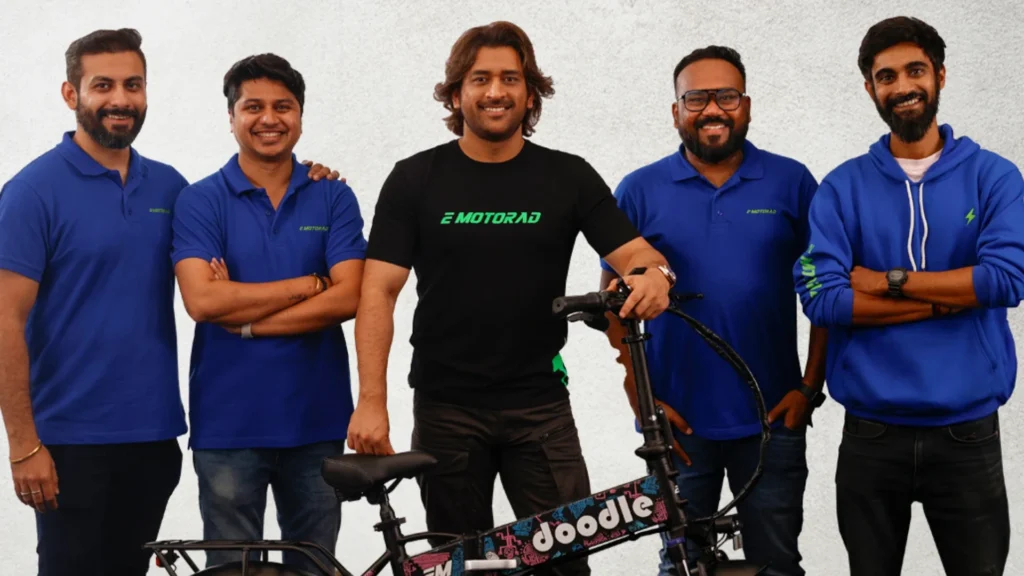
When MS Dhoni announced his partnership with EMotorad in January 2022, many dismissed it as just another celebrity endorsement deal. The former Indian cricket captain promoting electric bicycles seemed like an odd fit for someone synonymous with powerful bikes, fast cars, and high-octane cricket.
Fast forward to 2025, and EMotorad has become India’s leading electric cycle brand, valued at over ₹600 crore, selling 100,000+ e-bikes annually, expanding to 500+ retail touchpoints across India, and achieving what seemed impossible: making electric cycles aspirational and cool.
The EMotorad Dhoni Results:
- Company valuation: ₹600-700 crore (2025)
- Dhoni’s stake: Estimated 3-4% equity ownership
- Dhoni’s investment value: ₹18-28 crore current worth
- Annual revenue: ₹180-220 crore (2024-2025), 300% growth from 2022
- Units sold: 100,000+ e-bikes annually
- Retail presence: 500+ touchpoints across 200+ cities
MS Dhoni isn’t just EMotorad’s brand ambassador but an investor, stakeholder, and the face of a company riding India’s electric vehicle revolution. From viral marketing campaigns using the iconic “Bole Jo Koyal” song to turn trolls into brand advocates, to strategic positioning that made e-bikes desirable for fitness enthusiasts and urban commuters, Dhoni’s involvement transformed EMotorad from niche startup to mainstream phenomenon.
Why Dhoni Chose Electric Cycles
The Bike Lover’s EV Pivot
MS Dhoni’s love for motorcycles is legendary. His personal collection includes Harley-Davidsons, Confederate Hellcats, Ducatis, and vintage bikes worth crores. He’s been spotted riding powerful superbikes, often making headlines for his motorcycle adventures.
So why would India’s most famous bike enthusiast invest in electric cycles? The answer lies in Dhoni’s forward-thinking approach to sustainability and fitness. Post-retirement from international cricket in 2020, Dhoni focused on maintaining fitness through cycling, farming at his Ranchi farmhouse, and living a more grounded lifestyle.
Why Electric Cycles Made Sense:
- Fitness focus: Post-retirement cycling became key to Dhoni’s fitness routine
- Sustainability alignment: Recognized India’s urban mobility was broken, pollution choking cities
- Market timing: E-cycles represented perfect intersection of fitness, sustainability, practical urban transportation
- Growth potential: Segment poised for explosive growth as India pushed toward electric mobility
Meeting EMotorad: The Perfect Partnership
EMotorad was founded in 2020 by Rajib Gangopadhyay, Aditya Oza, Kunal Gupta, and Sumedh Battewar, four entrepreneurs who saw opportunity in India’s nascent e-cycle market. While electric scooters and cars grabbed headlines, e-cycles remained overlooked despite offering zero emissions, fitness benefits, affordable pricing at ₹25,000-80,000, and no license or registration requirements.
When EMotorad approached Dhoni in late 2021, they weren’t looking for just a celebrity face but someone whose credibility and lifestyle aligned with their brand values: fitness, sustainability, and authenticity.
The Partnership Structure:
- Announcement: January 2022 as brand ambassador and investor
- Equity stake: Undisclosed but estimated at 3-4% ownership
- Deal structure: Not pure cash transaction but included brand promotion, strategic guidance, long-term partnership
- Market context: India’s e-cycle market was tiny (less than 50,000 annual sales in 2021) but growing rapidly
Dhoni saw potential as India’s e-cycle market was tiny but growing rapidly with urban Indians seeking alternatives to polluted commutes and sedentary lifestyles. The government was pushing electric mobility through subsidies and infrastructure. The timing was perfect.
The Business Model: How EMotorad Makes Money
Product Range and Pricing
EMotorad Dhoni operates across multiple segments. Commuter e-cycles representing 40% of revenue include Doodle at ₹32,999-39,999 as entry-level bestseller, T-Rex at ₹49,999-64,999 with premium features, EMX at ₹44,999-54,999 with mountain bike design, and X1 at ₹29,999-34,999 as budget-friendly option.
Performance e-bikes representing 35% of revenue include T-Rex+ at ₹74,999-84,999 for high-speed premium components, Karbon at ₹1,49,999 with carbon fiber top-tier specs, and Lil E at ₹34,999-39,999 as compact city bike.
Specialized Models (25% of revenue):
- Cargo e-bikes: For delivery at ₹54,999-69,999
- Fat-tire models: Off-road at ₹64,999-79,999
- Kids’ e-cycles: At ₹24,999-29,999
The pricing strategy positions EMotorad as premium-mid segment, above Chinese imports at ₹15,000-25,000 but below international brands like Giant or Specialized at ₹1,00,000-3,00,000+.
Revenue Streams
Direct sales representing 60% of revenue come through EMotorad website, brand app with financing options, and direct WhatsApp and phone orders. Retail partnerships at 30% of revenue include 500+ touchpoints across 200+ cities, multi-brand e-bike stores, Decathlon partnership for select models, and cycle specialty stores.
B2B sales at 10% of revenue include corporate gifting and employee wellness programs, delivery fleet partnerships for food delivery and e-commerce, tourism and rental operators, and government and institutional bulk orders.
Financial Performance:
- Total annual revenue (2024-2025): ₹180-220 crore
- Growth trajectory: Nearly 300% growth from 2022 revenues of ₹60-70 crore
- Market position: India’s fastest-growing e-cycle brand
- Manufacturing: Pune facility with some imported components (batteries from China, motors from Taiwan)
The Marketing Genius: Turning Trolls into Brand Advocates
The “Bole Jo Koyal” Campaign
EMotorad’s marketing strategy, particularly campaigns featuring MS Dhoni, demonstrates how celebrity equity combined with cultural insight can create viral moments. The most clever approach has been EMotorad Dhoni’s embrace of internet meme culture.
The “Bole Jo Koyal” meme, a fan-made parody edit that went viral on social media, showed Dhoni lip-syncing to the song. While Dhoni never actually appeared in any such movie or ad, the parody became internet folklore generating millions of views and endless trolling.
Campaign Strategy:
- Authentic content: Dhoni riding EMotorad cycles through Ranchi streets, cycling through farmhouse with dogs, commuting on e-bike instead of superbike collection
- Messaging focus: “Choose Smarter, Not Harder” positioning e-cycles as intelligent choice
- User-generated content: Fans riding EMotorad, reposting memes about Dhoni and cycling
- Organic integration: Showing Dhoni genuinely using the product
The Results
Instead of ignoring or fighting internet culture, EMotorad’s marketing team understood the power of memes in reaching younger audiences. Their campaigns leaned into Dhoni’s cool, unfazed personality and his ability to laugh at himself.
Social media integration prioritized user-generated content from fans riding EMotorad, reposting memes about Dhoni and cycling including the viral parody culture, engaging with “Thala for a reason” meme trend, encouraging customers to share #RideWithThala moments, and organic content showing Dhoni genuinely using the product.
Campaign Impact:
- Social impressions: 50+ million across platforms
- Trending power: #ThalaRides and #EMotorad trended on Twitter for 3 days
- PR value: Media coverage worth estimated ₹15+ crore
- Traffic spike: 300% increase in website traffic during campaign periods
- Sales boost: 40% increase in monthly sales
- Demographic shift: Younger demographic (25-35 years) became largest customer segment
The Market Context: India’s E-Cycle Revolution
EMotorad Dhoni’s growth reflects broader transformation in India’s mobility landscape. India’s e-cycle market in 2024-2025 reached ₹3,000-3,500 crore size with annual sales of 700,000-800,000 units, growing at 40-50% CAGR, and projected to reach ₹10,000-12,000 crore with 3-4 million units annually by 2030.
Key Drivers:
- Government push: FAME II scheme provides ₹5,000-15,000 subsidies per e-bike, PLI encourages domestic manufacturing, cities building cycling infrastructure
- Urban pollution crisis: Delhi, Mumbai, Bangalore among world’s most polluted; e-cycles offer zero-emission alternative for 85% of Indian urban trips under 8 km
- Fitness boom: Post-pandemic health awareness, cycling clubs, fitness influencers promoting cycling
- Cost savings: Operating cost ₹0.10-0.20 per km vs ₹3-5 per km for petrol vehicles, no license or registration required
Competitive Landscape
Domestic brands include EMotorad as market leader with 12-15% share, Hero Lectro from Hero Group as largest by volume, Firefox Bikes as established cycle brand, plus Ninety One Cycles, Geekay Bikes, and Being Human E-Cycles from Salman Khan.
International players like Giant from Taiwan, Specialized from USA, and Trek from USA have limited presence with high pricing. Chinese imports include unbranded models on Amazon and Flipkart with quality issues but aggressive pricing at ₹15,000-25,000.
EMotorad’s Competitive Advantage:
- Premium quality: At accessible pricing
- Dhoni’s celebrity equity: Unmatched in Indian sports
- Strong brand identity: Cool, aspirational positioning
- Omnichannel distribution: 500+ touchpoints
- India-focused design: For Indian road conditions and use cases
The Strategy: What Makes EMotorad Different
Premium Positioning with Accessible Pricing
EMotorad occupies sweet spot: better quality than Chinese imports, more affordable than international brands. At ₹30,000-80,000, products target India’s growing middle class seeking quality without luxury pricing.
Unlike imported models, EMotorad designs for Indian conditions with stronger frames for rough roads and potholes, weather-resistant components for monsoons and heat, comfortable seating for longer rides, practical features like carrier racks and phone holders, and aesthetics appealing to Indian sensibilities.
Omnichannel Distribution:
- Online: Website and app for information and ordering
- Offline: 500+ touchpoints for test rides and purchases
- Service network: In 200+ cities
- Home delivery: And setup services
Financing and Service
EMotorad partners with fintech companies offering 0% interest EMI for 3-6 months, buy-now-pay-later schemes, and corporate tie-ups for employee purchase programs. Making ₹40,000-60,000 cycles affordable through ₹3,000-5,000 monthly installments dramatically expands addressable market.
Strong service network includes doorstep service in major cities, 1-year comprehensive warranty, spare parts availability, and service centers in 100+ cities. In market plagued by poor after-sales support, EMotorad Dhoni’s focus on customer service builds loyalty and word-of-mouth.
Community Building:
- Sunday group rides: In cities
- Cycling challenges: And competitions
- Social media groups: For riders
- EMotorad Owners Club: With exclusive benefits
This emotional connection increases customer lifetime value and creates brand advocates who organically promote the brand through their networks.
The Dhoni Effect: Measuring Celebrity Impact
Quantifiable Results
Quantifying Dhoni’s impact on EMotorad shows brand awareness pre-Dhoni in 2021 at less than 5%, jumping to 40-45% awareness in urban India post-Dhoni by 2023-2025.
Sales growth showed 2021 at approximately 25,000 units, 2022 when Dhoni joined at approximately 45,000 units representing 80% growth, 2023 at approximately 70,000 units with 55% growth, and 2024-2025 at approximately 100,000 units with 43% growth.
Revenue and Valuation Trajectory:
- 2021 revenue: ₹35-40 crore
- 2022 revenue: ₹60-70 crore
- 2023 revenue: ₹110-130 crore
- 2024-2025 revenue: ₹180-220 crore
- Pre-Dhoni valuation (2021): ₹150-200 crore
- Post-Dhoni valuation (2025): ₹600-700 crore
Social media metrics jumped from 15,000 Instagram followers in 2021 to 500,000+ in 2025, YouTube subscribers from 5,000 to 300,000+, and engagement rates improved 400%+. Media coverage featured EMotorad in 1,000+ articles from 2022-2025 with estimated PR value of ₹50+ crore.
The Bottom Line
MS Dhoni’s EMotorad investment represents convergence of celebrity credibility, market timing, and execution excellence. What started as brand ambassador deal evolved into genuine partnership, with Dhoni’s equity stake aligning his interests with company’s long-term success.
Why EMotorad Dhoni Succeeded:
- Authentic celebrity partnerships: Dhoni’s genuine use of EMotorad products and alignment with sustainability mission created credibility that pure paid endorsements can’t buy
- Embrace internet culture: Willingness to engage with memes, parody culture, “Thala for a reason” phenomenon showed how brands turn internet humor into marketing advantage
- Perfect timing: Entering India’s e-cycle market in 2020-2022 as government pushed EV adoption, post-pandemic fitness consciousness surged, urban pollution worsened
- Premium quality at accessible pricing: ₹30,000-80,000 pricing captured aspirational middle class seeking quality without luxury pricing
- Community building: Cycling clubs, group rides, owner communities created emotional connections beyond transactions
- Solve real problems: E-cycles address urban pollution, fitness needs, expensive commuting, parking challenges with practical benefits
EMotorad has achieved remarkable growth reaching ₹600-700 crore valuation, ₹180-220 crore annual revenue, 100,000+ units sold annually, and market leadership in India’s fastest-growing EV segment. Dhoni’s involvement provided credibility, visibility, and mass appeal that accelerated this trajectory.
Key Success Factors:
- Omnichannel distribution: Balancing online convenience with 500+ offline touchpoints addressed Indians’ preference for experiencing products before buying
- Thala factor: MS Dhoni brings authenticity genuinely using product, mass appeal commanding respect across demographics, fitness icon credibility post-retirement, sustainability alignment, trust factor in market plagued by quality issues
The “Bole Jo Koyal” campaign exemplifies brilliant marketing by turning potential weakness into strength, embracing self-aware humor, and creating viral cultural moments. This approach, combined with quality products, smart pricing, and strong distribution, positioned EMotorad for sustained success.
For Dhoni personally, the investment provides ₹18-28 crore current stake value with potential ₹36-60 crore by 2027 representing 2-3x returns within 5 years, alignment with sustainability mission, strategic positioning in India’s ₹10,000+ crore e-bike market projected for 2030, and diversified portfolio beyond cricket and traditional endorsements.
As India’s e-cycle market explodes from ₹3,500 crore in 2025 to projected ₹10,000+ crore by 2030, EMotorad is positioned to capture significant share. The company’s target: ₹500+ crore annual revenue and IPO by 2027-2028 which could further multiply Dhoni’s stake value.
The EMotorad Dhoni story demonstrates that celebrity investments, when built on authentic connection, strategic execution, and market fundamentals, create win-win outcomes. Dhoni didn’t just lend his name but became face of India’s sustainable mobility revolution, proving that Thala’s smart moves extend well beyond cricket pitch to building genuine impact measured not just in crores but in reducing pollution, promoting fitness, and transforming how Indians move through their cities.