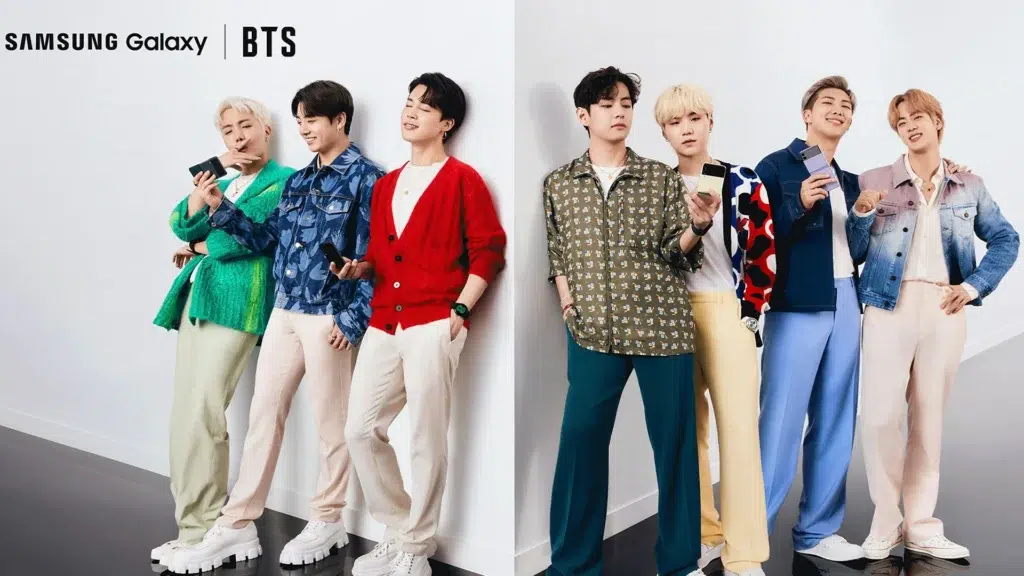
When Samsung Electronics announced BTS as global smartphone ambassadors in February 2020, it wasn’t just another celebrity endorsement. It was a calculated bet that the world’s biggest K-pop group could help a struggling smartphone division reconnect with youth audiences who’d started viewing Samsung as their parents’ phone brand. Five years later, the bet paid off beyond anyone’s wildest projections.
The numbers tell an extraordinary story. BTS contributes an estimated $5 billion annually to South Korea’s economy, with Samsung partnerships representing significant portions of both groups’ commercial success. The BTS Samsung collaboration drove measurable Galaxy sales increases, created viral cultural moments like “No iPhone Only Galaxy,” and positioned Samsung as the preferred smartphone brand among Gen Z and Millennials globally.
This wasn’t celebrity endorsement as usual. BTS members actually use Samsung products, famously declaring loyalty during concerts and refusing iPhones for fan selfies. The partnership evolved from simple product placement into integrated campaigns spanning smartphones, TVs, sustainability initiatives, and even art curation. Most remarkably, it survived military enlistments and controversies while competitors cycled through forgettable influencer deals that generated zero lasting impact.
Why Samsung needed BTS in 2020
The youth market crisis Samsung faced
By late 2019, Samsung had a problem. Despite maintaining global smartphone market leadership with 259 million units shipped annually, the brand was losing cultural relevance with younger consumers. Apple dominated aspirational positioning among teens and college students, while Chinese brands like Xiaomi and OPPO captured budget-conscious youth with aggressive social media marketing.
The challenge wasn’t product quality. Samsung’s Galaxy S and Note lines competed technically with any smartphone available. The problem was perception. Younger consumers viewed Samsung as the safe, boring choice their parents made. Apple represented status and ecosystem lock-in. Samsung needed cultural credibility that traditional advertising couldn’t provide.
Market challenges requiring intervention:
- Youth brand perception: Samsung viewed as older generation’s choice versus Apple’s cool factor among teens and young adults
- Social media weakness: Traditional marketing failed to generate organic buzz on platforms where youth actually spent time
- Chinese competition: Aggressive pricing and influencer marketing from Xiaomi, OPPO, Vivo captured budget youth segments
- Ecosystem gaps: Google Android fragmentation made Samsung less sticky than Apple’s closed ecosystem approach
- Innovation fatigue: Foldable phones impressive but niche, not driving mainstream youth adoption
Samsung’s mobile division generated approximately $109.76 billion in 2020 revenue, but growth had plateaued. The company needed a catalyst that could shift youth perception globally, not just in Korea. Enter BTS, the seven-member group that had achieved something unprecedented: dominating both Eastern and Western markets simultaneously while maintaining genuine connection with fans spanning ages 10 to 40.
What made BTS the perfect global youth ambassador
BTS wasn’t just popular in 2020. They were a cultural phenomenon whose influence extended far beyond music. The group’s “Love Yourself” campaign with UNICEF had generated global awareness about mental health and self-acceptance. Their UN speeches on youth empowerment had been viewed hundreds of millions of times. And their fanbase, known as ARMY, was famously devoted and organized.
More importantly for Samsung, BTS’ influence crossed traditional geographic and demographic boundaries. They’d topped US Billboard charts while maintaining dominance in Asia. Their fans ranged from teenagers to middle-aged parents. They appealed to both genders. And critically, their fans actually listened when they recommended products, with documented “BTS effects” showing immediate sales spikes for everything from cosmetics to dolls.
Strategic advantages BTS provided Samsung:
- $5 billion economic impact: BTS estimated annual contribution to Korean economy demonstrated commercial influence beyond entertainment
- Global reach: Fanbase spread across 100+ countries from Philippines to Brazil to United States simultaneously
- Cross-generational appeal: ARMY members aged 10-50 provided much broader reach than typical youth-focused ambassadors
- Authentic engagement: Group’s history of genuine fan interaction made endorsements feel like recommendations not transactions
- Cultural soft power: BTS positioned as cultural ambassadors raising South Korea’s global profile beyond just product promotion
The partnership launched strategically alongside the Galaxy S20+ and Galaxy Buds+ in February 2020. Samsung didn’t just slap BTS’ faces on advertisements. They created BTS-themed purple versions of both products, integrated augmented reality experiences for the Connect BTS art initiative, and gave fans exclusive content through Samsung devices. This deep integration signaled genuine partnership rather than superficial endorsement.
The campaigns that made Galaxy aspirational again
Galaxy S20+ BTS Edition and the purple phenomenon
The February 2020 launch campaign centered on limited-edition purple Galaxy S20+ phones and Galaxy Buds+ featuring BTS’ signature purple heart logo and member signatures. The color choice was strategic genius. Purple had become synonymous with BTS through their “I Purple You” fan phrase, meaning “I’ll love you til the end.” By making Samsung products purple, the company literally made them physical manifestations of fan devotion.
The products sold out globally within hours. Fans who couldn’t secure the limited editions still felt included through Samsung’s AR experiences allowing them to virtually explore Connect BTS exhibitions. The campaign generated massive social media engagement as fans shared unboxing videos, photos with their purple devices, and discussions about which member signed which part of the packaging.
Campaign elements driving success:
- Limited edition scarcity: Purple devices sold out within hours creating aspirational desire and secondary market premium pricing
- Color symbolism: Purple heart logo connected product directly to BTS’ “I Purple You” meaning creating emotional attachment
- Member signatures: Personalization with each member’s signature made devices feel like collectible merchandise not just phones
- Connect BTS integration: AR experiences tied product to cultural initiative giving buyers access to exclusive art content
- Unboxing culture: Fans created thousands of YouTube videos documenting purchase experience generating free advertising reach
Samsung’s mobile division revenue grew despite COVID-19 disruption, with analysts attributing sustained performance partly to successful BTS collaboration keeping Samsung top-of-mind during lockdowns when in-store experiences disappeared. The partnership proved especially valuable as traditional marketing channels became less effective.
“No iPhone Only Galaxy” and organic brand advocacy
In April 2023, BTS member Suga created perhaps the partnership’s most viral moment during his solo world tour in the United States. When taking selfies with fans, he declared “No iPhone, only Galaxy,” refusing to use anything but Samsung devices for fan interactions. The statement became instant meme material spreading across social media platforms.
What made this moment powerful wasn’t just one member’s declaration. It was authentic. Suga and other BTS members genuinely used Samsung products daily, documented through social media posts, backstage footage, and concert content. When fans saw BTS using Galaxy phones in unsponsored contexts, it reinforced that this wasn’t just paid promotion but actual preference.
Organic advocacy impact measurements:
- Social media virality: “No iPhone Only Galaxy” generated millions of shares, memes, and discussions across all platforms
- Fan behavior influence: ARMY members began declaring Galaxy preferences online and switching from competing devices
- Concert integration: BTS actively used Samsung products during performances and backstage creating constant organic exposure
- Content creation tools: Members shared photos and videos taken with Galaxy cameras highlighting product capabilities naturally
- Peer pressure dynamics: Within ARMY fandom, using Samsung became social signal of dedication creating conversion pressure
This organic advocacy delivered value traditional advertising couldn’t purchase. When celebrities genuinely prefer products and openly declare loyalty, it creates psychological influence that paid placements never achieve. Samsung benefited from BTS members acting as authentic brand ambassadors rather than just contracted spokespersons.
Measurable business impact and revenue growth
How BTS drove Samsung’s mobile division performance
Samsung’s mobile experience division generated approximately $21.6 billion in Q3 2024, making it the company’s largest revenue generator. While attributing specific percentages to BTS partnership is impossible without internal data, multiple market indicators demonstrate measurable impact during the collaboration’s five years.
The Galaxy S20+ BTS Edition contributed to stronger than expected Q1 2020 performance despite COVID-19 beginning to impact global markets. Subsequent BTS-themed releases for Galaxy Z Flip 4 and other models consistently generated sellout success. More significantly, Samsung maintained smartphone market leadership with approximately 259 million annual shipments while Apple and Chinese competitors fought for second place.
Financial performance indicators:
- Mobile division revenue: $21.6 billion quarterly in Q3 2024, largest revenue generator for entire Samsung corporation
- Market share maintenance: Samsung sustained approximately 20% global smartphone market share throughout partnership period
- Youth segment growth: Increased Galaxy adoption among 18-34 demographic where Samsung had previously struggled
- Premium device sales: BTS-themed editions commanded price premiums without resistance from price-sensitive consumers
- Emerging market penetration: Strong BTS followings in Philippines, Indonesia, Brazil helped Samsung compete against local brands
The partnership also provided insurance against Apple’s ecosystem advantages. While Samsung couldn’t match Apple’s hardware-software integration, they could offer something Apple didn’t have: endorsement from the world’s most popular musical group. This cultural capital helped offset technical disadvantages in youth marketing.
The “BTS effect” on Samsung and Korean economy
The Hyundai Research Institute estimated BTS contributes over $5 billion annually to South Korea’s economy. This “BTS effect” extends across tourism, consumer goods, entertainment, and technology sectors. Samsung’s partnership captures significant portions of this economic impact through direct product sales and indirect brand value enhancement.
When BTS released content featuring Samsung products, it generated what marketers call “earned media” worth millions in advertising equivalent. A single Instagram post from member V featuring a Galaxy phone reached his 60+ million followers instantly. Multiply this across seven members and count similar organic mentions in backstage videos, concert content, and V LIVE broadcasts, and the free advertising value compounds dramatically.
Economic multiplier effects:
- Tourism impact: 1 in 13 tourists visiting South Korea cited BTS as reason, many purchasing Samsung products as souvenirs
- Cross-brand elevation: Samsung partnership raised perception of other Korean tech brands through association effect
- Stock market influence: BTS-related announcements correlating with Samsung stock price movements on trading days
- Export facilitation: BTS cultural influence opened doors for Samsung in markets where Korean products previously struggled
- Innovation showcase: Partnership positioned Samsung as innovative brand willing to embrace cultural movements not just technology
The Korea Creative Content Agency’s vice president stated K-pop had “skyrocketed” since BTS’ popularity surged, creating jobs not just for BTS but entire sectors. Samsung’s early partnership positioning gave them first-mover advantage in capturing this cultural wave’s commercial benefits.
Beyond smartphones: Expanding the partnership
Galaxy Z Flip, sustainability campaigns, and Art TVs
The BTS Samsung partnership evolved far beyond initial smartphone focus. In August 2022, BTS appeared in Times Square promoting the Galaxy Z Flip 4, positioning Samsung’s foldable technology as the innovative choice for trend-forward consumers. The campaign emphasized how flip phones combined nostalgia with cutting-edge technology, perfectly matching BTS’ own blend of contemporary and classic influences.
February 2022 saw the launch of Galaxy for the Planet sustainability initiative featuring BTS. The campaign highlighted Samsung’s commitment to using recycled materials in products and reducing environmental impact. BTS’ message “Let’s rethink the life of a product” aligned with their social responsibility advocacy while giving Samsung green credentials valuable with environmentally conscious youth consumers.
Partnership expansion areas:
- Foldable phones: Z Flip and Z Fold campaigns positioned Samsung as innovation leader in emerging device categories
- Sustainability messaging: Galaxy for the Planet leveraged BTS’ social advocacy credibility for environmental marketing
- Wearables: Galaxy Buds+ and Galaxy Watch promotions expanded partnership beyond phones into ecosystem products
- Television: 2025 RM appointment as Art TV ambassador brought cultural sophistication to home entertainment division
- Content creation: Connect BTS AR experiences and exclusive content made Samsung devices necessary for accessing fan experiences
In June 2025, Samsung appointed BTS leader RM as global ambassador for Art TVs following his return from military service. This partnership evolution demonstrated Samsung’s long-term strategic thinking. Rather than ending the BTS relationship, they adapted it to member availability and brand needs, with RM’s renowned art appreciation perfectly matching Art TV positioning.
Surviving military service and maintaining momentum
The mandatory military enlistment of BTS members posed significant challenges for the Samsung partnership. Jin enlisted in December 2022, followed by other members through 2023. By mid-2023, the entire group was serving, creating an 18-month period where group activities ceased completely.
Samsung adapted cleverly. Rather than pausing all BTS-related marketing, they shifted to individual members available for promotional activities. Suga promoted The Freestyle portable projector at IFA 2023 while on leave. RM, SUGA, and Jimin appeared in Galaxy S24 Ultra campaigns in January 2024. Jin visited Samsung’s Paris pop-up store in August 2024 after completing service. This individual-member strategy maintained partnership visibility while respecting military commitments.
Military service navigation strategy:
- Individual member focus: Shifted from group campaigns to solo appearances by members with availability
- Product diversification: Expanded beyond smartphones to TVs, projectors, appliances reducing dependence on group availability
- Content banking: Created campaigns during available windows that could be released during enlistment periods
- Fan engagement maintenance: Continued BTS-themed products and experiences keeping ARMY engaged with brand
- Re-launch positioning: Planned major campaigns around discharge dates building anticipation for group’s return
The strategy worked. When RM became Art TV ambassador in June 2025 following discharge, it generated major media coverage and fan excitement. Samsung maintained BTS partnership momentum despite what could have been fatal 18-month interruption, demonstrating commitment that fans appreciated and rewarded with continued brand loyalty.
The controversy that tested the partnership
Suga’s DUI incident and Samsung’s response
In August 2024, BTS member Suga (Min Yoon-gi) was involved in a DUI scooter incident that generated significant controversy in South Korea. The Korea Herald reported that Samsung was “considering not extending its brand ambassador contract with the singer,” with sources citing risks of promoting someone causing social controversy.
The incident created genuine dilemma for Samsung. Suga had been prominent BTS member in Samsung campaigns, famously declaring “No iPhone Only Galaxy.” His visibility made him closely associated with brand identity. Yet Samsung’s contract was with BTS as a group, not individual members, creating legal and practical complications around removing him from marketing materials.
Crisis management considerations:
- Contract structure: Group deal meant Suga couldn’t be removed from campaigns unless he left BTS entirely
- Fan sentiment: ARMY largely supported Suga through controversy, making harsh brand response potentially counterproductive
- Cultural context: South Korean public standards regarding celebrity behavior stricter than international markets
- Competitor vulnerability: Harsh action could open door for Apple or others to court disillusioned BTS fans
- Long-term relationship: Five-year partnership represented significant investment worth protecting through short-term controversy
Samsung ultimately took measured approach. They didn’t immediately pull Suga from advertisements but privately evaluated options. Sources indicated the company would “monitor the situation” before making final decisions. This balanced response acknowledged concerns without overreacting to what many fans viewed as relatively minor incident.
Why the partnership survived and what it revealed
The Suga controversy ultimately demonstrated the BTS Samsung partnership’s resilience. By January 2025, RM’s Art TV ambassador announcement showed Samsung maintained commitment to BTS despite months of uncertainty. The partnership survived because both parties had too much invested to abandon over single member’s mistake.
The incident also revealed authentic nature of the partnership. If this was purely transactional endorsement deal, Samsung likely would have cut ties quickly to avoid brand damage. Instead, their measured response suggested genuine relationship where both parties worked through challenges rather than immediately terminating at first sign of trouble.
Factors enabling partnership survival:
- Mutual financial stakes: Both Samsung and BTS derived significant revenue making termination costly for both parties
- Fan loyalty: ARMY’s support for Suga meant harsh Samsung response would have damaged brand among key demographic
- Contractual complexity: Group contract structure made clean exit nearly impossible without broader implications
- Cultural ambassadorship: Partnership represented South Korea’s soft power making it larger than commercial transaction
- Demonstrated commitment: Samsung’s five-year investment signaled this wasn’t disposable influencer relationship
The resolution validated Samsung’s original partnership thesis. By choosing BTS, they’d selected ambassadors whose fanbase would defend them through controversies. This loyalty extended to defending Samsung’s decision to maintain the partnership, with ARMY members publicly praising the brand’s measured response.
The Bottom Line
The BTS Samsung partnership represents modern celebrity marketing at its most effective. Over five years starting in 2020, the collaboration generated measurable business impact through authentic product advocacy, cultural positioning, and sustained engagement that survived military service interruptions and public controversies. Samsung didn’t just buy access to BTS’ 100+ million combined social media followers, they earned genuine endorsement from artists who actively chose Galaxy over competitors.
The financial results speak clearly. BTS contributes an estimated $5 billion annually to South Korea’s economy, with Samsung partnerships representing significant portions. Samsung’s mobile division generates $21.6 billion quarterly, maintaining market leadership partly through cultural relevance the BTS partnership provided. More importantly, Samsung transformed from “parents’ phone brand” into aspirational youth choice through five years of strategic collaboration.
Key success factors:
- Authentic product usage: BTS members genuinely preferred Samsung devices making endorsements credible not transactional
- Cultural alignment: Partnership positioned as Korean soft power initiative not just commercial transaction
- Strategic evolution: Expanded from smartphones to sustainability, Art TVs, and individual member collaborations
- Crisis resilience: Survived military enlistments and controversies through mutual commitment and flexible adaptation
- Fan value creation: Delivered exclusive content, limited editions, and experiences making Samsung devices necessary for ARMY participation
For marketers studying the case, the lesson is that youth marketing requires more than celebrity faces in advertisements. It demands authentic partnerships where products genuinely align with ambassadors’ values and lifestyles. BTS chose Samsung not because of money alone but because the partnership offered platform for cultural initiatives, sustainability messaging, and creative expression beyond simple product placement.
The partnership’s continued expansion in 2025 with RM’s Art TV ambassadorship demonstrates both parties see long-term value. Samsung isn’t replacing BTS with newer K-pop groups, they’re evolving the collaboration as members pursue individual projects. This sustained commitment differentiates the BTS Samsung partnership from forgettable influencer deals that chase trends rather than building lasting brand equity.
As BTS reunites in 2025 following military service completions, Samsung has positioned itself perfectly to benefit from the group’s next chapter. Five years of partnership have created such strong association that fans now view Samsung and BTS as intrinsically connected. That’s the ultimate measure of marketing success: becoming genuinely inseparable in consumer minds.