In 2016, buying decent earphones meant choosing between expensive international brands like Sony and JBL or cheap Chinese knockoffs that broke within weeks. There was no middle ground for young Indians who wanted style and reasonable quality without spending Rs 5,000. Aman Gupta and Sameer Mehta saw this gap and launched Boat, betting that most people didn’t need audiophile-grade sound, they needed good-enough audio that looked cool and didn’t cost a month’s allowance.
Seven years later, Boat audio owns nearly half of India’s wearable audio market. They sell more earphones and headphones than Sony, Apple, Samsung, and JBL combined in India. The company crossed Rs 3,000 crore revenue and became profitable while global brands struggled to understand what just happened. Boat’s dominance reveals crucial truths about Indian consumer behavior: value matters more than brand heritage, online-first distribution beats traditional retail, and youth marketing through cricket and influencers works better than celebrity endorsements.
The Pricing Strategy That Changed Everything
Boat audio succeeded because they understood Indian price sensitivity better than global brands. A decent Boat earphone cost Rs 1,000-1,500 when Sony equivalents cost Rs 3,000-4,000. Was the Sony sound quality better? Marginally. Did most users notice or care? Not really. For students, young professionals, and middle-class consumers, Boat’s quality was sufficient and the price savings were significant. That value proposition was unbeatable.
The company achieved these prices through smart sourcing and manufacturing. They partnered with Chinese ODMs initially, getting good components at low costs. As volumes grew, Boat set up local assembly in India, reducing import duties and further improving margins. This operational efficiency let them maintain low prices while staying profitable, unlike brands relying on expensive international supply chains.
Pricing mastery:
- 2016: expensive international brands (Sony, JBL) vs. cheap Chinese knockoffs
- No middle ground for young Indians wanting style and quality without Rs 5,000
- Aman Gupta and Sameer Mehta launched Boat
- Good-enough audio that looked cool, didn’t cost month’s allowance
- Nearly half of India’s wearable audio market
- More than Sony, Apple, Samsung, JBL combined in India
- Rs 3,000+ crore revenue and profitable
- Boat earphone: Rs 1,000-1,500 vs. Sony Rs 3,000-4,000
Boat audio also avoided the premium positioning trap. Global brands justified high prices through legacy and audio engineering heritage. Boat said “we’re not audiophile gear, we’re stylish, functional audio for everyday use.” This honesty resonated with consumers tired of paying for brand names. People wanted earphones that worked well for calls, music, and videos without pretending to be professional studio equipment.
Manufacturing Efficiency
The manufacturing strategy gave Boat audio cost advantages competitors couldn’t match. Chinese ODM partnerships provided economies of scale and component access that would have taken years to build independently. As volumes reached millions of units annually, negotiating power with suppliers increased, driving costs down further. Local assembly in India after 2018 reduced logistics expenses and took advantage of government incentives for domestic manufacturing.
This operational model meant Boat audio could price products 40-50% below international brands while maintaining healthy margins. The savings came from supply chain efficiency, not compromising on quality within their target specifications. For Indian consumers calculating value per rupee, Boat won decisively.
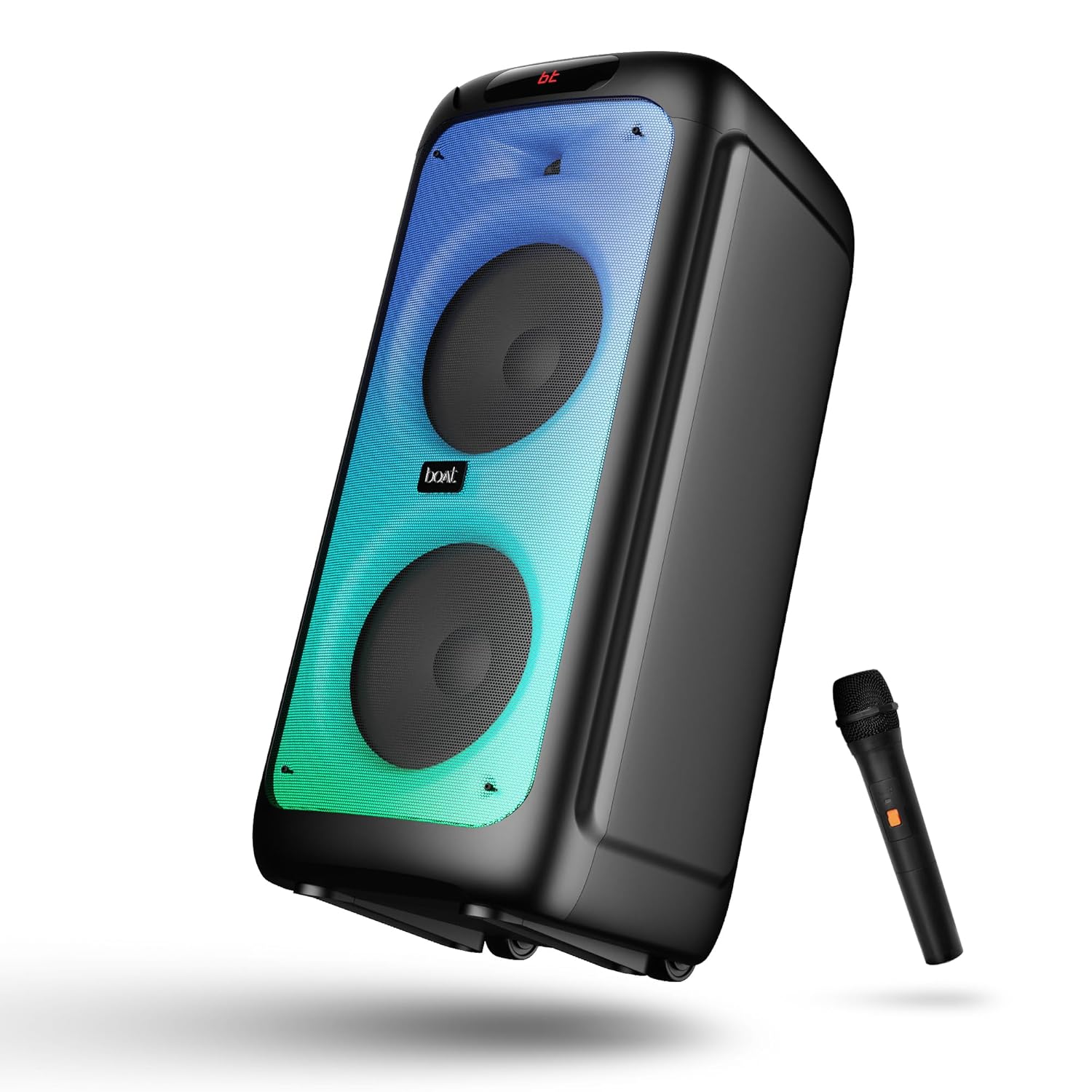
boAt Partypal 390/400 Speaker w/ 160 W Signature Sound, Karaoke with 2 Microphone Ports, Up to 6 hrs Playtime, TWS Mode, Bluetooth v5.3 (Space Black)
🛒 Shop Now on AmazonYouth Marketing and Brand Building
Boat audio became cool through relentless youth-focused marketing. They sponsored IPL teams and matches, getting massive visibility during India’s biggest entertainment property. Cricket sponsorships meant Boat was everywhere during the tournament, associating the brand with energy, youth, and entertainment. This strategy cost less than traditional celebrity endorsements while reaching exactly their target demographic.
Influencer marketing was central to Boat’s growth. They partnered with hundreds of YouTubers, Instagram creators, and tech reviewers, sending free products for reviews. These organic endorsements from trusted voices worked better than polished advertisements. When a favorite tech YouTuber praised Boat earphones, followers bought them. The company built an army of micro-influencers who evangelized the brand authentically.
Marketing innovation:
- Partnered with Chinese ODMs: good components at low costs
- Volumes grew: local assembly in India, reducing import duties
- Operational efficiency: low prices while staying profitable
- “We’re not audiophile gear, we’re stylish, functional audio for everyday use”
- Honesty resonating with consumers tired of paying for brand names
- IPL teams and matches sponsorships: massive visibility
- India’s biggest entertainment property
- Associated with energy, youth, entertainment
- Cost less than celebrity endorsements
Aman Gupta’s appearance as a judge on Shark Tank India made him a celebrity founder, dramatically boosting Boat’s visibility. Suddenly, Boat audio had a face, a personality, and mainstream recognition beyond just product marketing. Gupta’s relatability and success story inspired young entrepreneurs while keeping Boat top-of-mind for consumers. This personal branding created emotional connection that product ads couldn’t achieve.
Product Innovation for Indian Needs
Boat audio designed products specifically for Indian conditions and preferences. Extra bass was standard because Indian audiences prefer bass-heavy sound profiles. Water resistance became standard because monsoons and sweat are real issues. Battery life was prioritized because Indians want devices that last all day without frequent charging. These adaptations made Boat products better suited for Indian use than international brands designing for global markets.
The company also launched trendy designs with colorful options appealing to youth wanting fashion accessories, not just audio devices. Collaborations with artists and limited editions created collectibility and urgency. Boat turned commodity earphones into lifestyle products through design and marketing, justifying their pricing versus generic Chinese brands selling similar technology.
Distribution Dominance
Boat audio won distribution by going all-in on e-commerce when global brands still prioritized physical retail. As Flipkart and Amazon became primary shopping destinations for electronics, Boat was ready with strong presence, aggressive pricing, and exclusive launches. They understood online shopping behavior, optimizing product pages, reviews, and flash sales that drove massive volumes.
The brand also built offline presence strategically. Instead of expensive branded stores, Boat partnered with mobile retailers and consumer electronics shops, creating 5,000+ touchpoints. These partnerships gave physical visibility without heavy retail infrastructure costs. Customers could see and try products before buying, addressing the main hesitation with online-only brands.
Omnichannel strategy:
- Hundreds of YouTubers, Instagram creators, tech reviewers
- Free products for reviews: organic endorsements from trusted voices
- Favorite tech YouTuber praising: followers bought
- Army of micro-influencers evangelizing authentically
- Aman Gupta Shark Tank India judge: celebrity founder
- Face, personality, mainstream recognition
- Relatability and success story inspiring young entrepreneurs
- Extra bass: Indian audiences prefer bass-heavy sound profiles
- Water resistance: monsoons and sweat real issues
- Battery life: devices lasting all day without frequent charging
Boat’s omnichannel strategy meant customers discovered the brand online through influencers, researched on e-commerce platforms, sometimes tried in retail stores, and bought wherever convenient. This flexibility across channels beat brands locked into traditional retail models or purely online players without physical presence. Boat audio understood that Indian consumers wanted options, not restrictions on how they shopped.

Boat Nirvana Ivy Pro (2025 Launch), Dolby Atmos w/Head Tracking, 52dB Hybrid Adaptive ANC, Hi-Res LDAC, Titanium Dual Drivers, Bluetooth Earbuds (Crystal Black)
🛒 Shop Now on AmazonCompetition and Market Evolution
Boat’s success forced global brands to adapt. Sony, JBL, and others launched budget lines trying to compete on price. But they struggled because their brand positioning as premium made discounting feel desperate rather than strategic. Boat didn’t have this baggage, affordable was always their identity. New competitors like Noise and Boult emerged copying Boat’s playbook, but Boat’s first-mover advantage and brand recognition kept them ahead.
The market also evolved toward truly wireless earbuds where Boat audio maintained leadership by launching products quickly at aggressive prices. When Apple’s AirPods created the TWS category, Boat launched affordable alternatives within months. This speed to market, enabled by flexible Chinese manufacturing partnerships and local assembly, let Boat ride trends faster than slower-moving international brands.
Market leadership:
- All-in on e-commerce when global brands prioritized physical retail
- Flipkart and Amazon: primary shopping destinations for electronics
- Strong presence, aggressive pricing, exclusive launches
- Optimizing product pages, reviews, flash sales
- Partnered with mobile retailers and consumer electronics shops: 5,000+ touchpoints
- Physical visibility without heavy retail infrastructure costs
- Omnichannel: discovered online, researched e-commerce, tried retail, bought wherever convenient
- Sony, JBL launched budget lines trying to compete on price
Apple remains the premium segment leader, but that’s a different market. Boat dominates the mass segment which is 10x larger in volume. The company is now pushing into smartwatches and other wearables, leveraging their brand and distribution to expand beyond audio. Whether they can replicate audio success in new categories remains uncertain, but their fundamentals of understanding Indian consumers and delivering value remain strong.
The Competition Response
Global brands’ response to Boat audio’s success revealed their strategic limitations. They couldn’t simply cut prices without damaging their premium positioning globally. Their organizational structures designed for slow, deliberate product cycles couldn’t match Boat’s agility in launching new models. Their retail partnerships created obligations that prevented aggressive online discounting. These structural disadvantages meant that even when global brands recognized the threat, responding effectively proved difficult.
Meanwhile, new Indian brands like Noise and Boult studied Boat audio’s playbook and launched similar strategies. The market became crowded with affordable audio brands, each trying to capture share through influencer marketing, e-commerce focus, and value pricing. However, Boat’s brand equity from being first and investing heavily in marketing created advantages that late entrants struggled to overcome.
The Bottom Line
Boat audio proved that Indian startups could beat global giants not through superior technology but through superior local understanding. They solved the right problem: making decent audio affordable and accessible for India’s price-conscious, trend-aware youth. While international brands chased premium customers with incremental improvements, Boat captured the massive middle market that just wanted good products at fair prices.
The success formula:
- Premium positioning as premium making discounting feel desperate
- Boat: affordable always their identity
- Noise and Boult: copying Boat’s playbook
- First-mover advantage and brand recognition keeping ahead
- TWS category: launched affordable alternatives within months
- Speed to market: flexible Chinese manufacturing, local assembly
- Apple: premium segment leader (different market)
- Boat: mass segment 10x larger in volume
- Pushing into smartwatches and other wearables
The company’s Rs 3,000 crore revenue with profitability shows that serving this segment well creates huge businesses. Boat’s dominance reveals shifting Indian consumer behavior. Brand heritage matters less than value and relevance. Online-first distribution works when executed well. Youth marketing through cricket and influencers delivers better ROI than traditional advertising.
Boat audio didn’t invent any of these strategies, but they executed all of them brilliantly while competitors were still figuring out India. That combination made them the most successful Indian consumer electronics brand of the 2010s and set the template others are now desperately trying to copy. The lesson is clear: understanding your market deeply, moving fast, and delivering genuine value beats global brand power when execution is excellent.