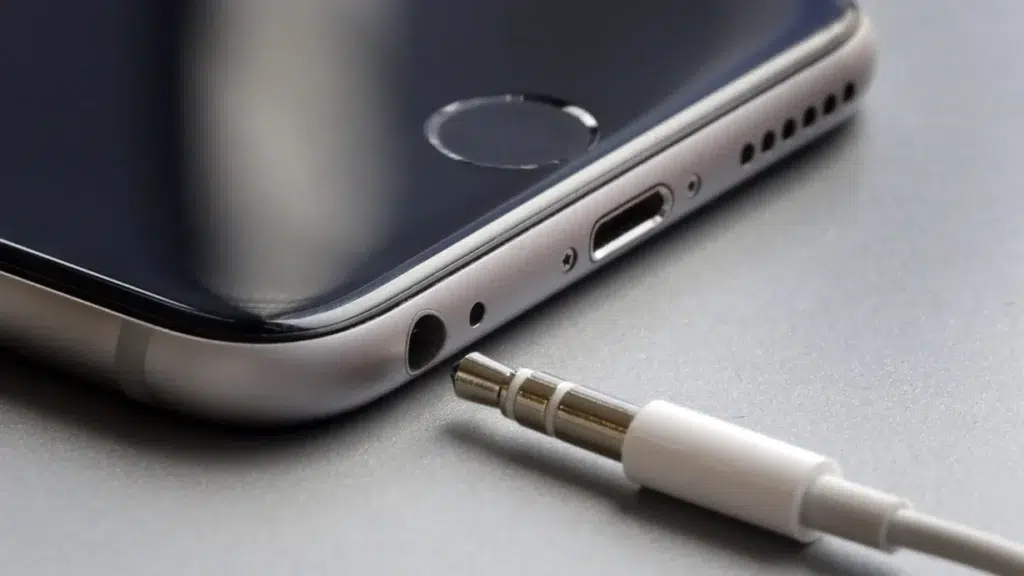
In September 2016, Apple announced the iPhone 7 without a 3.5mm headphone jack. The backlash was immediate and global. Petitions circulated online, tech reviewers called it anti-consumer, and Android manufacturers mocked Apple in advertisements.
By 2024, that controversial decision generated $22 billion in annual AirPods revenue. That’s larger than Spotify, Nintendo, and eBay combined as standalone businesses. The headphone jack removal wasn’t about saving space or improving water resistance. It was about forcing a technology transition that created an entirely new product category Apple could dominate.
The Decision in Context
What Was at Stake
Apple had spent years building the iPhone into the world’s most profitable consumer product, generating over $200 billion in annual revenue by 2016. The headphone jack removal risked alienating loyal customers during a period when smartphone growth was slowing and competition from Samsung, Google, and Chinese manufacturers was intensifying.
The decision carried three critical risks:
- $200+ billion iPhone revenue potentially jeopardized if users rejected the change and switched to Android competitors
- Accessory ecosystem control determining whether Apple could capture billions in wireless audio market
- Customer loyalty test showing if users would accept forced transitions or abandon the platform
The stakes extended beyond immediate sales. Third-party headphone manufacturers would need Lightning adapters or Bluetooth compatibility, giving Apple control over the entire audio accessory ecosystem.
When This Decision Was Made
The groundwork began in 2014 when Apple acquired Beats Electronics for $3 billion, obtaining audio engineering talent and an existing wireless headphone product line. Behind the scenes, Apple’s hardware teams were developing AirPods alongside iPhone 7, creating the wireless solution before removing the wired option.
Three factors aligned:
- Smartphone market maturation with iPhone sales growth slowing from double digits to single digits
- Bluetooth technology breakthrough making wireless audio quality acceptable for mainstream users
- Margin pressure requiring new revenue streams beyond hardware sales
Services and accessories represented Apple’s fastest-growing segments, with wireless audio offering margins exceeding 60% compared to 38% on iPhone hardware.
The Options on the Table
Option 1: Keep the Headphone Jack Indefinitely
This path would have satisfied existing users and avoided short-term criticism. Samsung, LG, and other Android manufacturers continued offering headphone jacks through 2017 to 2018, positioning themselves as customer-friendly alternatives to Apple’s controversial removal.
What this approach offered:
- Backward compatibility with billions of existing wired headphones worldwide
- Zero user backlash avoiding negative press from removing expected features
- Competitive differentiation letting Android brands position themselves as customer-first
Market research showed 80% of smartphone users preferred wired headphones in 2016, primarily due to cost and reliability concerns with Bluetooth alternatives.
Option 2: Offer Both Wired and Wireless Options
A compromise approach would have seen premium iPhone models remove the jack while standard models kept it, similar to how Apple differentiates Pro and non-Pro iPads today.
The dual-path strategy:
- Gradual transition giving users time to adopt wireless naturally without force
- Tiered positioning marketing wireless as premium while keeping budget compatibility
- Reduced backlash maintaining options for price-sensitive customers
This would have slowed the wireless transition and delayed creation of a high-margin accessory category generating billions annually.
Option 3: Complete Headphone Jack Removal
Apple chose the aggressive path. The company eliminated the 3.5mm jack from all new iPhones starting with iPhone 7, launched AirPods simultaneously at $159, and included Lightning-to-3.5mm adapters with every device.
The all-in approach:
- Forced wireless adoption eliminating the jack from entire iPhone lineup immediately
- AirPods launch positioning Apple’s wireless earbuds as the premium solution
- Industry pressure accelerating competitor and accessory manufacturer transitions
This required absorbing immediate criticism while betting users would accept wireless audio once forced to try it. Apple knew it had sufficient brand loyalty to weather the backlash.
Why They Chose Complete Removal
The Financial Logic Behind Headphone Jack Removal
Apple’s services and accessories strategy required creating products that generated recurring revenue beyond one-time hardware sales. Removing the headphone jack created immediate demand for AirPods, which then drove engagement with Apple Music and other subscription services.
The revenue opportunity was massive:
- AirPods revenue reaching $18 billion in 2023, growing to $22 billion by 2024
- 60%+ gross margins on AirPods versus 38% on iPhone hardware
- 3x Apple Music adoption among AirPods users compared to non-owners
AirPods cost approximately $60 to manufacture but sold for $159, surpassing companies like Spotify ($14 billion), Nintendo ($12 billion), and eBay ($10 billion) in annual revenue. Users also spent an estimated $700 million annually just replacing lost AirPods, creating recurring revenue streams.
The Strategic Positioning
The headphone jack removal transformed audio from a commodity feature into a proprietary advantage. While any smartphone worked with any wired headphones, AirPods worked best with iPhones due to Apple’s proprietary W1 chip and seamless software integration.
Apple’s competitive advantages:
- W1 chip technology enabling instant pairing and automatic device switching
- First-mover advantage in true wireless earbuds market before competitors
- 80% iPhone loyalty among AirPods owners versus 60% without
The W1 chip enabled instant pairing, automatic device switching across Apple products, and optimized battery life that standard Bluetooth couldn’t match. Users who purchased $159 AirPods or $249 AirPods Pro became significantly less likely to switch to Android.
The Risk They Accepted
Apple projected potential 5% to 10% iPhone sales decline in the first year after headphone jack removal based on consumer sentiment surveys. Tech media and consumer advocates framed the decision as anti-consumer and profit-driven rather than innovation-focused.
The immediate threats:
- Samsung’s mocking ads highlighting Galaxy phones with headphone jacks
- Reputation damage from tech media calling it a cash grab
- Third-party backlash from headphone manufacturers criticizing forced Lightning adoption
But Apple’s internal analysis showed competitors would follow within 18 to 24 months, eliminating any sustained competitive disadvantage. Long-term AirPods revenue would offset short-term iPhone sales weakness.
What This Decision Required
The Capital Commitment
Apple invested heavily in making the transition appear seamless and inevitable. The $3 billion Beats acquisition in 2014 brought audio engineering talent, brand positioning in music culture, and an existing wireless headphone product line that would inform AirPods development.
The investment breakdown:
- $3 billion Beats acquisition for audio talent and wireless product expertise
- $500+ million AirPods development covering W1 chip design and manufacturing
- $200+ million marketing spend positioning wireless as premium rather than compromise
Apple ran television commercials showing AirPods users dancing freely without wires, reframing the narrative from limitation to liberation.
The Organizational Shift
Hardware teams integrated Beats engineers into Apple’s audio division, creating new roles focused exclusively on wireless audio product development. Supply chain teams built relationships with manufacturers capable of producing millions of miniaturized Bluetooth earbuds meeting Apple’s quality standards.
The retail challenge:
- 40% surge in Genius Bar appointments for Bluetooth pairing and adapter help
- New training programs teaching employees to overcome headphone jack objections
- Wireless audio specialists added to stores handling transition questions
The retail operation faced immediate pressure as confused customers flooded Apple Stores seeking technical support.
The Market Messaging
Apple executives framed the headphone jack removal as “courage” rather than feature deletion. Phil Schiller told the iPhone 7 launch audience that removing the headphone jack took courage to move forward and do something new benefiting users long-term.
The public positioning:
- “Courage” narrative framing removal as bold innovation rather than cost-cutting
- Water resistance justification claiming IP67 rating required jack removal
- Wireless future vision positioning transition as inevitable industry direction
Apple never apologized or suggested reversal. The company immediately discontinued all iPhones with headphone jacks, signaling permanent direction.
The Outcome: What Actually Happened
The Financial Results from Headphone Jack Removal
The numbers exceeded even Apple’s internal projections. AirPods revenue reached $18 billion in 2023 and grew to $22 billion by 2024, making it larger than Spotify, Nintendo, eBay, and Intuit as standalone businesses.
The revenue transformation:
- $22 billion AirPods revenue in 2024, larger than most Fortune 500 companies
- 78.3 million iPhone 7 units sold first year despite backlash
- $37 billion wearables segment in 2024, up from $11 billion in 2016
iPhone 7 sales proved users would accept the change when given no alternative. Only 15% of iPhone 7 buyers were former Android users, suggesting Apple’s customer base remained loyal despite losing a claimed-essential feature.
The Market Share Impact
Apple captured over 50% market share in the true wireless stereo earbud category through 2020, despite aggressive competition from Samsung, Sony, Bose, Sennheiser, and dozens of other manufacturers.
The competitor timeline:
- Google removed jacks from Pixel 2 in 2017 after mocking Apple in 2016
- Samsung removed jacks from Galaxy Note 10 in 2019 after years of differentiation
- OnePlus removed jacks from OnePlus 6T in 2018 despite “never settling” brand
By 2024, less than 10% of smartphones sold globally included headphone jacks, compared to over 95% in 2016. Apple’s decision transformed the entire industry’s approach to audio connectivity.
The Strategic Advantage Gained
The ecosystem lock-in effect proved even stronger than Apple anticipated. By 2024, AirPods owners showed 80% likelihood to buy their next phone from Apple, compared to 60% loyalty among iPhone users without AirPods.
The compounding benefits:
- 80% iPhone loyalty among AirPods owners versus 60% without
- 3x Apple Music adoption among AirPods users driving services revenue
- $249 AirPods Pro pricing maintained while competitors struggled at $200
Premium pricing power remained intact. Apple charged $249 for AirPods Pro while competitors struggled to exceed $200 for comparable wireless earbuds, driven by perceived quality from seamless iOS integration.
What If They Had Chosen Differently
If They Had Kept the Headphone Jack
AirPods adoption would have remained niche, limited to early adopters, fitness enthusiasts, and users willing to pay premium prices for optional accessories. Without the forced migration, wireless earbuds would have stayed positioned as luxury items rather than necessary iPhone companions.
The revenue impact:
- $15-20 billion plateau for wearables versus actual $37 billion in 2024
- Niche AirPods positioning limiting adoption to early adopters only
- Android differentiation sustained through customer-friendly messaging
The forced transition created mainstream demand that wireless audio never achieved organically in markets where headphone jacks remained. Optional accessories rarely achieve the adoption rates of required ones.
Why Gradual Transition Failed for Others
Microsoft kept headphone jacks on Surface devices throughout their product line, seeing minimal wireless accessory adoption. Surface Earbuds, launched in 2019 at $199 to compete with AirPods, was discontinued in 2021 due to poor sales.
The competitor failures:
- Microsoft Surface Earbuds discontinued 2021 due to poor sales with jacks present
- Google Pixel USB-C earbuds confused consumers by offering both options
- Samsung Galaxy Buds captured only 10% share entering market years late
Google included USB-C earbuds with Pixel phones through 2019, confusing consumers about whether Pixel Buds were premium accessories or necessary purchases. The ambiguity prevented formation of new purchasing habits.
Samsung’s delayed removal proved most telling. Entering wireless earbuds years behind Apple meant Galaxy Buds captured only 10% market share despite competitive pricing and superior audio quality. The late start meant always playing catchup in a category Apple defined.
The Broader Industry Context
Who Else Faced Similar Decisions
Google’s reversal proved most embarrassing. The company spent 2016 mocking Apple’s headphone jack removal in Pixel 1 advertising, highlighting their phone’s retention of the 3.5mm port as evidence of Google’s user-first philosophy. Just one year later, Pixel 2 launched without a headphone jack.
The industry shift timeline:
- Google Pixel 2 (2017) removed jack after mocking Apple in Pixel 1 ads
- Samsung Galaxy Note 10 (2019) removed jack after years of criticizing Apple
- OnePlus 6T (2018) removed jack despite “never settling” brand identity
Samsung held the line longer, explicitly calling out Apple’s dongle requirement in advertising through 2018. But Galaxy Note 10 launched without a jack in 2019, followed by S20 in 2020. The shift from critic to follower validated Apple’s decision.
OnePlus represented the value brand perspective. The company built identity on preserving features competitors removed, yet OnePlus 6T in 2018 eliminated the jack. Even brands positioning as anti-Apple followed the same path.
What This Reveals About Consumer Electronics
The headphone jack removal demonstrated that smartphone manufacturers control audio accessory markets through hardware design choices, not consumer preferences or organic technology adoption.
The strategic lessons:
- Forced adoption creates markets faster than waiting for organic transitions
- Accessory margins exceed hardware making ecosystem expansion more profitable
- Industry follows Apple regardless of initial criticism or competitive posturing
By removing ports, companies don’t just sell phones. They architect entire categories of required purchases generating recurring revenue at margins exceeding the hardware itself. Apple’s 60%+ iPhone loyalty in 2016 provided the buffer to survive the transition before AirPods became mainstream.
The Bottom Line
Apple’s headphone jack removal proved that mature hardware companies can create new markets by forcing technology transitions rather than waiting for organic adoption.
What the decision accomplished:
- Transformed optional wireless earbuds into $22 billion business by 2024
- Forced entire smartphone industry to follow within three years
- Created ecosystem lock-in stronger than iPhone itself
The strategy worked because Apple had sufficient brand loyalty to absorb short-term criticism without sales collapse. iPhone 7 sold 78.3 million units in its first year despite backlash, proving users would accept the change when given no alternative.
Competitors who kept headphone jacks longer, like Samsung and Google, saw no sales advantage and fell behind in wireless audio accessory revenue. By 2024, less than 10% of smartphones globally included headphone jacks.
The real genius was recognizing that hardware removal creates accessory demand more effectively than marketing. AirPods generated more annual revenue than many Fortune 500 companies while requiring minimal marginal cost beyond initial development. The headphone jack removal wasn’t about improving phones. It was about manufacturing demand for a proprietary accessory category that would drive recurring revenue and ecosystem lock-in for decades.