On February 27, 2025, Liberty Media CEO Stefano Domenicali addressed analysts following the release of F1’s record 2024 financial results. His exact words: “Our sponsorship roster is the strongest in the sport’s history and the commercial pipeline remains robust.” The statement was not boastful. It was accurate.
Eight years earlier, when Liberty Media completed its acquisition, F1’s sponsorship infrastructure was described internally as undervalued. Bernie Ecclestone’s commercial model had prioritized broadcast rights and race hosting fees. Sponsorship was managed episodically, with limited data on audience demographics, brand exposure value, or deal pricing benchmarks. Brands paid what they negotiated individually, with no transparent market.
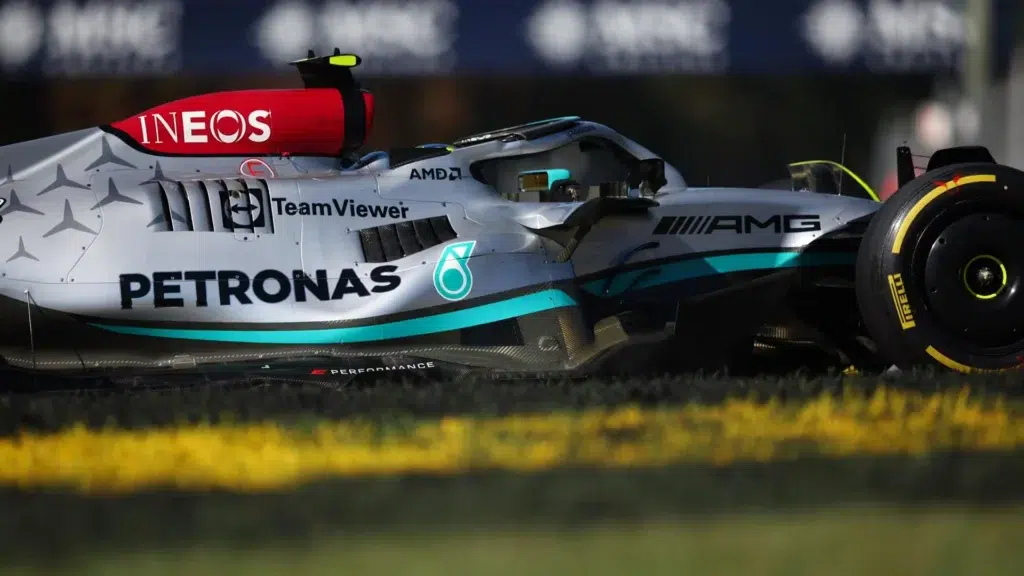
Liberty’s first structural change was to commoditize sponsorship inventory. Every asset on an F1 car, from the airbox to the sidepod to the halo, was assigned a valuation range based on broadcast exposure time, camera angles, and market reach. The airbox and sidepod are now priced at $5.3 million to $7.5 million per season according to SponsorUnited’s 2024 analysis. That pricing transparency transformed negotiating dynamics. Teams could show brands exactly what they were buying and why it was worth the number on the page.
The audience transformation followed. Netflix’s Drive to Survive, first released in 2019, reframed F1 as a character-driven drama accessible to viewers with zero motorsport background. The average F1 viewer age fell from 44 to 32 during Liberty’s early ownership years. The female fan share grew from 32% to 42% between 2018 and 2025. The global fanbase reached 826.5 million people in 2024, with notable growth in China (+39%), Canada (+31.5%), and Saudi Arabia (+25.5%) according to RTR Sports reporting. Brands that had previously seen F1 as a European niche product suddenly had access to a young, global, high-income audience that no other single sports property could replicate.
F1 sponsorship is no longer a niche luxury play. It is one of the most structured, data-driven commercial ecosystems in global sport, and the numbers confirm that brands have recognized the shift.
What Brands Are Actually Buying
The 1,900-Asset Inventory No Other Sport Offers
SponsorUnited’s 2024 F1 report tracked more than 1,900 distinct sponsorship assets across the 10 teams in a single season. These range from the primary livery panels visible in broadcast coverage to driver helmet branding, race suit logos, garage signage, pit stop equipment, social media content rights, and exclusive hospitality access in the paddock. No other sporting product offers this density of branded touchpoints in a single event.
A Grand Prix weekend runs from Thursday to Sunday. A team with a major sponsor activates that brand across four days of broadcast coverage, press availability, social content, and trackside visibility in a single location. Multiply that across 24 races in 2024, held in 21 different countries, and the cumulative brand exposure is unmatched in any annual sporting calendar.
The pricing structure reflects the hierarchy of visibility. Airbox placement sits at the top because it appears in the single-camera shot used most frequently during race coverage: the onboard view looking forward from above the driver’s helmet. Sidepod placement is second because it is visible in the wide-angle circuit shots that dominate broadcast coverage. Every other position is priced downward from there, with rear wing, floor, and driver kit placements occupying lower tiers.
F1 sponsorship asset tiers by estimated annual value (per SponsorUnited, 2024):
- Airbox: $5.3 million to $7.5 million per season
- Sidepod primary: $4 million to $6 million per season
- Title sponsorship (team naming rights equivalent): $28.2 million median for exclusive title deals
- Driver personal sponsorship (top earners): Lando Norris and Oscar Piastri generated 50 million+ branded social engagements combined in 2024
- Paddock Club hospitality: Premium per-race hospitality packages sold separately from broadcast sponsorship
Why the Average Deal Is Eight Times the NFL’s
The NFL’s 32 teams generated $2.49 billion in sponsorship revenue in 2024, higher than F1’s $2.04 billion in absolute terms. But the NFL does it across 32 franchises with 272 regular season games. F1 does it across 10 teams with 24 races. The per-deal economics reflect the concentration of global value in fewer, more exclusive commercial relationships.
An NFL team’s sponsorship partner shares branding space with dozens of other brands across a domestic American audience, primarily. An F1 team’s title sponsor appears on a vehicle traveling to 21 countries, in front of 826.5 million global fans, with broadcast coverage in over 200 territories. The audience’s income profile is also different. F1’s fanbase skews toward higher-income demographics compared to most team sports, which is precisely what luxury goods, financial services, and premium technology brands are paying to access.
The Sectors Driving the $2 Billion
Technology: The Dominant Force at $543 Million
Technology companies generated $543 million in F1 team sponsorship in 2024, accounting for 26% of the total, the single largest sector by value. The category includes cloud computing giants, semiconductor firms, enterprise software companies, and consumer electronics brands. Oracle’s partnership with Red Bull Racing and AMD’s association with multiple teams represent the scale of commitment from this sector.
The logic for technology brands is functional, not just reputational. F1 teams are among the most data-intensive engineering organizations on earth. A partnership with an F1 team carries implicit credibility: if your technology is trusted to perform at 300 km/h with a championship on the line, it can handle an enterprise client’s infrastructure. The sponsorship is simultaneously a brand statement and a product demonstration.
Financial services generated $379 million in 2024, the second-largest sector, reflecting the alignment between F1’s premium audience demographics and the wealth management, private banking, and fintech products targeting high-income consumers. Mastercard’s deal with McLaren, reported to be approximately $100 million per season through the mid-2030s, represents the ceiling of what financial services brands will commit to a single F1 partnership.
Top sectors by F1 team sponsorship value (2024, per SponsorUnited):
- Technology: $543 million (26% of total)
- Financial services: $379 million (18% of total)
- Cryptocurrency and digital assets: $174 million allocated to F1 specifically, part of $565 million total crypto sports spend
- Energy and fuel: Natural gas and oil sub-category crossed $100 million in F1 spend in 2024
- Luxury and consumer goods: LVMH activated six brands across F1 for 2025; Nestlé and PepsiCo added new F1 partnerships
Crypto’s Return and LVMH’s Arrival
The cryptocurrency sector’s F1 investment collapsed in 2022 following FTX’s bankruptcy, which wiped out several prominent sports sponsorship deals and made governing bodies cautious about digital asset brands. By 2024, the sector had returned with $174 million in F1-specific spending, now structured around longer-term institutional commitments rather than aggressive short-term visibility plays. Six crypto exchanges were active as F1 sponsors in 2025, up from four the previous season. Crypto.com leads the category, with OKX, Kraken, and Gate.io all active on the grid.
LVMH’s arrival in 2025 as a multi-brand F1 sponsor marked a structural shift in how luxury conglomerates view the sport. The group activated six brands across the season, treating F1 as a platform for lifestyle integration rather than simple logo placement. LVMH’s strategy reflects the broader trend: brands no longer want perimeter signage. They want narrative, context, and cultural association. F1, post-Drive to Survive, provides all three.
How Sponsorship Changed the Team Business Model
From Money Pits to Profitable Franchises
Before Liberty Media’s acquisition and the introduction of the cost cap in 2021, most F1 teams operated at structural losses. Top teams spent $400 million or more per season on car development, with prize money distributions covering only a fraction of that cost. Sponsorship revenue was inconsistent and insufficient to bridge the gap. Teams survived through manufacturer backing or billionaire owner subsidies, not commercial self-sufficiency.
The 2021 cost cap at $135 million per team per season (with adjustments for the 24-race calendar) fundamentally changed the maths. Combined prize money and sponsorship revenue for most teams now regularly exceeds $300 million annually according to F1 financial analysis published in March 2026. The result is that F1 teams have transitioned from loss-making racing operations into commercially sustainable sports franchises.
Even backmarker teams now carry valuations above $1.5 billion because the cost cap guarantees they cannot hemorrhage money the way previous eras allowed. The Cadillac entry fee set at $450 million for 2026, confirmed under the ninth Concorde Agreement signed in 2025, reflects what an F1 grid slot is worth in a post-cap environment where commercial viability is structurally protected.
How F1 team revenue breaks down in the post-cap era:
- Prize money from Concorde Agreement: $1.27 billion total distributed in 2024 across 10 teams
- McLaren as 2024 champion: Estimated $133.38 million in prize money for winning the Constructors’ title
- Ferrari LST bonus: Approximately $63 million in 2025 just for being the only team in every F1 season since 1950
- Mercedes hidden performance bonus: Estimated $112 million annually reflecting eight consecutive constructors titles (2014-2021), per industry reporting
- Team sponsorship revenue: $2.04 billion total in 2024, distributed unevenly with Mercedes, Ferrari, and Red Bull at the top
The American Pivot: 34% of New Sponsorship
The single most important commercial development in F1’s 2025 sponsorship landscape is the American market. According to RTR Sports analysis, 34% of new sponsorship for the 2025 season came from US companies, reflecting Liberty Media’s deliberate strategy to transform the United States from a growth market into the commercial center of the sport.
Three US races, Miami, Austin, and Las Vegas, anchor the American presence in the annual calendar. US viewership per race grew approximately 120% over seven years of ESPN’s partnership, confirmed in S&P Global reporting. The US fanbase reached 52 million in 2024, up 10.5% year-on-year. Cadillac’s arrival as the eleventh team in 2026, following the payment of a $450 million anti-dilution fee, gives the American market a domestic constructor to follow for the first time in decades.
The commercial implication is direct. American brands pay premium rates to associate with a product that can demonstrably reach American consumers at scale. Google, Oracle, and ExxonMobil were among US brands already active in F1 before 2025. The Cadillac entry is expected to open an entirely new category of American corporate sponsorship from brands that previously had no reason to consider the sport.
What Comes Next: The 2026 Horizon
The 2026 F1 season introduces new technical regulations, a new constructor in Cadillac, and the commercial framework of the ninth Concorde Agreement signed through 2030. Each development has sponsorship implications.
New technical regulations typically generate a surge in sponsorship interest because teams rebrand their visual identity alongside the new car design. Sponsors negotiating for 2026 entry positions are effectively buying into the launch window of a new product cycle, which commands higher rates than mid-cycle additions. The Cadillac team arrives with a blank commercial slate, 12 grid slots available, and the backing of General Motors, which brings its own sponsor ecosystem.
F1: The Movie, the Hollywood production starring Brad Pitt directed by Joseph Kosinski, is positioned as a cultural expansion event designed to replicate what Drive to Survive achieved for the sport’s narrative reach. A major film featuring F1 as its setting generates the same audience introduction effect as the Netflix series at a different scale. Every new F1 fan created by the film is a potential consumer of the brands advertising around F1 content.
Factors pointing to continued F1 sponsorship growth beyond 2025:
- Cadillac’s arrival in 2026: A US constructor opens new brand categories and American corporate partnerships
- New technical regulations: Rebrand cycles drive sponsorship renegotiation and fresh entry-point pricing
- F1 The Movie: Hollywood-level cultural visibility extending the audience beyond motorsport interest
- Olympics inclusion of motorsport discussion: While not confirmed, any Olympic-adjacent development expands the addressable sponsor base
- Ampere Analysis projection: Total F1 sponsorship value to exceed $2.9 billion in 2025, up from $2.04 billion in team deals alone in 2024
The Bottom Line
F1 sponsorship reached $2.04 billion in team-level revenue in 2024, second only to the NFL among sports leagues with North American presence, achieved with one-third the number of teams. By 2025, Ampere Analysis projected total sponsorship across the championship and teams to exceed $2.9 billion. Liberty Media’s full-year 2025 results confirmed F1 revenue of $3.87 billion, with sponsorship at its highest ever share of primary revenue at 21.7%.
The business case is structural, not cyclical. Drive to Survive created an audience. The cost cap created profitable teams. The American expansion created new commercial territory. Each development reinforced the others, producing a sponsorship market that now attracts technology conglomerates, luxury groups, financial institutions, and crypto exchanges simultaneously.
Why F1 sponsorship outperforms every comparable sports product:
- Global reach with premium demographics: 826.5 million fans across 200+ territories, skewing high-income
- Asset density: 1,900+ sponsorship assets per season, more than any comparable sport
- Year-round commercial calendar: 24 races across 21 countries versus a domestic league’s regional exposure
- Narrative infrastructure: Drive to Survive created a storytelling platform that turns sponsors into characters, not logos
- Cost cap protection: Team financial stability guarantees long-term sponsorship partnership viability
Prize money under the Concorde Agreement is distributed by formula. Sponsorship is won in the open market. The teams that understood this earliest built commercial operations to match their engineering ones. The gap between F1’s top commercial earners and the rest of the grid is now as much a function of sponsorship strategy as it is of on-track performance.