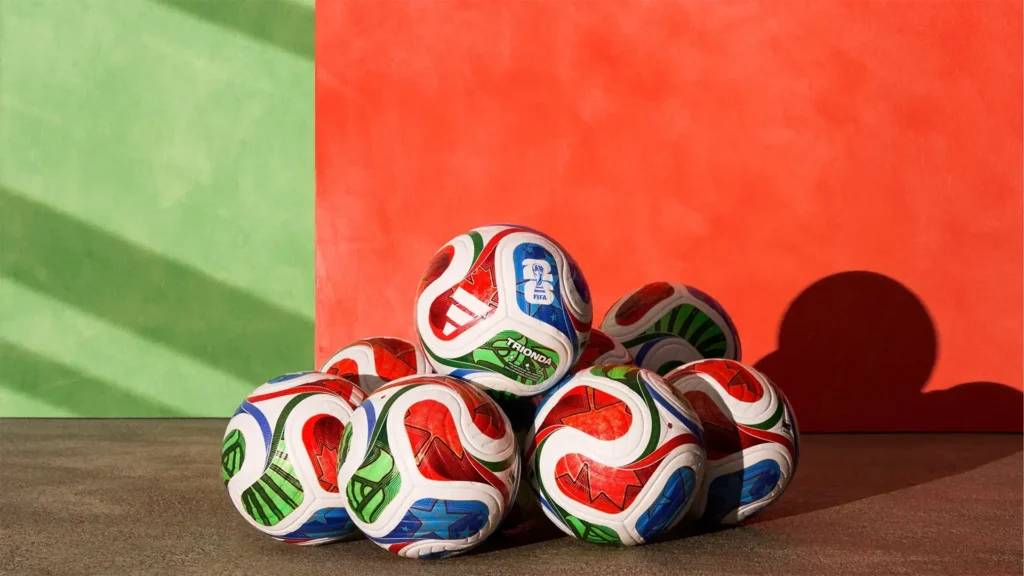
On October 2, 2025, Adidas unveiled the Trionda, the official match ball for the 2026 FIFA World Cup. Made from just four thermally bonded polyurethane panels with embedded IMU chip technology for VAR systems, the Trionda represents the 15th consecutive World Cup ball Adidas has supplied since 1970. No other brand has touched a World Cup final. Every goal scored in 2026 will be scored with an Adidas ball. Every referee will wear Adidas. Every volunteer at all 16 host cities will represent Adidas.
Nike, the world’s largest sportswear company with $51.4 billion in annual revenue, sponsors 11 of the 48 teams qualified for 2026 including host USA, Brazil, England, and France. Yet Nike cannot be “the official” anything. The tournament infrastructure belongs entirely to Adidas through a FIFA partnership dating to 1970, extended through 2030 in a deal industry analysts estimate exceeds $1 billion in total value.
The 2026 World Cup, hosted across USA, Canada, and Mexico with 48 teams playing 104 matches from June 11 to July 19, will generate an estimated $11 billion in FIFA revenue. Adidas claims the most valuable piece through official partnership status, match ball exclusivity, and 13 national team sponsorships. Nike outspends Adidas per deal, paying €100 million annually for Germany starting 2027, but Adidas wins the ecosystem war.
The FIFA Partnership: A 56-Year Monopoly Nike Cannot Break
Why Official Status Changes Everything
Adidas has supplied every FIFA World Cup match ball since 1970. When Nike launched its first football boot in 1994, Adidas had already supplied six World Cup tournaments. This heritage creates structural advantages Nike’s budget cannot overcome.
FIFA’s official partnership with Adidas, extended through 2030 in a deal announced in 2024, grants Adidas exclusive rights across tournament infrastructure. The economic value is extraordinary.
What Adidas Controls Through FIFA Partnership:
- Match ball: Trionda for all 104 matches, worth $500M in sales (10M units)
- Referee kits: All officials, assistant referees, and VAR staff wear Adidas
- Volunteer apparel: 50,000+ uniforms across 16 host cities
- Tournament branding: Co-branded FIFA x Adidas marketing campaigns
- Fan zones: Official merchandise presence in all host cities
- Training equipment: Supplies for all 48 teams during tournament
- Advertising equivalent value: Estimated $800M-1.2B across 104 matches
Industry analysts estimate Adidas will sell 10 million Trionda balls globally, generating approximately $500 million in sales. Official match balls retail at $170-200. Replica balls sell for $30-50. Collector editions exceed $300. The World Cup Historical Ball Collection featuring all 15 Adidas balls from 1970-2026 retails at $2,500 for full-size versions.
Beyond direct sales, the FIFA partnership delivers advertising value estimated at $800 million to $1.2 billion. Every televised match shows the Adidas ball. Every highlight reel features the Adidas logo. Every referee close-up reveals Adidas branding. With FIFA projecting 6 billion viewers across 104 matches, the cumulative brand exposure dwarfs team-specific sponsorships.
The Visibility Advantage Nike Cannot Buy
Nike sponsors Brazil, whose matches might draw 300-500 million cumulative viewers across the tournament. Adidas’ match ball appears in every single game regardless of who’s playing. The reach is universal rather than team-dependent.
Adidas Tournament-Wide Visibility vs Nike Team-Specific Exposure:
- Adidas match ball: Visible in all 104 matches (6 billion viewers)
- Adidas referee kits: On-screen throughout every match
- Adidas volunteers: 50,000+ in branded apparel across 16 cities
- Nike Brazil kit: Visible only when Brazil plays (7-8 matches maximum)
- Nike USA kit: Visible when USA plays (host advantage, up to 10 matches)
- Nike France kit: Visible when France plays (7-8 matches maximum)
The FIFA partnership also includes less visible but financially significant elements. Adidas manages official merchandise distribution through FIFA-branded stores. Adidas receives preferential access to broadcast advertising during matches. These bundled rights create a revenue ecosystem Nike cannot replicate.
Perhaps most importantly, the FIFA partnership cements Adidas as “the official” football brand in consumer perception. When casual fans think “World Cup,” they think of Adidas balls first. This association, built over 56 years and 15 consecutive tournaments, represents brand equity Nike cannot purchase at any price.
13 Teams vs 11 vs 10: The National Team Battle
Adidas’ Strategic Portfolio
As of March 2026, Adidas sponsors 13 of the 48 qualified teams compared to Nike’s 11 and Puma’s 10. The raw numbers favor Adidas, but more importantly, Adidas holds the most strategically valuable teams.
Adidas 2026 World Cup Teams (13 Total):
- Argentina: Defending champions, Lionel Messi’s likely final World Cup
- Mexico: Co-host playing 13 matches, massive Hispanic fan base in USA
- Spain: Euro 2024 runners-up, technical excellence, strong brand
- Germany: Final tournament before €100M Nike switch in 2027
- Japan: Asia’s most commercially valuable team, huge merchandising
- Belgium: FIFA top-10 ranking, golden generation still competing
- Italy: Four-time champions despite missing 2018 and 2022
- Colombia: South American passion, James Rodriguez resurgence
- Algeria: North African powerhouse, passionate regional support
- South Africa: African confederation leader
- Scotland: Return to World Cup after decades of absence
- Sweden: Scandinavian market strength, consistent performers
- Wales: Celtic pride, Gareth Bale legacy continues
Argentina is the crown jewel. As defending champions, Argentina’s jerseys will outsell every other team except possibly host USA and Portugal. Lionel Messi, at 39 years old in 2026, will almost certainly play his final World Cup. Every Messi moment will feature Adidas boots, an Adidas Argentina kit, and the Adidas ball.
Mexico’s sponsorship is particularly valuable because the team plays in Los Angeles, Houston, and other cities with enormous Mexican-American fan bases. Mexico’s jerseys will generate massive sales in the USA regardless of FIFA ranking because cultural identity drives purchases more than on-field performance.
Nike’s Marquee Names
Nike 2026 World Cup Teams (11 Total):
- United States: Co-host playing 78 of 104 matches, home advantage
- Brazil: Five-time champions, global football icon, massive brand
- England: Euro 2024 finalists, huge commercial market
- France: 2018 champions, Kylian Mbappé-led attack
- Canada: Co-host playing 13 matches, growing football nation
- Netherlands: Total Football legacy, consistently elite
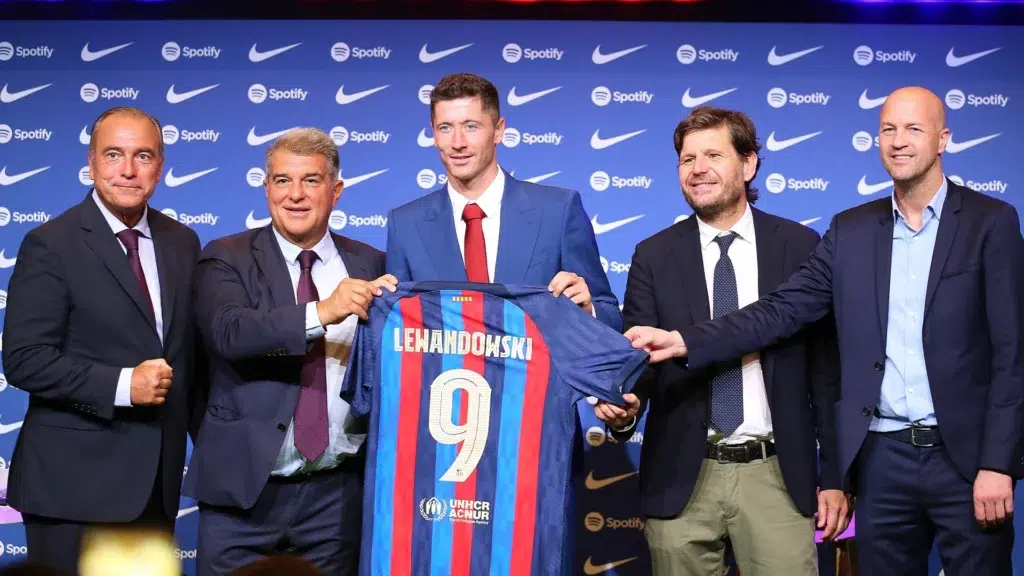
- Poland: Robert Lewandowski’s final World Cup
- Saudi Arabia: Massive sponsorship budget, growing regional power
- Nigeria: African giant, passionate support
- South Korea: Asian confederation strength
- Australia: Oceania representative, strong sporting culture
Nike’s 11 teams include host USA playing 78 matches, Brazil, France, and England. The USA hosting advantage is significant. American fans will buy USA jerseys in massive quantities. Miami, Los Angeles, New York, and other host cities will see overwhelming demand for Nike’s USA kits.
Brazil generates strong sales globally regardless of results. France features Kylian Mbappé, Nike’s marquee football endorser. England’s commercial market is enormous despite never winning since 1966.
Puma’s Portugal Coup
Puma 2026 World Cup Teams (10 Total):
- Portugal: Switched from Nike January 1, 2025 (€30M annually)
- Austria: Surprise qualifiers, growing football nation
- Switzerland: Consistent tournament performers
- Iceland: Viking warriors return to World Cup stage
- Czechia: Eastern European dark horse potential
- Paraguay: South American grit and determination
- Senegal: African champions 2022, strong following
- Ghana: Black Stars resurgence after difficult years
- Morocco: Breakout 2022 semifinalists, historic African run
- Côte d’Ivoire: West African powerhouse with elite talent
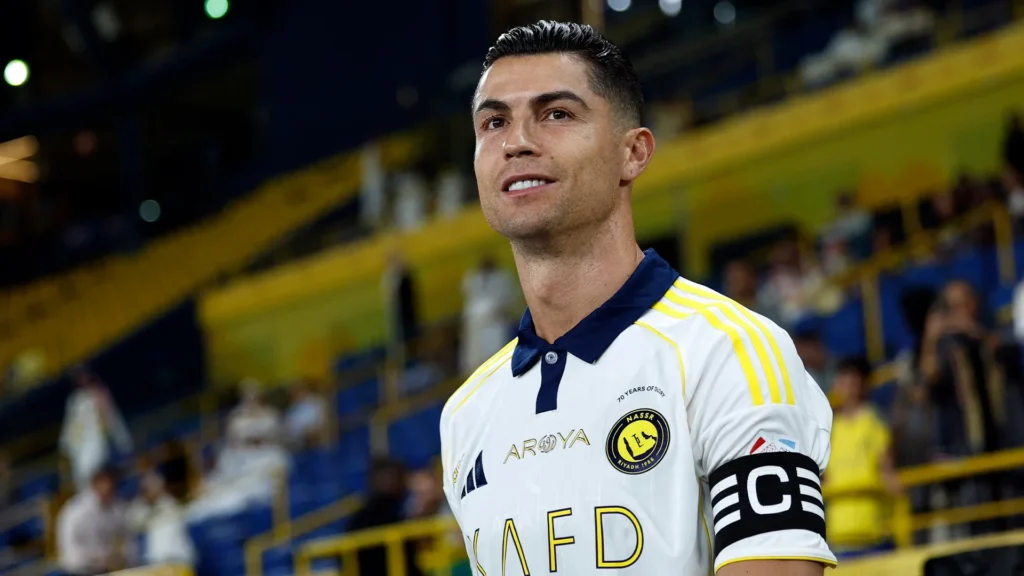
Puma’s acquisition of Portugal on January 1, 2025 marks a significant Nike loss. Portugal, featuring Cristiano Ronaldo (likely his final World Cup at 41) and emerging stars, was a Nike team for over two decades. Puma offered €30 million annually, and Nike declined to match.
This suggests Nike is retreating from mid-tier sponsorships to focus budget on top-tier deals like Brazil ($100M annually) and Germany (€100M starting 2027). The net result: Nike gains one major team in 2027 but loses Portugal now.
The Trionda Ball: Technology, Tradition, and $500 Million
Four Panels and an IMU Chip
The Adidas Trionda, unveiled October 2, 2025, represents the 15th consecutive World Cup ball Adidas has supplied. Made from just four thermally bonded polyurethane panels, it is the lowest panel count in World Cup history, reducing seams that affect flight trajectory.
Trionda Technical Specifications:
- Panels: 4 thermally bonded polyurethane (fewest in World Cup history)
- IMU chip: Side-mounted inertial measurement unit for VAR
- Data transmission: Real-time ball position within milliseconds
- Weight: 420-445 grams (FIFA regulation)
- Circumference: 68.5-69.5 cm (FIFA regulation)
- Cultural design: Green/red (Mexico), maple leaf (Canada), stars (USA)
- Retail price: $170-200 official, $30-50 replica, $300+ collectors
The ball features connected ball technology with a side-mounted IMU chip providing real-time data to VAR systems. This chip tracks ball position, rotation speed, and impact force within milliseconds, enabling more accurate offside calls and goal-line technology. The 2022 Al Rihla ball suspended the chip inside the bladder; the Trionda mounts it within a panel, reducing weight and improving balance.
The ball’s design incorporates cultural elements from all three host nations. Green and red panels represent Mexico’s flag. Maple leaf patterns honor Canada. Stars reference the USA flag. This tri-national branding creates marketing opportunities across North America.
$500 Million in Global Sales
Adidas projects selling 10 million Trionda balls globally. Official match balls retail at $170-200. Replica balls sell for $30-50. Training versions cost $20-30. Collector editions can exceed $300.
Trionda Sales Projections:
- Official match balls: 2M units at $180 average = $360M
- Replica balls: 5M units at $40 average = $200M
- Training balls: 2.5M units at $25 average = $62.5M
- Collector editions: 500K units at $250 average = $125M
- Historical ball collection: 2,026 units at $2,500 = $5M
- Total projected revenue: Approximately $500M-750M
Beyond sales, the Trionda generates brand visibility Nike cannot match. Every match highlight shows the ball. Every goal celebration features it. Every training session uses it. Players worldwide will practice with Trionda replicas for years, cementing Adidas’ football credibility with youth athletes who drive long-term brand loyalty.
The ball also serves defensive purposes. By controlling the official match ball, Adidas prevents competitors from gaining tournament association. Nike cannot supply balls for training camps. Puma cannot provide match balls for warm-up games.
European Club Dominance: Where the Real Money Lives
6 of Top 10 Belong to Adidas
UEFA’s February 2026 merchandising report showed Barcelona with the highest revenue driven by their new 14-year Nike deal worth €158 million annually. Yet Adidas captured 6 of the top 10 positions by total kit revenue.
Top 10 Clubs by Merchandising Revenue (UEFA Feb 2026):
- Barcelona: Highest revenue (Nike, €158M annually + one-time payments)
- Real Madrid: €196M (Adidas, €120M annual deal through 2028)
- Bayern Munich: €171M tied (Adidas, €80-100M annual deal)
- Liverpool: €146M (Adidas, £70M annual deal starting 2025-26)
- Manchester United: €146M tied (Adidas, £90M annual deal through 2035)
- Arsenal: €120M (Adidas, £60M annual deal)
- Chelsea: €96M (Nike, £60M annual deal)
- Tottenham: €95M (Nike, £30M annual deal)
- PSG: Top 10 (Nike, €80M annual deal)
- Galatasaray: Top 10 (Nike, Turkish market strength)
Europe generates 40% of global football merchandise sales. The top 20 clubs saw 20% merchandising growth in 2025, with Adidas capturing the majority by supplying more elite teams.
Real Madrid’s €196M includes organic sales without one-time signing bonuses. Bayern Munich’s €171M reflects consistent Champions League success. Liverpool, wearing Adidas for the first time in 2025-26 after switching from Nike, is projected to sell 1.8 million kits in year one.
The Jersey Sales Numbers
Annual Kit Sales by Top Clubs:
- Manchester United (Adidas): 2M+ jerseys annually, global fanbase
- Real Madrid (Adidas): 1.5-2M jerseys annually, Champions League success
- Bayern Munich (Adidas): 1.5M+ jerseys annually, Bundesliga dominance
- Liverpool (Adidas): 1.8M projected first year after Nike switch
- Barcelona (Nike): 1.5M jerseys annually despite one-time payment boost
- Chelsea (Nike): 900K jerseys annually, Premier League market
- PSG (Nike): 800K jerseys annually, Ligue 1 dominance
Nike’s European portfolio is strong but shallower. Barcelona benefits from exceptional one-time payments in the first year of their 14-year deal. Chelsea and Tottenham represent Premier League strength, but both trail Adidas’ top five clubs significantly.
The gap widens outside the top 10. Adidas also sponsors Juventus, AC Milan, Ajax, Benfica, Celtic, and Fenerbahçe. Across the top 20 UEFA clubs by revenue, Adidas outfits 11, Nike has 5, and Puma has 4.
This European dominance matters because club loyalties drive youth football participation, which fuels long-term brand loyalty. A 10-year-old Real Madrid fan will likely buy Adidas boots and training gear throughout their teenage years, creating lifetime customer value.
The Germany Defection: Nike’s €100 Million Desperation
77 Years Ended for Double the Price
On March 21, 2024, Nike secured Germany’s national team sponsorship for 2027-2034 with a €100 million annual offer, double the €50 million Adidas had been paying. The deal shocked the football world.
Germany Deal Breakdown:
- Adidas (1954-2026): €50M annually, 77-year partnership
- Nike (2027-2034): €100M annually, 8-year deal worth €800M total
- Increase: 100% premium over Adidas’ rate
- Per-year overpayment: €50M annually above market rate
- Total overpayment: €400M over 8 years
The German Football Association (DFB) conducted an open bidding process and accepted Nike’s offer as “by far the best financial proposal.” Political backlash was immediate. German Economy Minister Robert Habeck called the Adidas partnership “a piece of German identity.”
For Adidas, the loss stings symbolically. Germany won all four men’s World Cups (1954, 1974, 1990, 2014) and both women’s World Cups (2003, 2007) wearing Adidas. Adi Dassler personally fitted the 1954 German team. The three stripes were synonymous with German football excellence for three generations.
Financially, however, the loss is manageable. Germany generates €50-70 million annually in kit sales. Nike will pay €100 million for that privilege, likely operating at a €30-50 million annual loss before accounting for brand value.
What Nike Gained and Lost Simultaneously
Adidas reallocated the saved €50 million to retain Italy (€40M annually), Spain (€45M), and sign Croatia (€20M) for 2026. Meanwhile, Nike lost Portugal to Puma on January 1, 2025.
Nike’s 2024-2025 Football Sponsorship Changes:
- Gained: Germany starting 2027 (€100M annually, overpaid by €50M)
- Lost: Portugal to Puma January 2025 (€30M annually, declined to match)
- Net change: +1 major team in 2027, -1 team now
- Financial impact: Overpaying €50M annually for Germany while saving €30M on Portugal
The Germany deal reveals Nike’s strategic bind. To compete in football, Nike must overpay for marquee teams. Nike pays €100M for Germany, approximately $100M annually for Brazil, and £60M for England. These premiums compress profit margins and leave less budget for mid-tier teams.
Market Share and Revenue: Adidas Leads Where It Matters
The Football-Specific Gap
Nike holds 15-16% of global sportswear market share compared to Adidas’ 11%. In every category except football, Nike dominates. But in football specifically, Adidas leads 29% market share to Nike’s 26%.
Global Sportswear Market (2025):
- Nike: 15-16% overall share, $51.4B revenue (FY2024)
- Adidas: 11% overall share, €23.2B revenue (2024)
- Nike advantage: Basketball, North American sports, running, lifestyle
Football-Specific Market (2025):
- Adidas: 29% market share
- Nike: 26% market share
- Puma: 15-18% estimated
- Under Armour, others: Remaining share
This football-specific dominance matters because football is the world’s most popular sport. Global football merchandise generates approximately $30-35 billion annually. Adidas captures $8-10 billion of this, representing 35-40% of Adidas’ total revenue. Nike’s football business generates $6-8 billion annually, representing just 12-15% of Nike’s revenue.
The concentration explains strategic differences. Adidas cannot afford to lose football dominance. If Adidas falls to number two in football, the brand loses its identity. Nike can afford to be number two in football as long as it maintains number one status in basketball, running, and lifestyle categories.
Revenue Growth Trajectories
Adidas Football Revenue (2020-2025):
- 2020: €6.2B (COVID impact)
- 2021: €7.1B (recovery)
- 2022: €8.3B
- 2023: €9.1B
- 2024: €9.8B
- 2025 projection: €10.5B+ (World Cup year boost)
Nike Football Revenue (2020-2025):
- 2020: $5.8B (COVID impact)
- 2021: $6.4B (recovery)
- 2022: $7.1B
- 2023: $7.6B
- 2024: $7.9B
- 2025 projection: $8.3B+ (World Cup year boost)
Adidas benefits from football’s growth trajectory. FIFA projects the 2026 World Cup will generate $11 billion in total revenue, a 71% increase from the 2018-2022 cycle. As football revenues grow, Adidas’ FIFA partnership captures proportional value automatically.
The 2026 Ecosystem: Why Adidas Won Before Kickoff
Multiple Revenue Streams Simultaneously
The 2026 FIFA World Cup begins June 11, 2026 and concludes July 19, 2026. Across 39 days, 48 teams will play 104 matches in 16 cities spanning three countries. FIFA projects 6 billion viewers globally. Adidas captures multiple revenue streams simultaneously.
Adidas 2026 World Cup Revenue Projections:
- Match ball sales: $500M from 10M Trionda balls
- Kit sales from 13 teams: $800M-1.2B in jersey sales
- FIFA partnership rights: $150-200M annually through 2030
- Volunteer and referee apparel: $50-75M across 50,000+ uniforms
- Fan zone merchandise: $100-150M in official stores
- Historical ball collection: $5M from limited editions
- Global sales uplift: 5-7% boost = $1.5B additional revenue
- Total estimated impact: $3-4B in 2026 football revenue
Nike’s revenue model is simpler: jersey sales from 11 sponsored teams. USA jerseys will sell exceptionally well as the host nation. Brazil, France, and England generate strong sales regardless of results. But Nike lacks the multiplier effects Adidas enjoys.
The structural advantage becomes clear when comparing team-specific exposure to tournament-wide visibility. Nike’s Brazil jersey appears when Brazil plays. Adidas’ match ball appears in all 104 matches. Nike’s France kit is visible when France is on screen. Adidas’ referee uniforms are visible throughout every match.
The Omnipresence Factor
Adidas Brand Touchpoints Per Match:
- Match ball: Visible throughout 90+ minutes
- Referee kit: On-screen constantly
- Fourth official: Visible during substitutions
- VAR officials: Mentioned during reviews
- Ball kids: Wearing Adidas apparel
- Sideline equipment: Adidas-branded
- Post-match interviews: Adidas backdrop
Nike Brand Touchpoints Per Match (Brazil Example):
- Player kits: Visible when Brazil plays only
- Bench apparel: Limited screen time
- Warm-up gear: Brief pre-match visibility
This omnipresence creates brand recall advantages measured in billions of impressions. When highlights are shared on social media, the Adidas ball is in frame. When goals are celebrated, the Adidas logo is visible. When controversial VAR decisions are analyzed, the Adidas-supplied technology is credited.
What Nike Gets Right (And Where It Still Loses)
Nike’s Strategic Advantages Exist Outside Football
Nike is not failing in football. Nike sponsors 11 World Cup teams including the host nation playing 78 matches. Nike outfits Barcelona, Chelsea, and PSG. Nike pays Kylian Mbappé, Cristiano Ronaldo, and emerging stars. Nike’s football business generates $6-8 billion annually and is growing.
Where Nike Dominates:
- Basketball: 90%+ market share globally
- North American sports: NFL, MLB, NBA partnerships
- Running: Leading market share in performance running
- Lifestyle: Jordan Brand, Air Max, Dunk franchises
- Athlete endorsements: LeBron James, Serena Williams, Tiger Woods
But Nike is losing the football ecosystem war despite winning individual battles. Nike won Germany from Adidas by paying €100M annually, yet Nike lost Portugal to Puma for €30M annually. Nike sponsors more teams numerically, but Adidas holds FIFA official partnership status.
Nike’s strategic advantages exist outside football. Nike dominates basketball. Nike leads North American sports. Nike controls the running category. Nike’s lifestyle and streetwear segments crush Adidas. Football represents 12-15% of Nike’s business.
This creates a ceiling on Nike’s football ambitions. Nike will not sacrifice profitability to match Adidas’ football spending. Nike will not overpay for the FIFA partnership if it requires accepting lower margins. Nike treats football as one category among many, while Adidas treats football as existential.
The Profitability Question
Nike Football Profit Margins (Estimated):
- Revenue: $7.9B (2024)
- Cost of goods: $3.5B
- Marketing and sponsorships: $2.5B (including Germany €100M overpayment)
- Operating costs: $800M
- Profit: $1.1B (14% margin)
Adidas Football Profit Margins (Estimated):
- Revenue: €9.8B (2024)
- Cost of goods: €4.2B
- Marketing and sponsorships: €3.0B (including FIFA partnership)
- Operating costs: €900M
- Profit: €1.7B (17% margin)
Adidas generates higher profit margins in football despite lower overall revenue because Adidas doesn’t overpay for sponsorships. Adidas paid €50M for Germany for 77 years. Nike will pay €100M starting 2027, compressing margins to compete.
The 2026 World Cup exemplifies this dynamic. Nike could theoretically outbid Adidas for FIFA partnership rights when the current deal expires in 2030. But doing so would require Nike to accept Adidas-level dependence on football revenues, something Nike’s diversified business model does not require.
The Bottom Line
Adidas secured the 2026 FIFA World Cup before a single match was played through FIFA partnership status dating to 1970, supplying the Trionda match ball for all 104 matches worth $500 million in sales, outfitting 50,000 volunteers and all referees, and sponsoring 13 qualified national teams including defending champions Argentina and co-host Mexico, creating omnipresent brand visibility worth an estimated $1.5 billion in sales uplift and $800M-1.2B in advertising equivalent value that Nike’s 11 team sponsorships cannot replicate.
Barcelona topped UEFA’s February 2026 merchandising report with the highest revenue driven by Nike’s €158 million annual deal, but Adidas captured 6 of the top 10 positions including Real Madrid at €196 million, Bayern Munich at €171 million, Liverpool at €146 million, Manchester United at €146 million, and Arsenal at €120 million, controlling European club football where 40% of global merchandise sales occur and long-term youth brand loyalty is built through club affiliations.
Nike lost Germany’s national team after 77 years by offering €100 million annually for 2027-2034, double Adidas’ €50 million rate, yet simultaneously lost Portugal to Puma on January 1, 2025 when declining to match Puma’s €30 million annual offer, revealing a strategic retreat from mid-tier sponsorships to focus budget on premium marquee deals that operate at compressed 14% profit margins versus Adidas’ 17% in football.
Adidas holds 29% football-specific market share versus Nike’s 26% globally, sponsors 13 World Cup teams versus Nike’s 11 and Puma’s 10, controls 6 of Europe’s top 10 clubs by merchandising revenue versus Nike’s 3, and maintains FIFA official partnership status since 1970 that delivers $150-200 million annually through 2030 while preventing Nike from accessing tournament infrastructure, co-branded FIFA marketing, or referee and volunteer visibility regardless of Nike’s $51.4 billion overall revenue advantage.
The 2026 World Cup begins June 11, 2026. By then, Adidas will have already won the tournament that matters most: the battle for brand dominance in global football.