Luxury has always carried an air of exclusivity, elegance, and tradition. For over a century, brands like Louis Vuitton have built their identity on craftsmanship and heritage, setting the standard for what refined living represents. But as culture shifted and younger generations began to influence fashion, the old rules of luxury no longer felt enough. Millennials and Gen Z demanded more than timeless design, they wanted relevance, cultural authenticity, and a sense of belonging.
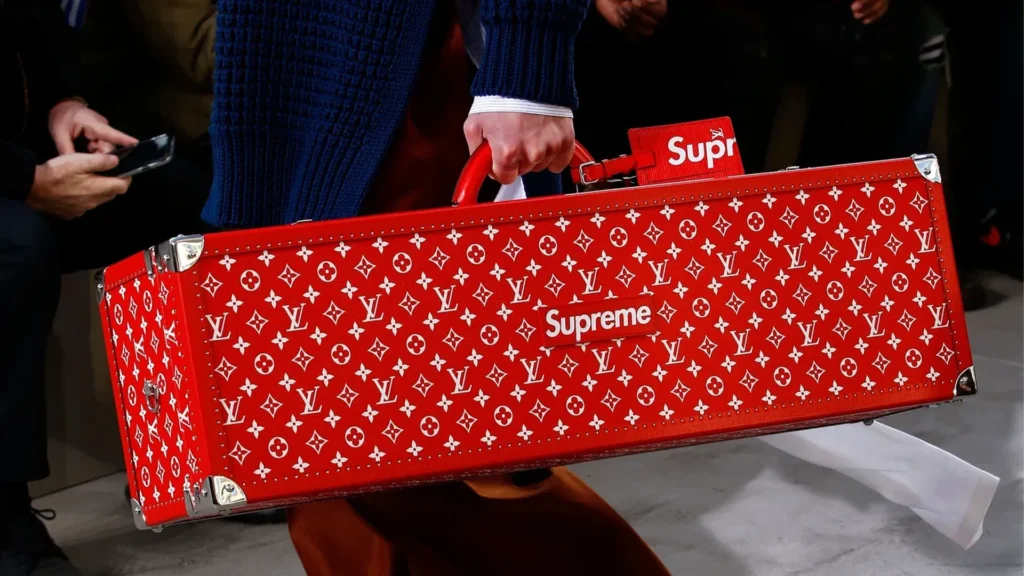
In 2017, Louis Vuitton x Supreme made a daring move that surprised the fashion world. On the surface, it was an unlikely pairing. One was a French luxury powerhouse rooted in legacy, the other a streetwear brand born from skate culture and underground cool. Yet this contrast was exactly what made the partnership unforgettable. The collection became more than a product release, it was a cultural moment that sparked global conversations and shifted the way people understood luxury.
Redefining Luxury for New Generations
Luxury has traditionally been defined by exclusivity, fine craftsmanship, and a deep respect for heritage. Yet in today’s fast-moving fashion world, heritage alone no longer guarantees relevance. Younger audiences, especially millennials and Gen Z, look for culture and meaning as much as they value quality. Louis Vuitton x Supreme recognized this shift early on and chose to adapt without losing identity.
This partnership was never just about selling clothes or accessories. It became a cultural event, merging the credibility of streetwear with the prestige of luxury. By doing so, Louis Vuitton was able to tap into the energy of hype culture while reinforcing its own aspirational image. The collaboration showed that luxury could remain timeless while also being part of the cultural conversation.
Redefinition strategy:
- Luxury: exclusivity, elegance, tradition for over century
- Craftsmanship and heritage: setting standard for refined living
- Culture shifted: younger generations influencing fashion
- Millennials and Gen Z: relevance, cultural authenticity, belonging
- 2017: daring move surprising fashion world
- French luxury powerhouse vs. streetwear brand skate culture
- Contrast: exactly what made partnership unforgettable
- Cultural moment: global conversations shifting luxury understanding
The success of this move lies in its ability to bring together two very different worlds. On one side stood Louis Vuitton, a symbol of French tradition and refinement. On the other was Supreme, a brand built on rebellion, skate culture, and youthful cool. Together, they created a collection that not only sold out instantly but also redefined what luxury could mean.
The Evolution of Luxury
For much of its history, luxury fashion drew its strength from heritage. Brands like Louis Vuitton, Chanel, and Hermès became cultural icons by emphasizing craftsmanship, limited availability, and traditions passed down through generations. This slow and deliberate approach appealed to long-standing clients who valued refinement and exclusivity above all else. But as new generations entered the market, the old model began to lose its edge.
Millennials and Gen Z came with a different mindset. They wanted more than a product; they wanted a story they could be part of. For them, Louis Vuitton x Supreme showed that luxury is as much about cultural relevance and shared identity as materials and design. Streetwear labels such as Supreme understood this shift early, building strong communities around scarcity and the energy of limited releases.
Evolution drivers:
- Heritage alone: no longer guarantees relevance
- Millennials and Gen Z: culture and meaning as much as quality
- Adapted without losing identity
- Cultural event: merging streetwear credibility with luxury prestige
- Tapping into hype culture energy
- Timeless while part of cultural conversation
- French tradition and refinement vs. rebellion, skate culture, youthful cool
- Sold out instantly: redefined what luxury could mean
Louis Vuitton’s decision to collaborate with Supreme signaled a turning point. It was proof that heritage brands could preserve their timeless image while embracing the pulse of contemporary culture. This move showed that the future of luxury lies in balancing tradition with innovation.
Heritage Meets Street Culture
On the surface, Louis Vuitton and Supreme seemed like complete opposites. What made the partnership so powerful was not their similarities, but their differences. The very contrast became the attraction, a collision that caught the world’s attention. When the collaboration launched, it carried both shock value and credibility.
The Mechanics of Desire
The Louis Vuitton x Supreme collaboration leaned heavily on scarcity to fuel demand. Instead of distributing products across all major stores, Vuitton limited access to exclusive pop-ups in select cities. This gave the collection a sense of rarity from the very beginning, pushing fans to camp outside boutiques and creating global headlines about the frenzy.
By making the collection hard to access, Louis Vuitton positioned each item as more than a purchase. It became a symbol of being in the right place at the right time, of having access to a cultural moment others could only watch from afar. In this way, scarcity didn’t just maintain exclusivity, it transformed the products into living status symbols.
Scarcity mechanics:
- Chanel, Hermès: craftsmanship, limited availability, traditions
- Slow deliberate approach: long-standing clients
- New generations: old model losing edge
- Wanted story they could be part of
- Cultural relevance and shared identity vs. just materials and design
- Supreme: communities around scarcity and limited releases energy
- Turning point: preserving timeless image while embracing contemporary culture
- Opposites: differences as attraction, collision catching attention
The Culture of Hype
Supreme brought something new to the luxury space: the thrill of drop culture. Unlike traditional luxury houses, where collections stayed available for months, Supreme’s model made items vanish almost as quickly as they appeared. Louis Vuitton x Supreme adopted this formula, and the collaboration became a real-time event.
This created a shift in how people understood luxury. It was no longer only about craftsmanship or heritage but also about cultural relevance and immediacy. For younger buyers, owning a piece was proof of being part of a movement, not just part of a brand’s history.
Capturing the Next Generation
For much of its history, Louis Vuitton built loyalty among established clients who valued craftsmanship, heritage, and exclusivity. This customer base gave the brand its enduring strength, but it also highlighted a challenge: luxury risked becoming too closely tied to older generations. As millennials and Gen Z began to dominate cultural influence, Vuitton needed a way to capture their attention without weakening its legacy.
The collaboration with Supreme became the perfect entry point. Supreme’s fanbase was built on young, urban consumers who were deeply invested in hype culture and the thrill of scarcity. By aligning with this audience, Louis Vuitton x Supreme tapped into an entirely new segment of buyers.
Generation capture:
- Limited access: exclusive pop-ups in select cities
- Rarity from beginning: fans camping outside boutiques, global headlines
- Hard to access: symbol of being right place right time
- Cultural moment: transforming products into living status symbols
- Drop culture thrill: items vanishing quickly
- Real-time event vs. collections available for months
- Cultural relevance and immediacy vs. just craftsmanship or heritage
- Proof of being part of movement
This credibility mattered. Younger buyers do not simply purchase products; they invest in brands that reflect their identity and values. By associating with Supreme, Vuitton gained authenticity in a space where cultural relevance is as valuable as quality. For millennials and Gen Z, owning a piece was not just about wearing luxury, it was about being part of something that felt current and aspirational.
Long-Term Investment
The long-term impact is perhaps the most important. Many who first experienced Vuitton through this collaboration will eventually become high-spending luxury clients. By capturing them early through a cultural connection, Louis Vuitton x Supreme secured loyalty that could last decades. It was not just a short-term marketing move but a forward-looking strategy.
The Legacy of Cultural Revolution
The Louis Vuitton x Supreme collaboration is remembered as a turning point in modern fashion. It demonstrated that heritage and disruption could exist side by side, creating something entirely new without undermining tradition. By merging the refinement of a luxury house with the raw energy of streetwear, the partnership set a new industry standard.
For Supreme, the collaboration provided validation in a world where streetwear often existed outside the boundaries of high fashion. Suddenly, the brand had the legitimacy of couture-level prestige. For Louis Vuitton, the gain was equally significant, it positioned the house as culturally aware and adaptable.
Cultural impact:
- Established clients: craftsmanship, heritage, exclusivity loyalty
- Challenge: luxury risked older generations tie
- Millennials and Gen Z: dominating cultural influence
- Supreme’s fanbase: young, urban, hype culture and scarcity invested
- Entirely new segment of buyers
- Authenticity in space: cultural relevance as valuable as quality
- Current and aspirational: being part of something
- First experienced through collaboration: eventually high-spending clients
The Bottom Line
Louis Vuitton’s collaboration with Supreme was more than a successful collection, it was a cultural milestone that reshaped the way luxury is understood. By blending heritage with street culture, exclusivity with accessibility, and tradition with disruption, Vuitton proved that luxury can evolve without losing its timeless essence.
The blueprint:
- Turning point in modern fashion
- Heritage and disruption: existing side by side
- Refinement with raw streetwear energy: new industry standard
- Supreme: validation and couture-level prestige legitimacy
- Louis Vuitton: culturally aware and adaptable positioning
- Cultural milestone: reshaping luxury understanding
- Heritage with street culture, exclusivity with accessibility blended
- Evolved without losing timeless essence
Rather than diluting identity, the collaboration strengthened it. The house gained relevance with younger generations while maintaining the loyalty of established clients. It created a shared language where credibility, scarcity, and aspiration worked together to generate desire. For consumers, owning a piece meant more than wearing a label, it meant belonging to a cultural moment.
The legacy of this bold experiment is a new blueprint for luxury. Future success will come from embracing contrast, curating scarcity, and seeking cultural relevance without fear of change. Louis Vuitton x Supreme showed that the most powerful luxury is not static but dynamic, capable of honoring tradition while engaging with the spirit of the present.