In the summer of 2014, a young entrepreneur named Anjana Reddy was sitting across from one of India’s most recognizable faces with an unconventional pitch. Virat Kohli had just returned from a rough England tour where critics had written him off. Reddy wanted him to co-create a fashion brand called WROGN, targeting the very youth that idolized him. Kohli was hesitant. The name was odd, the timing uncertain, and his form on the field was being questioned.
He said yes anyway. What followed was one of Indian cricket’s most interesting off-field stories.
The WROGN Virat Kohli Results:
- Brand launch: 2014, co-created by Virat Kohli and Anjana Reddy’s USPL
- Peak revenue: Rs 344 crore (FY23), from Rs 24 crore in FY15
- Total funding raised: $98.7 million (approximately Rs 820 crore) across 15 rounds
- Key investors: Accel, Flipkart, Myntra, Virat Kohli, Sachin Tendulkar
- Virat’s investment: Rs 19.3 crore invested in USPL (2020) via Cornerstone Sporthrs LLP
- Latest backing: Aditya Birla Group invested Rs 200 crore total (2024) for 32.84% stake
- Distribution: Omnichannel across website, Myntra, Amazon, Flipkart, physical retail
- RCB sponsorship: Official jersey sponsor of Royal Challengers Bangalore (IPL 2018)
WROGN is not a story of a celebrity slapping his name on a product and collecting royalties. It is the story of how Virat Kohli backed a startup at its riskiest point, built it into a nationally recognized brand, and stayed involved through both its highs and its ongoing challenges.
How WROGN Started: The Woman Behind the Brand
Anjana Reddy and the USPL Bet
Before WROGN existed, there was Anjana Reddy, a 26-year-old entrepreneur from a business family who founded Universal Sportsbiz Pvt Ltd (USPL) in 2012 in Bengaluru. USPL started as a sports merchandise and memorabilia company under the brand Collectabillia, but it struggled to find consistent scale.
Reddy pivoted. She identified a gap in the Indian apparel market: branded casual wear for young men that felt genuinely cool, not corporate or generic. In early 2014 she launched two apparel lines simultaneously, WROGN for men and Imara for women. Both were built on a simple insight: Indian youth aspired to dress like their favorite celebrities but had limited access to premium branded clothing at reasonable prices.
The Early Business Challenge:
- 2012: USPL founded, focused on sports memorabilia and collectibles
- Early problem: Factories demanded large minimum orders, USPL couldn’t provide guarantees
- 2014 pivot: Launched WROGN (men’s) and Imara (women’s) simultaneously
- Initial team: Around 30 people, mostly designers and vendor managers
- First year revenue (FY15): Rs 24 crore (combined WROGN and Imara)
- Strategy: Celebrity-backed brand targeting 18-30 age group in tier 1 and tier 2 cities
The name “WROGN” was deliberate. It was a statement, an intentional misspelling designed to signal that this brand did not follow rules. The philosophy: be unapologetically yourself, break from convention, dress your own way. For a brand targeting India’s restless, cricket-mad youth, it needed a face that embodied exactly that attitude.
Convincing Kohli: The Risky 2014 Bet
Anjana Reddy made her approach to Virat Kohli in the summer of 2014, which turned out to be the worst possible time on paper and the best possible time in hindsight. Kohli had just returned from an England tour where he averaged under 14 in Tests. Pundits were questioning his technique, his temperament, and his future.
“Even Virat himself was not sure of signing up with a brand called WROGN especially after failing to perform in the England series,” YourStory reported. “However, the persistence from Anjana’s team prevailed over the cricketer’s reluctance and they convinced him that he was signing up with a brand that was catering to his fan base.”
The Timing That Worked in Their Favour:
- July 2014: Kohli signs with WROGN as co-creator and brand face during England slump
- Late 2014: Kohli goes on to score four Test centuries in Australia
- Aftermath: Kohli becomes India’s biggest cricket star again, WROGN rides the wave
- Six months post-launch: Youth began associating WROGN as a brand owned by Kohli
- FY15 result: Revenue reaches Rs 24 crore in first year
- FY16 result: Revenue more than doubles to Rs 61 crore
The Kohli association was not just a branding move. He was not paid to hold a product in a photoshoot and walk away. Kohli was positioned as co-creator. The brand’s identity, its attitude, its visual language, all of it was built around his personality: aggressive, stylish, unafraid, anti-establishment.
WROGN’s Growth: From Startup to Rs 300 Crore Brand
Building the Product and Distribution
Through 2015 to 2019, WROGN built steadily. The product range expanded from basic graphic T-shirts and shirts to cover denim, joggers, jackets, hoodies, bomber jackets, sneakers, and accessories. The brand positioned itself in the affordable premium segment, with T-shirts priced between Rs 599 and Rs 1,499, and jeans between Rs 999 and Rs 2,499.
This price positioning was deliberate. WROGN sat between fast fashion brands like Roadster and H&M on one end, and premium brands like Jack and Jones or Pepe Jeans on the other. It offered better design and celebrity association than mass-market, at prices that college students and early-career professionals could actually afford.
Product Range Built:
- Core casual wear: T-shirts, shirts, jeans, trousers, shorts
- Outerwear: Bomber jackets, denim jackets, hoodies, sweatshirts
- Footwear: Sneakers, loafers, slip-ons
- Accessories: Belts, caps, bags
- Athleisure: Joggers, track pants, performance wear
- Price range: Rs 599 to Rs 2,999 across categories
The Funding Rounds That Built Scale
WROGN attracted serious institutional capital early, a sign that investors saw real business potential beyond celebrity association. Accel Partners, one of India’s most respected venture capital firms, backed the brand through multiple rounds. Over 15 funding rounds between 2012 and 2024, WROGN raised a total of $98.7 million.
Key Funding Milestones:
- Early rounds (2012-2016): Accel Partners leads, validates the D2C fashion thesis
- Series F (November 2020): Flipkart invests, opening access to India’s second-largest e-commerce platform
- Myntra integration: Partnership with India’s largest fashion e-commerce platform for online distribution
- 2020: Virat Kohli formally invests Rs 19.3 crore in USPL through Cornerstone Sports LLP, acquiring 4,282 shares at Rs 47,571 per share
- Sachin Tendulkar: Also an investor in USPL, connecting two of India’s greatest cricketers to the same brand
- June 2024: Aditya Birla’s TMRW acquires 16% stake in USPL for Rs 125 crore
- October 2024: Aditya Birla Digital Fashion Ventures increases stake to 32.84% with additional Rs 75 crore investment
- Total Aditya Birla investment: Rs 200 crore, signaling long-term institutional confidence
The Accel endorsement mattered enormously. Mahendran Balachandran, partner at Accel, explained: “We invested in Collectabillia when most others were wary of a brand-centric model.” Accel’s continued backing through multiple rounds provided credibility that went beyond Kohli’s celebrity pull.
Virat Kohli’s Role: More Than Just a Face
What Kohli Actually Did for WROGN
The difference between WROGN and a standard celebrity endorsement deal is visible in how Kohli engaged with the brand. Most celebrity fashion collaborations involve a photoshoot, a press event, and a licensing fee. WROGN operated differently.
Kohli was positioned as co-creator from day one. Campaign visuals, product design direction, brand personality, all carried his distinct aesthetic. When WROGN said it was about breaking convention, Kohli embodied that claim on the field with his aggressive batting style and off the field with his vocal, unfiltered personality.
Kohli’s Specific Contributions:
- Brand identity: WROGN’s visual attitude mirrors Kohli’s on-field personality directly
- RCB jersey sponsorship: WROGN logo appeared on Royal Challengers Bangalore jerseys in IPL 2018, giving the brand exposure to 350+ million viewers
- Social media amplification: Kohli’s 264+ million Instagram followers (as of 2025) organically promoted WROGN without paid advertising costs
- Investor credibility: Formally invested Rs 19.3 crore in USPL in 2020, converting from brand partner to financial stakeholder
- Co-creator narrative: Brand marketed as built with Kohli, not just endorsed by him
The RCB jersey deal was a particularly sharp move. In IPL 2018, the WROGN logo appeared on RCB team kits throughout the tournament. Every match, every highlight, every social media post featuring Kohli or his teammates was also a WROGN advertisement. The brand got premium cricket visibility without paying broadcast advertising rates.
WROGN was not Kohli’s only fashion bet. He also owns One8, a sportswear and lifestyle brand covering apparel, innerwear, accessories, and fragrances, which later expanded into One8 Commune, his restaurant chain across 10+ cities. In December 2025, Kohli agreed to sell One8 to Agilitas Sports while personally investing Rs 40 crore in the company. Both WROGN and One8 show the same pattern: Kohli building brands rooted in his personal lifestyle, not just his fame.
The Sachin Tendulkar Connection
An often-overlooked dimension of WROGN’s story is that both Virat Kohli and Sachin Tendulkar are investors in USPL, the parent company. This is remarkable. India’s two of the most celebrated cricketers, one from a different generation entirely, both backed the same fashion startup.
Kohli was quoted as saying he made this investment following in the footsteps of his cricket idol Tendulkar. Having the previous generation’s greatest cricketer and the current generation’s biggest star both backing a youth fashion brand sent a clear signal to other investors and consumers alike.
Investor Lineup:
- Accel Partners: Institutional venture capital, led early rounds
- Flipkart: Strategic e-commerce investor, distribution partnership
- Myntra: Fashion e-commerce platform, distribution access
- Virat Kohli: Co-creator and financial investor (Rs 19.3 crore via Cornerstone Sports LLP)
- Sachin Tendulkar: Angel investor through USPL
- Aditya Birla Digital Fashion Ventures: Rs 200 crore across 2024 investments, now 32.84% stakeholder
Revenue Story: Growth, Peak, and Current Challenges
The Numbers from Verified Sources
WROGN’s revenue trajectory tells an honest story. The brand grew rapidly in its early years, reached a peak, and has since faced headwinds that are common across India’s D2C fashion startup ecosystem.
WROGN Revenue Timeline (Source: MCA Filings, Inc42, Storyboard18):
- FY2014-15: Rs 24 crore (first full year)
- FY2015-16: Rs 61 crore (2.5x growth)
- FY2021-22: Rs 336 crore (scale achieved)
- FY2022-23: Rs 344 crore (marginal 2.3% growth, losses at Rs 44 crore)
- FY2023-24: Rs 243 crore (29% decline, losses at Rs 56.8 crore)
- FY2024-25: Rs 223 crore (9% further decline, losses at Rs 75.5 crore)
- Total funding raised: $98.7 million (Rs 820+ crore) across 15 rounds
The growth from Rs 24 crore to Rs 344 crore between FY15 and FY23 represents a 14x increase over eight years. That is genuine business building, not just celebrity hype. The subsequent revenue decline reflects broader challenges in India’s D2C fashion space, increased competition from Myntra’s private labels, Roadster, HRX (Hrithik Roshan’s brand), and global fast fashion expansion.
Why Revenue Declined and What Happened Next
The FY24 and FY25 declines are significant and worth understanding honestly. WROGN competes in one of India’s most difficult segments: online men’s casual wear. Its competitors include Roadster (Myntra’s private label with platform advantage), HRX (Hrithik Roshan’s brand with similar celebrity positioning), and international brands like H&M and Zara that expanded aggressively in India post-2020.
Despite declining revenue, the brand attracted Rs 200 crore from Aditya Birla Group across 2024, increasing ABDFVL’s stake to 32.84%. This investment, structured on milestone-based valuations, signals that the Aditya Birla Group sees long-term potential in the omnichannel expansion WROGN is pursuing.
Competitive Challenges:
- Roadster (Myntra private label): Platform advantage on India’s largest fashion app
- HRX (Hrithik Roshan + Myntra): Direct celebrity competitor in same price segment
- H&M and Zara: Global fast fashion with massive India expansion since 2015
- Bewakoof: Budget fashion brand in Rs 299-999 range taking price-sensitive customers
- Funding winter: Broader startup ecosystem tightening affected expansion plans
- Post-COVID shift: Consumer behavior shifted toward premium or budget, squeezing mid-segment
The company filed with the Ministry of Corporate Affairs that it is “optimistic about the company’s business and hopeful of better performance with increased revenue in next year.” The Aditya Birla partnership brings distribution infrastructure, brand-building resources, and retail network access that WROGN had been building independently.
What WROGN Built: The Business Across Its 11 Years
Omnichannel Distribution
Over its existence, WROGN evolved from a purely D2C online brand to an omnichannel operation with presence across India’s major retail formats.
Current Distribution Channels:
- Own website: wrogn.com with D2C sales
- Myntra: Primary fashion e-commerce channel
- Flipkart: General e-commerce distribution
- Amazon India: Additional e-commerce reach
- Physical retail: Multi-brand outlets and exclusive brand outlets
- Geographic reach: Pan-India across tier 1 and tier 2 cities
Brand Identity That Stood Out
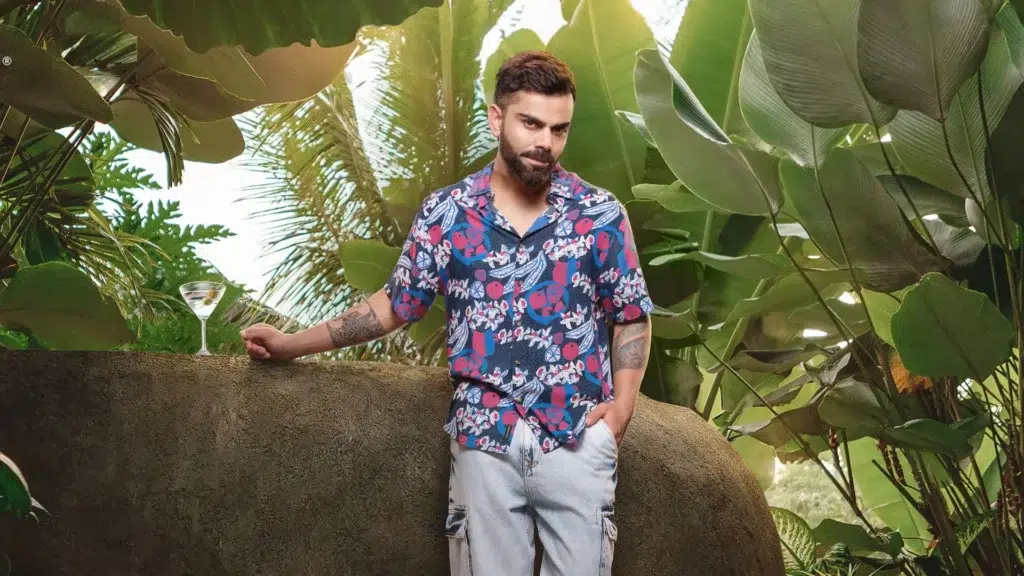
One thing WROGN did consistently well was maintain a clear brand identity. In a market full of generic fashion brands, WROGN always communicated a distinct attitude. Its campaigns featured Kohli in settings that matched the brand’s rebellious tone: high-energy, colorful, direct.
The brand also made strategic moves that kept it relevant beyond just Kohli’s cricket fame. Campaigns incorporated streetwear aesthetics, collaborations with emerging Indian designers, and product drops that built anticipation among its core 18-28 audience.
Brand Positioning Pillars:
- Anti-establishment attitude: The name WROGN itself is a statement against convention
- Youth-first design: Products designed for Indian body types and style preferences
- Celebrity authenticity: Kohli positioned as co-creator, not just endorser
- Accessible premium: Price points higher than fast fashion, below luxury
- Cricket culture leverage: RCB association connecting fashion to sport in one brand universe
The Bottom Line: What Virat Kohli Did with WROGN
WROGN Virat Kohli’s story is one of genuine celebrity entrepreneurship in India’s fashion market. From a Rs 24 crore startup in FY15 to a Rs 344 crore brand at peak, WROGN became one of the few celebrity-backed fashion brands in India to achieve real commercial scale with institutional investor backing.
Why WROGN Virat Kohli Succeeded in Building the Brand:
- Right timing: Kohli joined at a low point in his career in 2014, making the association feel authentic rather than opportunistic
- Beyond endorsement: Kohli invested real money (Rs 19.3 crore) in USPL in 2020, aligning financial interest with brand success
- RCB leverage: IPL jersey sponsorship gave WROGN national visibility at a fraction of broadcast advertising costs
- Institutional backing: Accel, Flipkart, Myntra as investors validated the business beyond celebrity hype
- Product foundation: Brand built genuine product range across categories before chasing scale
- Omnichannel build: Distributed across website, Myntra, Flipkart, Amazon, and physical retail
The brand’s current challenges with declining revenue are real and should not be ignored. FY25 revenue at Rs 223 crore represents a significant fall from the FY23 peak of Rs 344 crore. But the Rs 200 crore Aditya Birla investment in 2024 demonstrates institutional belief in the brand’s turnaround potential.
Key Lessons from WROGN’s Journey:
- Celebrity co-creation beats endorsement: WROGN’s positioning as something Kohli built, not just promoted, created deeper consumer trust
- Timing a celebrity partnership matters: Backing Kohli during his England slump and riding his Australia comeback showed Anjana Reddy’s conviction
- Institutional capital validates celebrity brands: Accel and Flipkart backing showed the brand had substance beyond Kohli’s name
- Mid-market fashion is India’s hardest segment: Between Roadster and H&M lies intense competition that requires constant product innovation
- Infrastructure investment is non-negotiable: Aditya Birla’s backing brings distribution scale that celebrity association alone cannot provide
- Long-term involvement matters: Kohli’s decade-long association with WROGN is rare in celebrity brand partnerships
For Virat Kohli, WROGN represents his most significant direct business involvement in a brand outside cricket. Not an investment in someone else’s startup, not a licensing deal, but a genuine co-creation where his identity shaped a product that millions of young Indians wore. That is a different kind of celebrity business achievement, and one that is harder to build than it looks.