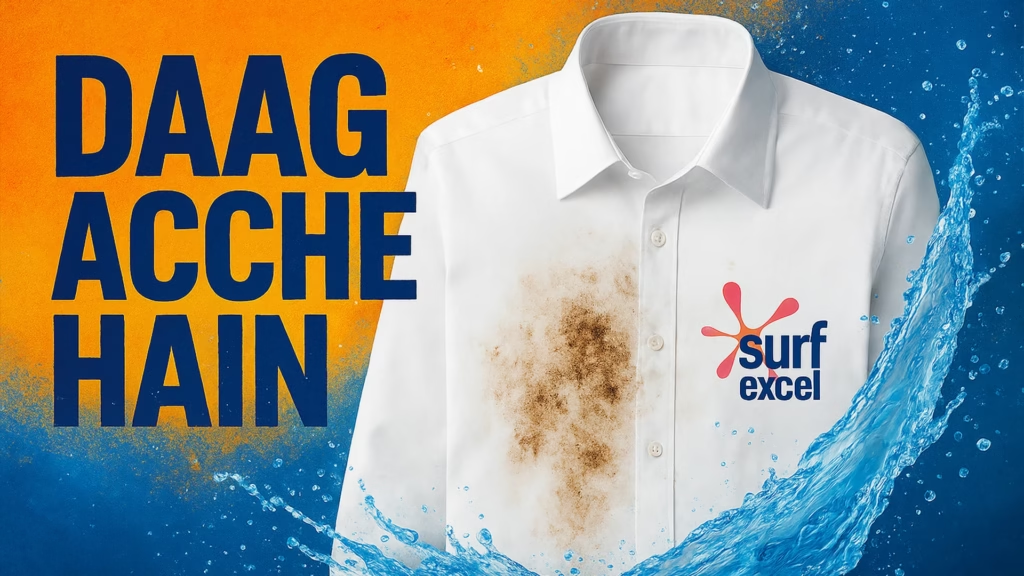
In 2005, Hindustan Unilever faced a challenge. Surf Excel dominated India’s premium detergent market, but the category was boring. Every brand claimed superior stain removal, better whiteness, and longer-lasting freshness. Advertising showed housewives worried about stains and relieved when detergents removed them. This rational, problem-solution approach worked but created no emotional connection. Then Surf Excel launched Daag Acche Hain (Stains are Good), and Indian advertising changed forever.
The campaign’s insight was revolutionary: stains aren’t enemies but evidence of meaningful experiences. A child’s mud-stained clothes might mean they helped a friend who fell, played in the rain with siblings, or celebrated Holi with neighbors. These stains tell stories of kindness, joy, and childhood wonder. By celebrating stains rather than just removing them, Surf Excel Daag Acche Hain positioned itself not as a cleaning product but as an enabler of life’s beautiful messy moments.
The Strategic Brilliance of Flipping Category Conventions
Surf Excel Daag Acche Hain succeeded because it did something competitors couldn’t copy: it changed the conversation entirely. Traditional detergent advertising across brands like Tide, Ariel, Rin, and Wheel focused on functional benefits. They showed stains being removed, whites becoming whiter, and clothes lasting longer. This created a race to the bottom where every brand made similar claims, and consumers chose based on price rather than preference.
Surf Excel recognized that in a category where functional parity exists (most detergents clean reasonably well), emotional differentiation creates lasting competitive advantage. The insight that stains represent meaningful experiences was culturally resonant in India, where parents often worry about children getting dirty but also value childhood freedom and joy. Daag Acche Hain gave parents permission to let children play without constant worry, positioning Surf Excel as the brand that understands what truly matters.
The strategic positioning shift:
- Traditional detergent ads: functional benefits (stain removal, whiteness, freshness)
- Tide, Ariel, Rin, Wheel: similar claims creating price-based competition
- Surf Excel: emotional differentiation in functional parity category
- Stains represent meaningful experiences culturally resonant in India
- Parents value childhood freedom and joy
- Permission to let children play without constant worry
- Product secondary to philosophy
- Ads tell stories making audiences feel something
- Product appears at end with reassurance Surf Excel handles stains
The strategic genius was making the product secondary to the philosophy. Surf Excel ads rarely show close-ups of stain removal or product demonstrations. Instead, they tell stories that make audiences feel something. The product appears at the end with the reassurance that whatever stains come from these meaningful moments, Surf Excel will handle them.
The Psychology Behind “Stains are Good”
Surf Excel Daag Acche Hain tapped into cognitive dissonance brilliantly. Stains are traditionally negative (dirt, mess, extra work), but the campaign reframed them as positive (evidence of good deeds, childhood joy, living fully). This reframing required mental processing that made the message memorable. When consumers saw the tagline, they had to think about it, and that cognitive engagement created stronger memory encoding than straightforward benefit claims.
The Iconic Ads That Became Cultural Moments
Surf Excel Daag Acche Hain success came from consistently excellent storytelling across multiple ads that resonated deeply with Indian audiences. Each ad told a complete story in 60-90 seconds, often with minimal dialogue, letting visuals and emotions communicate the message. These weren’t just commercials but short films that people actively sought out, shared, and discussed.
The Holi Ad (Rang Layi Hai Rangi Se Yaari):
- Perhaps most iconic Daag Acche Hain execution
- Young girl in white clothes standing outside during Holi
- Apparently not playing, other children throw colors
- She remains still getting completely covered in colored powder
- Reveals why: shielding friend’s doorway with religious symbol
- Protecting from colors during celebration
- Message: true friendship means sacrificing cleanliness to protect what matters
- Became Holi cultural reference watched millions of times annually
The Raksha Bandhan Ad (Ek Chhoti Si Jaan):
- Brother rescuing puppy from muddy water
- Wearing sister’s gift of new clothes for Raksha Bandhan
- Ruins clothes saving puppy
- Shows up at sister’s door muddy holding puppy
- Sister’s reaction: pride that brother has good heart not anger
- Connected Surf Excel to major Indian festival celebrating sibling bonds
- Brand feels culturally integrated vs. commercially opportunistic
The Ramadan Ad (Bhai Ka Shukrana):
- Young Hindu boy getting splattered with mud as cars pass
- Seemingly by accident, reveal shows deliberate
- Stood in path diverting splashing from Muslim friend heading to mosque
- Ramadan prayers protection
- Cross-religious friendship and sacrifice message
- Resonated powerfully in India’s diverse society
- Millions of views, widespread praise promoting communal harmony
Emotional Storytelling Over Product Benefits
What makes these ads memorable is the absence of traditional advertising elements. There’s no product demonstration, no competitive comparison, no announcer listing benefits. Instead, Surf Excel Daag Acche Hain trusts that emotional connection will drive preference. The formula is consistent: show a child getting dirty for a good reason, reveal the meaningful context, end with “Daag Acche Hain” and brief product appearance.
Building Market Leadership Through Emotional Connections
Surf Excel Daag Acche Hain helped the brand maintain and grow market leadership in India’s highly competitive detergent market. With approximately 38% share in the premium detergent segment and strong presence in the overall market valued at over Rs 15,000 crore, Surf Excel commands premium pricing 30-40% above mass-market brands like Wheel or Rin.
Parents buying Surf Excel aren’t just purchasing detergent. They’re buying into the Daag Acche Hain philosophy, signaling that they value meaningful experiences over spotless appearances. This emotional positioning creates brand loyalty that functional benefits cannot match. When competitors launched similar emotional campaigns, they felt derivative because Surf Excel owned the territory first and most authentically.
Market leadership metrics:
- 38% share in premium detergent segment
- Overall market valued at Rs 15,000+ crore
- Premium pricing 30-40% above mass-market brands
- 1kg pack: Rs 150-200 vs. Rs 80-120 alternatives
- Expanded target beyond traditional purchasers (mothers)
- Children influenced brand preference: “Daag Acche Hain wala”
- Family brand vs. just household product
The Premium Pricing Power of Emotion
Surf Excel demonstrates how emotional branding justifies premium pricing even in categories where cheaper alternatives work reasonably well. A 1kg pack of Surf Excel costs Rs 150-200, while mass-market alternatives cost Rs 80-120. Rationally, most consumers could save money buying cheaper detergents. But Surf Excel Daag Acche Hain emotional positioning makes the premium feel worth it because consumers aren’t just buying cleaning power but buying into values they want to embody.
Long-Term Consistency and Cultural Integration
Surf Excel Daag Acche Hain campaign’s remarkable longevity (20+ years) demonstrates the power of consistent messaging. While many brands change campaigns every few years chasing trends, Surf Excel understood that emotional territories require long-term commitment to own definitively. Each new execution under the Daag Acche Hain umbrella reinforced the core message while exploring new emotional territories: friendship, sacrifice, festivals, kindness, courage.
This consistency built cumulative brand equity that newer campaigns cannot achieve. Parents who grew up with early Daag Acche Hain ads now buy Surf Excel for their own children, creating generational brand loyalty. The tagline entered everyday vocabulary; people use “daag acche hain” in contexts beyond laundry, applying the philosophy to embrace life’s messy but meaningful moments.
The consistency advantage:
- 20+ years longevity demonstrating consistent messaging
- Emotional territories requiring long-term commitment
- Each execution reinforcing core message
- Exploring new emotional territories: friendship, sacrifice, festivals
- Cumulative brand equity newer campaigns cannot achieve
- Generational brand loyalty: parents buying for own children
- Tagline in everyday vocabulary beyond laundry context
- Cultural integration: campaign becomes part of culture itself
Adapting to Digital and Social Media
As media consumption shifted to digital, Surf Excel adapted Daag Acche Hain for YouTube, Instagram, and social media while maintaining emotional storytelling. The brand released extended versions of TV ads online, created behind-the-scenes content, and encouraged user-generated content where families shared their own “stains are good” stories. This digital extension kept the campaign relevant to younger audiences while preserving authentic emotional connection.
The Bottom Line
Surf Excel Daag Acche Hain succeeded not just as advertising but as a cultural movement that changed how Indians think about childhood, experiences, and what truly matters. Surf Excel’s insight that stains represent meaningful living rather than problems to solve resonated so deeply that the campaign transcended its commercial purpose. Parents genuinely adopted the philosophy, encouraging children to play freely and explore without constant cleanliness concerns.
The cultural movement:
- 2005: Launched by Hindustan Unilever
- 20+ years of consistent emotional messaging
- Changed Indian advertising forever
- Tagline “Daag Acche Hain” became cultural phrase
- Used beyond advertising context
- Parents tell children okay to play freely
- Stains evidence of meaningful experiences
- Helping friend who fell, playing in rain, celebrating Holi
- Stories of kindness, joy, childhood wonder
From a business perspective, Surf Excel Daag Acche Hain demonstrates that in commoditized categories where functional differences are minimal, emotional differentiation creates sustainable competitive advantage. Surf Excel’s 38% market share and ability to charge premium prices for decades proves that consumers will pay more for brands that connect with their values and aspirations beyond product performance.
The Surf Excel story teaches marketers that consistency, authenticity, and emotional depth matter more than clever tactics or constant reinvention. Twenty years of commitment to a single powerful idea built more equity than two decades of campaign rotation could achieve. By trusting that meaningful emotional connection would drive business results and resisting pressure to focus on functional benefits, Hindustan Unilever created not just a successful detergent brand but a cultural touchstone that millions of Indians embrace as expressing their values.