Most celebrity beauty brands follow a predictable formula: slap a famous name on decent products, launch with fanfare, ride the initial hype wave, then fade into irrelevance within two years. The graveyard of celebrity beauty failures is littered with brands that prioritized fame over formula and marketing over meaning.
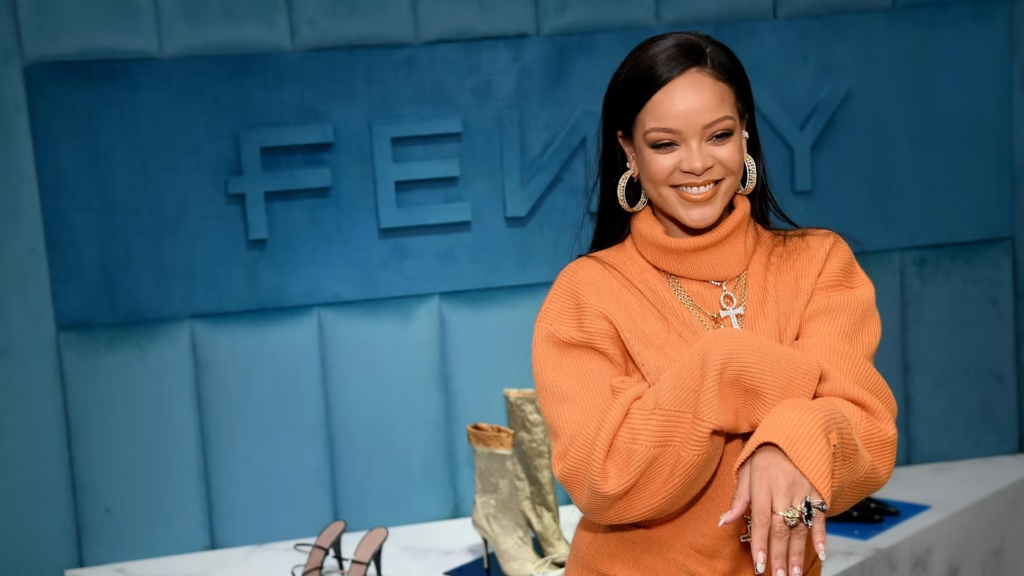
But when Rihanna launched Fenty Beauty in September 2017, she didn’t just create another celebrity makeup line. She sparked a revolution that forced the entire $650 billion global beauty industry to fundamentally rethink who it serves, how it markets, and what inclusivity actually means.
The Fenty Beauty Rihanna Results:
- Current valuation: $2.8 billion
- Annual revenue: $600+ million (2024-2025)
- First year sales: $570 million (2017-2018)
- First 40 days: $100 million in sales
- Rihanna’s stake: 50% ownership worth $1.4 billion
- Rihanna’s net worth: $1.7 billion (82% from Fenty Beauty)
- Foundation shades: 50 shades serving every skin tone
Fast forward to December 2025, and Fenty Beauty stands as the world’s highest-earning celebrity beauty brand with over $600 million in annual revenue, 50 foundation shades serving every skin tone from albinism to the deepest complexions, and 12+ million Instagram followers creating the “Fenty Effect”, a seismic industry shift pressuring every major beauty brand to expand shade ranges.
Why Fenty Beauty? Rihanna’s Vision for “Beauty for All”
When Rihanna decided to enter the beauty industry, she wasn’t motivated by vanity or quick money. She was solving a problem she’d personally experienced for decades as a professional performer traveling the world: the inability to find makeup that matched her skin tone.
“The first woman I saw put makeup on her face was a black woman, my mom,” Rihanna told Vogue in 2017. “When I think of my customers, I want everyone to feel like they can find their color, that they are represented.”
The Personal Experience That Built a Billion-Dollar Brand:
- Professional frustration: As international superstar, worked with countless makeup artists who struggled to match her skin tone
- Industry failure: Products designed for “medium” or “tan” skin never quite worked, artists mixed 3-4 foundations just to create something close
- Market insight: If wealthy celebrity with world’s best products and artists struggled, what were everyday women of color experiencing?
- The answer: Frustration, exclusion, and message they weren’t important enough to deserve products made for them
The “Beauty for All” Philosophy
Rihanna saw this not as an inconvenience but as a massive market failure. For decades, the beauty industry operated on the assumption that “flesh tone” meant beige, that “universal” shades could serve everyone, and that people with very dark or very light skin were niche markets not worth the production costs.
From the beginning, Rihanna’s vision was crystal clear: absolutely no one would be excluded. This wasn’t a tagline or marketing speak but the brand’s foundation literally.
Core Principles:
- Complete shade range from day one: Most brands launched with 10-15 shades then maybe added darker options later if pressured; Fenty launched with 40 shades immediately, expanded to 50 within a year
- Quality without compromise: Fenty wouldn’t just offer more shades, formulas had to work brilliantly across all skin types and tones
- Authentic representation: Marketing would feature models of every ethnicity, skin tone, body type, gender, background as genuine celebration
This wasn’t performative inclusivity or trend-chasing. Rihanna personally tested every product during rehearsals, performances, and daily life, ensuring each item met professional standards regardless of who it was designed for.
The Launch That Shook the Beauty Industry
September 8, 2017: The Day Everything Changed
When Fenty Beauty launched in September 2017 across 1,600 stores in 17 countries including Sephora, Harvey Nichols, and online, the beauty industry experienced its biggest disruption in decades.
The debut product, the Pro Filt’r Soft Matte Longwear Foundation, offered 40 shades, nearly double the industry standard of 20-25 shades. But it wasn’t just the number but the distribution. Where most brands offered 15 variations of beige, three medium shades, and two “tan” options, Fenty offered equal representation across light, medium, and deep tones with careful attention to undertones (warm, cool, neutral).
Social Media Explosion:
- Emotional response: Women shared tearful videos of finding their perfect shade for the first time in their lives
- Albinism representation: Krystal Robertson went viral reviewing Fenty’s shade 110, marveling it finally matched her skin without turning orange
- Deep complexion celebration: Women with deepest skin shared similar stories of finally being seen
- Cultural moment: #FentyBeauty trended worldwide on Twitter, Instagram, TikTok
The Numbers That Made History
Within hours, social media exploded as Fenty Beauty Rihanna generated $72 million in earned media value (publicity from press and social media) in the first month, 132+ million YouTube views of Fenty Beauty content, became biggest beauty brand launch in YouTube history, and trended worldwide across all platforms.
First 40 days generated $100 million in sales. First year from 2017-2018 reached $570 million in revenue, was named one of Time Magazine’s Best Inventions of 2017, expanded shade range from 40 to 50, with darker foundation shades consistently sold out proving massive underserved demand.
The “Fenty Effect” Ripples Across the Industry:
- Maybelline expansion: Expanded Fit Me foundation from 16 to 40 shades (May 2017), SuperStay Full Coverage from 28 to 50 shades (2018-2019)
- CoverGirl response: Launched TruBlend Matte Made with 40 shades (June 2018)
- Dior adaptation: Released Dior Backstage foundation with 40 shades (2018)
- Too Faced pressure: Expanded Born This Way foundation from 24 to 35 shades (2019) after intense criticism
- Industry transformation: “40 shades” went from unprecedented to baseline expectation

💋 FENTY BEAUTY Glossy Posse VIII 3-Piece Lip Luminizer Set – Fenty Glow, Sugar Plumz & Hot Chocolit
🛒 Shop Now on AmazonThe Business Model: How Fenty Beauty Makes Billions
The LVMH Partnership
Fenty Beauty operates as a joint venture between Rihanna and LVMH (Moët Hennessy Louis Vuitton), the world’s largest luxury goods conglomerate, through its Kendo Brands beauty incubator. LVMH invested approximately $10 million initially and owns 50% of Fenty Beauty, while Rihanna owns the other 50% and serves as CEO and Chief Creative Officer.
This partnership provides global distribution through LVMH’s luxury retail network, manufacturing expertise and supply chain infrastructure, marketing budgets for worldwide launches, and prestige positioning as part of LVMH portfolio including Dior, Givenchy, Make Up For Ever.
Creative Control:
- Rihanna’s authority: Maintains creative control and final approval on all products, marketing, brand direction
- Not licensing: This isn’t a deal where she just lends her name but actively involved in product development, testing, strategy
- 50% ownership: Joint venture structure ensures aligned interests between Rihanna and LVMH
Revenue Streams
Product sales include foundation (Pro Filt’r Soft Matte Longwear Foundation at $39, Pro Filt’r Hydrating Foundation at $39), concealer (Pro Filt’r Instant Retouch Concealer at $28), powder (Pro Filt’r Instant Retouch Setting Powder at $36, Invisimatte at $32), highlighter (Killawatt Freestyle Highlighter at $38, Diamond Bomb at $44), lip products (Gloss Bomb at $21, Stunna Lip Paint at $27), and eyes (Snap Shadows at $25, Flyliner at $24).
Distribution channels include Sephora as primary retail partner in US, Canada, Europe, Middle East, Harvey Nichols in UK luxury department stores, Fenty Beauty website for direct-to-consumer with highest margins, and international retailers in 50+ countries.
Complementary Brands:
- Fenty Skin (August 2020): Skincare line with gender-neutral products expanding beauty ecosystem
- Fenty Eau de Parfum (2021): Gender-free fragrance
- Annual revenue: 2017-2018 first year $570M, 2023 £477M ($595M USD), 2024 $600M+, 2025 projected $600-650M
How Does Fenty Beauty Make Money?
The Business Model
The business model is straightforward but brilliantly executed. High-quality products at accessible prestige pricing with most Fenty products costing $20-40, positioning them as “affordable luxury”, more expensive than drugstore brands at $8-15 but cheaper than ultra-prestige at $60-100, hitting the sweet spot where quality meets accessibility.
Low marketing costs through Rihanna’s influence with 160+ million Instagram followers, 110+ million Twitter followers, and global celebrity status. When she posts about Fenty Beauty, millions see it instantly at zero advertising cost.
Marketing Efficiency:
- Super Bowl moment: 2023 Halftime Show moment where she applied Fenty Invisimatte Powder on camera generated $5.6M in earned media value within 12 hours
- Viral social momentum: Fenty’s inclusivity story is inherently shareable, customers who find their perfect shade post tearful reviews, tag friends, create content
- User-generated marketing: Free marketing worth millions from organic customer enthusiasm
- Strategic product drops: Creates urgency and FOMO (fear of missing out), customers rush to buy before products sell out
Repeat Purchase Revenue
Foundation, concealer, and powder run out and need replacing every 2-3 months, creating steady repeat purchase revenue. Unlike one-time impulse buys, complexion products generate ongoing sales establishing predictable revenue streams.
What Makes Fenty Beauty Different:
- Inclusivity was foundation: Most brands add diversity later under pressure; Fenty built entire brand around it from day one as core product strategy
- Marketing approach: Fenty’s team revealed they never once used the word “inclusive” in advertising; brand was defined as inclusive by press and consumers because products spoke for themselves
- Rihanna’s authentic involvement: Personally tests every product, approves every shade, influences every campaign, photographed using Fenty products on movie sets and events

✨ Fenty Beauty by Rihanna Hella Thicc Full-Size Volumizing Mascara Duo Set
🛒 Shop Now on AmazonHow Much Is Rihanna Worth Because of Fenty Beauty?
Rihanna’s net worth in December 2025 sits at $1.7 billion. Fenty Beauty with 50% ownership is worth $1.4 billion from brand valued at $2.8B. Savage X Fenty with 30% ownership contributes $300 million from brand valued at $1B. Music catalog, royalties, tours add $100+ million. Real estate and investments contribute $50+ million.
Annual Income from Fenty Beauty:
- Ownership dividends: From Fenty Beauty’s profits
- Annual estimates: $40-80 million per year from Fenty Beauty alone based on typical beauty brand profit margins of 15-20% and her 50% stake
- Additional income: Music streaming royalties generating millions annually, Savage X Fenty adding tens of millions, endorsements and appearances
- Notable earnings: £5 million for performing at Anant Ambani’s pre-wedding bash in 2024
Fenty Beauty accounts for 82% of Rihanna’s net worth, making it by far her most valuable asset. Her music career, which made her famous, contributed only about 6% of her current wealth demonstrating the wealth creation power of authentic celebrity entrepreneurship.
The Fenty Effect: How One Brand Changed an Entire Industry
What Changed After Fenty
The term “Fenty Effect” now appears in business schools, marketing conferences, and industry reports as shorthand for how a single disruptive brand can force systemic change across an entire industry.
Shade range expectations shifted dramatically as before Fenty Beauty Rihanna, 20 foundation shades was considered good. After Fenty, 40 became the minimum expected by consumers with brands launching with fewer shades facing immediate backlash.
Industry Transformation:
- Representation in marketing: Beauty ads now routinely feature models of all skin tones, body types, backgrounds; what was once rare became mandatory
- Influencer power shift: Fenty proved diverse influencers and authentic community-building could rival traditional celebrity endorsements
- Social issues in beauty: Opened door for brands like Rare Beauty (mental health), The Lip Bar (Black-owned beauty) to build businesses around social missions
The Brands That Followed
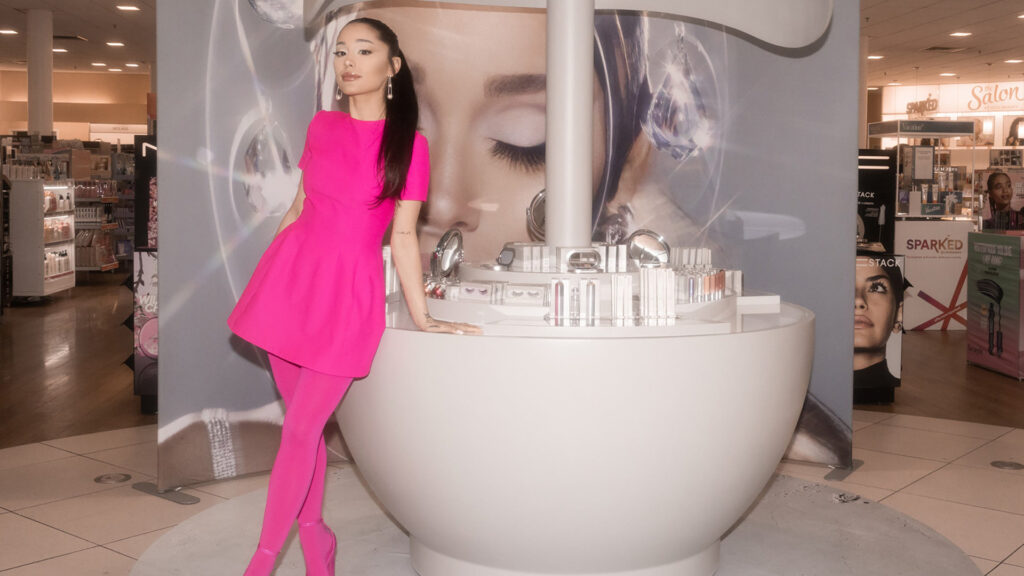
Several celebrity beauty brands launched post-Fenty with inclusive positioning. Rare Beauty by Selena Gomez in 2020 achieved $400M revenue with mental health focus and extensive shade ranges. Rhode by Hailey Bieber in 2022 reached $200M revenue with minimalist skincare, acquired by Elf for $1B. r.e.m. beauty by Ariana Grande in 2021 generated $25-89M revenue with bold color stories and Gen Z appeal. The Outset by Scarlett Johansson in 2022 offered clean, vegan skincare for sensitive skin.
These brands all learned from Fenty: inclusivity isn’t optional, authenticity matters, and quality must match marketing demonstrating the lasting impact of Rihanna’s revolutionary approach.
The Bottom Line
Rihanna’s Fenty Beauty didn’t just become the world’s highest-earning celebrity beauty brand with $600+ million in annual revenue and a $2.8 billion valuation. It fundamentally transformed the global beauty industry’s approach to inclusivity, forced every major brand to expand their shade ranges, and proved that serving everyone authentically isn’t corporate responsibility but the most profitable business strategy in beauty.
Why Fenty Beauty Rihanna Succeeded:
- Solve real problems, don’t follow trends: Fenty succeeded because it solved genuine problem, lack of makeup for diverse skin tones, that industry ignored for decades
- Inclusivity is profitable, not charitable: Proved serving everyone isn’t CSR or charity but smart business; the “underserved” market was actually massive and willing to spend
- Authenticity beats celebrity alone: Dozens of celebrity beauty brands launched around same time; most failed because they were vanity projects with mediocre products
- Show, don’t tell: Fenty never said “we’re inclusive” in advertising, they just were; actions spoke louder than words
- Quality products must back the message: If Fenty foundations were terrible, brand would have died after initial hype; superior product quality drove repeat purchases
- Right partnership accelerates growth: Partnering with LVMH gave instant global distribution, manufacturing expertise, prestige positioning compressing decades of growth into years
What started with 40 foundation shades in September 2017 became a revolution that generated $100 million in 40 days, $570 million in year one, and turned Rihanna into a billionaire by 2021 with a net worth of $1.7 billion with 82% from Fenty Beauty demonstrating the extraordinary wealth creation possible when solving real problems.
Key Success Factors:
- The Fenty Effect: Sparked industry transformation forcing Maybelline, CoverGirl, Dior, and dozens of other brands to finally address their exclusionary shade ranges
- Cultural timing: Launched during cultural moment focused on diversity and representation, rode this momentum while amplifying it
- Rihanna’s involvement: Personally tests every product, approves every shade, maintains creative control as CEO and Chief Creative Officer
- LVMH partnership: 50/50 joint venture provided global infrastructure while maintaining Rihanna’s creative authority
- Marketing efficiency: 160M+ Instagram followers provide zero-cost marketing; 2023 Super Bowl powder moment generated $5.6M in earned media within 12 hours
The brand sparked the “Fenty Effect,” forcing every major beauty brand to expand shade ranges and representation, with Maybelline expanding Fit Me from 16 to 40 shades, CoverGirl launching TruBlend with 40 shades, Dior releasing Backstage with 40 shades, demonstrating how one brand transformed industry standards.
For entrepreneurs and celebrities, Fenty Beauty offers a blueprint: solve real problems that affect millions, make quality non-negotiable, let authenticity drive marketing, partner strategically for accelerated growth, and understand that the “niche” market you’re ignoring might actually be the majority of potential customers proving that inclusive design is the most profitable approach.
Rihanna didn’t just create a successful brand but changed what success means in beauty, proving that when you genuinely serve everyone, you don’t just make headlines but make history and billions of dollars while doing it. And seven years later with $600M+ annual revenue, 50 foundation shades, and $2.8B valuation, that revolution is still going strong demonstrating the enduring power of solving real problems with authentic commitment to serving everyone.