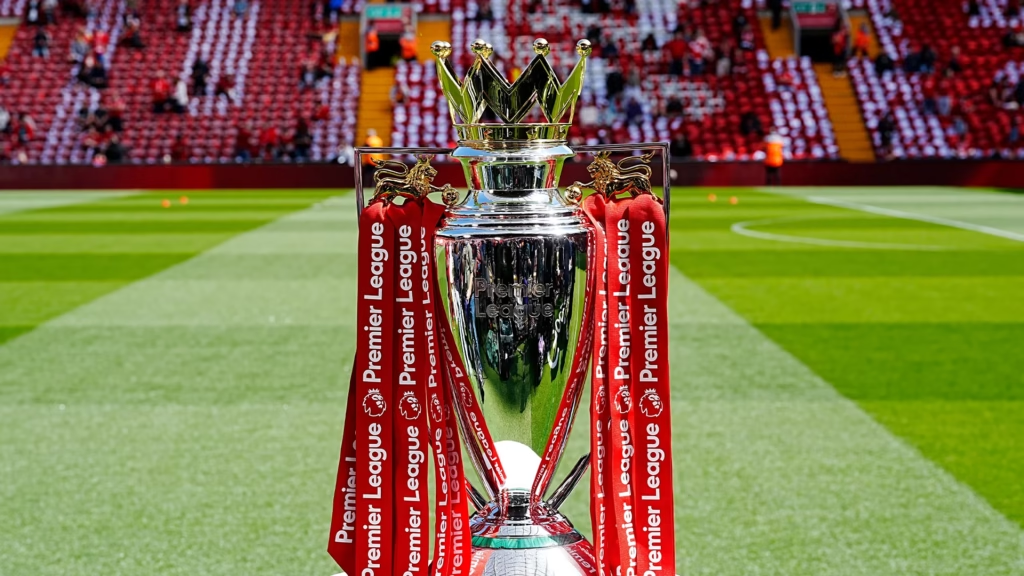
In December 2023, inside a London boardroom, Richard Masters announced something extraordinary: Sky Sports and TNT Sports had just secured Premier League broadcasting rights for £6.7 billion ($8.5 billion) over four years. The room erupted with commentary about “the largest sports media rights deal ever concluded in the UK.”
But here’s what made headlines worldwide: when combined with international rights worth £6.5 billion ($8.2 billion), the Premier League’s total broadcast value reached approximately £13.2 billion, roughly $16.7 billion, making it the world’s most valuable football league by a considerable margin.
The Numbers That Changed Football:
- Sky Sports: 215 Premier League matches per season
- TNT Sports: 52 matches per season
- NBC Sports (US): £378 million annually
- Annual total: £3.84 billion ($4.8 billion) every year
- Combined value: More than La Liga, Bundesliga, and Serie A combined
Mohamed Salah’s Liverpool contract, Manchester City’s £100 million signings, Arsenal’s new Emirates extension, they all trace back to one source: broadcast money. In the 2024/25 season, even last-place Southampton received £106.7 million from TV rights alone. The champions collected £176.4 million.
How did a football league founded in 1992 become worth more per match than any league except the NFL? And why are broadcasters willing to pay £13.8 million per Premier League game when Bundesliga matches fetch just £3.6 million?
The £6.7 Billion Domestic Deal That Changed Everything
Sky Sports Dominates with 215 Matches Per Season
Sky Sports dominated British football broadcasting since 1992, but the 2025-2029 cycle took that dominance to unprecedented levels. By securing four of five available packages, Sky increased its live Premier League coverage by 70%, jumping from 128 matches to 215 per season.
Sky Sports’ Massive Premier League Rights Package:
- 215 live matches per season (57% of all Premier League games)
- All Saturday 5:30pm kick-offs (the most-watched UK time slot)
- All Sunday 2:00pm and 4:30pm matches (traditional family viewing)
- Every Friday and Monday night fixture (primetime slots)
- Three complete midweek match rounds (Champions League weeks)
- All 10 final-day matches broadcast simultaneously (unprecedented coverage)
For the first time in Premier League history, Sky will show every match on the season’s final day live. That’s 10 simultaneous broadcasts featuring title races, relegation battles, and European qualification drama. Pure television gold for broadcasters and advertisers.
TNT Sports’ Premier League Rights Deal:
- 52 matches per season
- Exclusive Saturday 12:30pm slot (traditional early kick-off)
- Two complete midweek match rounds
- Continuation of BT Sport’s legacy coverage
The BBC kept Match of the Day highlights for £75 million annually, ensuring Gary Lineker continues summarizing weekend action for 4 million viewers every Saturday night.
The Real Economics Behind the Domestic Deal
The domestic deal’s real story isn’t just the £6.7 billion headline. When you break it down:
- £1.67 billion per season
- Only 2.3% higher than the previous cycle
- 35% increase in live matches (from 200 to 270)
- Per-match value declined from £8.11 million to £6.2 million
Yet Sky committed £6.4 billion because Premier League rights remain their subscription business’s crown jewel. Manchester United vs Manchester City on Super Sunday drives more Sky subscriptions than any drama series, movie premiere, or news coverage. In Britain’s fragmented media landscape, live Premier League football is the last truly unmissable television.
International Rights: Where Premier League Really Dominates
International Revenue Exceeds Domestic for First Time
While domestic rights grabbed headlines, the international market is where Premier League economics truly shine. For the first time in league history, international broadcast revenue exceeded domestic income, and the gap is widening dramatically.
International Premier League Broadcast Rights Growth:
- 2022-2025 cycle: £5.3 billion internationally vs £5.1 billion domestically
- 2025-2028 cycle: £6.5 billion internationally (23% increase)
- Annual international value: £2.17 billion per season starting 2025/26
- International rights now exceed domestic by 30%
- Ten-fold increase since 2007 (from just £625 million over three years)
Major International Premier League Broadcast Deals
United States (NBC Sports):
- £378 million annually through 2027/28
- £2.27 billion over six years
- More than Spain’s entire international rights package
- Every match streamed live on Peacock
- Rebecca Lowe anchoring studio coverage
Middle East and North Africa:
- £150 million annually
- beIN Sports as primary broadcaster
- Growing Saudi Arabia market influence
Southeast Asia:
- £80 million annually
- Multiple territories across Thailand, Vietnam, Indonesia, Malaysia
South Asia (JioStar):
- Disney-Reliance joint venture secured rights
- 40% increase over previous cycle
- Covers India, Pakistan, Bangladesh, Sri Lanka
Nordic Countries (NENT Group):
- Over £2 billion across multiple cycles
- All 380 matches available live
Global Premier League Broadcasting Reach:
- 188 countries broadcast Premier League matches live
- 3.2 billion cumulative global television audience
- More viewers than any football league worldwide
- Available in every major market except North Korea
Why such massive international appeal? English as the global language helps, but it goes deeper. Manchester United built a 1.1 billion fan base globally through strategic tours and partnerships. Liverpool’s Mohamed Salah created an entire generation of Egyptian fans. Manchester City’s UAE ownership expanded Middle Eastern interest. Arsenal’s diverse international signings from Japan’s Takehiro Tomiyasu to Brazil’s Gabriel Jesus created touchpoints across continents.
The Premier League doesn’t just export matches. It exports narrative. When Erling Haaland scores five goals against Luton Town, that clip trends on TikTok in Jakarta, São Paulo, and Lagos.
Why Broadcasters Pay Premium Prices for Premier League Rights
£13.8 Million Per Match Justification
At £13.8 million per match, Premier League broadcast rights cost more than any football league globally.
Football Broadcast Rights Comparison (Per Match Value):
- Premier League: £13.8 million per match
- La Liga: £6.1 million per match
- Bundesliga: £3.6 million per match
- Serie A: £5.2 million per match
- NFL: $27.8 million per broadcast (only league exceeding Premier League)
What justifies this premium?
Live Sports Are DVR-Proof
In 2025, Netflix, Disney+, and Amazon Prime compete for streaming subscriptions. Audiences binge-watch shows at their convenience, skip ads, and share accounts. But live Premier League matches are watched in real-time.
Real-Time Premier League Viewership Data:
- 7.9 million Britons watched Liverpool defeat Manchester United on Super Sunday (March 2025)
- Nobody streams that match on Tuesday afternoon
- Advertisers pay premium rates for engaged audiences
- 30-second spots reach viewers who actually watch commercials
- Sky charges premium because Premier League viewers can’t fast-forward through halftime ads
The Saturday Afternoon Religion
British football culture treats Saturday 3pm fixtures as sacred. Since 1960, the “3pm blackout” has protected lower-league attendance by prohibiting live broadcasts between 2:45pm and 5:15pm on Saturdays. Every other time slot is fair game for Premier League broadcasting.
Premier League Appointment Television Slots:
- Friday Night Football: 8pm
- Saturday lunchtime: 12:30pm
- Super Sunday: 4:30pm (most-watched slot)
- Monday Night Football: 8pm
Millions of Britons structure their weekends around these Premier League broadcasts. Pubs pay £1,200 monthly for commercial Sky Sports licenses. They know that showing Liverpool vs Chelsea fills seats, sells pints, and keeps regulars returning. Multiply that across 40,000 British pubs, and suddenly Sky’s £1.6 billion annual payment makes economic sense.
Competitive Balance Creates Unpredictability
Unlike Spain, where Barcelona and Real Madrid historically dominated, or Germany, where Bayern Munich wins almost every Bundesliga title, the Premier League maintains remarkable competitive balance.
Premier League Competitive Balance:
- Leicester City won the league in 2015/16 at 5,000-1 odds
- 7 different champions in last 12 seasons (2013-2025)
- Nottingham Forest returned after 23 years and immediately challenged for European spots
- Brighton developed into a top-six contender
- Any of 6-7 teams enter each season with realistic title aspirations
Premier League Revenue Distribution Model:
- 50% divided equally among all 20 clubs
- 25% based on league position (merit payments)
- 25% based on matches broadcast (facility fees)
Southampton finishing last in 2024/25 still collected £106.7 million in broadcast revenue, more than Real Betis received for finishing 10th in La Liga. This financial parity means mid-table Premier League clubs can buy £40 million players and compete with Europe’s elite.
The NBC Effect: How America Became Premier League’s Biggest Fan
318% Viewership Increase in 12 Years
Rebecca Lowe didn’t just host Premier League coverage on NBC. She helped build American football culture from scratch.
NBC’s Premier League Broadcasting Success:
- 2013 rights deal: £250 million over three years
- 2012/13 average: 414,000 US viewers per match
- 2024/25 average: 1.73 million per broadcast
- 318% viewership increase in 12 years
NBC’s Premier League Strategy:
- Goalzone: Live whip-around show switching between simultaneous matches (NFL RedZone for soccer)
- Peacock streaming: Every match available live on digital platforms
- Familiar analysts: Kyle Martino, Robbie Earle, Tim Howard explaining tactics
- Perfect timing: Saturday 12:30pm UK = 7:30am Eastern (breakfast with football)
The time zone difference, once considered a barrier, became an asset. Americans discovered they could watch three Premier League matches before NFL games started at 1pm Sunday.
American Investment Following NBC’s Success
American Investment in Premier League:
- Liverpool vs Manchester United (March 2024): 2.6 million US viewers (more than most NBA regular season games)
- Josh Harris bought Crystal Palace for £2.5 billion
- Todd Boehly’s Clearlake Capital paid £4.25 billion for Chelsea
- American private equity groups now own 9 of 20 Premier League clubs
- NBC renewed rights through 2027/28: £2.27 billion (55% increase)
- Next renewal projected: £500 million+ annually
Comparing Premier League vs European League Broadcast Rights
The Financial Chasm Between Leagues
The Premier League’s financial dominance over European competitors isn’t close, it’s a chasm.
La Liga’s Broadcasting Reality Check:
Spain’s top division secured a five-year domestic deal worth €4.95 billion (£4.2 billion) from 2022-2027, less than the Premier League earns domestically in three seasons.
La Liga Broadcast Rights Breakdown:
- DAZN paid €4.95 billion for near-exclusive domestic rights
- International rights: £897 million annually
- Total: £1.9 billion per season
- Real Madrid and Barcelona collect 43% of all La Liga broadcast revenue
- Sevilla (7th place): £87 million in 2023/24
- Brighton (7th in Premier League): £153 million same season
Bundesliga’s Domestic Strength, International Weakness:
Bundesliga Broadcast Rights Structure:
- Four-year domestic deal: €4.48 billion (£3.83 billion) starting 2025/26
- Sky Deutschland and DAZN split coverage
- Domestic: £960 million per season (second in Europe)
- International rights: £240 million annually (less than Premier League’s US market alone)
- Total: £1.2 billion per season
Bayern Munich’s dominance (11 consecutive titles through 2023) and the 50+1 ownership rule limiting external investment make Bundesliga less attractive to global investors and broadcasters.
Serie A’s Struggle:
Serie A Broadcast Rights:
- Three-year domestic deal: €2.9 billion (£2.48 billion) from 2021-2024
- DAZN and Sky Italia sharing coverage
- International rights: £371 million annually
- Total: £1.2 billion per season
When Cristiano Ronaldo left Juventus in 2021, Italian football lost its biggest international draw.
The Premier League Broadcast Rights Math
Annual Premier League Broadcasting Revenue:
- Domestic: £1.67 billion annually
- International: £2.17 billion annually
- Commercial: £120 million annually
- Total: £3.97 billion ($5 billion) per season
The Premier League generates more broadcast revenue than La Liga, Bundesliga, and Serie A combined. And the gap widens every cycle.
The Economics Behind Premier League Broadcasting Dominance
Scarcity Creates Value
Strip away the drama, rivalries, and goals, and Premier League broadcast rights reveal fundamental media economics.
The Scarcity Economics of Football Broadcasting:
- Only 380 Premier League matches exist per season
- Can’t manufacture additional Manchester City vs Arsenal fixtures
- Unlike movies or TV shows that can be produced endlessly
- Live sports have inherent scarcity
- Sky can’t commission additional Liverpool matches when ratings peak
When Amazon, Sky, TNT, and DAZN bid for Premier League rights, they’re bidding for irreplaceable inventory. If Sky doesn’t secure Saturday 5:30pm matches, a competitor will. That exclusivity drives bidding wars.
English Language Is Currency
The Premier League broadcasts in English to 188 countries where English is either the primary language or widely spoken as a second language. Commentary, analysis, interviews, everything works across markets without translation barriers.
Language Advantage in Football Broadcasting:
- Indian teenager understands Jamie Carragher’s analysis without subtitles
- Nigerian fan follows Martin Tyler’s commentary natively
- Compare La Liga (Spanish) or Bundesliga (German)
- Neither language has English’s global reach
- This linguistic advantage compounds Premier League’s international marketability
The Premier League Reinvestment Loop
Unlike American leagues that cap player salaries, Premier League clubs reinvest virtually all broadcast revenue into talent acquisition.
How Premier League Broadcast Revenue Fuels Spending:
- £100 million transfer fees: Declan Rice, Moises Caicedo
- £350,000 weekly wages: Kevin De Bruyne, Mohamed Salah
- £60 million stadium improvements: Tottenham Hotspur Stadium
- £30 million training facilities: Arsenal’s Colney
- £200 million youth academy investments across the league
This spending attracts the world’s best players. The league’s financial strength creates a virtuous cycle: broadcast money funds elite players, elite players create compelling matches, compelling matches justify higher broadcast fees.
The “Big Six” and Global Brands
Premier League’s Global Brand Power:
- Manchester United, Liverpool, Chelsea, Arsenal, Manchester City, Tottenham
- Combined: 3.5 billion fans worldwide
- Manchester United alone: 1.1 billion supporters across Asia, Africa, Americas
When NBC shows Manchester United vs Liverpool, they’re broadcasting to audiences in Mumbai, Lagos, Jakarta, Mexico City, and São Paulo simultaneously. That match draws bigger global viewership than many nations’ domestic cup finals.
The Future of Premier League Broadcast Rights
First Serious Plateau in Growth
The Premier League’s broadcast rights trajectory faces its first serious plateau. The 2025-29 domestic deal, while record-breaking in total value, shows only 2.3% annual growth, barely ahead of inflation. The per-match value decreased 24% compared to the 2016-19 peak.
Headwinds Facing Premier League Broadcasting Growth:
Streaming’s Uncertain Economics:
- Peacock offers Premier League matches within $7.99 monthly subscription
- DAZN lost $1.4 billion in 2022 despite securing football rights across Europe
- Streaming platforms struggle to monetize live sports profitably
- Unlike on-demand content that amortizes over time, live matches air once
- Amazon’s decision not to bid for 2025-29 cycle signals ROI concerns
Market Saturation in the UK:
- Sky already broadcasts 215 of 270 live Premier League matches
- TNT shows 52 matches
- BBC has highlights
- 2025-29 deal increased live matches by 35%
- Domestic revenue grew just 4%
Cord-Cutting Accelerates:
- British Sky subscribers: 12.5 million (2019) to 10.8 million (2024)
- Young audiences increasingly abandon traditional pay-TV
- Netflix, YouTube, TikTok replacing sports viewing
- Sky offers streaming through Sky Glass and Now TV
- These services cannibalize higher-margin satellite subscriptions
But International Growth Remains Robust
International Premier League Broadcasting Rights Growth:
- International rights grew 23% in 2025-28 cycle
- Now £2.17 billion annually
- India’s JioStar deal jumped 40%
- NBC’s US renewal increased 55%
- Middle Eastern broadcasters backed by sovereign wealth funds paying premium rates
International Revenue Trajectory:
- Premier League now earns 56% of total broadcast revenue internationally
- Up from 38% a decade ago
- English football’s global brand continues strengthening
- International broadcasters paying increasing premiums
The Premier League’s next growth phase isn’t in Manchester or London, it’s in Mumbai, Jakarta, and Miami.
The Bottom Line: Global Media Dominance
At its core, Premier League broadcast economics reveal a simple truth: in fragmented media landscapes, live sports remain the most valuable content.
Why Premier League Broadcasting Works:
- Viewers don’t binge-watch football on Tuesday afternoons
- They watch Liverpool vs Arsenal live on Saturday or miss it entirely
- Advertisers can’t fast-forward through halftime commercials
- Pubs need Saturday fixtures to fill tables
- Families structure weekends around kickoff times
This creates irreplaceable value in sports broadcasting.
Sky Sports didn’t pay £6.7 billion because Premier League football is “good entertainment.” They paid because Saturday 5:30pm Manchester City matches drive subscriptions better than any alternative programming. NBC didn’t commit £2.27 billion because Americans suddenly love soccer. They paid because Premier League fixtures fill Sunday morning slots better than infomercials or reruns.
The Potential Threats:
- If streaming platforms develop profitable models for live sports, traditional broadcasters face existential competition
- If younger audiences abandon scheduled television entirely, even Premier League fixtures lose appointment-viewing value
- If Saudi Arabia’s Public Investment Fund continues building rival competitions with unlimited resources, the Premier League’s talent monopoly erodes
But for now, the £3.97 billion annual broadcast machine hums along smoothly:
- Manchester United pays Alejandro Garnacho £200,000 weekly
- Arsenal signs £100 million players
- Southampton, finishing dead last, still collects more broadcast money than most European champions
- Combined domestic and international rights: £13.2 billion over the cycle
The Premier League has built something unprecedented: a sports league that generates more international revenue than domestic revenue, attracts more global viewership than any league except the NFL, and maintains financial dominance over European competitors despite shorter history than Spanish, Italian, or German football.
As long as broadcasters need live sports to justify subscription fees, as long as English remains the global language, and as long as Manchester City, Liverpool, Chelsea, and Manchester United remain among the world’s most valuable sports franchises, the Premier League’s $12 billion broadcast model will endure.
That’s not just the economics of football. That’s the economics of global media dominance.