In 1999, when Ravi Modi opened his first Manyavar store in Kolkata’s Chowringhee area, Indian men bought ethnic wear from neighborhood tailors or unorganized retailers with inconsistent quality and sizing. The wedding wear market was fragmented across thousands of small shops, none offering branded experience or standardized products.
Modi saw opportunity where others saw tradition. He realized that India’s growing middle class wanted ethnic wear shopping experiences matching Western apparel brands. They wanted consistent sizing, quality assurance, modern store environments, and hassle-free returns, things no ethnic wear player offered at scale.
Twenty-five years later, Manyavar brand strategy has created India’s largest ethnic menswear company with ₹1,500+ crore annual revenue, 600+ stores across 230+ cities, and brand recall rivaling international fashion labels. The company went public in 2022 with ₹4,000+ crore market capitalization, validating that organized ethnic wear could match Western apparel profitability.
This is the story of how one entrepreneur organized India’s chaotic ethnic menswear market, made sherwanis as aspirational as suits, and built retail empire through relentless expansion, celebrity endorsements, and understanding that weddings drive 60%+ of ethnic wear purchases in India.
Why Indian Ethnic Menswear Market Was Fragmented and Unorganized
Before Manyavar, Indian ethnic menswear shopping meant visiting local tailors, fabric shops, or small retailers selling limited selections with unpredictable quality. The market operated on relationships and negotiations rather than fixed pricing and standardized products.
Traditional shopping experience challenges:
- No consistent sizing: each tailor used different measurements without standardization
- Quality unpredictability: fabric and stitching quality varied dramatically even within single shop
- Limited selection: small retailers stocked 20-50 designs versus hundreds of options
- Price opacity: heavy bargaining culture meant same product sold at different prices to different customers
- No returns policy: purchases were final with minimal recourse for defects
- Service inconsistency: experience depended entirely on shopkeeper’s mood and customer relationship
Wedding shopping challenges in unorganized market:
- Shop hopping: families visited 5-10 different retailers comparing options
- Time consumption: custom tailoring required 2-3 weeks with multiple fitting appointments
- Last-minute stress: fitting issues discovered days before wedding with no resolution time
- Price confusion: same product quoted at different prices to different customers
- Zero recourse: final sale policies meant no exchanges or refunds for defects
- Relationship dependency: quality and service varied based on personal connections with shopkeeper
The unorganized market also meant no brand building or premium positioning. Ethnic wear was commodity business where price and personal relationships determined purchases rather than brand trust or perceived quality differences.
Why Organized Players Avoided Ethnic Menswear Initially
Large apparel retailers hesitated entering ethnic menswear for valid reasons. The category required deep regional understanding since preferences varied dramatically across Indian states. A sherwani popular in North India wouldn’t sell in South India where dhotis and angavastrams dominated.
Inventory management was nightmarish. Unlike Western wear with standard sizes and year-round demand, ethnic wear required size variations, regional style differences, and seasonal demand spikes around wedding seasons and festivals. Most retailers preferred simpler Western casualwear categories.
The tailoring element added complexity. Pure retail meant stocking only ready-made garments, but ethnic wear customers often wanted customizations requiring alteration services. Integrating retail with tailoring required capabilities that established players lacked.
How Manyavar Brand Strategy Organized the Market Through Retail Excellence
Ravi Modi’s insight was treating ethnic menswear like organized retail rather than traditional ethnic business. He studied Pantaloons, Shoppers Stop, and Western apparel retailers to understand modern retail operations, then applied those principles to category that had never seen such professionalism.
Revolutionary retail concepts Manyavar introduced:
- Fixed pricing: clear price labels eliminating bargaining culture
- Organized display: products categorized by occasion and style rather than random placement
- Modern infrastructure: air-conditioned trial rooms with proper mirrors and lighting
- Trained staff: product knowledge and consultative selling without pushiness
- Return policy: 30-day exchange unprecedented in ethnic wear retail
- Size variety: extensive size range displayed rather than custom-only approach
- Visual merchandising: professional display creating aspirational shopping environment
This retail excellence became Manyavar’s core differentiation. While competitors focused on designs and fabrics, Manyavar focused on shopping experience. The bet was that customers would pay premium for hassle-free branded experience versus cheaper but frustrating unorganized alternatives.
Standardization as Competitive Advantage
Manyavar brand strategy centered on standardization across every customer touchpoint:
- Sizing system: developed consistent measurement standards working across all stores
- Quality protocols: vendor contracts specified fabric grades and stitching standards with penalties for violations
- Store design: identical layouts and visual merchandising creating familiar experience across cities
- Staff training: centralized training programs ensuring consistent product knowledge and customer service
- Pricing transparency: fixed prices eliminated negotiations creating trust and reducing sales cycle time
- Inventory systems: centralized warehousing and SKU management enabling efficient stock rotation
This standardization was expensive to implement. Manyavar invested in technology, training, and processes that small retailers couldn’t afford. But scale economics meant these investments became more cost-effective as store count grew, creating barriers to entry for competitors.
The quality consistency also enabled premium pricing. Manyavar sherwanis cost 30-50% more than unorganized alternatives, but customers paid willingly because product quality and shopping experience justified premiums in ways that designs alone couldn’t.
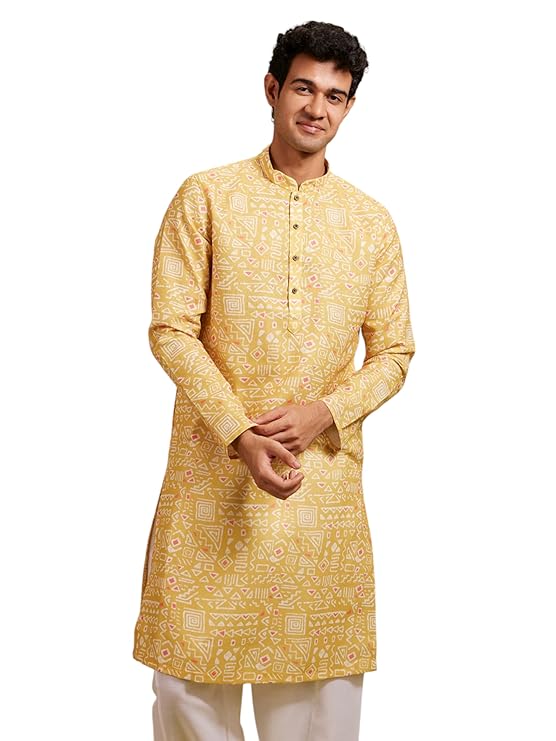
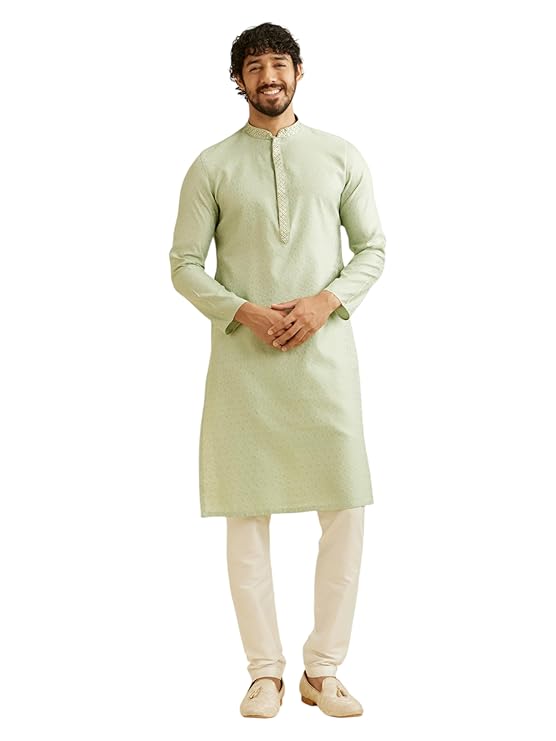
DIWAS BY MANYAVAR Men’s Cotton Blend Printed Kurta (1pc)
🛒 Shop Now on AmazonWedding Market Domination Through Occasion-Based Retail Strategy
Manyavar’s breakthrough insight was recognizing that Indian ethnic menswear follows occasion-driven consumption patterns. Unlike Western casual wear purchased year-round, ethnic wear concentrates around weddings, festivals like Diwali and Eid, and special celebrations.
Weddings particularly drive 60-65% of ethnic menswear spending. Indian weddings involve multiple ceremonies over several days requiring different outfits for grooms, family members, and guests. A single wedding generates ethnic wear purchases for 20-50+ people across both families.
Manyavar organized stores around wedding shopping journeys. The Manyavar Mohey combo stores targeted complete wedding solutions where grooms bought sherwanis while brides shopped for lehengas. This one-stop-shop approach simplified wedding planning for families coordinating multiple purchases.
Strategic wedding market advantages:
- High ticket size: wedding purchases average ₹15,000-50,000 per customer versus ₹3,000-8,000 for festival shopping
- Repeat customers: successful wedding experience drives recommendations to friends’ and relatives’ weddings
- Family shopping: wedding parties bring 5-10 people buying simultaneously increasing transaction values
- Premium positioning: wedding emotional importance reduces price sensitivity enabling higher margins
- Loyalty building: positive wedding experience creates brand affinity for future occasions
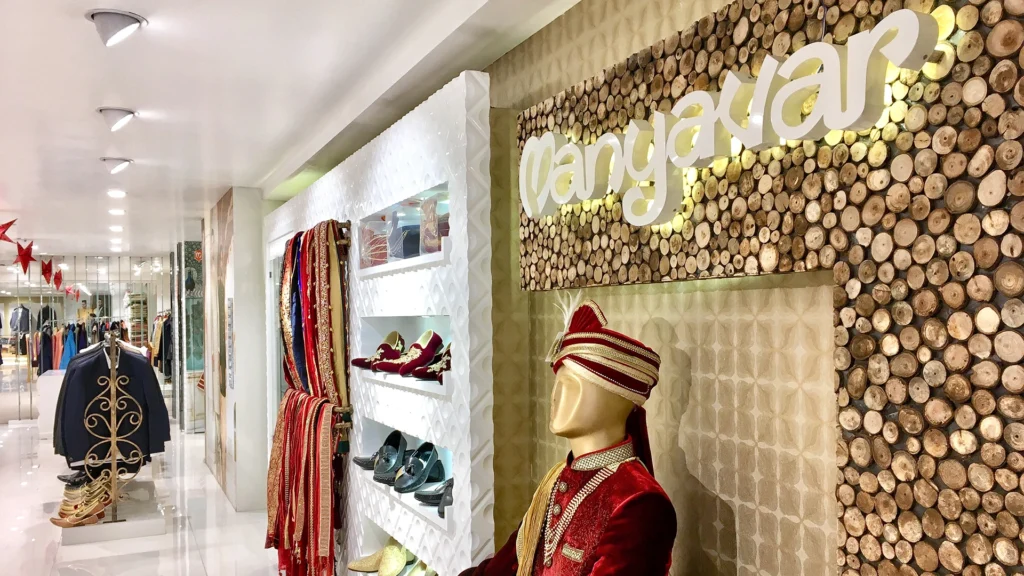
The wedding focus also justified premium retail investments. Manyavar stores span 2,000-4,000 square feet in prime locations, far larger than typical ethnic wear shops. The space enables displaying 300-500+ SKUs creating perception of extensive selection that smaller competitors couldn’t match.
Regional Expansion Following Wedding Belts
Manyavar brand strategy for geographic expansion followed wedding markets rather than general population. North India, with elaborate wedding cultures and higher spending on ceremonies, became priority versus South India where wedding attire customs differed.
The company expanded in clusters, opening 5-10 stores in major cities before entering nearby tier-2 towns. This clustering allowed centralized inventory management, shared marketing costs, and operational efficiencies that isolated stores couldn’t achieve.
Wedding seasons also drove inventory and staffing patterns. October-December and April-June peak wedding seasons required 2-3x inventory and temporary staff increases. Manyavar’s centralized operations enabled efficient seasonal scaling that fragmented competitors couldn’t replicate.
Celebrity Endorsements Driving Mass-Market Aspirations
Manyavar’s brand transformation from retail chain to cultural icon came through aggressive celebrity marketing starting mid-2010s. The company signed Virat Kohli in 2016 as brand ambassador, creating immediate mass-market appeal and youth aspirational quotient that ethnic wear brands had never achieved.
Virat Kohli endorsement strategy:
- Cricket popularity: Kohli’s massive following gave Manyavar instant national visibility
- Youth appeal: Kohli’s modern image made ethnic wear cool for younger demographics
- Wedding association: Kohli’s own wedding to Anushka Sharma in Manyavar sherwani generated massive organic publicity
- Fitness association: Kohli’s athletic physique made ethnic wear seem contemporary versus traditional
- Pan-India relevance: cricket fandom transcended regional preferences affecting other ethnic celebrities
Measurable impact of celebrity partnerships:
- Brand recall: jumped from 20-30% to 60%+ in target demographics post-Kohli
- Store traffic: walk-ins increased 40-50% during active campaign periods
- Youth appeal: ethnic wear became acceptable for urban millennials
- Social media: millions of impressions through celebrity posts and wedding photos
- Premium justification: celebrity association supported 30-50% price premiums
- Regional penetration: cricket’s pan-India appeal transcended language barriers
- Wedding associations: Kohli’s own wedding generated ₹50+ crore equivalent organic publicity
Following Kohli’s success, Manyavar signed multiple celebrities including Kartik Aaryan, Ranveer Singh, and regional stars. The celebrity strategy targeted different demographics, Kartik for family-oriented customers, Ranveer for bold fashion-forward segments, regional stars for local market penetration.
Television Advertising Creating Emotional Connections
Manyavar’s television campaigns, particularly “Tyohaar Wali Feeling” and “Shubh Aarambh,” created emotional narratives around ethnic wear rather than just showcasing products. The ads positioned Manyavar as part of life’s special moments rather than mere clothing.
The emotional advertising approach differentiated Manyavar from competitors running product-focused campaigns. By associating brand with weddings, festivals, and family celebrations, Manyavar became top-of-mind whenever these occasions approached. Customers didn’t think “I need ethnic wear” but rather “I need Manyavar” for important life events.
Television spending reached ₹100-150 crore annually by 2020s, unheard of in ethnic wear segment. But the investment built brand moat that price-based competitors couldn’t overcome. Even if small retailers offered similar products cheaper, brand associations drove customers to Manyavar stores.
Vertical Integration and Private Label Manufacturing Improving Margins
As volumes grew, Manyavar brand strategy shifted toward vertical integration controlling more supply chain elements. The company established manufacturing partnerships and eventually own production facilities handling 40-50% of volumes by 2020s.
Vertical integration advantages:
- Cost control: eliminating middlemen improved gross margins from 35-40% to 50-55%
- Quality consistency: direct manufacturing oversight ensured consistent product standards
- Design exclusivity: own production enabled proprietary designs competitors couldn’t copy immediately
- Inventory flexibility: faster production cycles allowed responding to trend changes within weeks
- Customization capability: integrated manufacturing enabled personalization services at scale
The manufacturing investments required significant capital but paid back through margin improvements. Private label products generated 60-65% gross margins versus 40-45% for outsourced manufacturing, directly improving bottom line profitability.
Manyavar also backward integrated into fabric sourcing, establishing direct relationships with textile mills. This further compressed supply chain costs while ensuring fabric quality consistency across seasons. The fabric relationships became strategic advantages during cotton price volatility when competitors faced supply disruptions.
Technology Integration for Inventory and Customer Data
Behind the traditional retail exterior, Manyavar brand strategy incorporated significant technology investments unusual for ethnic wear segment. Centralized ERP systems tracked inventory across 600+ stores enabling real-time stock visibility and automated replenishment.
Technology systems powering retail operations:
- Centralized ERP: real-time inventory tracking across 600+ stores
- CRM database: customer purchase histories and occasion dates for targeted marketing
- Dynamic pricing: AI-powered promotional optimization based on store-level performance
- Demand forecasting: predictive analytics for seasonal inventory planning
- Automated replenishment: stock levels triggered automatic warehouse orders
- Customer analytics: shopping patterns informing product development and marketing
- POS integration: seamless checkout experience with loyalty program tracking
- Mobile apps: virtual try-on and style advisory features for online engagement
The technology also enabled dynamic pricing and promotional optimization. Manyavar tested different discount strategies across stores and regions, learning which promotions drove traffic versus margin erosion. These learnings informed national campaign planning with data rather than intuition.

Manyavar Men’s Cotton Blend Floral Print Kurta (1pc)
🛒 Shop Now on AmazonMohey Women’s Ethnic Wear Expanding Total Addressable Market
Recognizing that wedding shopping involves both brides and grooms, Manyavar launched Mohey women’s ethnic wear brand in 2015. The strategy created complete wedding shopping destinations where families purchased outfits for bride, groom, and family members simultaneously.
Mohey entry made strategic sense beyond obvious revenue expansion. The women’s lehenga and saree market was 3-4x larger than men’s ethnic wear, offering massive growth potential. Mohey could leverage Manyavar’s retail infrastructure, celebrity marketing, and brand equity while targeting new customer segments.
Strategic advantages of Manyavar-Mohey combination stores:
- Transaction value increase: average purchase jumped 60-80% with combined shopping
- Family convenience: one-stop shopping reduced time spent across multiple retailers
- Cross-selling opportunities: groom purchases influenced bride selections and vice versa
- Store efficiency: shared real estate and staff reduced per-brand operating costs
- Marketing synergy: combined campaigns reached both male and female audiences
- Inventory leverage: similar fabric sourcing created procurement scale economies
- Brand reinforcement: coordinated outfits strengthened wedding market positioning
- Customer data richness: complete family purchase patterns informed product development
Combined Manyavar-Mohey stores increased average transaction values by 60-80% compared to men-only locations.
Twamev Affordable Segment Targeting Mass Market
Twamev differentiation from premium Manyavar:
- Price positioning: 30-40% lower than Manyavar maintaining quality standards
- Store format: smaller 1,000-1,500 sq ft locations versus Manyavar’s 2,000-4,000 sq ft
- Geographic focus: tier-2 and tier-3 cities where premium pricing faced resistance
- Product range: focused selection of 150-200 SKUs versus Manyavar’s 300-500 SKUs
- Marketing approach: localized campaigns instead of expensive celebrity endorsements
- Target demographic: middle-income families versus Manyavar’s affluent positioning
- Operating efficiency: lighter inventory and simpler operations enabling profitability despite lower prices
The multi-brand strategy followed automobile industry playbooks where Maruti offered brands from Alto to Ciaz covering different price segments. Manyavar recognized that Indian market includes customers at every price point, and capturing more segments increased total market share even if individual brand margins differed.
Twamev particularly targeted tier-2 and tier-3 cities where ₹8,000-12,000 sherwanis faced less competition than metro cities. The brand used smaller store formats and lighter inventory reducing operating costs, enabling profitability despite lower prices. By 2023, Twamev operated 150+ stores contributing 15-20% of company revenues.
Challenges Facing Manyavar’s Continued Growth
Despite impressive growth, Manyavar brand strategy faces significant challenges as market matures. The organized ethnic wear segment has attracted competitors including Peter England Ethnix, Raymond Ethnix, Fabindia’s menswear, and D2C brands like Tasva (backed by Aditya Birla).
These competitors bring advantages Manyavar lacks. Peter England and Raymond leverage parent companies’ (Aditya Birla Fashion and Raymond) manufacturing scale and retail expertise. Fabindia offers artisanal positioning that premium customers value. D2C brands like Tasva avoid retail real estate costs entirely, operating with leaner models.
Market saturation in metros creates growth constraints. Tier-1 cities already have 3-5 Manyavar stores each, limiting expansion opportunities. But tier-2 expansion requires adapting products and pricing for local preferences and spending capacity, risking brand consistency that drove initial success.
Competitive pressures and growth challenges:
- Retail expansion costs: new stores require ₹50-80 lakh investment per location before breakeven
- Competition intensifying: established apparel brands entering ethnic segment with resources matching Manyavar
- Wedding market limits: dependence on wedding timing means seasonal revenue volatility
- Fashion trend risks: ethnic wear styles change requiring continuous design refresh
- Economic sensitivity: wedding spending drops during economic downturns affecting premium positioning
- E-commerce disruption: online ethnic wear sales growing with lower cost structures than physical retail
The path to doubling revenues requires either dramatic store expansion into smaller towns or significant same-store sales growth. Store expansion faces capital constraints and market saturation. Same-store growth needs broader occasion targeting beyond weddings, making ethnic wear daily-wear option that Indian men have historically avoided.
E-commerce Strategy Balancing Channels
Manyavar’s e-commerce presence through own website and marketplaces like Myntra creates channel conflicts with physical retail. Online discounting pressures offline store profitability. But avoiding e-commerce means surrendering growing online segment to competitors.
Omnichannel integration balancing online and offline:
- Website discovery: customers browse collections online before visiting stores
- Store locator: prominent feature directing online traffic to nearby retail locations
- Virtual catalog: complete product range visible online with store availability indicators
- Online reservations: customers reserve products online for in-store trial and purchase
- Click-and-collect: order online, pickup at convenient store location within 24 hours
- Exclusive launches: limited online-only collections testing products before retail rollout
- Digital marketing: social media and search ads driving both online and offline traffic
- Fitting emphasis: marketing highlights importance of proper trial for wedding purchases
The solution involves omnichannel strategies where online discovery drives store visits for trials and purchases.
The Bottom Line
Manyavar brand strategy transformed India’s fragmented ethnic menswear market into organized retail category generating ₹1,500+ crore annual revenues. The company succeeded by applying modern retail principles to traditional product category, creating standardized shopping experiences that customers willingly paid premiums to access.
The wedding market focus proved strategically brilliant. By dominating occasion wear segment where emotional value justified premium pricing, Manyavar avoided commoditization that destroyed margins in casual ethnic wear. The wedding association also created marketing advantages as successful customers became brand evangelists recommending Manyavar to their social circles.
Celebrity endorsements, particularly Virat Kohli partnership, elevated Manyavar from retail chain to aspirational brand. The massive marketing spending, unusual for ethnic wear segment, created brand moat protecting against price-based competition. Customers chose Manyavar for brand associations beyond just product attributes.
What made Manyavar brand strategy successful:
- Retail standardization: consistent quality and shopping experience versus fragmented alternatives
- Wedding market dominance: focused on high-value occasion wear rather than broader ethnic category
- Celebrity marketing: created aspirational brand identity making ethnic wear desirable for youth
- Vertical integration: improved margins through controlled manufacturing and supply chain
- Multi-brand strategy: Mohey women’s wear and Twamev affordable segment expanded addressable market
- Store expansion: 600+ locations created omnipresence impossible for competitors to match quickly
The challenges ahead are real. Market saturation, intensifying competition, and e-commerce disruption threaten Manyavar’s retail-heavy model. The company must evolve from pure wedding wear toward broader ethnic lifestyle brand to sustain growth rates. International expansion offers opportunities but requires adapting strategies for diaspora markets with different preferences.
For Indian retail, Manyavar proved that traditional categories could be organized and premiumized through brand building and retail excellence. The playbook works beyond ethnic wear, multiple categories like jewelry, furniture, and home textiles remain fragmented opportunities for similar transformation. Manyavar showed the path from chaos to category leadership in world’s fastest-growing consumer market.
The question isn’t whether Manyavar succeeded in organizing ethnic menswear, the ₹1,500 crore revenue and 600+ stores prove that conclusively. The question is whether they can defend leadership as deep-pocketed competitors recognize the market opportunity they validated. That competitive battle will determine if Manyavar becomes lasting brand or cautionary tale of first-mover advantages eroded by better-resourced followers.