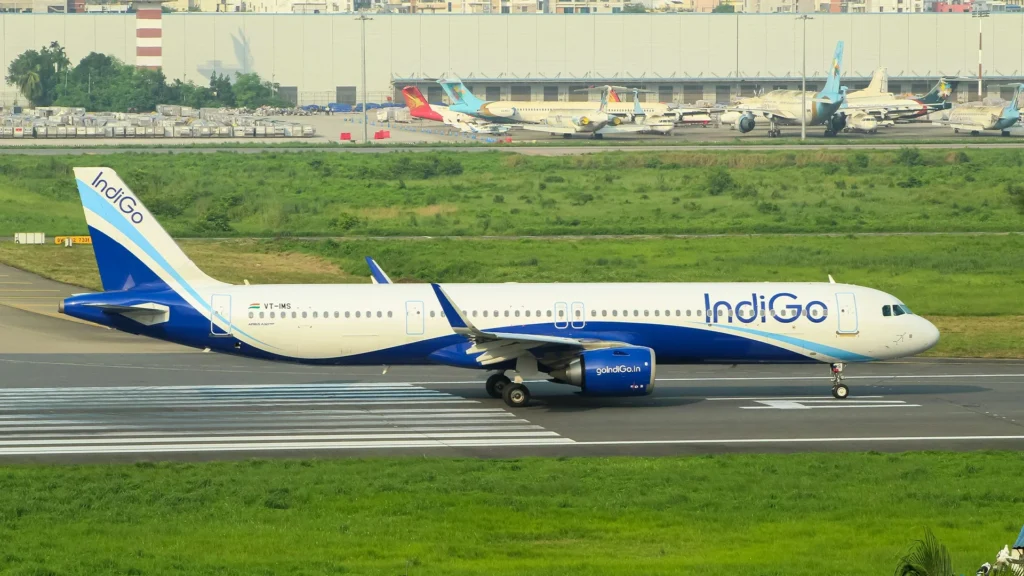
On May 23, 2024, IndiGo’s CEO Pieter Elbers stood before investors with numbers that seemed impossible for an Indian airline to achieve. The company had just reported a net profit of ₹8,172 crore ($1 billion) for fiscal year 2024, making it the first Indian airline in history to cross the billion-dollar profit mark. This wasn’t a one-time fluke.
IndiGo’s remarkable FY 2024 achievement:
- Four consecutive profitable quarters
- 64% domestic market share captured
- Fleet larger than all competitors combined
- ₹71,200 crore total revenue ($8.5 billion)
- 107 million passengers carried
The profitability story becomes even more remarkable against the backdrop of India’s brutal airline graveyard. While IndiGo printed money, its competitors painted a very different picture:
The competition’s FY 2025 carnage:
- Air India Group: Lost ₹9,700 crore ($1.15 billion)
- Akasa Air: Lost ₹2,000 crore ($239 million)
- SpiceJet: Lost ₹58 crore ($7 million)
- IndiGo: Profit of ₹7,258 crore ($915 million)
India’s aviation history reads like a corporate graveyard. Kingfisher Airlines collapsed in 2012 with $2.5 billion in debt after flamboyant owner Vijay Mallya’s extravagant spending destroyed the company. Jet Airways, once India’s premier carrier, entered insolvency in 2019 despite operating for 26 years. GoAir filed for bankruptcy in 2023. Yet IndiGo, founded just 19 years ago in 2005 by Rakesh Gangwal and Rahul Bhatia, not only survived but thrived by doing everything differently.
But this dominance came with a price. In December 2025, IndiGo’s cost-cutting obsession spectacularly backfired when the airline canceled over 4,000 flights in ten days, stranding 600,000 passengers and triggering India’s worst aviation crisis.
The Brutal Business Model That Prints Money
The Single Aircraft Strategy
IndiGo’s profitability starts with a decision most airlines consider boring: operating only one aircraft family. The airline’s fleet consists entirely of Airbus A320 family aircraft, with some ATR 72-600 turboprops for regional routes, plus a handful of wet-leased Boeing aircraft for temporary capacity. This monotony generates massive cost savings that competitors can’t match.
Cost advantages of fleet standardization:
- Pilots trained on A320s can fly any aircraft without additional type-rating costs
- Maintenance crews need expertise on just one system instead of multiple
- Spare parts inventory shrinks dramatically
- Bulk purchasing power drives per-unit costs far below rivals
- Training programs simplified across the entire organization
Fleet scale comparison (December 2025):
- IndiGo: 434 aircraft (India’s largest)
- Air India: 286 aircraft
- SpiceJet: 80 aircraft
- Akasa: 24 aircraft
The operational advantages compound exponentially as fleet size grows. When IndiGo placed a massive order for 500 Airbus A320neo family aircraft in 2023, valued at over $50 billion, the per-unit cost came in far below published list prices, giving IndiGo a structural cost advantage competitors simply cannot replicate without similar scale. In April 2024, IndiGo added another order for 30 A350-900 aircraft with options for 70 more in a deal valued at $5 billion, with deliveries expected from 2027.
This standardization strategy explains why IndiGo’s cost per available seat kilometer (CASK) remains the lowest in India at ₹4.51, compared to full-service carriers that typically run ₹6-7 due to their diverse fleets and complex operations.
The 20-Minute Turnaround Revolution
IndiGo’s obsession with aircraft utilization borders on fanatical. The airline targets a 20-minute turnaround time between landing and takeoff, ensuring each aircraft flies approximately 12-13 hours daily instead of the 8-10 hours typical for Indian carriers.
The 20-minute turnaround system:
- Ground staff double as baggage handlers (eliminates handoff delays)
- Check-in staff assist with boarding procedures
- Cleaning crews sprint through cabins during simultaneous refueling
- Cross-trained pilots can switch between A320 family types instantly
- Maximum crew scheduling flexibility reduces delays
Financial impact of higher utilization:
- IndiGo aircraft: 12-13 hours flying daily
- Competitor average: 8-10 hours flying daily
- Advantage: 30% more revenue from same capital investment
- With 434 aircraft, this represents billions in incremental revenue
The military precision required for these turnarounds shapes IndiGo’s entire organizational culture. Every role combines multiple functions to eliminate idle time. Cabin crew trained to handle multiple aircraft types maximize scheduling flexibility when delays or cancellations require rapid crew adjustments. This cross-training philosophy extends throughout the organization, creating operational efficiencies competitors cannot match without completely rebuilding their cultures from scratch.
The Financial Performance That Defies Gravity
Record-Breaking Profitability
IndiGo’s fiscal year 2024 performance represented a historic achievement not just for the airline but for Indian aviation as an industry. The numbers tell a story of complete market dominance:
FY 2024 financial highlights:
- Total revenue: ₹71,200 crore ($8.5 billion)
- Net profit: ₹8,172 crore ($1 billion)
- Net margin: 11.9%
- All four quarters profitable: First time since FY 2019
- Passengers carried: 107 million
Q4 FY 2024 performance:
- Revenue: ₹18,505 crore
- Net profit: ₹1,895 crore
- EBITDAR margin: 24.8%
- Load factor: 86.3%
- Passenger yield: ₹5.19 per kilometer
The profitability continued into FY 2025, with Q1 showing net profit of ₹2,730 crore on revenue of ₹20,249 crore, maintaining the momentum despite increasing competition. By Q4 FY 2025 (ended March 2025), IndiGo posted its highest-ever quarterly profit of ₹3,067 crore, representing 62% growth year-over-year. For the full FY 2025, IndiGo reported ₹7,258 crore in profits while carrying 118 million passengers.
What makes these numbers extraordinary is the competitive context. During the same FY 2025 period, Air India Group reported losses of ₹9,700 crore ($1.15 billion), Akasa Air lost ₹2,000 crore ($239 million), and SpiceJet recorded losses of ₹58 crore ($7 million). IndiGo wasn’t just profitable, it was the only major Indian airline making money while everyone else hemorrhaged cash.
Market Share Domination
IndiGo’s market share trajectory represents one of the most dominant performances in global aviation history. The airline has systematically crushed competitors through a combination of aggressive pricing, superior on-time performance, and relentless capacity expansion.
IndiGo’s market share evolution:
- 2007: 9% (first full year of operations)
- 2010: 17% (doubled in 3 years)
- 2015: 37% (becoming market leader)
- 2020: 47% (post-COVID dominance)
- August 2024: 62%
- August 2025: 64.2% (near-monopoly status)
Current operational scale:
- Over 2,700 daily flights
- 137 total destinations
- 94 domestic destinations
- 43 international destinations
- Fleet of 434 aircraft (December 2025)
This market share gives IndiGo unprecedented pricing power and network advantages. With 64% of domestic capacity, the airline effectively sets market-wide fare levels, with competitors forced to match IndiGo’s pricing or risk flying empty planes.
Network density advantages:
- Mumbai to Jaipur: 6 daily IndiGo flights vs 2 Air India, 1 SpiceJet
- Route-specific dominance: 70-80% traffic on key city pairs
- Schedule flexibility unmatched by any competitor
- Connectivity combinations impossible for rivals to replicate
The dominance extends to specific routes where IndiGo often captures 70-80% of traffic, effectively monopolizing city pairs that competitors can barely justify serving. This concentration triggered concerns during the December 2025 crisis when IndiGo’s failures left passengers with few alternatives.
The Low-Cost Advantage That Crushes Competition
Revenue Optimization Through Ancillaries
While IndiGo positions itself as a low-cost carrier, the airline has mastered the art of revenue extraction through aggressive ancillary sales that significantly boost per-passenger profitability. The base ticket price represents just the starting point, with IndiGo systematically charging for nearly every additional service.
IndiGo’s fee structure breakdown:
- Seat selection: ₹200-₹1,500 depending on location
- Priority boarding: ₹300-₹600 per passenger
- Extra baggage: ₹300-₹2,000 per additional bag
- Onboard meals: ₹200-₹600 per meal
- Flight changes: ₹2,500-₹3,500 per change
- Cancellations: 50-100% of ticket value forfeited
Ancillary revenue performance:
- Q4 FY 2024: ₹17,194 million in ancillary revenue
- Percentage of total revenue: Nearly 10%
- Growth potential: Ryanair achieves 30%, Spirit Airlines 45%
- Runway for expansion: Significant upside remaining
New revenue streams launched:
- IndiGoStretch (2024): Business class seating on select routes
- Premium features: Complimentary meals, advance seat selection, zero convenience fees
- Target market: Corporate travelers willing to pay premiums
- IndiGo CarGo: Dedicated cargo subsidiary with 3 A321 freighters
International partnerships:
- Air France KLM Martinair Cargo interline agreements
- Leverages massive domestic network for international cargo connections
- Revenue streams impossible for passenger-only operations
- Opens new profit channels beyond ticket sales
The cargo business adds another revenue layer that competitors without dedicated freighters cannot access, while business class expansion targets higher-margin customers without fundamentally changing the low-cost operational model.
Cost Discipline That Borders On Obsession
IndiGo’s cost structure reflects extreme discipline that competitors struggle to match. The no-frills approach extends throughout the passenger experience, with every decision optimized for maximum cost savings.
The ultra-lean operational model:
- All-economy seating: Maximizes revenue passenger kilometers per flight
- No hot meals: Aircraft lack ovens (saves weight and maintenance)
- No entertainment systems: Reduces aircraft weight and fuel burn
- Minimal cabin crew: Lower labor costs per flight
- Multi-role employees: Staff perform multiple functions
Pilot utilization that triggered crisis:
- Only 1,247 pilots added over six months
- Fleet expanded aggressively during same period
- Skeleton crew approach kept labor costs minimal
- Zero margin for disruptions when regulations changed
- December 2025 crisis exposed inadequate staffing
Aircraft utilization comparison:
- IndiGo average: 12-13 hours flying daily
- Competitor average: 8-10 hours flying daily
- Revenue advantage: 30% more flying time per aircraft
- Cost advantage: CASK of ₹4.51 vs ₹6-7 for full-service carriers
Where cost-cutting works:
- More revenue from same capital investment
- Structural advantages scale with fleet size
- Competitors cannot match without complete operational rebuild
Where cost-cutting backfired:
- Inadequate pilot numbers for new regulations
- System collapsed when buffer disappeared
- Profitability built on razor-thin margins
- Single regulatory change triggered complete meltdown
The staffing model that enabled record profitability also created the conditions for December 2025’s spectacular failure, raising questions about whether IndiGo’s cost structure is sustainable or dangerously fragile.
The December 2025 Crisis: When Profitability Met Reality
The Meltdown That Stranded 600,000 Passengers
IndiGo’s cost-cutting obsession spectacularly imploded in December 2025 when the airline triggered India’s worst aviation crisis. The chaos began when new Flight Duty Time Limitation (FDTL) regulations implemented November 1, 2024, forced IndiGo to comply after months of lobbying for delays.
The new FDTL regulations:
- Mandatory weekly rest increased: 36 hours → 48 hours
- Weekly night landings capped: 6 → 2 maximum
- Implementation date: November 1, 2024
- IndiGo compliance status: Unprepared and understaffed
The crisis timeline:
- November 2024: On-time performance crashes from 84.1% to 67.7%
- November: 1,232 total flight cancellations (755 due to crew shortages)
- December 2-5: Crisis intensifies dramatically
- December 5: Only 706 flights operated (from usual 2,300+)
- December 2-12: Over 4,000 flights canceled
The human impact:
- 600,000+ passengers stranded
- 3,000+ bags lost across airports
- Medical emergencies delayed
- Weddings missed
- Business meetings lost
- Passengers sleeping on airport floors
IndiGo had requested approval for 15,014 weekly winter departures based on estimated aircraft availability of 403, but was operating only 339 aircraft in October and 344 in November when the rules took full effect. The airline had added only 1,247 pilots over six months despite aggressive fleet expansion, leaving zero margin for new rest requirements.
Videos showed airports descending into chaos with elderly travelers crying in frustration, IndiGo help desks overwhelmed and eventually unmanned, and one memorable French passenger climbing onto an airline desk screaming that she wanted to go home.
Government Intervention And Regulatory Backlash
The crisis forced unprecedented government intervention in India’s aviation sector. Civil Aviation Minister Kinjarapu Rammohan Naidu directly blamed IndiGo for “mismanagement regarding their crew,” noting that other airlines had prepared for the regulatory changes without major disruptions.
Government emergency actions:
- Show cause notice issued: DGCA demanded 24-hour response
- CEO summoned: Pieter Elbers called for explanation on December 12
- Schedule cuts mandated: 10% reduction in flights ordered
- Refund deadline: All pending refunds required by December 8, 8 PM
- Passenger hotline: Ministry launched assistance line
- Railway coordination: 116 extra coaches added to 37 trains
- DGCA staff actions: Four contracted flight inspectors terminated
- Price caps imposed: Government capped airfares on competing airlines
Refund processing crisis:
- Total refunds required: ₹6.10 billion ($67.6 million)
- Deadline: December 8, 8 PM
- Processing status: Unclear if fully completed
- Passenger complaints: Many received only McDonald’s vouchers
Temporary exemptions granted (controversial):
- Night landing restrictions: Waived until February 10, 2026
- Duty time limits: Relaxed temporarily
- Pilot rest requirements: Exemptions allowed
- Pilot union response: “Rules exist solely to safeguard human life”
- Safety concerns: Exemptions compromise passenger and crew safety
The DGCA sent a show cause notice to IndiGo asking for a response within 24 hours, stating bluntly that “You have failed in your duty to ensure timely arrangements for conduct of reliable operations.” The December 9 order mandated 10% flight cuts, later clarified that IndiGo must reduce its schedule by ten percent due to inability to conduct efficient operations.
The Monopoly Question That Won’t Go Away
The December 2025 crisis exposed the dangers of allowing IndiGo’s market dominance to grow unchecked. With 64% domestic market share and Air India controlling another 26%, the two carriers control 90% of India’s aviation market, creating what analysts call a duopoly situation where competition barely exists.
When IndiGo failed, passengers had nowhere to turn:
- Alternative carriers lacked capacity to absorb demand
- Available seats on competitors priced 10x normal fares
- Air travel became unaffordable for stranded passengers
- No real competition to discipline IndiGo’s operations
The 15-year competitor collapse timeline:
- 2012: Kingfisher Airlines collapsed ($2.5B debt)
- 2019: Jet Airways entered insolvency
- 2023: GoAir filed bankruptcy
- 2024: Vistara merged into Air India (Tata consolidation)
- 2024: AirAsia India acquired by Tata Group
Market concentration reality:
- IndiGo + Air India: 90% market control
- New entrants struggling: Akasa Air (launched 2022) fights for foothold
- Air India losses: Burning billions despite Tata Group backing
- SpiceJet survival: Barely staying afloat with liquidity issues
Each competitor failure increased IndiGo’s market share, creating a self-reinforcing cycle where scale advantages made competition increasingly futile. Industry observers question whether India’s aviation market remains competitive enough to protect consumer interests.
Regulatory capture concerns:
- IndiGo secured FDTL exemptions despite causing massive disruptions
- Poor planning resulted in no meaningful consequences
- Full compliance delayed until February 2026 (2 months post-crisis)
- Market dominance appears to shield from regulatory penalties
The Bottom Line
IndiGo’s transformation from a startup with one aircraft in 2006 to India’s aviation colossus generating ₹8,172 crore annual profits represents the most successful airline story in Indian history. The formula combined ruthless cost discipline, aggressive capacity expansion, and operational excellence that competitors couldn’t match.
The winning formula that created India’s only profitable airline:
- Single-aircraft fleet strategy driving lowest CASK in India
- 20-minute turnarounds extracting 30% more flying hours
- 64% market share creating unmatched pricing power
- Ultra-lean staffing keeping labor costs minimal
- Ancillary revenue mastery adding 10% to total revenue
The profitability record:
- FY 2024: ₹8,172 crore profit (first $1B in Indian aviation history)
- FY 2025: ₹7,258 crore profit while competitors lost billions
- Q4 FY 2025: ₹3,067 crore (highest quarterly profit ever)
- Passengers carried: 118 million annually
But December 2025’s spectacular meltdown revealed the fragility underlying IndiGo’s profit machine. The ultra-lean staffing model that maximizes margins left zero buffer when new pilot rest regulations took effect, forcing the airline to cancel 4,000 flights in ten days and triggering government intervention.
The crisis exposed critical vulnerabilities:
- Profitability depends on pushing pilots to minimal legal rest
- Aggressive lobbying against safety regulations
- Market dominance so complete alternatives don’t exist
- Cost structure built on razor-thin margins
- Single regulatory change triggers complete system collapse
The monopoly problem India must address:
- IndiGo + Air India = 90% domestic market control
- When IndiGo fails, passengers have nowhere to turn
- Competitors lack capacity to absorb demand
- Alternative flights priced 10x normal during crisis
- Market power enables regulatory exemptions despite massive failures
The broader question extends beyond one airline’s operational crisis to India’s aviation market structure itself. Whether IndiGo’s profitability model remains sustainable or whether increasing regulatory scrutiny and competitor recovery will force changes represents the defining question for India’s aviation future. IndiGo proved Indian airline profitability is possible, but at what cost to passenger safety, employee welfare, and market competition?