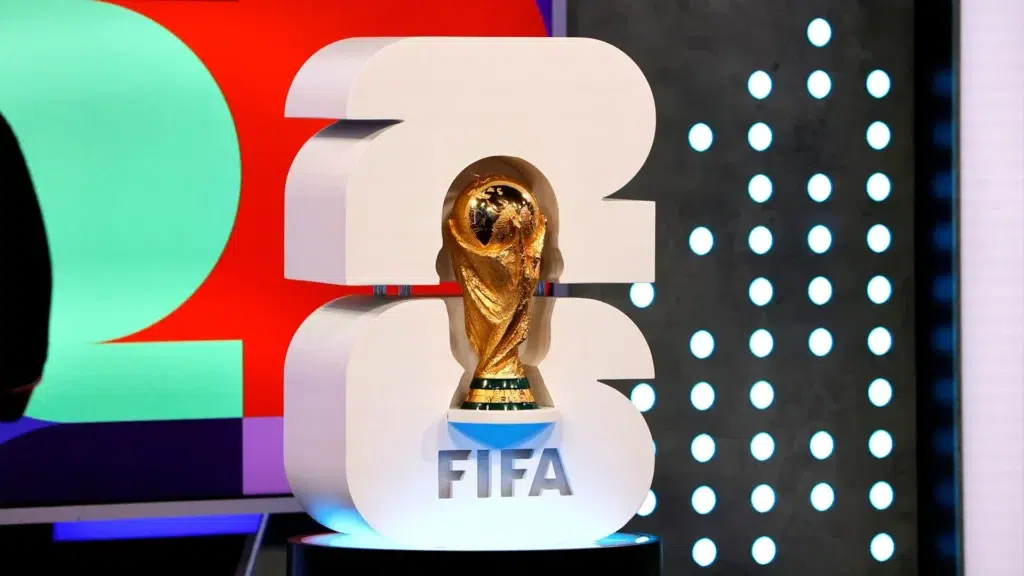
On December 17, 2025, FIFA officially announced the 2026 FIFA World Cup prize money pool would reach $896 million, more than double the $440 million distributed in Qatar 2022. The winner will receive approximately $50 million (projections suggest up to $53 million), compared to Argentina’s $42 million for their 2022 triumph. Every qualified team receives at least $10.5 million, including a mandatory $1.5 million preparation grant.
The expanded format drives these numbers. For the first time in World Cup history, 48 teams will compete across 104 matches rather than the traditional 32 teams playing 64 matches. The tournament runs 39 days from June 11 to July 19, 2026, seven days longer than Qatar’s 32-day format.
FIFA’s official 2023-2026 cycle budget, approved in March 2023, projects total revenue of $11 billion across the four-year period. The 2026 World Cup itself accounts for an estimated $8.9 billion (but one source says the overall budget is $10.5B) of that total. The previous 2019-2022 cycle generated $6.44 billion total revenue. The 2023-2026 cycle represents a $4.56 billion increase, or 71% growth.
Broadcasting rights in North American time zones offer global coverage during prime hours in Europe, Asia, and the Americas simultaneously. Existing modern infrastructure across 16 cities eliminates stadium construction costs that bankrupted previous hosts. The United States market, valued at over 300 million people with high spending power, provides guaranteed ticket and hospitality revenue.
The Financial Structure Behind $11 Billion
FIFA’s 2023-2026 Cycle Revenue Breakdown
FIFA’s official budget for the 2023-2026 quadrennial projects $11 billion in total revenue. This represents a 71% increase from the previous $6.44 billion cycle and the largest revenue growth in FIFA’s history.
FIFA 2023-2026 Cycle Revenue by Source:
- Television broadcasting rights: $4.26 billion (+$964 million from previous cycle)
- Marketing and commercial rights: $2.69 billion (+$927 million from previous cycle)
- Hospitality and ticketing: $3.1 billion (+$2.589 billion from previous cycle)
- Licensing rights: $669 million (+$66 million from previous cycle)
- Other revenue: $277 million (+$14 million from previous cycle)
- Total: $11 billion
The 2026 World Cup itself accounts for approximately $8.9 billion of this total. The remaining $2.1 billion comes from the 2025 Club World Cup, Women’s World Cup earnings, and other FIFA competitions during the cycle.
Broadcasting rights represent the single largest revenue stream at $4.26 billion. North American time zones create ideal global coverage. A match kicking off at 3 PM Eastern Time reaches European audiences at 8-9 PM local time, Asian markets during late evening hours, and the entire Western Hemisphere during daylight.
Qatar’s November scheduling required awkward match times to avoid desert heat. The 2026 summer schedule eliminates this constraint entirely.
Why Broadcasting Rights Hit $4.26 Billion
FIFA’s budgeted revenue from television broadcasting rights totals $4.264 billion, with North American time zones offering favorable coverage across the globe for the FIFA World Cup 2026 plus an expanded match schedule providing a solid platform for commercialization of rights.
The 104-match format provides 40 additional matches compared to Qatar’s 64 games. More matches mean more advertising inventory, more subscription value for streaming services, and more content to sell across every territory globally.
Television networks pay premium rates for North American sporting events because time zones align with peak viewership hours worldwide. The Super Bowl generates $600+ million in advertising revenue for a single three-hour broadcast. The 2026 World Cup offers 104 matches across 39 days, all schedulable during prime time windows in multiple continents simultaneously.
Major Broadcasting Deals Already Secured:
- United States: Fox and Telemundo holding rights estimated at $400-500 million
- European territories: Extensive coverage rights in 200+ territories
- Asian markets: Massive deals reflecting growing football fanbases in China, India, Japan, South Korea
- Latin America: Premium pricing for Mexico and South American territories given geographic proximity
Broadcasting is not just television anymore. Streaming services including Apple TV+, Amazon Prime, and regional platforms compete for digital rights separately from traditional broadcasters. FIFA’s strategy treats digital and television as separate revenue streams, monetizing the same content twice.
The 48-Team Expansion: More Teams, More Money
From 32 to 48: The Format Change That Changed Everything
On January 10, 2017, the FIFA Council voted unanimously to expand the World Cup from 32 teams to 48 teams beginning in 2026. Teams split into twelve groups of four teams, with the top two teams in each group and the eight best third-placed teams progressing to a new round of 32.
FIFA originally proposed 16 groups of three teams each, playing 80 total matches. Critics argued that three-team groups create collusion risks in final matchdays, where two teams could predetermine a result that eliminates the third.
On March 14, 2023, FIFA abandoned the three-team group format and approved the current structure: 12 groups of four teams, with 104 total matches, extending the tournament to 39 days.
Tournament Format Evolution:
- 1994-2022: 32 teams, 8 groups of 4, 64 matches, 32 days
- 2026 (original proposal): 48 teams, 16 groups of 3, 80 matches, 32 days
- 2026 (final format): 48 teams, 12 groups of 4, 104 matches, 39 days
- Winner’s path: 8 matches instead of 7 (new round of 32 added)
The 40 additional matches create enormous commercial value. Each match generates broadcasting, ticketing, hospitality, and sponsorship activation revenue. FIFA projected that the increase to 48 teams will generate an additional $1 billion in revenue, and $640 million in profit.
The Regional Allocation: Who Gets the 16 Extra Slots
Expanding from 32 to 48 teams required FIFA to redistribute qualification slots across six continental confederations.
2026 Qualification Slots by Confederation:
- UEFA (Europe): 16 slots (up from 13 in 2022)
- CAF (Africa): 9 slots (up from 5 in 2022)
- AFC (Asia): 8 slots (up from 4.5 in 2022)
- CONMEBOL (South America): 6 slots (up from 4.5 in 2022)
- CONCACAF (North/Central America + Caribbean): 6 slots (includes 3 automatic host qualifications)
- OFC (Oceania): 1 slot (up from 0.5 in 2022)
- Inter-confederation playoffs: 2 slots
- Total: 48 teams
Africa and Asia received the largest absolute increases, reflecting FIFA’s stated goal of globalizing the tournament. Europe remains dominant with 16 slots but represents a smaller percentage of total teams. As the host nations, Canada, Mexico, and the United States all automatically qualified.
The expanded field guarantees more nations in the tournament, which directly translates to larger television audiences in those markets. A nation with its team in the World Cup watches more matches, buys more tickets, and generates more commercial interest than one without representation.
Prize Money Doubles to $896 Million
The $896 Million Prize Pool Breakdown
The FIFA Council approved a record-breaking prize money pool of $655 million, marking a 50% increase compared to the previous edition. Each qualified team receives $1.5 million to cover preparation costs, meaning all teams are guaranteed at least $10.5 million each.
The total financial commitment to participating teams reaches $896 million when adding preparation grants, insurance, and club compensation payments. This is more than double the $440 million total from Qatar 2022.
2026 Prize Money Distribution (Projected):
- Winner: $50 million (up from $42 million in 2022)
- Runner-up: $37 million (up from $30 million in 2022)
- Third place: $32 million (up from $27 million in 2022)
- Fourth place: $29 million (up from $25 million in 2022)
- Round of 32 (16 teams): $10.5 million each (new knockout round)
- Group stage elimination (24 teams): $9 million each
- Preparation grant (all 48 teams): $1.5 million each guaranteed
- Total prize pool: $896 million
The winner’s prize represents a conservative FIFA-official figure. Applying 2022’s payout structure percentage to the expanded pool suggests the winner could receive up to $53 million.
What Players Actually Earn
National federations receive the prize money from FIFA and then distribute it to players based on pre-negotiated agreements. Distribution percentages vary by country, typically 50-90% goes to players, with federations retaining the remainder.
Using Argentina’s 2022 World Cup victory as a reference, the players collectively received approximately 85% of the $42 million prize, or $35.7 million. Divided among 26 players, the average per player before taxes was $1.37 million. After typical 40% tax rates, individual take-home was approximately $822,000.
For 2026, if the winner’s prize reaches $50 million and 85% goes to players, the average per player before taxes would be $1.63 million, or approximately $978,000 after taxes.
Hosting Across Three Nations: The Infrastructure Advantage
16 Host Cities, Zero New Stadium Construction
The 2026 FIFA World Cup will use 16 existing stadiums across three countries: 11 in the United States, 3 in Mexico, and 2 in Canada. Unlike past hosts which incurred vast costs for building new stadiums, the FIFA World Cup 2026 leverages existing modern infrastructure.
United States Host Cities (11):
- New York-New Jersey (MetLife Stadium): Final on July 19, 2026
- Los Angeles (SoFi Stadium)
- Dallas (AT&T Stadium)
- San Francisco Bay Area (Levi’s Stadium)
- Atlanta (Mercedes-Benz Stadium)
- Miami (Hard Rock Stadium)
- Philadelphia (Lincoln Financial Field)
- Seattle (Lumen Field)
- Kansas City (Arrowhead Stadium)
- Boston (Gillette Stadium)
- Houston (NRG Stadium)
Mexico Host Cities (3):
- Mexico City (Estadio Azteca)
- Guadalajara (Estadio Akron)
- Monterrey (Estadio BBVA)
Canada Host Cities (2):
- Toronto (BMO Field)
- Vancouver (BC Place)
Mexico becomes the first country to host or co-host the men’s World Cup three times, having previously hosted in 1970 and 1986. The United States previously hosted in 1994. Canada hosts the men’s tournament for the first time.
The existing infrastructure eliminates the financial disasters that plagued previous hosts. Brazil spent $15 billion on the 2014 World Cup, including $3 billion on new stadiums that now sit largely unused. South Africa spent $4 billion on 2010 infrastructure. Russia spent an estimated $11.6 billion for 2018. Qatar’s total World Cup expenditure exceeded $220 billion when including the entire nation-building project.
The United 2026 bid requires no new stadium construction. Upgrades, temporary seating additions, and FIFA-specification modifications will cost approximately $2 billion total across all venues. This is a fraction of what previous hosts spent.
The Economic Impact: $5-6 Billion Across Three Nations
Estimates project the tournament will generate between $5 billion and $6 billion across the host nations, with cities receiving hundreds of millions each from tourism, advertising, and job creation.
Tourism Economics estimates that the tournament will attract approximately 1.2 million international visitors to the United States alone.
Projected Economic Impact by Nation:
- United States: $3.5-4 billion (hosting 78 of 104 matches including final)
- Mexico: $1-1.2 billion (hosting 13 matches)
- Canada: $500-800 million (hosting 13 matches)
- Total: $5-6 billion combined
Los Angeles County is set to host a significant number of matches including the sought-after U.S. Men’s National Team opener. The projected impact includes total economic impact up to $594 million for the county and approximately $35 million in additional tax revenue.
The last World Cup hosted in the United States, in 1994, generated over $1.4 billion for host cities in period dollars. Adjusted for inflation and accounting for the 40 additional matches in 2026, the economic impact should far exceed that figure.
Host cities benefit from hotel occupancy taxes, restaurant and retail spending, transportation revenue, and long-term tourism marketing that continues generating returns years after the tournament ends.
Marketing, Sponsorship, and Commercial Rights: $2.69 Billion
The Sponsorship Structure
With a projected $2.69 billion, a $927 million increase, marketing and commercial rights showcase FIFA’s digital-first strategy. FIFA’s sponsorship structure operates in tiers, with different levels of rights and activation opportunities.
FIFA Partner (Top Tier):
- Adidas: apparel and equipment partner since 1970
- Coca-Cola: beverage partner since 1978
- Hyundai-Kia: automotive partner
- Visa: payment services partner
- Qatar Airways: official airline
- Wanda Group: Chinese conglomerate
FIFA World Cup Sponsors (Second Tier):
- Budweiser: beer sponsor
- Hisense: electronics
- McDonald’s: fast food
- Vivo: mobile phones
- Multiple regional partners
Partners at the top tier pay $100-150 million per four-year cycle for exclusive category rights, global activation permissions, and premium hospitality access.
The United States plays a pivotal role as the largest market among the three host nations. American corporate sponsorship budgets dwarf those in most countries, and brands view the US-hosted World Cup as a rare opportunity to activate at scale in the world’s largest advertising market.
Hospitality and Ticketing: $3.1 Billion Projected
FIFA controls all hospitality packages directly rather than outsourcing to third parties, retaining 100% of revenue. Premium packages for the 2026 final at MetLife Stadium are expected to range from $20,000 to $50,000+ per person for all-inclusive access including flights, accommodation, meals, and VIP match tickets.
2026 Ticket Price Ranges (Confirmed):
- Group stage: $60 to $2,735 (top category for host nation matches)
- Round of 16: Approximately $980 (top tier)
- Quarterfinals: Approximately $1,775 (top tier)
- Semifinals: Approximately $3,295 (top tier)
- Final: Approximately $6,730 (top tier category)
Group stage matches involving a host nation (USA/Canada/Mexico) reach up to nearly $2,735 in top categories. Official FIFA tickets start at $60 for group-stage matches with premium Final seats reported up to $6,730.
With 104 matches and an average stadium capacity of 65,000-80,000, total attendance will exceed 7.1 million fans. If the average ticket price is $300, ticketing alone generates $2.13 billion before hospitality packages. More than 4.5 million people applied to buy 2026 FIFA World Cup tickets during the first presale draw.
Hospitality packages add approximately $1 billion more based on historical World Cup ratios, bringing total ticketing and hospitality revenue to approximately $3.1 billion.
The Investment Side: Where FIFA Spends $12.9 Billion
FIFA’s 2023-2026 Cycle Expenditure Budget
The investment budget for the 2023-2026 cycle totals $12.9 billion when including all development programs and operational costs.
FIFA 2023-2026 Cycle Expenditure Breakdown:
- FIFA Forward development programs: $2.25 billion to 211 member associations
- Prize money and team compensation: $896 million for 2026 World Cup teams
- Tournament operations: $3.84 billion estimated for 2026 World Cup operations
- Football development fund: $660 million for grassroots and youth programs
- Broadcasting production costs: Hundreds of millions for TV feeds, VAR technology, cameras
- Marketing and administration: Approximately $1 billion across the cycle
- Total investment: $12.9 billion
FIFA will reinvest $11.673 billion or more than 90% of its budgeted investments back in the game to boost global football development. The 211 member associations each receive at least $2 million annually through FIFA Forward programs.
This redistribution model is why smaller footballing nations support FIFA’s commercial expansion. A nation like Cape Verde or Curaçao, making their World Cup debut in 2026, will earn over $10 million in prize money alone, more than their federation’s entire annual budget.
Why 2026 Will Remain the Most Expensive
The Perfect Storm of Commercial Factors
The 2026 FIFA World Cup will likely remain the most expensive tournament in history for decades because every commercial factor aligned simultaneously.
Factors Making 2026 Uniquely Valuable:
- First 48-team tournament: 104 matches, 40 more than any previous World Cup
- North American time zones: Prime-time global coverage in Europe, Asia, Americas simultaneously
- Existing infrastructure: Zero new stadium costs, all investment goes to operations
- United States market: 300+ million people, highest per-capita spending power globally
- Post-pandemic return: First summer World Cup since 2018, pent-up demand
- Social media integration: 97 million FIFA followers, TikTok generating 50+ billion views
- Streaming wars: Apple, Amazon competing with traditional broadcasters for rights
Future World Cups will struggle to match 2026’s commercial performance. The 2030 tournament will be split between Morocco, Portugal, Spain, and three South American nations hosting single centenary matches. This geographic fragmentation will increase costs while making it harder for fans to travel between matches.
The 2034 tournament is likely heading to Saudi Arabia, which has unlimited financial resources but a much smaller domestic market than the United States and time zones unfavorable for American and European audiences simultaneously.
The Bottom Line
FIFA’s 2023-2026 cycle will generate $11 billion in total revenue. The 2026 World Cup accounts for $8.9 billion of that. Prize money doubles to $896 million, the winner receives $50 million, and 48 teams playing 104 matches will create the largest sporting event in history measured by revenue, attendance, and global reach.
The tournament leverages existing infrastructure across the United States, Mexico, and Canada, eliminating the financial disasters that plagued Brazil, South Africa, Russia, and Qatar. With zero new stadiums required, the entire economic benefit flows to tourism and hospitality rather than construction. The projected $5-6 billion economic impact across three nations represents pure multiplier effect without offsetting debt.
Why 2026 is the most expensive World Cup in five numbers:
- $11B: Total FIFA cycle revenue, up 71% from previous $6.44B
- $8.9B: 2026 World Cup revenue alone
- $4.26B: Broadcasting rights, highest in any sporting event history
- 104: Total matches, 40 more than any previous World Cup
- $896M: Prize pool, double Qatar 2022’s $440M
Broadcasting rights at $4.26 billion reflect North American time zones creating simultaneous prime-time coverage globally. Marketing at $2.69 billion capitalizes on the United States being the world’s largest advertising market. Hospitality at $3.1 billion leverages existing modern stadiums with luxury suites already built in.
The expanded 48-team format future-proofs FIFA’s revenue model. Every confederation gained qualification slots, ensuring broader television audiences and stronger commercial interest from regions previously underrepresented. The infrastructure advantage cannot be overstated. Qatar spent $220 billion total, Russia spent $11.6 billion, Brazil spent $15 billion. The United 2026 bid requires approximately $2 billion in modifications across all venues combined.
Future World Cups will inherit the 48-team format and expanded prize pools, but they will struggle to match 2026’s commercial perfection. The combination of North American infrastructure, time zones, market size, and commercial maturity that makes 2026 possible will not repeat within the next generation.