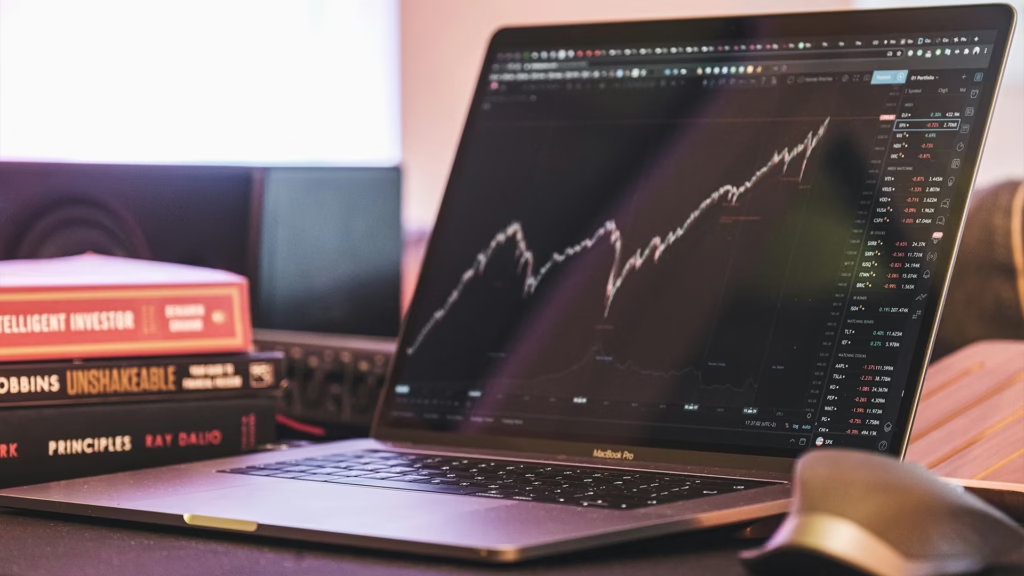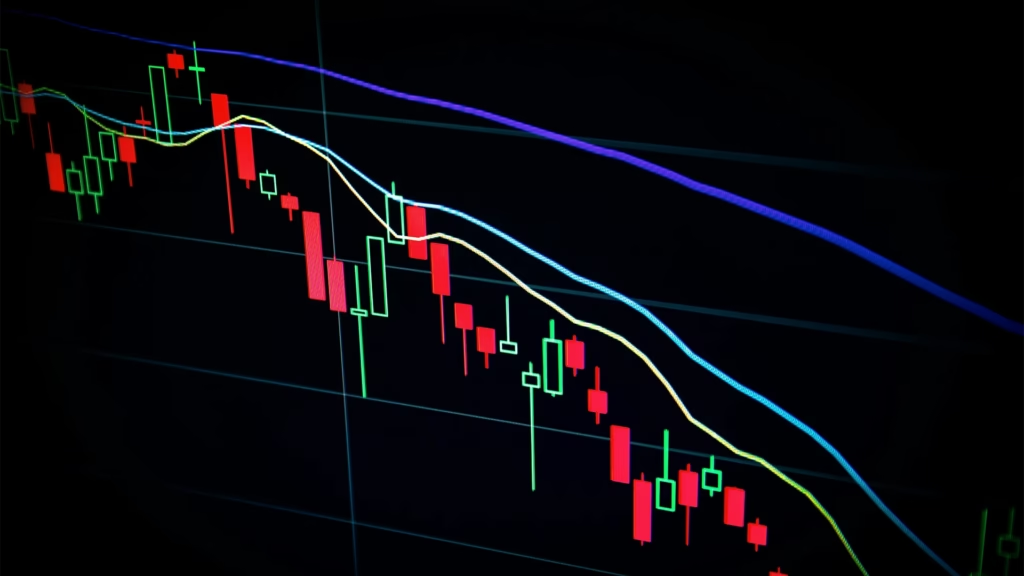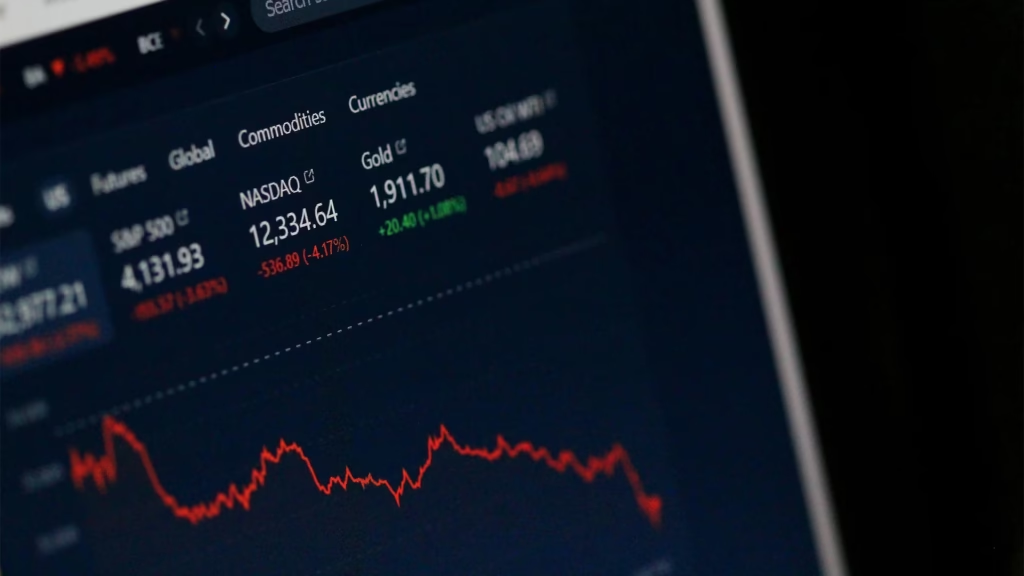
A stock market is like eBay or Amazon, but instead of buying phones or shoes, people buy and sell pieces of companies.
That’s it at the core.
Buyers and sellers meet, agree on a price, and trade. The stock market is just the organized place where this happens electronically, instantly, millions of times per day.
The Marketplace Analogy
Imagine a farmers market on Saturday morning. There are 20 vendors selling apples and 100 people want to buy apples. Prices are set by negotiation: “I’ll sell for $5/kg” “I’ll pay $4/kg” – eventually, they agree on a price and the transaction happens. The stock market works exactly the same way, just digitally and at lightning speed. Instead of apples, it’s shares of Apple Inc. (the company).
How It Used to Work (1792-1990s):
Picture the New York Stock Exchange trading floor: hundreds of traders shouting, waving hand signals. “I want to BUY 100 shares of IBM at $50!” “I want to SELL 100 shares of IBM at $51!” A middleman matches them up. Chaotic, loud, but it worked.
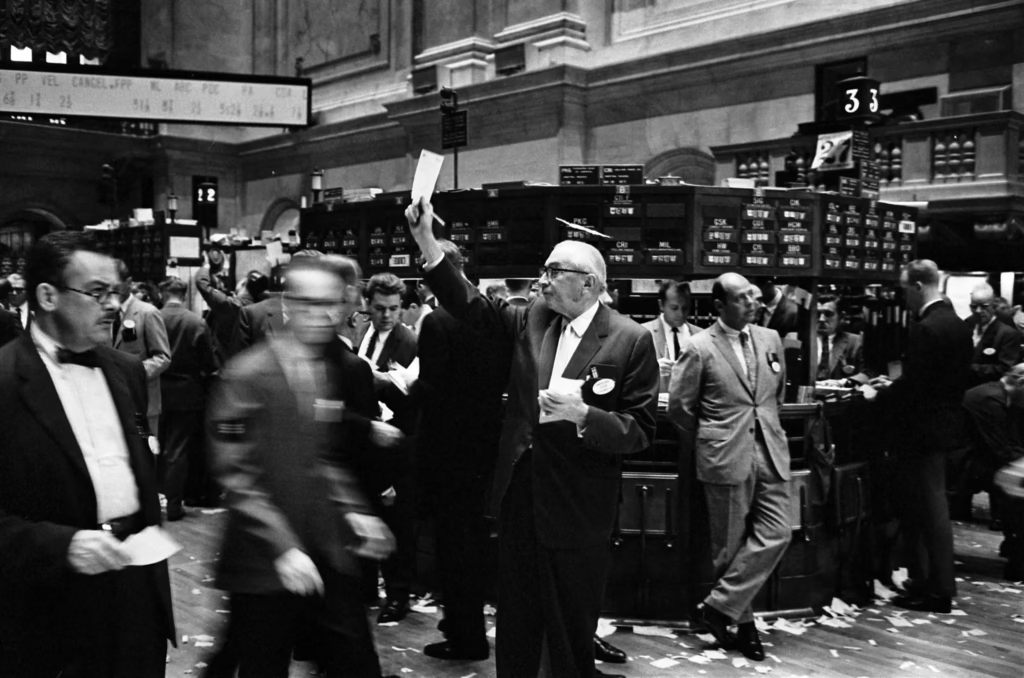
How It Works Today (1990s-Now):
Now it’s all computerized. You open an app (like Robinhood, Fidelity, E-Trade), click “Buy 10 shares of Tesla,” and a computer instantly finds a seller. The trade executes in milliseconds. Done. No shouting, no physical floor (mostly), just algorithms matching buyers with sellers. 95% of trading today is electronic.
How Stock Prices Work
This is the most important concept to understand: Stock prices are determined by one thing: Supply and Demand.
Let me show you with a real example from October 21, 2025:
9:30 AM – Market Opens Tesla’s current price is $445. There are 1,000 people who want to BUY at $445 or higher, and 1,000 people who want to SELL at $445 or lower. It’s balanced, so the price stays around $445.
10:15 AM – News Breaks Tesla announces: “We just signed a $10 billion deal with the U.S. government for electric vehicles!” Suddenly 5,000 people want to BUY (demand increases) but only 500 people want to SELL (supply decreases). Buyers compete: “I’ll pay $450!” “I’ll pay $455!” “I’ll pay $460!” The price shoots up to $460 in minutes.
Why? More buyers than sellers. Demand > Supply.
1:00 PM – More News Tesla announces: “Our factory had a major fire. Production stopped for 3 months.” Now 5,000 people want to SELL immediately (supply increases) but only 500 people want to BUY (demand decreases). Sellers compete: “I’ll sell at $450!” “I’ll sell at $445!” “I’ll sell at $440!” The price drops to $440 in minutes.
Why? More sellers than buyers. Supply > Demand.
Bid-Ask Spread
Two prices always exist in real-time:
- BID = Highest price someone will PAY
- ASK = Lowest price someone will ACCEPT
Real Example – Apple Stock:
- Bid: $253.50 (someone wants to buy at this price)
- Ask: $253.55 (someone wants to sell at this price)
- Spread: $0.05 (the difference)
When you click “Buy Now,” you pay the ASK price ($253.55) and transaction happens instantly with someone selling at $253.55. When you click “Sell Now,” you get the BID price ($253.50) and someone buying at $253.50 gets matched with you. The spread is how market makers earn money.
Stock Exchanges: The Platform and Rules
Think of a stock exchange as the referee and meeting place for all trades. They provide the technology platform to match buyers and sellers (like how eBay provides the platform for auctions), set the rules for trading (trading hours, who can trade, reporting requirements), ensure fairness (prevent fraud, stop market manipulation, monitor suspicious activity), and list companies (approve which companies can be traded and set standards they must meet).
Major Stock Exchanges
In the United States:
- NYSE (New York Stock Exchange) – Oldest in the U.S. (founded 1792), located on Wall Street in NYC, home to Coca-Cola, Walmart, Disney, Visa. Market cap: ~$25 trillion
- NASDAQ – Electronic exchange with no physical floor, founded 1971, home to Apple, Microsoft, Amazon, Tesla, Google. Market cap: ~$25 trillion. Known for tech companies
- Others include CBOE (Chicago Board Options Exchange), NYSE American, and BATS Exchange
Around the World
- London Stock Exchange (UK) – 3rd largest globally
- Tokyo Stock Exchange (Japan) – 3rd largest in Asia
- Shanghai Stock Exchange (China) – Rapidly growing
- Hong Kong Stock Exchange – Major Asian hub
- Euronext (Europe) – Paris, Amsterdam, Brussels
- Toronto Stock Exchange (Canada)
- Bombay Stock Exchange (India) – Oldest in Asia
You can invest in companies listed on any of these exchanges.
Trading Hours (U.S. Markets, EST)
- Pre-Market: 4:00 AM – 9:30 AM (limited trading, lower volume, mostly professionals)
- Regular Hours: 9:30 AM – 4:00 PM (main session, 90% of volume)
- After-Hours: 4:00 PM – 8:00 PM (limited trading, more volatile)
- Closed: Weekends and holidays
Why limited hours? Originally needed time to process paperwork. Now it’s tradition and gives markets time to “cool off” overnight.
Market Makers – The Middlemen
Market makers (like Citadel Securities, the largest) ensure there’s always someone to buy from or sell to. They constantly post both buy and sell orders: “I’ll BUY Apple at $253.50” and “I’ll SELL Apple at $253.55.” When you want to buy Apple, Citadel sells to you at $253.55. They make $0.05 per share (the spread). Multiply by billions of trades = huge profits. They provide liquidity, which means the market flows smoothly. Without market makers, you might wait hours to find a buyer or seller.
How to Buy and Sell Stocks
Step-by-Step: Buying 10 Shares of Microsoft
- You place an order – Open your brokerage app, search for “MSFT” (Microsoft’s ticker), click “Buy,” enter 10 shares, choose “Market Order” (buy at current price), click “Submit”
- Your broker receives it – Your order goes to your broker (Fidelity, Schwab, Robinhood, etc.). They check if you have enough money ($4,150 for 10 shares at $415). If yes, they send the order to the exchange.
- Exchange matches your order – NASDAQ receives your buy order. A computer algorithm finds a seller willing to sell at $415. Takes milliseconds (literally 0.003 seconds).
- Trade executes – You get 10 shares, the seller gets your $4,150, both accounts updated instantly.
- Settlement – Behind the scenes, the official transfer happens in 1-2 business days (T+1 or T+2), but you can see and trade the shares immediately.
Total time: Under 1 second.
Types of Orders You Can Place
Market Order – Buy/sell immediately at current price. Example: Microsoft is trading at $415, you place a market order to buy 10 shares, you’ll get them at $415 (or very close). Fast and guaranteed execution, but price might change slightly. Best for normal market hours and stable stocks.
Limit Order – Buy/sell only at a specific price or better. Example: Microsoft is trading at $415, you place a limit order to buy at $410 or less. Your order sits and waits. If the price drops to $410, you get your shares. If it never drops, you don’t get them. You control the price but might not execute. Best for volatile stocks when you’re patient.
Stop-Loss Order – Automatically sell if price drops to a certain level. Example: You own Tesla at $445, you set a stop-loss at $420. If Tesla drops to $420, your shares automatically sell. This protects you from bigger losses. It’s automatic risk management, but could sell during a temporary dip. Best for protecting gains and managing risk.
What Moves Stock Prices
Prices change constantly throughout the day for several reasons:
News and announcements move prices instantly. In October 2025, at 9:00 AM Apple announced iPhone 17 sales exceeded expectations. By 9:01 AM, the stock jumped from $254 to $262 as thousands of people suddenly wanted to buy.
Earnings reports create big moves. When Netflix reported Q3 2025 earnings after market close and subscriber growth beat expectations, the next morning the stock opened 8% higher.
Economic data affects entire markets. At 8:30 AM, if the government reports strong job growth, the entire market often rises because a good economy means good for businesses.
Global events shift money between sectors. When geopolitical tensions increase, investors move money to “safe” stocks – tech stocks might drop while utility stocks might rise.
Large institutional trades create pressure. When a pension fund decides to buy $500 million of Tesla, it creates buying pressure and the price rises.
Pure speculation also drives prices. Sometimes there’s no news at all. Traders just think a stock will go up or down, and their collective action creates the price movement.
Circuit Breakers – Safety Features
Stock exchanges have emergency brakes to prevent crashes. If the S&P 500 drops 7% in one day, trading halts for 15 minutes. If it drops 13%, trading halts for another 15 minutes. If it drops 20%, the market closes for the rest of the day. This gives everyone time to calm down and prevents panic selling.
Real example: On March 16, 2020 during the COVID crash, the market dropped 12% in one day. The circuit breaker triggered, trading halted for 15 minutes, and it helped prevent total panic. Individual stocks also have halts – if any stock moves up or down more than 10% in 5 minutes, trading pauses for 5-10 minutes.
Understanding Market Mechanics
Primary vs Secondary Markets
The primary market is where companies first sell their stock through an IPO (Initial Public Offering). Example: Airbnb decided to go public in 2020, created 10 million shares, sold them at $68 each, and raised $680 million. The company gets this money. This happens once.
The secondary market is where investors trade stocks with each other – this is the regular stock market you see every day. Example: You buy 100 Airbnb shares from another investor for $135 each. You pay $13,500, the other investor gets $13,500, but the company gets nothing (they already got their money during the IPO). This happens millions of times per day.
Key Point: When you buy stock on Robinhood or Fidelity, you’re buying from another investor, not from the company. The company doesn’t get your money.
Volume – The Measure of Activity
Volume means the number of shares traded in a day. On October 21, 2025, Apple had 45 million shares traded, Tesla had 85 million shares traded, while a small company might only have 50,000 shares traded.
High volume means lots of interest, easy to buy/sell (liquid market), and price changes are meaningful. Low volume means little interest, harder to buy/sell quickly, and prices can be manipulated easier. As a beginner, look for high-volume stocks because they’re easier to trade.
Market Cap vs Stock Price
Many beginners get this wrong. Stock price alone means NOTHING. Here’s why:
Company A (Amazon):
- Stock price: $217 per share
- Total shares: 10 billion
- Market cap: $2.17 TRILLION
Company B (Small retailer):
- Stock price: $500 per share
- Total shares: 1 million
- Market cap: $500 MILLION
Company A is 4,340 times more valuable even though its stock price is lower! Always look at market cap (total company value), not just stock price.
Common Questions Beginners Ask
- Who decides the IPO price? Investment banks work with the company to analyze demand and set an initial price. Then the market takes over and supply/demand determines everything.
- Can I buy stocks after hours? Yes, but volume is lower, spreads are wider, and prices are more volatile. Not recommended for beginners.
- Why do stocks move without news? Overall market sentiment, algorithmic trading, large institutional trades, or just random fluctuations from normal buying and selling.
- What if I place an order when the market is closed? It queues and executes when the market opens. The price you get might be different from the previous close.
- Can stock prices go to zero? Yes. If a company goes bankrupt, the stock becomes worthless. This is why diversification matters.
- Why can’t I buy partial shares? Some brokers don’t offer fractional shares, but most modern apps (Robinhood, Fidelity, Schwab) do now.
Why This Matters to You
Understanding how stock markets work changes everything:
Before understanding: “Stock prices are random. They go up and down for no reason. It’s confusing and scary. I’ll never understand it.”
After understanding: “Stock prices move based on supply and demand. When more people want to buy Tesla than sell it, the price goes up. When bad news comes out, more people want to sell, so the price drops. It’s not random, it’s logical.”
This mindset shift is huge. You’re no longer intimidated by price movements. You understand the mechanics. When you see a stock drop 5% in a day, you don’t panic, you know it’s just normal market activity from buyers and sellers finding a new price point.
Let’s Recap
The stock market isn’t mysterious or magical. It’s just a marketplace.
Buyers want to buy at lower prices. Sellers want to sell at higher prices. When they meet in the middle, a trade happens. Do this millions of times per day across thousands of stocks, and you have the stock market.
That’s all it is.
- Stock markets evolved from physical trading floors with shouting traders to electronic systems that execute in milliseconds
- Supply and demand is the ONLY thing that determines stock prices, more buyers push prices up, more sellers push prices down
- Bid-ask spread shows the gap between what buyers will pay and sellers will accept
- Stock exchanges (NYSE, NASDAQ) provide the platform, match buyers with sellers, and set trading rules
- Trading hours are 9:30 AM – 4:00 PM EST, with limited pre-market and after-hours trading
- Market makers ensure you can always buy or sell by posting both buy and sell orders
- Order types give you control, market orders for speed, limit orders for price control, stop-loss for protection
- Primary market is where companies raise money through IPOs; secondary market is where you trade with other investors
- Volume tells you how active a stock is, high volume means easy to trade, low volume means harder
- Market cap (not stock price) shows true company value, a $10 stock can be worth more than a $500 stock
What’s Next?
Now that you understand how stock markets work, you’re ready to learn:
- How to read and analyze stock charts
- What makes a stock price go up or down long-term
- Different types of stocks (growth, value, dividend, etc.)
- How to open a brokerage account
- How to place your first trade
- Investment strategies for beginners
Understanding the mechanics of how markets work is fundamental. Everything else builds on this foundation.
You now understand more than most people ever learn about how markets actually function.
Remember: This is educational content only. Stock trading involves risk. Always do your research before investing. Past performance doesn’t guarantee future results.