On July 17, 2025, Real Madrid released its financial results for the 2024/25 season, confirming what industry experts already suspected. The club had become the only football team in history to surpass €1 billion in annual revenue for two consecutive years. Total revenue reached €1.185 billion, marking a 10% increase from the previous year.
Net debt stood at just €12 million, excluding the Santiago Bernabéu renovation project. The debt-to-EBITDA ratio was 0, representing maximum solvency and absolute financial autonomy. Cash reserves totaled €166 million. The club posted €24 million in profit after tax, a 56% increase from 2023/24.
Meanwhile, across the city, Barcelona announced they ended the 2024/25 fiscal year with a €17 million loss. Their debt reached approximately €1.9 billion, including €159 million owed to other clubs for unpaid transfer fees. La Liga slashed Barcelona’s spending cap to €351 million while increasing Real Madrid’s limit to €761 million.
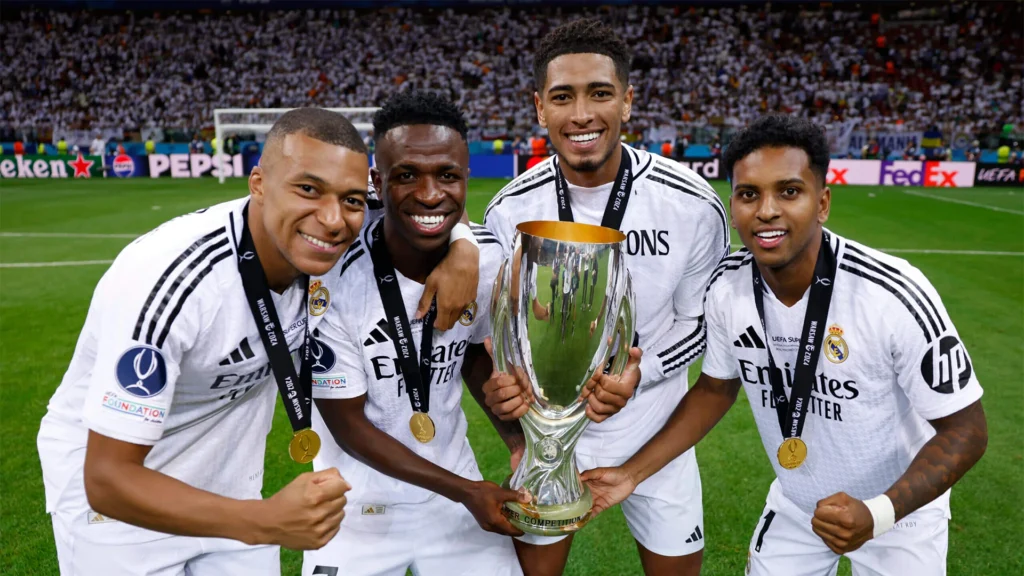
How does Real Madrid sign superstars like Kylian Mbappé, Jude Bellingham, and Vinicius Junior while maintaining pristine finances? The answer lies in a revolutionary image rights system, disciplined wage structure, and a business model that treats football as both sport and enterprise.
The 50-50 Image Rights System That Changed Football
How Real Madrid Invented the Image Rights Model
When Florentino Pérez became Real Madrid president in 2000, he recognized something other clubs missed. Football’s biggest stars generated enormous commercial value through endorsements, sponsorships, and licensing deals. The club needed a system to monetize player brands while keeping wage costs sustainable.
Pérez instituted a revolutionary 50-50 image rights split. Real Madrid would receive half of all commercial revenue generated by a player’s image, while the player kept the other half. The argument: playing for Real Madrid exponentially increased a player’s global commercial value, so the club deserved its share.
Before Real Madrid’s system, most clubs paid massive salaries but captured zero commercial revenue from player endorsements. A player might earn €10 million salary plus €30 million from Nike, Adidas, or Pepsi deals, with the club receiving nothing. Real Madrid’s 50-50 model changed this dynamic forever, creating a new revenue stream worth tens of millions annually.
The Galacticos Era Proved the Model:
- Luis Figo (2000): Accepted 50-50 split, earned €4 million annually in salary plus massive image rights revenue. Real Madrid’s merchandising exploded 137% during his five-year stint.
- Zinedine Zidane (2001): Signed with 50-50 split at €6 million annual salary. His jersey became the best-selling in football history within one season. Zidane’s commercial deals with Adidas, Lego, and Christian Dior generated millions for both player and club.
- David Beckham (2003): Negotiated hard but ultimately accepted 50-50 split. Real Madrid saw merchandising revenue rise 137% during his four-year tenure. Beckham earned approximately €6 million in salary plus tens of millions from shared image rights including Adidas, Pepsi, and Vodafone deals.
- Ronaldo Nazário (2002): Brazilian legend accepted 50-50 split despite being one of football’s most marketable players globally.
The Financial Logic:
The system worked because Real Madrid’s platform amplified player value. A player earning €20 million annually in commercial deals before joining Madrid might earn €50 million after joining. The 50-50 split meant the player kept €25 million (more than before) while Real Madrid generated €25 million in new revenue without increasing wage costs. This created win-win scenarios that competitors couldn’t match.
Only Two Players Ever Broke the 50-50 Rule
For over two decades, Real Madrid maintained the 50-50 image rights split with almost zero exceptions. Luis Figo, Zinedine Zidane, David Beckham, Kaká, Gareth Bale, Luka Modrić, Sergio Ramos, and hundreds of other players accepted the equal split. The policy became Real Madrid’s financial identity, separating the club from competitors who paid higher wages but captured no commercial upside.
Then came Cristiano Ronaldo.
Cristiano Ronaldo: The First Exception (60-40 Split)
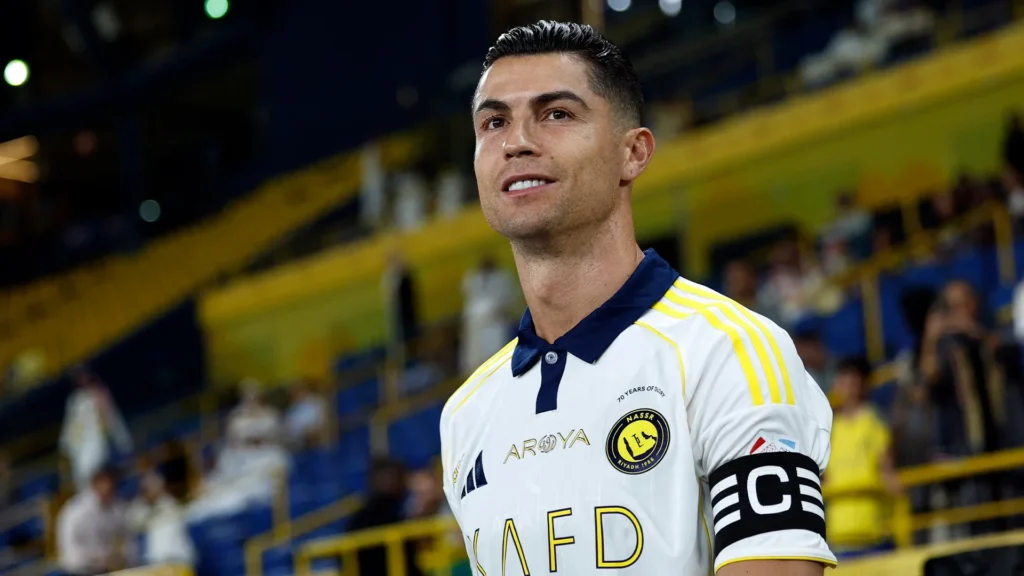
When Real Madrid signed Cristiano Ronaldo from Manchester United in 2009 for €94 million, the Portuguese forward had just won the Ballon d’Or. His commercial value was unprecedented. Ronaldo negotiated for 100% of his image rights, which Real Madrid flatly refused.
The compromise: 60-40 split in Ronaldo’s favor.
- Ronaldo’s salary: €17 million annually (after tax)
- Image rights split: Ronaldo kept 60%, Real Madrid received 40%
- Total Ronaldo earnings: Over €40 million annually including commercial revenue
In 2013, Ronaldo renegotiated his contract, demanding even more control. He reportedly pushed for 100% image rights ownership, which Real Madrid again refused. In 2015, Ronaldo sold his image rights to Singaporean businessman Peter Lim’s MINT Media for an undisclosed sum, keeping control of all commercial deals except those directly tied to Real Madrid.
Despite the concessions, Real Madrid still profited massively. Ronaldo’s brand helped the club secure record-breaking sponsorship deals with Emirates (€30 million annually), Adidas (€50+ million annually), and dozens of other partners. His jersey sales alone generated €50+ million annually for the club.
Kylian Mbappé: The Second Exception (Non-Standard Split)
In June 2024, Kylian Mbappé officially joined Real Madrid as a free agent after his Paris Saint-Germain contract expired. The 25-year-old French superstar signed a five-year deal through 2029.
According to multiple reports including Sky Sports News, Mbappé negotiated a more favorable image rights arrangement than the traditional 50-50 split, making him only the second player in Real Madrid history to break the equal-share rule.
- Signing-on bonus: €100+ million
- Annual salary: €15 million (after tax)
- Image rights split: More favorable to player than standard 50-50
- Total annual earnings: €31+ million including commercial revenue
This marked the most player-favorable image rights deal in Real Madrid history since Cristiano Ronaldo’s arrangement. Why did Real Madrid agree?
Why Mbappé Got Special Treatment:
- Arrived as a free agent (no transfer fee saved €150-200 million)
- Age 25 with 10+ years of peak performance ahead
- Global superstar status, especially in Asia and Africa where Real Madrid seeks growth
- Nike’s face of football (major brand value)
- Trademarks filed for “KM7,” “Kylian Mbappé,” and multiple phrases
Even with a more favorable split than the standard 50-50, Real Madrid still generates millions annually from Mbappé’s brand. His arrival boosted jersey sales by an estimated 30%, increased global viewership for Real Madrid matches, and enhanced sponsorship deal values. The club’s social media following grew by 15 million accounts within Mbappé’s first six months.
Real Madrid Revenue 2024/25: €1.185 Billion Breakdown
Real Madrid’s 2024/25 revenue of €1.185 billion came from diversified sources, making the club less dependent on any single income stream. This diversification protects against market shocks like COVID-19 that devastated clubs relying heavily on matchday revenue.
Broadcasting Revenue: €190 million (16% of total)
Television and streaming rights decreased from €231 million in 2023/24 due to UEFA’s changed revenue-sharing system.
- UEFA Champions League: €100+ million (quarterfinal finish)
- La Liga domestic rights: €60 million annually
- International broadcasting: €30 million from global markets
The broadcasting decline was more than offset by growth in other revenue streams, demonstrating the value of diversification. Real Madrid no longer depends on Champions League success for financial stability.
Commercial Revenue: €463 million (39% of total)
Commercial income is Real Madrid’s largest revenue source and grew €74 million year-over-year.
- Major sponsorships: Emirates (€70M annually), Adidas (€120+ M annually)
- Licensing and merchandising: Jersey sales, video games, branded products
- Image rights revenue: Estimated €50-70 million from superstar deals (shared with players)
- Regional partnerships: Asia, Middle East, Americas market-specific deals
The arrival of Jude Bellingham and Kylian Mbappé drove significant commercial growth as brands increased partnership values to associate with Real Madrid’s superstar roster. Adidas extended their kit deal through 2034, paying €120 million annually, the highest in football.
Matchday and Stadium Revenue: €326 million (28% of total)
The renovated Santiago Bernabéu becoming fully operational drove massive increases in stadium revenue.
Stadium Income Breakdown:
- Match tickets: €100 million from 20+ home games
- VIP boxes and premium seats: €150 million (300+ luxury suites at €200,000-500,000 annually each)
- Catering and hospitality: €55 million (increased 55% year-over-year)
- Stadium tours: €21 million (increased 75% year-over-year)
Stadium revenue grew €19 million (6%) year-over-year despite construction still ongoing. Once the venue is fully operational with concerts, NFL games, and corporate events, this revenue stream could grow to €400+ million annually. The Bernabéu is designed to host 50+ non-football events per year.
Friendlies and Competitions: €190 million (16% of total)
Real Madrid maximizes every competitive opportunity for revenue generation.
- FIFA Club World Cup: €40 million (expanded mid-season tournament)
- Copa del Rey: €10 million (reached final)
- Pre-season friendlies: €30 million (tours in USA, Asia generate €5M per match)
- Supercopa de España: €15 million (prize money and broadcasting)
- UEFA Super Cup: €10 million (competition plus broadcasting)
This revenue source increased €39 million (26%) year-over-year, primarily from the expanded FIFA Club World Cup format featuring 32 teams.
Real Madrid Wage Bill: €514 Million at 43% of Revenue
Real Madrid’s total wage expenses for 2024/25 reached €514 million, representing just 43% of total revenue. This is one of the healthiest wage-to-revenue ratios in European football and creates enormous financial flexibility that competitors lack.
Why 43% Matters More Than You Think:
The European Club Association recommends clubs keep wage costs below 70% of revenue to maintain financial stability. Most elite clubs operate between 50-60%, stretching their finances to afford star players. Real Madrid at 43% demonstrates extraordinary discipline. This ratio means Real Madrid generates €671 million after player wages, available for stadium costs, transfers, operations, and profit.
Wage-to-Revenue Comparisons Across Europe:
- Real Madrid (2024/25): 43% (€514M wages / €1,185M revenue)
- Barcelona (2017/18 at crisis peak): 70% (€487M wages / €695M revenue)
- Barcelona (2024/25 after painful cuts): 50% (€500M wages / €994M revenue)
- Manchester United: 55-58% (consistently among highest in Premier League)
- Paris Saint-Germain: 60-65% (inflated by Mbappé, Neymar, Messi era)
- Bayern Munich: 50-55% (German efficiency model)
- Manchester City: 52-56% (despite massive revenues)
Barcelona at 50% generates just €494 million after wages. Manchester United at 58% has even less flexibility. This explains why Real Madrid can sign Mbappé while Barcelona struggles to register players.
Highest Paid Real Madrid Players 2025/26
1. Kylian Mbappé: €31.25 million annually
- Base salary: €15 million (after tax)
- Image rights compensation: Additional millions
- Signing-on bonus: €100+ million amortized over contract
- Free agent arrival (zero transfer fee)
2. David Alaba: €22.5 million annually
- Long-serving defender on lucrative contract
- Arrived as free agent from Bayern Munich (2021)
- Contract through 2026
3. Vinicius Junior: €20.8 million annually
- Breakout star, renegotiated contract in 2023
- Commercial value skyrocketing after Champions League heroics
- Signed from Flamengo for €45 million at age 18
4. Jude Bellingham: €18-20 million annually
- Signed from Borussia Dortmund for €103 million (2023)
- Performance bonuses boost total compensation
- Contract through 2029
Other High Earners:
- Rodrygo: €16 million (signed from Santos)
- Antonio Rüdiger: €12 million (free agent from Chelsea)
- Federico Valverde: €12 million (signed from Peñarol)
- Aurélien Tchouaméni: €10 million (signed from Monaco)
Notice Real Madrid’s top earners fall into three categories: free agents (Mbappé, Alaba, Rüdiger) with zero transfer fees allowing higher wages, academy graduates (Carvajal, Asencio) saving millions in fees, and young signings (Vinicius, Rodrygo, Valverde, Camavinga) purchased at lower wages that grow with performance.
The average Real Madrid player earns approximately €12 million annually, one of the highest averages in world football. Yet the club maintains profitability because revenue growth (10% annually) consistently outpaces wage growth (2% annually), creating expanding profit margins every season.
How Real Madrid Stay Profitable While Barcelona Struggle
The Financial Discipline Difference
Real Madrid and Barcelona both operate as member-owned clubs, both had similar revenues in 2017, and both competed for the same players. Seven years later, the financial gap is enormous.
Real Madrid’s Financial Health (2024/25):
- Total revenue: €1.185 billion
- Wage bill: €514 million (43% of revenue)
- Net debt: €12 million (excluding stadium renovation)
- EBITDA: €243 million
- Cash reserves: €166 million
- Profit after tax: €24 million
- La Liga spending cap: €761 million
Barcelona’s Financial Crisis (2024/25):
- Total revenue: €994 million
- Wage bill: €500 million (50% of revenue, down from 70% crisis peak)
- Total debt: €1.9 billion (including stadium project and unpaid transfer fees)
- Net worth: Negative €153 million
- Loss after tax: €17 million
- Unpaid transfer fees: €159 million owed to other clubs
- La Liga spending cap: €351 million (less than half of Real Madrid’s)
What Went Wrong at Barcelona:
Barcelona’s financial collapse stemmed from catastrophic decisions made between 2017 and 2021 under president Josep Bartomeu. When PSG triggered Neymar’s €222 million release clause in 2017, Barcelona panicked and made devastating choices.
Barcelona’s Spending Spree (2017-2020):
- Ousmane Dembélé: €150 million from Borussia Dortmund
- Philippe Coutinho: €150 million from Liverpool
- Antoine Griezmann: €120 million from Atlético Madrid
- Frenkie de Jong: €75 million from Ajax
- Total: €495 million on four players with minimal return
The wage bill exploded from €340 million (2017) to €670 million (2020). Wages reached 110% of revenue during COVID-19, meaning Barcelona spent more on player salaries than they earned. Players like Griezmann (€45 million annually), Messi (€100+ million annually), and De Jong (€37 million annually) consumed unsustainable portions of revenue.
Barcelona’s crisis forced them to activate “economic levers,” selling 25% of La Liga television rights for 25 years (€500+ million), selling 49% of licensing and merchandising (€200 million), and selling future stadium revenue. These desperate measures provided short-term cash but gutted long-term income.
La Liga imposed strict spending controls. Barcelona was restricted to using just 25% of money raised through player sales and salary cuts to register new players. In January 2025, Barcelona temporarily couldn’t register new signings Dani Olmo and Pau Víctor due to exceeding La Liga’s salary cap, creating global headlines.
By November 2025, Bayern Munich honorary president Uli Hoeneß publicly criticized Barcelona: “In any other country, they wouldn’t even be in the first division. When you have €1.3 billion in debt, how are you supposed to function? It’s absurd they’re still playing in the top division.”
Real Madrid’s Different Path
Real Madrid avoided Barcelona’s fate through disciplined spending and revenue diversification. The club maintained wage costs below 50% of revenue even during COVID-19. When star players like Gareth Bale and Eden Hazard underperformed on massive contracts, Real Madrid let those contracts expire rather than panic-buying replacements.
The club prioritized young talent. Eduardo Camavinga (€31 million), Aurélien Tchouaméni (€80 million), and Vinícius Junior (€45 million) were signed young at lower wages, allowing salaries to grow gradually with performance. Real Madrid also maintained strict transfer discipline. Jude Bellingham (€103 million) was the club’s largest signing in years, purchased only after years of savings and planning.
Real Madrid Stadium Debt: Separate from Club Operations
Real Madrid’s Santiago Bernabéu renovation project, initially estimated at €575 million in 2019, has grown to €1.347 billion total investment as of June 2025.
Financing Structure:
- 2019: €575 million loan (Key Capital Partners, JP Morgan, Bank of America, Santander, CaixaBank)
- 2021: Additional €225 million
- 2023: Additional €370 million
- Total: €1.17 billion financing
Current Status:
- Total spent: €1.347 billion
- Outstanding principal: €1.132 billion
- Repayment timeline: 2053 (29 years remaining)
- Average interest rate: 3.2%
- Annual repayment: €15-23 million (principal), plus €36-40 million interest
The stadium debt is legally structured as a separate project with its own revenue streams. The loan is secured against future stadium income including VIP boxes, corporate hospitality, concerts, and events. If stadium revenues fall short, Real Madrid C.F. remains ultimately liable, but the separation protects the club’s operational finances from stadium cost overruns.
Real Madrid’s €12 million operational net debt (excluding stadium) demonstrates the club maintains pristine balance sheets despite the massive renovation project. By contrast, Barcelona’s €1.9 billion debt includes €974.9 million already spent on Espai Barça plus €159 million in unpaid transfer fees, all bleeding into operational finances.
The Santiago Bernabéu is designed to generate €400+ million annually once fully operational through concerts (50+ per year), NFL games, corporate events, and premium hospitality. This revenue will comfortably service the debt while generating surplus for the club.
The Bottom Line
Real Madrid generated €1.185 billion in revenue during 2024/25, becoming the only football club in history to surpass €1 billion for two consecutive years. The club maintains just €12 million net debt (excluding stadium), €166 million cash reserves, and achieved a 0 debt-to-EBITDA ratio.
Why The Model Works:
The revolutionary 50-50 image rights split monetizes player brands without increasing wage costs. Luis Figo, Zinedine Zidane, David Beckham, and dozens of Galacticos accepted equal splits, generating hundreds of millions in commercial revenue. Only Cristiano Ronaldo and Kylian Mbappé ever negotiated more favorable arrangements.
Financial Discipline Creates Flexibility:
Real Madrid’s €514 million wage bill represents just 43% of revenue versus Barcelona’s crisis-era 70%. This healthy ratio allowed Real Madrid to sign Mbappé while Barcelona owes €159 million in unpaid transfer fees and operates at a €17 million loss.
The Formula:
- Revenue diversification: Broadcasting (€190M), commercial (€463M), matchday (€326M), competitions (€190M)
- Image rights system: Estimated €50-70 million annually from superstar deals
- Wage discipline: 43% of revenue leaves €671 million for other costs and profit
- La Liga rewards discipline: €761 million spending cap vs Barcelona’s €351 million
While Barcelona activated desperate “economic levers” selling future rights for short-term cash, Real Madrid maintained steady growth. While Barcelona wages reached 110% of revenue during COVID-19, Real Madrid stayed below 50%. While Barcelona mixes stadium debt with operations, Real Madrid legally separated the €1.132 billion Bernabéu loan.
The Santiago Bernabéu renovation demonstrates financial sophistication. The €1.347 billion investment is financed through a separate €1.17 billion loan repayable through 2053, secured against stadium revenue. Real Madrid already began principal repayments (€38 million in 2023-25) while maintaining operational debt at just €12 million.
Twenty-five years after Florentino Pérez instituted the 50-50 image rights split, Real Madrid stands alone as the only club to surpass €1 billion revenue twice, while their biggest rival drowns in €1.9 billion debt. The gap between financial success and crisis isn’t talent or trophies. It’s discipline.