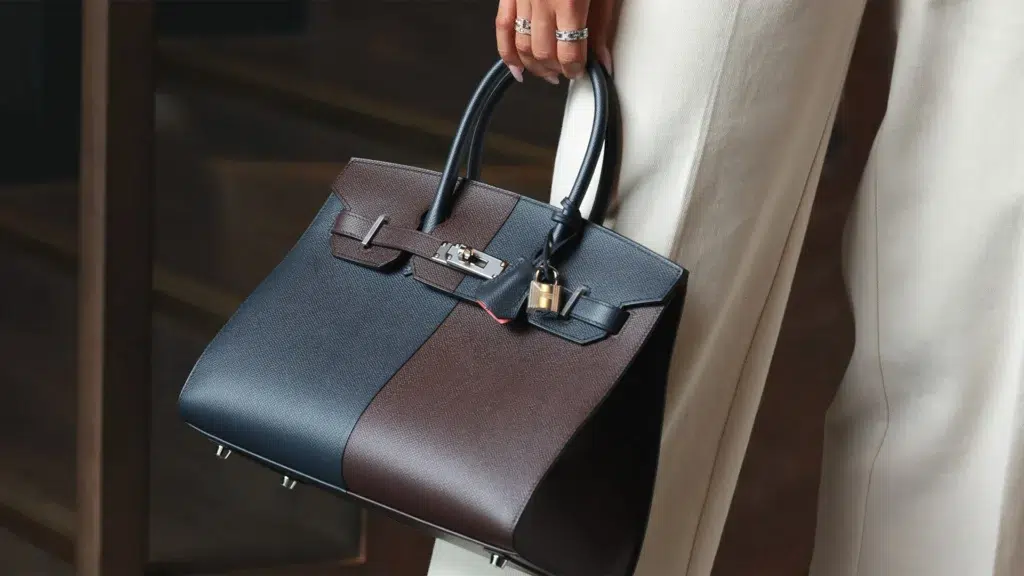
In 1984, when Hermès chairman Jean-Louis Dumas sat next to actress Jane Birkin on Air France flight from Paris to London, she complained that her Kelly bag didn’t fit her weekly planner and complained about functional weekend bags. Dumas sketched a design on airplane sick bag creating what would become the most valuable handbag in luxury history.
The Birkin bag wasn’t revolutionary in craftsmanship, Hermès had been making leather goods since 1837. The revolution was treating handbags as investment vehicles rather than fashion accessories. While other luxury bags depreciated like cars after purchase, Birkins appreciated like fine art, creating secondary market where 10-year-old bags sold for more than original retail prices.
Thirty-nine years later, Birkin bag investment returns averaged 14.2% annually according to Baghunter’s study, outperforming S&P 500’s 8.7%, gold’s 1.9%, and London real estate’s 11.6%. Rare Birkins sold for $300,000-500,000 at auction, with Himalaya Birkin setting record $500,000 in 2022. The handbag became alternative asset class discussed in wealth management alongside stocks and bonds.
This is the story of how one French luxury house transformed handbags from depreciating fashion into appreciating investments through production constraints, artisan mythology, celebrity cultivation, and secondary market liquidity rivaling collectible watches and fine wine. It demonstrates that scarcity, craftsmanship narratives, and social signaling can make physical goods perform like financial assets when executed with discipline over decades.
Why Birkin Bag Investment Returns Beat Traditional Assets
The Birkin’s performance as investment stems from supply-demand imbalance engineered deliberately by Hermès. While luxury competitors increased production to meet demand maximizing revenues, Hermès constrained Birkin production to roughly 120,000 bags annually across all styles globally, a number barely increased despite exploding wealth concentration creating millionaire and billionaire customers.
This artificial constraint meant demand exceeded supply by estimated 10-20x. Women wanting Birkins faced years-long waitlists, allocation games with sales associates, and requirements to build purchase histories with other Hermès products before being offered opportunity to buy Birkin. The impossibility of buying Birkins at retail drove thriving resale market where bags traded at premiums.
What makes Birkin bag investment perform like financial asset:
- Supply constraint: 120,000 annual production versus millions wanting to purchase
- No depreciation: Bags maintain or increase value unlike typical luxury goods
- Secondary liquidity: Active resale market through auction houses and specialty dealers
- Price transparency: Public auction records establishing market values
- Authentication infrastructure: Experts and services verifying authenticity like art appraisers
- Storage simplicity: Physical bags stored in climate-controlled closets like collectibles
- Insurance availability: Specialized policies covering Birkins as valuable assets
- Emotional detachment possible: Investors buying purely for appreciation not use
The investment thesis rested on Hermès maintaining production discipline despite profit incentives to increase supply. Public company status since 1993 created pressure to grow revenues, but controlling family ownership (over 60% held by Dumas descendants) prioritized long-term brand equity over quarterly earnings, critical for sustaining artificial scarcity.
Documented Investment Performance Data
Historical Birkin bag investment returns across categories:
- Overall average: 14.2% annual appreciation over 35 years
- Rare colors: 20-25% annual returns for unusual leathers and colors
- Himalaya Birkin: 38% CAGR from $12,000 retail to $500,000 auction peak
- Limited editions: 15-30% annual appreciation for special releases
- Standard colors: 8-12% annual returns for classic black, gold, etoupe
- Exotic leathers: 18-28% returns for crocodile, alligator, ostrich
- Vintage pieces: 12-18% appreciation for well-maintained 20+ year bags
These returns assumed proper authentication, good condition maintenance, and selling through appropriate channels maximizing values. Poor storage damaging leather or lack of authenticity documentation destroyed investment value completely.
The Artisan Production Mythology Creating Value Perception
Hermès positioned Birkin bags as investment-grade through artisan craftsmanship narratives emphasizing human skill, time investment, and impossibility of mass production. Each bag supposedly required 18-24 hours of work by single artisan using traditional hand-stitching techniques unchanged for 150+ years.
The story resonated because it contrasted sharply with industrialized luxury goods production. While Louis Vuitton factories produced hundreds of bags daily through assembly lines, Hermès workshops supposedly limited each artisan to producing 3-4 Birkins monthly maintaining quality standards. This handmade scarcity justified both high prices and production constraints.
Hermès artisan mythology components:
- Single artisan: Each bag made entirely by one craftsperson start to finish
- Training duration: 2-3 years apprenticeship before allowed to make Birkins
- Hand stitching: Saddle stitch technique requiring manual needle work
- Quality rejection: Artisans discarding bags failing internal quality checks
- Material selection: Craftspeople personally selecting leather hides
- Tool tradition: Using same tools and techniques as 19th century predecessors
- Workshop locations: French ateliers maintaining traditional working environments
- Pride of authorship: Artisan stamps inside each bag as signature
The reality involved more industrial efficiency than mythology suggested. Hermès operated production facilities capable of making many more bags if desired. But maintaining artisan narrative required limiting production to levels consistent with hand-crafted story, creating self-reinforcing cycle where mythology justified scarcity justifying high prices justifying investment performance.
Production Capacity Versus Actual Output
Analysis of Hermès manufacturing capabilities:
- Estimated capacity: 200,000-250,000 Birkins annually with current facilities
- Actual production: 120,000 bags annually maintained deliberately
- Capacity utilization: 48-60% suggesting intentional underproduction
- Facility expansion: New workshops opened but production barely increased
- Artisan hiring: Adding craftspeople but maintaining per-person output limits
- Automation resistance: Avoiding efficiency improvements that would undermine artisan story
- Quality as constraint: Positioning defect rejection as reason for limited output
This gap between capability and reality revealed intentional strategy rather than genuine production constraints. Hermès could double Birkin production without compromising individual bag quality, but doing so would flood market, collapse resale premiums, and destroy investment performance that made Birkins desirable.

🍊 Hermès Eau d’Orange Verte Unisex Hair and Body Shower Gel (6.7 oz)
🛒 Shop Now on AmazonHow Celebrity Ownership Transformed Birkins Into Status Currency
The Birkin’s evolution from handbag to investment asset accelerated through strategic celebrity associations creating social proof that carrying Birkin signaled wealth and status globally. Victoria Beckham reportedly owned 100+ Birkins worth millions. Kim Kardashian showcased collections of exotic leather bags. Martha Stewart gifted her daughter Birkin for wedding.
These celebrity endorsements weren’t paid sponsorships. Hermès never paid celebrities for carrying Birkins. The associations emerged organically but were cultivated through allocation strategies prioritizing high-profile customers, ensuring paparazzi photographed celebrities with bags constantly. Each photograph reinforced Birkin as ultimate status symbol worth pursuing.
Celebrity impact on Birkin bag investment value:
- Visibility multiplication: Paparazzi photos creating millions of impressions globally
- Aspiration creation: Middle-class consumers dreaming of owning celebrity symbols
- Wealth signaling: Birkin became shorthand for “rich” in popular culture
- Gift economy: Birkins as ultimate luxury gift for major life events
- Collection bragging: Social media posts showcasing multiple bags
- Rental markets: Services renting Birkins for events charging $500-2,000 weekly
- Fake demand: Counterfeit market proving authentic versions highly desired
- Pop culture references: Movies, TV shows, songs mentioning Birkins by name
The celebrity cultivation created virtuous cycle. High-net-worth individuals wanted Birkins because celebrities carried them. Celebrities wanted Birkins because they signaled status among peers. The mutual reinforcement drove prices higher as both groups competed for limited supply.
The Kardashian Effect on Exotic Leather Pricing
Documented price increases following celebrity exposure:
- Standard leather Birkin: $9,000-12,000 retail increasing 8-10% annually
- Crocodile Birkin post-Kardashian: $45,000-65,000 retail with 15-20% annual increases
- Himalaya Birkin after celebrity auctions: $80,000-150,000 retail, 25-40% increases
- Limited editions: Celebrity-associated special releases commanding 100-300% premiums
- Vintage appreciation: Bags previously owned by celebrities trading 50-200% over comparable pieces
This celebrity premium created authentication industry. Handbag authentication services emerged verifying not just authenticity but provenance, charging premium fees for certificates documenting celebrity ownership adding thousands to resale values.
The Secondary Market Creating Investment Liquidity
Unlike most luxury goods requiring specialized dealers or consignment shops, Birkin bag investment achieved liquidity through established auction houses and luxury resale platforms treating bags like collectible art. Christie’s, Sotheby’s, and Heritage Auctions held dedicated handbag sales featuring rare Birkins attracting global bidders.
This secondary market infrastructure transformed Birkins from consumer goods into investment assets. Owners could sell bags within days through reputable platforms receiving fair market values determined by competitive bidding. The price transparency and transaction ease matched stocks more than typical luxury resale.
Secondary market platforms enabling Birkin liquidity:
- Auction houses: Christie’s, Sotheby’s, Heritage conducting dedicated sales
- Luxury resale: Fashionphile, Rebag, Vestiaire Collective offering instant quotes
- Consignment specialists: Madison Avenue Couture, Privé Porter focusing on Hermès
- Authentication services: Entrupy, Real Authentication validating bags before sale
- Condition grading: Standardized systems rating bags from pristine to poor
- Price databases: Platforms publishing historical auction results establishing valuations
- Escrow services: Third-party transaction management protecting buyers and sellers
- International shipping: Global logistics enabling cross-border sales
The market efficiency meant Birkin owners could liquidate holdings quickly when needing cash, similar to selling stocks or bonds. This liquidity premium further enhanced investment appeal versus illiquid assets like real estate or fine art requiring months to sell.
Auction Records Demonstrating Market Depth
Notable Birkin auction results establishing price benchmarks:
- 2022 Himalaya Birkin: $500,000 setting handbag auction record
- 2020 Fuchsia crocodile: $222,912 demonstrating exotic leather premiums
- 2019 Matte white Himalaya: $379,261 showing color rarity impact
- 2017 Jane Birkin’s personal bag: $162,500 for celebrity provenance
- 2015 Black crocodile diamond hardware: $298,000 for exceptional hardware
- Consistent results: Regular sales demonstrating sustained demand not isolated events
These public auction results created price transparency lacking in most luxury goods markets. Potential buyers could research historical values making informed investment decisions rather than relying on dealer claims.
The Purchase History Game: How to Actually Buy a Birkin
The Birkin’s investment performance paradoxically required impossibility of purchase at retail. Hermès implemented allocation systems where sales associates decided which customers received offers to purchase Birkins based on purchase histories, store relationships, and subjective loyalty assessments.
This allocation game meant customers spent $20,000-50,000 on other Hermès products, scarves, jewelry, ready-to-wear, building relationships before being offered opportunity to buy $12,000 Birkin. The prerequisite spending created additional revenue streams while maintaining Birkin scarcity.
Strategies for securing Birkin allocation from Hermès boutiques:
- Relationship building: Visiting same boutique regularly establishing face recognition
- Purchase history: Buying non-bag products demonstrating brand loyalty
- Sales associate bonding: Developing personal connections with specific staff
- Spending thresholds: Unofficial $15,000-30,000 requirements before Birkin offers
- Patience demonstration: Expressing interest but not desperation
- Flexibility signaling: Accepting colors/sizes/leathers available versus demanding specifics
- Multiple boutique strategy: Developing relationships at different locations
- International travel: Visiting Hermès stores in less competitive markets
The game created resentment among customers forced to spend significantly beyond Birkin prices to earn purchase rights. But this resentment didn’t reduce demand. Instead, successfully navigating allocation process became status achievement itself, another layer of exclusivity beyond merely owning bag.
Geographic Arbitrage in Birkin Allocation
Waitlist and allocation variations across markets:
- Paris flagship: 5-10 year waitlists for locals, shorter for tourists with purchase histories
- New York boutiques: 3-6 year waits requiring significant relationship building
- Dubai stores: 2-4 year timelines with emphasis on Middle Eastern clientele
- Asian markets: 4-8 year waits reflecting high demand from Chinese buyers
- Secondary cities: 1-3 year allocation times in less competitive locations
- Seasonal opportunities: Fashion week, holidays creating allocation events
Sophisticated buyers exploited these geographic differences, building relationships with boutiques in secondary markets where competition was lower, flying to Dubai or Singapore for purchases when allocated bags.

✨ Hermès Elixir Des Merveilles Eau De Parfum for Women (3.3 fl oz)
🛒 Shop Now on AmazonAuthentication and Condition: The Investment Due Diligence
As Birkin bag investment matured into alternative asset class, authentication and condition assessment became critical like art appraisal or gemological certification. Counterfeit Birkins flooded markets with quality sometimes deceiving casual buyers, making professional authentication essential for investment-grade purchases.
Authentication experts analyzed dozens of details from stitching patterns to hardware engravings to leather grain. Services like Entrupy used artificial intelligence analyzing microscopic leather characteristics impossible for counterfeiters to replicate. For investment buyers, $300-500 authentication costs were mandatory due diligence.
Authentication factors experts evaluate:
- Stitching consistency: Hand-stitched patterns following precise techniques
- Hardware stamps: Date codes, artisan stamps, logo engravings matching period
- Leather characteristics: Grain patterns, texture, aging consistent with authentic materials
- Construction details: Interior lining, pocket placement, strap attachment methods
- Weight and dimensions: Specifications matching authentic bags precisely
- Smell test: Leather scent versus chemical odors from fake materials
- Lock and key codes: Matching numbers on hardware components
- Craftsmanship quality: Overall finishing meeting Hermès standards
Condition grading similarly impacted investment values dramatically. Pristine unused bags commanded premiums while heavily worn pieces sold at discounts. Professional grading services rated bags from “museum quality” to “poor condition” establishing objective valuations.
Condition Impact on Resale Values
Price variations based on bag condition:
- Pristine/new: 100-150% of current retail, sometimes more for rare colors
- Excellent: 80-100% retail with minimal wear signs
- Very good: 60-80% retail showing light use but well-maintained
- Good: 40-60% retail with visible wear but no damage
- Fair: 25-40% retail requiring restoration work
- Poor: 10-25% retail with significant damage or repairs
Investment-focused buyers targeted pristine and excellent condition bags maximizing appreciation potential. Worn bags offered lower entry prices but limited upside unless extremely rare colors or leathers compensated for condition.
Tax and Legal Considerations for Birkin Investments
As Birkin bag investment gained recognition among wealth managers and family offices, tax and legal frameworks around handbag ownership as assets evolved. In some jurisdictions, Birkins qualified as collectibles subject to different tax treatment than stocks or bonds.
United States classified Birkins as collectibles taxed at maximum 28% long-term capital gains rate versus 20% for stocks. This higher rate reduced after-tax returns but didn’t eliminate investment appeal given gross returns. Some investors held Birkins in self-directed IRAs or trusts optimizing tax efficiency.
Legal and tax implications of Birkin investments:
- Capital gains treatment: Sales taxed as collectibles in many jurisdictions
- Estate planning: Birkins included in estate valuations requiring appraisals
- Insurance requirements: Specialized policies covering bags as valuable property
- Import/export duties: International purchases subject to customs regulations
- Sales tax variations: State and local taxes applying to secondary market transactions
- Authentication documentation: Records proving authenticity for tax basis
- Provenance tracking: Ownership history affecting valuations and tax reporting
High-net-worth individuals sometimes stored Birkin collections in climate-controlled vaults alongside fine art and jewelry, insuring bags under valuable articles policies with agreed-value coverage preventing disputes after losses.
Insurance and Storage Best Practices
Protecting Birkin bag investment value:
- Specialized insurance: Policies from Chubb, AIG covering handbags specifically
- Agreed value coverage: Pre-agreed valuations avoiding post-loss disputes
- Professional storage: Climate-controlled environments preventing leather degradation
- Dust bag protection: Original Hermès dust bags preventing scratches and sunlight
- Humidity control: 45-55% relative humidity optimal for leather preservation
- Temperature stability: 60-75°F avoiding extreme fluctuations
- Documentation retention: Receipts, certificates, authentication reports
- Periodic condition checks: Regular inspections catching issues early
The Bottom Line
Birkin bag investment performance averaging 14.2% annually over 35 years demonstrates that physical luxury goods can function as alternative assets when supply is genuinely constrained, brand equity is maintained obsessively, and secondary markets provide liquidity.
Hermès achieved this through disciplined underproduction limiting bags to 120,000 annually despite capacity for far more, artisan mythology justifying both constraints and premium pricing, celebrity cultivation creating universal status recognition, and secondary market development enabling price discovery and transaction liquidity.
What made Birkin bag investment viable as asset class:
- Genuine scarcity: Production limits maintained despite profit incentives to increase
- No depreciation curve: Bags retaining or appreciating versus typical luxury depreciation
- Price transparency: Public auction results establishing market valuations
- Authentication infrastructure: Professional services verifying authenticity
- Secondary liquidity: Multiple platforms enabling quick sales at fair values
- Celebrity status: Universal recognition as wealth symbol
- Condition standards: Grading systems creating objective quality assessments
- Storage simplicity: Physical bags stored easily versus complex assets
The challenges include market concentration risk if Hermès increased production, counterfeit sophistication potentially undermining authentication, economic downturns reducing luxury demand, and fashion trend shifts away from status handbags. The investment thesis depends entirely on Hermès maintaining production discipline indefinitely.
But 39 years of consistent execution suggests commitment to scarcity over short-term profits. The controlling family ownership structure protects against quarterly earnings pressure that might tempt public companies to increase production. As long as Hermès maintains discipline, Birkin bag investment performance should continue outpacing inflation.
For investors considering Birkins as alternative assets, the lessons are clear: authentication is mandatory, condition dramatically impacts values, purchase history games or secondary market premiums are entry costs, insurance and proper storage are essential, and liquidity requires using established platforms not informal sales.
The broader lesson for luxury brands: creating investment-grade products requires decades of discipline constraining supply despite demand, building mythology around craftsmanship justifying scarcity, cultivating celebrity associations creating universal status recognition, and enabling secondary markets providing liquidity. Hermès executed all elements successfully turning handbags into financial assets rivaling traditional investment vehicles.