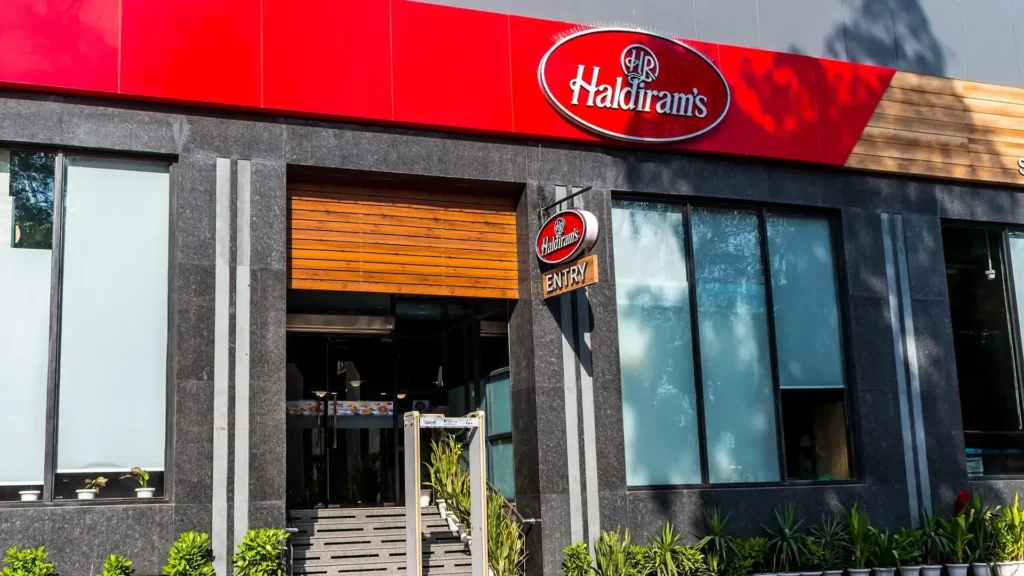
When Singapore’s sovereign wealth fund Temasek paid $1 billion for just 10% of Haldiram’s in March 2025, valuing the Indian snack maker at $10 billion, it wasn’t just buying into a successful business. Temasek was investing in one of the most sophisticated regional expansion playbooks in Indian retail history. This wasn’t a startup with venture capital hype or a tech unicorn promising disruption. This was an 88-year-old family business that turned bhujia into a ₹14,000 crore empire by mastering something that defeats most companies: scaling across India’s impossibly diverse regional markets while maintaining both authenticity and profitability.
Haldiram’s unprecedented achievements:
- Over 40% market share in India’s organized snacks segment
- ₹14,000 crore revenue in FY 2024 (16-17% CAGR)
- Presence in 100+ countries globally
- 250+ restaurant network across India
- 37,205 multi-brand retail outlets
- Plans for 150-200 new outlets in central and southern India
- Three major investments: Temasek, Alpha Wave Global, IHC
Haldiram’s expansion strategy offers a masterclass in regional scaling that goes far beyond the typical “grow fast and figure it out later” approach. The company solved the fundamental challenge that stumps even global giants: how do you grow nationally in a country where food preferences change every 100 kilometers, where “North Indian food” and “South Indian food” might as well be different cuisines entirely, and where consumers demand both authentic tradition and modern convenience?
The Three-Entity Structure Strategic Fragmentation that Actually Works
Regional Specialization through Operational Independence
Most business schools teach that brand fragmentation is dangerous, that splitting a company weakens it. Haldiram’s proved exactly the opposite by operating as three separate entities for decades, a structure that seemed chaotic from the outside but was actually strategic genius.
The three-entity division:
- Delhi operation: Founded by Manoharlal, focused on North India and quick-service restaurants
- Nagpur entity: Established by Shiv Kishan, concentrated on manufacturing scale and South/Central India
- Kolkata operation: Run by another branch, specialized in Eastern India’s unique preferences
- Operating principle: All under Haldiram’s brand but with complete operational independence
- Strategic insight: Deliberate regional specialization allowing each entity to master its market
How each entity specialized:
- Delhi focus: Convenient dining experiences alongside packaged snacks for urban consumers
- Nagpur strategy: Different product mixes where items like muruku performed better than bhujia
- Kolkata expertise: Sweet and savory combinations that differ significantly from other regions
- Decision-making: Each entity could adapt to local markets faster than centralized structure
- Supply chains: Optimized for their specific geographies and distribution needs
The 2025 Merger Creating Unified Platform
In 2025, the Delhi and Nagpur families finally merged their FMCG businesses into Haldiram Snacks Foods Private Limited (HSFPL), with existing shareholders holding 56% and 44% stakes respectively. This merger wasn’t about fixing a broken structure, it was about combining proven regional strengths into a unified platform capable of attracting the international investment needed for global expansion.
Merger benefits:
- Created operational synergies while preserving regional insights
- Unified corporate structure that public markets prefer
- Eliminated complexity for institutional investors
- Combined manufacturing operations for efficiency
- Positioned company for eventual IPO within 2-3 years
- Enabled $10 billion valuation from sophisticated investors
The merger created the consolidated entity that investors like Temasek wanted to see before committing capital to international growth. This operational consolidation is precisely what enabled the March 2025 investment rounds that valued Haldiram’s at $10 billion.
Regional Customization at Manufacturing Scale
Over 410 Products Tailored to Regional Tastes
The three-entity structure enabled Haldiram’s to perfect something most companies struggle with: regional customization at national scale. While competitors tried to force a single product lineup across India, Haldiram’s developed over 410 different products tailored to regional tastes.
Regional product examples:
- “Chennai Mixture”: Specifically targets South Indian preferences
- “Murukkus”: Dominates in southern markets
- “Bhujia”: Traditional North Indian favorite
- Traditional namkeens: Stronghold in Delhi and surrounding states
- Sweet variations: Eastern preferences differ significantly from West
Product portfolio breakdown:
- Ethnic snacks: 64% of revenue (core strength)
- Western snacks: 14% (chips, modern formats)
- Sweets: 8% (traditional mithai)
- Ready-to-eat/frozen: 4% (growing category)
- Others: 10-11% (beverages, dairy, cookies)
Manufacturing and distribution strategy:
- Plants in Nagpur, Delhi, Kolkata, and Bikaner
- Each produces region-specific items alongside core national products
- Supply chain efficiency while maintaining local authenticity
- Bangalore store offers significantly different mix than Jaipur
- Both maintain same quality standards and brand promise
The strategic insight here is profound: Haldiram’s recognized that India isn’t one market, it’s dozens of regional markets that happen to share national infrastructure. Rather than fighting this reality with standardization, they embraced it through decentralized operations that could respond to regional nuances.
The Franchise Model Low-Cost Expansion with Quality Control
Building 250+ Restaurants without Massive Capital
Haldiram’s explosive retail growth didn’t come from massive capital expenditure or corporate-owned stores. Instead, the company built its 250+ restaurant network and presence across 37,205 multi-brand outlets through a sophisticated franchise and B2B partnership model.
Franchise model advantages:
- Minimized capital requirements for expansion
- Enabled presence in tier-2 and tier-3 cities
- Built brand loyalty in markets larger FMCG companies ignored
- Franchisees get turnkey business with established customer base
- Haldiram’s gets rapid market penetration without balance sheet burden
What franchisees receive:
- Complete operational support
- Proven recipes and systems
- Supply chain access
- Brand equity that eliminates startup risk
- Training and ongoing assistance
Quality control systems:
- Centralized ingredient sourcing
- Regular audits of franchise operations
- Standardized operating procedures
- Supply chain ensures franchisees can’t cut corners
- Consistent quality: Indore outlet delivers same experience as Bangalore
The capital-light expansion strategy freed up resources for the manufacturing scale investments that really matter, while the quality control prevented the usual franchise problems of inconsistent quality and brand dilution.
Strategic Move into QSRs and Restaurants
Haldiram’s current plan to add 150-200 new outlets in central and southern India over the next two years represents a calculated bet on the “quick service restaurant” segment. This isn’t about competing with McDonald’s or KFC, it’s about capturing the massive middle ground between street food and fine dining.
QSR strategy benefits:
- Serves ready-to-eat meals, traditional sweets, hot snacks, beverages
- Becomes destination dining spots rather than just retail stores
- Creates powerful synergies with packaged snacks business
- Customers enjoying restaurant food buy packaged versions for home
- Functions as massive brand touchpoints and sampling opportunities
Regional expansion focus:
- Addresses limited presence in South India compared to North
- 150-200 new outlets targeting central and southern India
- Aims to replicate brand penetration from North Indian stronghold
- Menus adapted to regional preferences
- Maintains quality and value proposition
The Product Innovation Machine Balancing Tradition with Evolution
Diversification Beyond Core Namkeens
Haldiram’s dominance in traditional namkeens (contributing 60% of revenues) would tempt most companies to focus exclusively on their core strength. Instead, Haldiram’s has systematically diversified into adjacent categories.
Strategic product expansion:
- Ready-to-eat meals (instant poha, upma, curry preparations)
- Frozen foods (ready-to-cook parathas, samosas, complete meals)
- Cookies and western snacks
- Chips and potato-based products
- Beverages and drink mixes
- Dairy products
Ready-to-eat innovation approach:
- Targets urban consumers wanting traditional food with modern convenience
- Not restaurant dishes canned, carefully engineered shelf-stable formats
- Delivers authentic taste through modern packaging
- Captures “weeknight dinner” occasion for working professionals
- Leverages trusted brand when home cooking isn’t practical
Frozen foods strategy:
- Attacks different consumption occasion
- Uses similar distribution infrastructure
- Sits alongside international brands in freezer section
- Offers traditional Indian flavors Haldiram’s known for
- Bridge between frozen food convenience and Indian authenticity
Premiumization without Abandoning Core Markets
While maintaining affordable pricing that built its middle-class following, Haldiram’s has simultaneously moved upmarket with premium offerings for festivals and gifting occasions.
Premium product strategy:
- “Nazarana” and “Panchratan” gift boxes command higher prices
- Premium sweet boxes for special occasions
- Leverages same brand trust for upmarket positioning
- Captures additional revenue from existing customers
- Doesn’t require separate brand building
Gifting segment advantages:
- During Diwali, Raksha Bandhan, Holi becomes gifting destination
- Elaborately packaged assortments compete with traditional mithai shops
- Generates disproportionate margins
- Reinforces position as quality leader
- Creates trial opportunities introducing Haldiram’s to new consumers
Portfolio approach:
- Maintains affordable everyday products alongside premium offerings
- Uses same retail infrastructure for both segments
- Captures full economic spectrum of Indian consumers
- Students buying ₹20 packs to families purchasing ₹2,000 hampers
The International Playbook Exporting Indian Authenticity Globally
100+ Countries Beyond the Diaspora
Haldiram’s presence in 100+ countries isn’t just about serving the Indian diaspora, though that’s certainly part of the strategy. The company has successfully positioned Indian snacks as a legitimate global food category.
International expansion strategy:
- Export markets: US, UK, Japan, Australia, Middle East
- Target segment 1: Indian diaspora seeking authentic flavors (pays premium prices)
- Target segment 2: Local consumers discovering Indian flavors through Haldiram’s
- Temasek investment focus: Expansion in US and Middle East markets
- Timing advantage: Indian cuisine popularity surging globally
What makes this sustainable:
- Doesn’t compromise authenticity for global palates
- Products taste same in Tokyo as in Delhi
- Maintains flavor profiles and quality standards
- Differentiates from Indian restaurant chains that modify recipes
- Preserves authentic experience that makes brand special
Manufacturing Scale for Global Standards
Behind Haldiram’s international presence is manufacturing infrastructure that can support global quality standards and logistics.
Manufacturing capabilities:
- Four major plants: Nagpur, Delhi, Kolkata, Bikaner
- Combines traditional recipes with automated production
- Ensures consistency at scale
- Processes thousands of tons monthly
- Maintains quality control for international markets
Post-merger advantages:
- Consolidated manufacturing operations
- More efficient serving of domestic and international markets
- Optimized production across facilities
- Reduced redundancies
- Investment in automation and quality certifications for global expansion
Scale advantages:
- Profitably serves price-sensitive Indian consumers
- Maintains margins on premium international sales
- Volume drives down costs across entire operation
- Competitive pricing from scale enables higher volumes
- Virtuous cycle compounds over time
The Capital Strategy Fueling Growth without Losing Control
The $1 Billion Temasek Deal
The Temasek deal, followed by investments from Alpha Wave Global and IHC (International Holding Company), represents a carefully calibrated capital strategy. The Agarwal family is raising growth capital without surrendering control.
Investment structure:
- Temasek: 10% stake for $1 billion (March 2025)
- Alpha Wave Global: ~3% stake (additional investor)
- IHC: ~3% stake (UAE-based investor)
- Total stake sold: Approximately 16% total
- Family ownership: Retains majority control
- Valuation: $10 billion ($85,000 crore)
What makes this significant:
- $10 billion valuation for traditional Indian food company
- Competing against global giants like PepsiCo
- Reflects investor confidence in growth trajectory
- Recognition that Haldiram’s solved problems stumping better-funded competitors
- Sophisticated investors paying premium valuations for minority stake
Capital deployment priorities:
- International expansion in US and Middle East
- Domestic retail buildout in under-penetrated regions
- Product innovation including health-focused offerings
- Leverages existing strengths while addressing growth constraints
IPO Plans and Future Capital Evolution
Market observers expect Haldiram’s to pursue an IPO within 2-3 years following the recent capital raises. The merger of Delhi and Nagpur entities into Haldiram Snacks Foods Pvt Ltd created the unified corporate structure that public markets prefer.
IPO preparation benefits:
- Eliminates complexity of multiple operating companies
- Pre-IPO investments from Temasek establish credible valuations
- Signal quality to future public market investors
- Provides liquidity for early investors
- Raises additional capital for expansion
Post-IPO advantages:
- Further professionalizes operations through governance requirements
- Creates currency for acquisitions
- Pursue inorganic growth opportunities
- Public markets favor clear growth narratives
- Haldiram’s combination of dominance and opportunity fits perfectly
The Bottom Line
Haldiram’s expansion strategy reveals that successful regional scaling in diverse markets requires embracing rather than fighting geographic and cultural differences. By operating through multiple entities that specialized in regional markets, building a franchise-heavy retail model that minimized capital requirements, innovating products that balanced tradition with modern convenience, and manufacturing at scale while maintaining quality, Haldiram’s solved problems that defeated competitors with more resources and global reach.
The proven playbook:
- Three-entity structure enabling regional specialization
- 410+ products tailored to local preferences
- Franchise model with quality control for rapid expansion
- QSR strategy creating brand touchpoints and synergies
- Product innovation respecting cultural authenticity
- International expansion without compromising authenticity
- Manufacturing scale supporting global ambitions
The financial validation:
- ₹14,000 crore revenue in FY 2024
- 40%+ market share in organized Indian snacks
- 16-17% CAGR demonstrating sustainable growth
- $10 billion valuation from sophisticated investors
- ₹1 billion+ annual operating profit estimated
- EBITDA margins of 20-21%
The expansion roadmap:
- 150-200 new outlets in central and southern India
- Backed by Temasek, Alpha Wave Global, IHC investments
- Operational consolidation through merger
- IPO expected within 2-3 years
- International focus on US and Middle East
- Health-focused product innovations
The strategic lessons:
- Regional customization doesn’t conflict with national scale
- Franchise models can work with proper quality control
- Product innovation must respect cultural authenticity
- Patient capital beats rushed expansion
- Understanding diverse markets more valuable than standardization
- Decentralized operations respond faster to regional nuances
Most importantly, Haldiram’s proves that traditional businesses can scale using modern strategies without losing their identity. The bhujia that Ganga Bishan Agarwal started selling in Bikaner in 1937 still tastes the same, but the company around it has evolved into a sophisticated multi-channel, multi-geography operation ready for the next century of growth. That combination of unchanging quality and relentless evolution is the real secret behind Haldiram’s expansion success.
For companies attempting regional expansion in fragmented markets, the Haldiram’s case study offers crucial insights that challenge conventional wisdom. Success in diverse markets requires deep regional understanding, operational flexibility, quality obsession, and the patience to master each market before forcing rapid national rollout. Haldiram’s $10 billion valuation validates an approach that prioritized authenticity over standardization, regional expertise over centralized control, and sustainable growth over venture-backed hypergrowth.