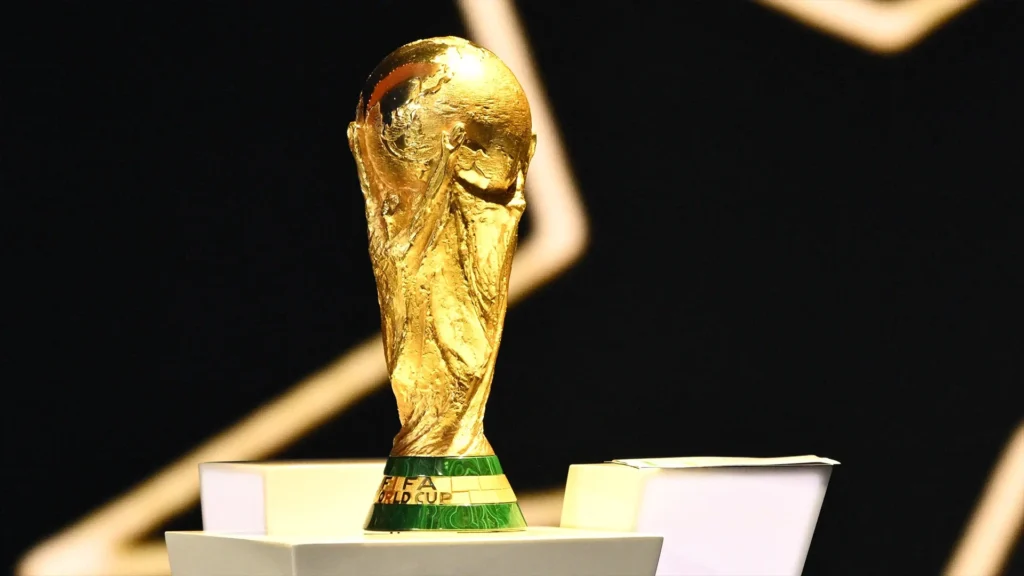
Every four years, the world stops to watch 32 nations (soon to be 48) compete for football’s greatest prize. But while fans see goals, drama, and glory, FIFA sees something else: a $7+ billion money-printing machine that funds the entire sport for the next four years.
The Qatar 2022 World Cup generated a record $7.57 billion in revenue for FIFA during the 2019-2022 cycle, shattering the previous record of $6.42 billion from Russia 2018. FIFA projects the 2026 World Cup in the United States, Canada, and Mexico will generate an unprecedented $11-13 billion when including the expanded Club World Cup.
Here’s the complete breakdown of how FIFA turns one month of football into billions of dollars, and where every penny actually goes.
The $7.57 Billion Revenue Breakdown: Qatar 2022
Five Revenue Streams Fund Global Football
FIFA operates in four-year cycles, with the World Cup serving as the crown jewel that generates the majority of income in the final year. The 2019-2022 cycle delivered record-breaking financial results despite the COVID-19 pandemic disrupting football for nearly two years.
Qatar 2022 revenue came from five primary sources, each contributing billions to FIFA’s total.
Broadcasting Rights: $3.43 Billion (45% of Revenue)
Television Drives Nearly Half of All Income
Broadcasting rights represent FIFA’s single largest revenue stream, accounting for nearly half of all World Cup income. FIFA divides the world into territories and sells exclusive rights to broadcasters in each region. These deals are typically signed years in advance, often in two-tournament packages covering both the current and next World Cup.
Qatar 2022 Broadcasting Revenue by Region:
- Europe: $1.061 billion (largest market)
- Asia and North Africa: $1.025 billion (second-largest)
- Americas: $800+ million (estimated)
- Other regions: $544 million
Key broadcast deals for Qatar 2022 were actually signed during former FIFA president Sepp Blatter’s presidency in 2011-2013, including Fox’s $400 million deal for US rights and BeIN Sports’ $880 million MENA package.
Most-Watched Sporting Event in History
The Qatar 2022 World Cup became the most-watched sporting event in history, with over 5 billion viewers tuning in globally. The final between Argentina and France attracted 1.5 billion viewers alone, making it the most-watched match ever.
This massive global audience explains why broadcasters pay billions for exclusive rights. A single World Cup final delivers more viewers than the Super Bowl, Olympics opening ceremony, and Champions League final combined.
Marketing and Sponsorship: $1.8 Billion (24% of Revenue)
Three-Tier Sponsorship System
FIFA’s sponsorship program operates in three tiers, each offering different levels of global visibility and activation rights.
Tier 1: FIFA Partners (7 companies paying $70-100M annually):
- Adidas (sportswear)
- Coca-Cola (beverage)
- Wanda Group (conglomerate)
- Hyundai/Kia Motors (automotive)
- Qatar Airways (airline)
- QatarEnergy (oil and gas)
- Visa (financial services)
Tier 2: FIFA World Cup Sponsors (7 companies):
- Budweiser (beer)
- McDonald’s (fast food)
- Vivo (smartphones)
- Hisense (electronics)
- Mengniu (dairy)
- Byju’s (education technology)
- Crypto.com (cryptocurrency)
Tier 3: Regional Supporters (18 companies):
- Qatar National Bank (QNB)
- Ooredoo (telecommunications)
- YouTube (announced hours before opening match)
- Visit Las Vegas
- Fine Hygienic Holding
All 32 available sponsorship packages for Qatar 2022 were sold, generating $1.795 billion across the 2019-2022 cycle. This marked a significant increase from previous tournaments as FIFA successfully sold packages at both global and regional levels.
Licensing Rights: $769 Million (10% of Revenue)
From Jerseys to Video Games
FIFA’s licensing program allows companies to manufacture and sell official World Cup merchandise, from jerseys to video games.
Major Licensing Categories:
- Official merchandise and apparel
- Video games (EA Sports FIFA generated $20+ billion over 30 years before license ended)
- Collectibles and memorabilia
- Publishing rights for books and magazines
- Consumer products using official logos and trademarks
Qatar 2022 marked FIFA’s largest-ever licensing and retail program. The permanent flagship FIFA Store launched at Doha’s Hamad International Airport in November 2022, supplementing temporary retail outlets across the eight tournament stadiums.
Licensing revenue increased 28% compared to the 2015-2018 cycle, reaching $769 million. This growth came despite losing the EA Sports partnership, which had paid FIFA approximately $150 million annually for naming rights. That deal expired after FIFA 23 in 2023.
Hospitality and Ticket Sales: $949 Million (13% of Revenue)
Fastest-Growing Revenue Stream
This represents one of FIFA’s fastest-growing revenue streams, driven by a strategic shift to run hospitality programs internally rather than outsourcing to partners.
Ticket Sales: $686 Million
Qatar 2022 sold approximately 2.45 million tickets across 64 matches, at an average price of around $280 per ticket. This fell short of the attendance record set by USA 1994 (3.6 million tickets), primarily due to Qatar’s smaller stadium capacities.
Ticket Price Breakdown:
- Category 1 (best seats): $200-1,604 per match
- Category 2 (mid-level): $70-800 per match
- Category 3 (standard): $40-220 per match
- Category 4 (locals only): $11 for group stage matches
The final at Lusail Stadium featured the most expensive tickets, with the best seats costing $1,604.
Hospitality Packages: $243 Million
FIFA offered six hospitality tiers ranging from the convivial “Club” experience to the exclusive “Pearl Suite.” A total of 259,116 hospitality packages were sold by tournament’s end.
Top Markets for Hospitality Sales:
- Qatar: 39% (host nation)
- Mexico
- United States
- Saudi Arabia
- Argentina
This $243 million represented a 64% increase ($95 million more) compared to Russia 2018’s hospitality revenue. The growth came from FIFA’s decision to move away from outsourcing hospitality and instead run the program internally, capturing the full profit margin.
Other Revenue: $629 Million (8% of Total)
Miscellaneous Income Nearly Doubled
This category nearly doubled from the previous cycle ($323 million in 2015-2018) thanks to several unusual income sources:
Major Contributors:
- Host country contribution: $200 million from Qatar for operational event costs
- US Department of Justice award: Compensation for losses FIFA suffered as victim of decades of corruption schemes (tied to the 2015 FIFA corruption scandal)
- FIFA Arab Cup contributions: Operational cost sharing for hosting the tournament
- Contract break fees: Penalties from cancelled partnerships
- Property sales: Gains from real estate transactions
Where the $7.57 Billion Goes: FIFA’s Complete Expenses
89% Reinvested Back Into Football
FIFA doesn’t pocket the billions. The organization operates as a non-profit (though this designation is debated) and reinvests approximately 89% of net revenue back into football.
Total Investments: $6.3 Billion
FIFA’s four-year expenses totaled $6.302 billion, broken down into:
- Football activities: $5.266 billion (83.5%)
- Administrative and commercial operations: $1.036 billion (16.5%)
The World Cup Itself: $1.83 Billion Investment
Prize Money: $440 Million Distributed
Qatar 2022 featured the largest-ever World Cup prize pool, increased 10% from Russia 2018’s $400 million.
Distribution Structure:
- Winners (Argentina): $42 million
- Runner-up (France): $30 million
- Third place (Croatia): $27 million
- Fourth place (Morocco): $25 million
- 5th-8th place (4 teams): $17 million each
- 9th-16th place (8 teams): $13 million each
- 17th-32nd place (16 teams): $9 million each
Additionally, each of the 32 participating teams received $1.5 million in preparation money before the tournament, bringing the minimum guaranteed payment to $10.5 million per nation.
FIFA Club Benefits Programme: $209 Million
This often-overlooked payment goes directly to clubs whose players participated in the World Cup. Clubs receive daily compensation for each player while they’re on national team duty, including training camp time.
For Qatar 2022, $209 million was distributed among approximately 440 clubs worldwide. European clubs captured the largest share, with English Premier League clubs alone receiving over $35 million.
The payment formula is calculated at a daily rate per player, meaning clubs with multiple players at the tournament and teams that advance deep into knockouts generate significantly more compensation. Manchester City, with 16 players at Qatar 2022, received over $5 million.
Tournament Operational Costs: $1.184 Billion
Major Expense Categories:
TV Operations and Broadcasting: $247.8 million
- Global feed production for 200+ territories
- VAR technology and camera infrastructure
- Satellite uplinks and transmission costs
- Commentary positions and broadcast facilities
Workforce Management: $217.3 million
- FIFA staff deployed to Qatar
- Referees and match officials ($17 million total for all officials)
- Security personnel
- Volunteer coordination and management
Operational Expenses: $322 million
- Ticketing systems and distribution ($41 million)
- Event transport and logistics
- Hospitality operations
- Medical facilities and services
- Ceremonial and cultural events
Preparatory and Administrative Costs: $717.1 million
- Tournament planning and coordination
- Stadium readiness and FIFA-specific modifications
- Team facilities and training sites
- Marketing and promotional campaigns
- Legal and compliance costs
Qatar’s unique compact geography created significant cost savings compared to previous tournaments. With all eight stadiums within a 50-kilometer radius of Doha, FIFA saved hundreds of millions on logistics, team travel, and broadcast operations that would normally be spread across an entire country.
Development and Education: $2.25 Billion
Largest Single Expense Category
FIFA’s development programs represent the largest single expense category, with investments across 211 member federations worldwide.
FIFA Forward 3.0 Programme: $1.746 Billion
This flagship development initiative distributes funds directly to member associations, confederations, and regional bodies.
Funding Structure (2019-2022 cycle):
- Operational grants: Each of 211 member associations receives $1 million per year ($500,000 paid in January, $500,000 in July pending compliance)
- Project funding: Each member association entitled to $2 million for specific development projects over the four-year cycle
- Confederation grants: Additional funding for six continental confederations (UEFA, CONMEBOL, CAF, AFC, CONCACAF, OFC)
- Emergency COVID-19 relief: $321 million distributed through FIFA COVID-19 Relief Plan
For 2023-2026, FIFA Forward increased 29% to $2.25 billion, with each member association now receiving enhanced funding.
Women’s Football Development: $155 Million
FIFA invested $155 million specifically in the FIFA Women’s World Cup France 2019, which drew a record 1.12 billion viewers globally. This investment doubled for the 2023 Women’s World Cup in Australia and New Zealand.
FIFA created separate sponsorship packages exclusively for women’s football, allowing brands to sponsor women’s tournaments independently from men’s competitions. This move aims to dramatically increase women’s football revenue.
Youth Tournaments: $276 Million
FIFA’s youth development ecosystem includes:
- FIFA U-20 Men’s World Cup
- FIFA U-17 Men’s World Cup
- FIFA U-20 Women’s World Cup ($21 million budgeted for 2022 edition)
- FIFA U-17 Women’s World Cup ($21 million budgeted for 2022 edition)
- Beach Soccer World Cup
- Futsal World Cup
- FIFA eFootball tournaments
Talent Development Scheme: $200 Million
Launched in 2022, this program provides assistance to member associations to give every child a chance to play football while reducing regional disparities in football development levels.
FIFA Club Protection Programme: $80 Million
This insurance program compensates clubs when their players suffer injuries while on national team duty during FIFA International Match Calendar dates. A total of 241 incidents were reported during the 2019-2022 cycle.
Administrative and Governance Costs: $1.036 Billion
Personnel and Operations: $600 Million
FIFA employs hundreds of staff across its Zurich headquarters and satellite offices worldwide, including technical development staff, commercial and marketing teams, legal and compliance divisions, FIFA+ streaming platform development, and judicial bodies and ethics committees.
FIFA President Gianni Infantino received a total pre-tax compensation package of 3.6 million Swiss francs ($3.9 million) in 2022, including base salary, bonuses, and expenses. His annual bonus increased by 620,000 Swiss francs ($673,000) following the successful Qatar World Cup.
Communications and Digital Innovation: $26+ Million
FIFA invested heavily in digital transformation:
- Launch of FIFA+ streaming platform (free live matches and documentary archive)
- Digital content creation and social media
- FIFA Museum operations
- Technology infrastructure upgrades
The FIFA+ platform launched in 2022 contains an extensive archive of every World Cup match ever filmed (both men’s and women’s competitions), plus free live matches from lower-tier competitions worldwide.
Football Governance: $167 Million
This covers judicial bodies and ethics committees, anti-match-fixing programs and investigations, Transfer Matching System (TMS) operations, disciplinary processes, and legal expenses.
FIFA’s legal costs significantly decreased during the 2019-2022 cycle as several high-profile corruption cases from the 2015 scandal drew to a close. Provisions of $120 million were released in 2022 related to legal cases from the 2018 and 2014 World Cups.
The 2026 World Cup: FIFA’s $11-13 Billion Jackpot
48 Teams, 104 Matches, Record Revenue
The expanded 48-team, 104-match World Cup co-hosted by the United States, Canada, and Mexico represents FIFA’s most ambitious financial undertaking ever.
Projected Revenue: $11-13 Billion
Broadcasting Rights: $4.264 billion
- 43% increase ($964 million more) compared to Qatar 2022 cycle
- North American time zones favorable for global viewership
- 62.5% more matches (104 vs 64) increases content inventory
- Fox and Telemundo already committed for US rights
Marketing and Sponsorships: $2.69 billion
- New American sponsors entering after losing EA Sports and Crypto.com
- 20-25% growth expected from 48-team format appeal
- First major tournament in US since 1994 attracts renewed corporate interest
Hospitality and Ticket Sales: $3.097 billion
- Projected 5.5+ million tickets (breaking USA 1994’s 3.6 million record)
- Average stadium capacity over 60,000 (vs Qatar’s 47,000)
- Strategic move away from outsourced hospitality model captures full margins
- Operational costs budgeted at $638 million, leaving approximately $2.5 billion net revenue
Licensing Rights: $835 million
- $66 million increase from 2019-2022
- New video game partnerships post-EA Sports split
- Expanded merchandise opportunities across three host nations
Other Revenue: $277 million
- Olympic Football Tournaments revenue
- FIFA Quality Programme
- Rental income and miscellaneous sources
32-Team Club World Cup 2025: $2+ billion
- Not included in original $11 billion projection
- Brings total 2023-2026 cycle revenue to approximately $13 billion
Projected Expenses: $10.9 Billion
Prize Money and Club Benefits: $1.01 billion
- Prize pool: $655 million (48.9% increase from Qatar’s $440 million)
- Winners receive $50 million (up from $42 million)
- Each team guaranteed minimum $10.5 million regardless of performance
- Preparation fees: $72 million ($1.5 million per team × 48 teams)
- Club Benefits Programme: $355 million (70% increase)
2026 World Cup Operations: $2.5 billion
- Logistics across 16 cities in 3 countries
- Existing NFL stadiums reduce infrastructure costs
- 104 matches require 62.5% more operational support
- Broadcasting production, VAR, and technology: $300+ million estimated
FIFA Forward 3.0: $2.25 billion
- 29% increase from previous cycle
- Each member federation receives increased annual grants
- Development projects and infrastructure funding
Women’s World Cup 2023: $435 million
- Australia and New Zealand co-hosting
- Separate sponsorship packages generate additional revenue
- Prize money increased to reduce gender pay gap
FIFA+ and Digital Innovation: $150+ million
- Platform expansion and content creation
- Technology infrastructure
- Digital fan engagement tools
Administrative Costs: $600+ million
- Personnel across expanded operations
- Legal and governance
- FIFA headquarters operations
Projected Profit: $100+ million conservatively budgeted, though actual profit likely higher if revenue exceeds projections.
FIFA’s $4 Billion War Chest
Massive Cash Reserves Fund Global Football
At the end of 2022, FIFA held reserves of $3.97 billion, up from $1.6 billion in 2021. By the end of 2024, reserves stood at $2.948 billion (down from the World Cup year peak as funds are deployed to development programs).
This massive cash reserve serves several purposes:
- Emergency funding for member federations during crises (COVID-19 relief distributed $321 million)
- Long-term investment in football infrastructure globally
- Financial stability to weather economic downturns
- Leverage for negotiating broadcast and commercial deals
Critics argue FIFA hoards excessive cash while developing nations struggle with basic football infrastructure. Defenders claim the reserves ensure FIFA can fulfill its four-year commitments regardless of economic conditions.
Where the Criticism Comes From
Four Major Controversies
Despite reinvesting 89% of revenue into football, FIFA faces persistent criticism over how money is distributed and spent.
- Questionable Host Selection: Qatar’s $220 billion World Cup (though mostly infrastructure unrelated to the tournament) versus FIFA’s $7.57 billion revenue raises questions about whether host nations benefit financially. Qatar directly earned only $4-6 billion while spending $220 billion, essentially subsidizing FIFA’s global football development with oil wealth. The 2026 model using existing NFL stadiums attempts to address this, though host cities still incur significant costs.
- Development Fund Effectiveness: While FIFA distributed $2.25 billion to member federations, corruption and mismanagement at national federation levels means money doesn’t always reach grassroots programs. Some federations have been accused of using FIFA Forward funds for salaries and administrative overhead rather than player development.
- Gender Pay Gap: The 2022 Men’s World Cup prize pool ($440 million) dwarfed the 2023 Women’s World Cup ($152 million), despite FIFA’s claims of supporting women’s football. While FIFA increased women’s prize money by 300% from 2019 to 2023, the gap remains enormous. For 2026, FIFA has committed to further reducing this disparity with separate commercial strategies for women’s tournaments.
- Executive Compensation: FIFA President Gianni Infantino’s $3.9 million annual package draws criticism given FIFA’s non-profit status. Critics argue such high salaries contradict FIFA’s mission of football development, while defenders claim competitive compensation is necessary to attract top business talent.
The Bottom Line: $7 Billion Funds Global Football
The FIFA World Cup isn’t just the world’s biggest sporting event. It’s a highly efficient money-printing machine that generates $7+ billion every four years and redistributes that wealth across global football development.
Qatar 2022 Revenue Breakdown:
- Broadcasting rights: $3.43 billion (45%)
- Marketing and sponsorships: $1.8 billion (24%)
- Licensing rights: $769 million (10%)
- Hospitality and tickets: $949 million (13%)
- Other revenue: $629 million (8%)
- Total: $7.57 billion
Where the Money Went:
- Development programs: $2.25 billion (FIFA Forward, women’s football, youth tournaments)
- World Cup operations: $1.83 billion (prize money, club benefits, tournament costs)
- Administrative costs: $1.036 billion (personnel, governance, digital innovation)
- Total invested: $6.3 billion (89% of revenue)
The 2026 World Cup in North America promises to shatter these records, with projected revenue reaching $11-13 billion thanks to the expanded 48-team format, favorable time zones, existing stadium infrastructure, and renewed American corporate interest. FIFA expects to distribute nearly $900 million in prize money alone, while investing over $2.25 billion in global football development through FIFA Forward 3.0.
Every goal, every save, every yellow card feeds into a multi-billion-dollar economic ecosystem that funds everything from youth academies in Oceania to women’s football leagues in Africa to grassroots programs across 211 nations.
The world watches for the drama on the pitch. FIFA counts the billions off it.