In 2019, you could buy a Chanel Medium Classic Flap bag for $5,800. By 2024, the same bag cost $10,800. By August 2025, the price reached $11,300. That is a 95% increase in six years, nearly doubling the price while inflation averaged 3-4% annually. Logic suggests this would destroy demand.
It did the opposite. Chanel boutiques imposed quota systems limiting customers to two Classic bags per year starting June 2022. Stores sold out seasonal colours within weeks. The resale market exploded with pristine bags trading at premiums above retail. Customers who once bought casually now strategized purchases months in advance, afraid the next price hike would put their dream bag permanently out of reach.
Chanel reported $18.7 billion revenue in 2024, down 4.3% from 2023’s peak of $19.7 billion but still extraordinary given aggressive pricing while competitors offered stability. Operating profit fell 30% to $4.5 billion from $6.4 billion, but the strategic pivot was clear: Chanel was trading volume for positioning, deliberately moving from accessible luxury toward Hermès-level exclusivity where scarcity creates desire.
This is the story of how one luxury house rewrote pricing rules, turned customer anger into urgency, and proved that in luxury markets, raising prices can increase demand when executed with absolute conviction.
Why Traditional Pricing Logic Breaks Down in Luxury
In normal markets, raising prices reduces demand. Economics 101 teaches that higher costs mean fewer buyers. But luxury goods operate on inverted demand curves where higher prices can increase desirability by signaling greater exclusivity. Chanel price increase strategy exploited this principle ruthlessly.
The Medium Classic Flap went from $5,800 to $11,300 between 2019 and 2025, a price trajectory that would bankrupt consumer brands selling functional products. But Chanel bags are not functional products. They are status signals, social currency, and identity markers that derive value from being difficult to obtain. Each price increase reinforced the perception that owning Chanel meant belonging to an increasingly exclusive club.
Bruno Pavlovsky, President of Fashion at Chanel, defended the strategy: “Price increases can become an issue when the quality doesn’t match the cost.” His statement implied that Chanel quality did match escalating costs, though critics argued that materials and craftsmanship remained largely unchanged while prices doubled. The real quality Chanel sold was not in stitching. It was in exclusivity.
Why luxury inverts traditional pricing psychology:
- Status signaling: Higher prices increase social currency value of ownership
- Scarcity perception: Expensive items feel rare even when production is high
- Investment framing: Rising prices create belief bags appreciate like assets
- Exclusion anxiety: Fear of being priced out motivates urgent purchases
- Quality inference: Consumers assume higher prices mean better craftsmanship
- Peer comparison: Visible luxury creates competitive purchasing behavior
The Chanel price increase strategy worked because the brand convinced customers they were not buying handbags. They were buying membership in an elite community that most people could not access.
The Hermès Envy That Changed Everything
Chanel’s aggressive pricing began accelerating after 2020, coinciding with the brand studying Hermès’ playbook obsessively. Hermès maintained 70-75% gross margins, commanded waitlists measured in years rather than weeks, and created secondary markets where used bags sold for more than retail. This was the ultimate luxury achievement: turning scarcity into a business model so powerful that customers thanked the brand for the privilege of waiting.
In 2022, Chanel explicitly adopted Hermès tactics including quota systems, purchase restrictions, and deliberate underproduction relative to demand. The message was clear: Chanel wanted to be Hermès, not Louis Vuitton. While Louis Vuitton sold millions of bags annually through mass accessibility, Chanel would sell fewer but at higher prices and with longer waitlists.
Hermès strategies Chanel adopted post-2020:
- Quota systems: Two Classic Flap bags per customer per year
- Purchase history requirements: Loyalty demonstrated through consistent buying
- Boutique-only distribution: Eliminated wholesale to control scarcity perception
- Deliberate stock limitations: Selling out colours to create urgency
- Resale market leverage: Using secondary prices to justify retail increases
- VIP treatment tiers: Private boutiques for highest-spending customers
The Hermès model worked for Hermès because the brand had spent decades building scarcity credibility. Chanel attempted to manufacture that credibility overnight through pricing and quotas, creating customer resentment that Hermès never faced because Birkin scarcity felt authentic while Classic Flap scarcity felt artificial.
The Chanel No. 5 Heritage Advantage in Luxury Pricing
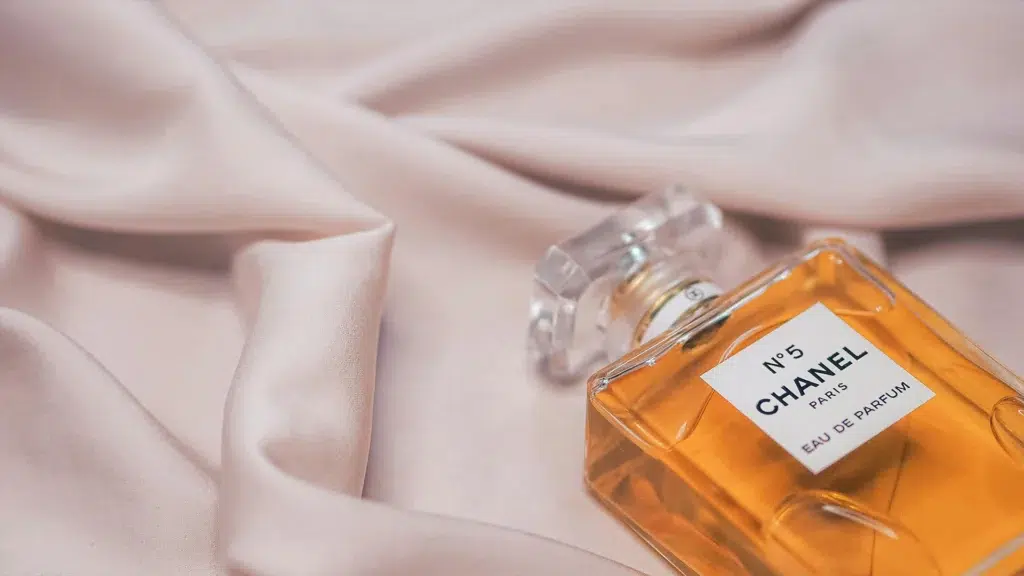
Chanel possesses a pricing credibility advantage that pure handbag brands including Hermès fundamentally lack: a 100+ year fragrance empire anchored by the world’s most iconic perfume. Chanel No. 5, launched in 1921 by Coco Chanel and perfumer Ernest Beaux, remains the bestselling prestige fragrance globally, generating an estimated $100+ million in annual sales. A bottle of Chanel No. 5 sells every 30 seconds somewhere in the world, creating continuous brand visibility and luxury association that extends far beyond leather goods into cultural consciousness spanning generations.
This fragrance heritage provides psychological justification for handbag pricing that competitors cannot replicate. When Chanel raised Classic Flap prices 95% in six years, customers accepted it partly because the brand demonstrated century-long mastery of luxury pricing across categories. The diversified revenue also gave Chanel financial flexibility that handbag-only brands lacked, spreading risk across fragrances, cosmetics, skincare, watches, and jewelry alongside handbags.
How Chanel No. 5 supports aggressive handbag pricing:
- Brand credibility: 100+ years of luxury fragrance pricing establishes value preservation trust
- Cultural permanence: Selling every 30 seconds globally proves timeless relevance across generations
- Pricing stability: Never discounted or mass distributed, demonstrating premium discipline
- Revenue diversification: Fragrance and beauty cushioning handbag sales volatility during pricing transitions
- Multigenerational loyalty: Customers watching mothers treasure same perfume for decades believe bags will similarly retain value
- Cross-category halo: Perfume prestige elevating perception of all Chanel products including leather goods
The 2024-2025 Price Increases That Tested Customer Loyalty
Chanel implemented aggressive price increases throughout 2024 and 2025 despite economic headwinds and declining sales volumes. The March 2024 increase pushed the Medium Classic Flap from approximately $9,800 to $10,200, a jump customers grudgingly accepted as inevitable. But the August 2025 increase to $11,300 crossed psychological thresholds that made even devoted customers question their loyalty.
The August 2025 increase affected nearly every bag category with Classic Flaps rising 4-5%, Boy Bags up 4-5%, Chanel 19 increasing 4.5%, and Chanel 22 jumping 7.3% for small sizes. Only the new Chanel 25 remained unchanged, likely because the brand wanted a honeymoon period for its newest design. The timing appeared deliberate, arriving just before Matthew Blazy’s debut collection as Creative Director in October 2025.
Customers reacted with fury online. Fashion forums filled with declarations of “I’m done buying Chanel” and pledges to explore alternatives. Luxury resale platform Madison Avenue Couture reported that customers were increasingly turning to pre-loved inventory where pricing felt more rational. But declarations of boycotts proved largely performative, as most customers eventually purchased anyway.
2024-2025 price increase breakdown:
- Classic Mini Square: $5,200, up 4% from $5,000
- Classic Mini Rectangular: $5,400, up 4% from $5,200
- Classic Small: $10,900, up from $10,400
- Classic Medium: $11,300, up from $10,800
- Classic Maxi: $12,800, up from $12,200
- Boy Bag range: $6,700-7,600, up 4-5%
- Chanel 19: Up 4.5% across sizes
- Chanel 22 Small: $5,900, up 7.3%
The 345% increase for Classic Maxi since 2010 became a viral statistic. A bag originally $3,700 now cost $12,800, a price trajectory that seemed designed to filter out all but the wealthiest or most committed customers.
Regional Pricing Strategy Creating Geographic Arbitrage
Chanel implemented price increases unevenly across regions, with Europe seeing steeper hikes than the United States in several rounds. The 2024 European increases averaged 7% while US increases hovered around 4-5%, creating opportunities for tourism-driven purchases where customers flew to cheaper markets specifically to buy bags before regional pricing adjustments equalized.
This geographic pricing variation appeared deliberate rather than accidental. Chanel stated that 2024-2025 increases aimed to eliminate regional differences, suggesting prior variations were strategic tools for managing demand across markets.
Regional pricing dynamics:
- United States: 4-5% average increase in 2025, historically lower than Europe
- Europe: 7% average increase in 2024, steeper hikes closing arbitrage opportunities
- Asia: Varied by market with China seeing moderate increases
- Tourism impact: Regional gaps driving travel purchases before price harmonization
- Currency effects: Dollar strength occasionally creating temporary bargains
The Quota System That Copied Hermès But Angered Customers
On June 7, 2022, Chanel implemented a strict two Classic bag per year quota system that fundamentally changed the purchasing experience. Customers who previously bought five or six bags annually found themselves limited to two, forcing choices between colours, sizes, and seasonal variations they once collected freely. The quota applied to any Classic style including Mini, Small, Medium, and Maxi.
The quota system served multiple strategic purposes simultaneously. It combated resellers buying inventory to flip on secondary markets. It created artificial scarcity where previously none existed, making Classic Flaps feel exclusive even as Chanel produced them in relatively high volumes. And it forced customers to plan purchases carefully, increasing engagement with sales associates who became gatekeepers controlling access.
But customers experienced quotas as punitive restrictions rather than exclusivity enhancements. A loyal buyer who had purchased two Classic bags in March found herself blocked from buying her mother a third for a June birthday. Collectors who wanted seasonal colours in multiple sizes had to choose one and watch others sell out.
How quota system operates in practice:
- Two Classic Flaps per calendar year regardless of size or colour
- Tracked by sales associates in customer purchase history systems
- Retroactive counting meaning pre-quota 2022 purchases counted against annual limit
- No workarounds for gifts or family purchases under different accounts
- Resale market surging as customers hit quota limits sought additional bags
- VIP customers sometimes receiving exemptions for highest spenders
Comparison to Hermès quotas revealed the strategy’s weakness. Hermès customers accepted quotas because Birkin scarcity was authentic, built over decades of genuine production constraints. Chanel scarcity felt manufactured because Classic Flaps had been readily available for years before quotas suddenly appeared.
Boutique-Only Strategy Eliminating Wholesale Distribution
Chanel withdrew from wholesale partners and department stores over the past decade, concentrating distribution exclusively in company-owned boutiques. This move mirrored Hermès’ model where flagship stores control the entire customer experience. By eliminating Neiman Marcus, Saks, and Harrods from carrying Chanel bags, the brand reduced customer touchpoints and increased perceived rarity.
The boutique-only strategy also enabled stricter quota enforcement and customer profiling. Department stores could not track purchase histories across locations or enforce annual limits effectively. Chanel boutiques integrated customer relationship management systems that flagged quota limits and identified high-value targets for VIP treatment.
Boutique-only distribution advantages:
- Complete control over customer experience and service standards
- Quota enforcement across all customer interactions nationally
- Purchase history tracking enabling VIP relationship management
- Elimination of discounting that department stores sometimes offered
- Brand presentation consistency impossible in multibrand retail
- Scarcity perception amplified by fewer buying locations
Why Sales Dropped But Strategy Didn’t Change
Chanel’s 2024 revenue declined 4.3% to $18.7 billion while operating profit fell 30% to $4.5 billion, suggesting the aggressive Chanel price increase strategy was finally hitting resistance. Customers were not just complaining, they were closing wallets. Yet the brand did not reverse course dramatically. Instead, it made tactical adjustments including moderating 2024 increases to 3% versus double-digit hikes in prior years.
The sales decline validated critics who warned that Chanel was pricing out loyal customers who wanted luxury but not at Hermès prices. These customers represented the core demographic: successful professionals earning $100,000-250,000 annually who could justify a $5,000 bag but struggled with $11,000. By chasing Hermès positioning, Chanel risked losing the middle without fully capturing the ultra-wealthy.
But Chanel’s leadership appears willing to accept volume declines in exchange for positioning improvements. The goal is not selling more bags. It is selling at higher prices to wealthier customers who view bags as collectibles rather than purchases.
Why Chanel persists despite sales pressure:
- Long-term positioning: Building Hermès-level brand perception takes decades
- Margin preservation: Selling fewer at higher margins maintains profitability
- Resale reinforcement: Secondary market values validating retail prices
- Customer quality: Attracting ultra-wealthy replacing middle-tier buyers
- Supply chain leverage: Lower volumes reducing production costs
- Competitive differentiation: Staking territory competitors cannot copy
The 2024 $1.8 billion capital investment in supply chain, including stakes in French silk suppliers and Italian jewelers, demonstrated commitment to positioning regardless of short-term sales.
The Resale Market Validating Retail Strategy
Chanel’s retail pricing strategy gained credibility from booming secondary markets where pristine Classic Flaps traded at or above retail. Platforms like Sotheby’s, Madison Avenue Couture, and Rebag reported that well-maintained Chanel bags retained 60-80% of retail value while limited editions commanded premiums.
The 2.55 Reissue originally sold for $220 in 1955 now traded for $11,300+ in excellent vintage condition, a 5,000%+ appreciation. Classic Flaps from the 1980s priced around $1,000 now sold for $8,000-12,000 depending on condition and rarity.
Resale market dynamics supporting pricing:
- Pristine bags: Retaining 60-80% of retail value immediately after purchase
- Limited editions: Supreme collaborations appreciating 100-300%
- Vintage pieces: 1980s-1990s bags trading at $8,000-12,000 in good condition
- Authentication services: Third-party verification adding credibility to secondary sales
- Auction results: Public sales establishing market pricing transparency
The Counterintuitive Psychology Making It Work
Chanel price increase strategy succeeds because luxury purchases are not rational decisions evaluated on price-value equations. They are emotional decisions driven by status anxiety, peer comparison, and fear of exclusion. Each price increase triggered psychological responses that paradoxically drove demand higher despite higher costs.
Announcement of upcoming increases created urgency where previously none existed. Customers who had planned to buy next year accelerated purchases to current year, worried next round would price them out permanently. This pulling forward of demand generated sales spikes before every increase.
Loss aversion also played a role. Customers who had already invested thousands in Chanel bags felt compelled to continue buying to justify prior purchases. Stopping felt like admitting mistake, while continuing felt like protecting investment.
Psychological triggers driving counterintuitive demand:
- Urgency creation: Upcoming increases accelerating purchase timelines
- Loss aversion: Protecting prior investments through continued buying
- Status anxiety: Fear of being unable to afford brand driving immediate purchase
- Peer pressure: Visible luxury creating competitive consumption
- Identity defense: Chanel ownership signaling identity customers unwilling to abandon
- Rarity perception: Higher prices making ownership feel more exclusive
The strategy particularly exploited younger luxury entrants who had not experienced stable pricing and therefore viewed constant increases as normal.
The Bottom Line
Chanel price increase strategy proved that luxury brands can defy traditional economics when exclusivity matters more than affordability. From $5,800 to $11,300 in six years while implementing quotas and eliminating wholesale demonstrated conviction that terrified competitors trying to balance volume and margin.
The 2024-2025 results showed strategy limits. Revenue declined 4.3% and operating profit fell 30% as even loyal customers balked. The brand moderated 2025 increases to 4-5% versus double-digit prior years, acknowledging that infinite pricing power does not exist even in luxury. But Chanel did not abandon the strategy.
What made Chanel price increase strategy work:
- Inverted demand: Higher prices signaling exclusivity rather than deterring buyers
- Quota systems: Artificial scarcity creating urgency and waitlists
- Hermès inspiration: Adopting proven scarcity tactics from luxury’s gold standard
- Boutique control: Eliminating wholesale enabling purchase restrictions
- Resale validation: Secondary markets justifying retail through appreciation
- Regional variation: Geographic pricing creating arbitrage opportunities
- Long-term commitment: Accepting volume losses for positioning improvements
- Psychological exploitation: Urgency, loss aversion, status anxiety driving demand
The challenge ahead is whether Chanel can complete transition to ultra-luxury without losing too many customers. Early results suggest pain: falling sales, customer resentment, market share losses. But luxury positioning takes decades to build.
For other luxury brands, the lesson is clear but dangerous. Chanel price increase strategy works only with absolute conviction, willingness to lose customers, and decades-long time horizons. The strategy works at the very top of luxury. Elsewhere it is mostly hubris.