In 1921, when Coco Chanel launched a perfume using an unprecedented blend of 80 ingredients including synthetic aldehydes, she broke every rule of the fragrance industry. Traditional perfumes used single floral notes, simple garden flowers for respectable women. But Chanel wanted something different, a scent that “smells like a woman, not like a rose.” She named it No. 5 after her lucky number and presented it on May 5th, the fifth month. That seemingly simple decision launched what would become the world’s most famous perfume, a fragrance that would outlive its creator and remain a bestseller for over a century.
Today, Chanel No. 5 stands as proof that some things truly are timeless. From Marilyn Monroe’s famous declaration in 1952 that she wore nothing to bed but “a few drops of Chanel No. 5” to the 2024 campaign featuring Margot Robbie and Jacob Elordi in Luca Guadagnino’s “See You at 5” film, the perfume has remained culturally relevant across generations. What makes this longevity remarkable isn’t just luck or legacy marketing, it’s a masterclass in brand building that combined revolutionary innovation, genius marketing before advertising existed, careful crisis management, and the discipline to evolve while staying true to core identity. This is the story of how one perfume became more than fragrance, it became a cultural icon representing timeless elegance and the power of a woman who refuses to be just another number.
The Revolutionary Formula That Changed Perfumery
When Coco Chanel met French-Russian perfumer Ernest Beaux in 1920 through her lover Grand Duke Dmitri Pavlovich Romanov, she had a clear vision that would revolutionize the industry. She wanted a fragrance that broke from tradition, something complex and modern that captured the liberated spirit of 1920s women throwing off Victorian constraints. At the time, fragrances for women fell into rigid categories that reflected society’s views on femininity and respectability. Respectable women wore simple single-flower scents like rose, lily, or violet, demure and unassuming fragrances that whispered rather than spoke. Meanwhile, courtesans and women of the demi-monde wore heavy musky perfumes with indolic flowers like jasmine and tuberose, fragrances that announced their presence and sexuality.
Chanel herself came from humble beginnings, raised in an orphanage after her mother’s death and her father’s abandonment. She had been a kept woman, supported by wealthy lovers including Boy Capel and the Duke of Westminster, before building her fashion empire. This background gave her unique insight into both worlds, the respectable and the scandalous. She understood that modern women wanted complexity, fragrances that could be both elegant and sensual, professional and alluring. She wanted to create something that appealed to both “respectable women” and the demi-monde by blending the allure of rich florals with the sophistication of refined simplicity.
Ernest Beaux worked through the summer and autumn of 1920 perfecting the formula, experimenting with combinations that had never been attempted. The breakthrough was his unprecedented use of aldehydes, synthetic compounds originally discovered in perfumery at the turn of the century but never used so boldly. These aldehydes gave the floral notes an airy, ethereal quality, a sparkle and lift that made the perfume feel almost effervescent. Combined with 80 natural and synthetic ingredients including the finest Grasse jasmine, Bulgarian rose, ylang-ylang from the Comoros, and sandalwood from Mysore, the result was revolutionary in every sense.
Revolutionary formula elements:
- 80+ natural and synthetic ingredients unprecedented complexity
- Bold use of aldehydes creating ethereal sparkle
- Abstract composition breaking single-floral tradition
- “Clean sheets and warm bodies” duality for day-to-evening wear
- Rose and jasmine elevated to never-before-experienced heights
- Named No. 5 after Chanel’s lucky number breaking naming conventions
This wasn’t a perfume that smelled like any single flower or attempted to recreate nature, it was an abstract composition that created an entirely new olfactory category. The aldehydes gave it what Chanel described as a “clean sheets and warm bodies” duality, fresh enough for daytime yet sensual enough for evening. It could be worn to the office or to a dinner party, bridging contexts that traditional perfumes couldn’t. When presented with numbered sample vials, Chanel chose number five. She told Beaux, “I show my collections on the fifth of May, the fifth month of the year, so let’s leave the number it bears, and this number five will bring it good luck.”
The Iconic Bottle Design
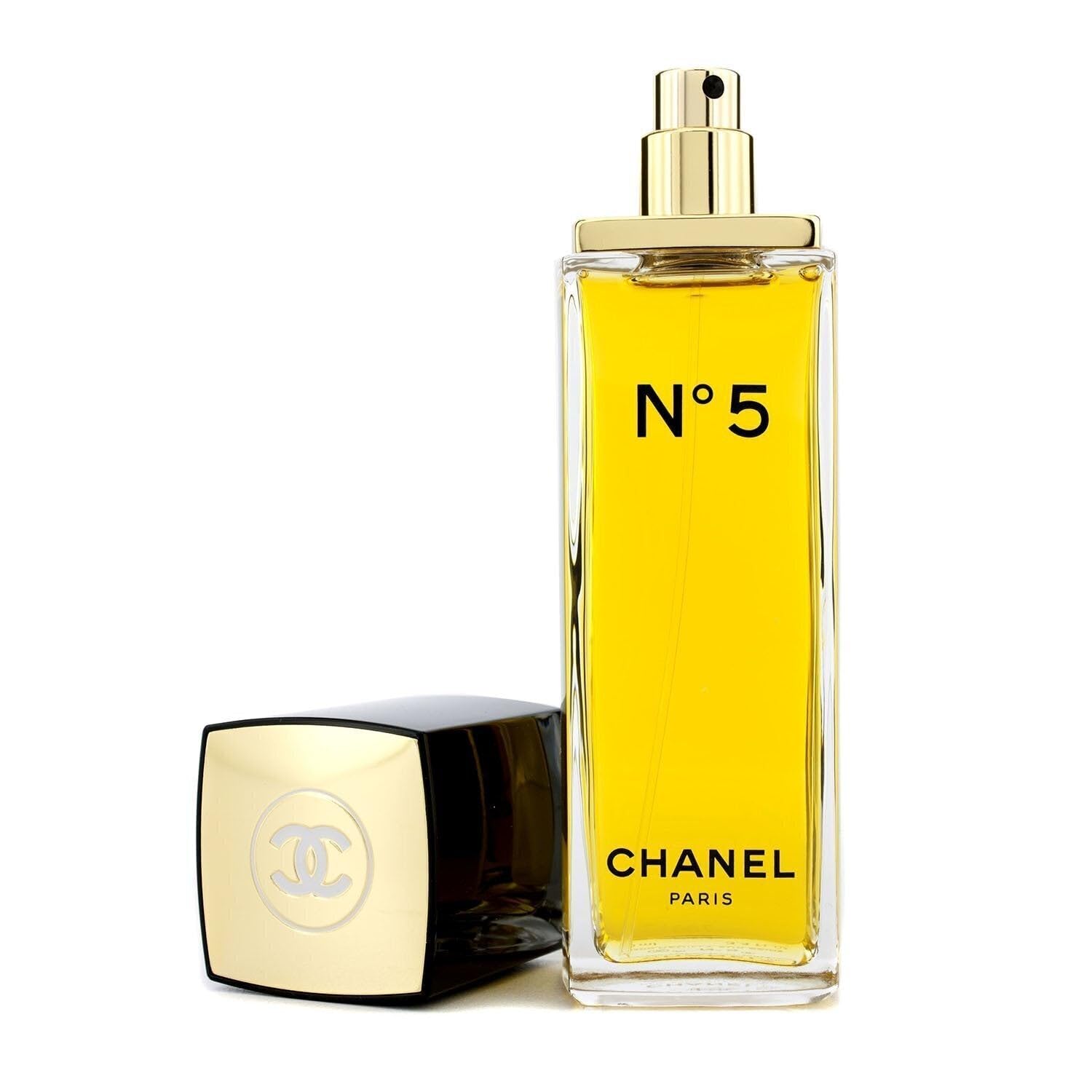
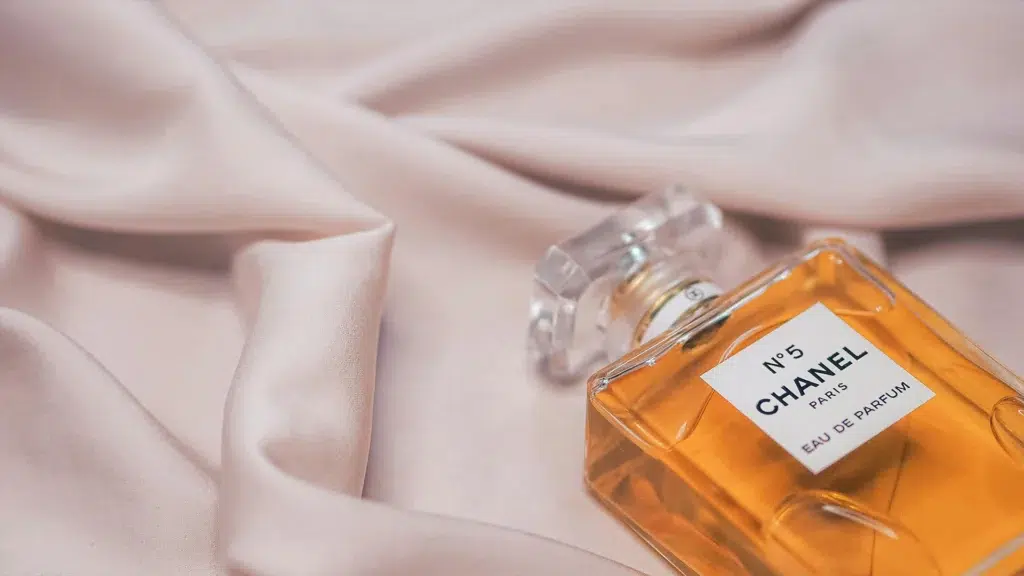
The bottle design was equally revolutionary and has remained virtually unchanged for over 100 years. While competitors used ornate crystal bottles with elaborate stoppers resembling jewelry boxes, designed to sit on vanity tables as decorative objects, Chanel wanted something that contradicted every convention. She requested “pure transparency, an invisible bottle” that would let the perfume itself be the star rather than elaborate packaging. The design, possibly inspired by a whiskey decanter or pharmaceutical vial that she saw in Boy Capel’s collection, was deliberately simple with clean architectural lines, beveled edges, and minimal ornamentation.
The rectangular shape with its masculine simplicity was a direct rebuke to the fussy, feminine packaging of the era. Even the stopper was plain, a simple rectangular block rather than an ornate sculptural element. The label was understated, featuring just the Chanel name and the number 5 in elegant typography. This minimalist approach made the bottle instantly recognizable and gave it a timeless quality that ornate designs could never achieve. While competitors’ bottles dated themselves with art deco flourishes or baroque excess, Chanel No. 5’s bottle looked modern in 1921 and still looks modern today.

✨ Chanel No.5 Eau De Parfum Purse Spray + 2 Refills – Travel Size (3x20ml)
🛒 Shop Now on AmazonThe Marketing Genius Before Advertising Existed
Chanel’s initial marketing strategy in 1921 would today be called influencer marketing, though it happened a century before social media existed and decades before the term “influencer” entered business vocabulary. She understood intuitively what marketing professors would later spend careers studying: in the exclusive world of Parisian high society, word-of-mouth from the right people mattered infinitely more than any paid advertisement. Her approach was brilliant in its simplicity, its exclusivity, and its understanding of human psychology around scarcity and social proof.
She started by spraying No. 5 above her table at fashionable restaurants in Cannes and Grasse during the summer season when Parisian elite flocked to the French Riviera. When people stopped to comment on the captivating scent trailing around her table, asking what perfume she wore, she’d mention casually that it was her new creation, not yet available for purchase. This created immediate desire through scarcity, the most powerful marketing tool ever discovered. People want what they cannot have, especially when they can smell it lingering in the air but cannot possess it themselves.
Next, she produced the first 100 bottles and gave them as unlabeled gifts to her most elite clients and friends during the 1921 Christmas season. These weren’t random customers or even wealthy patrons, they were carefully selected Parisian tastemakers, socialites, and cultural influencers whose preferences shaped what high society considered fashionable. When these women wore No. 5 to parties, salons, and social gatherings, they became walking advertisements more powerful than any print campaign could be. Chanel’s friend Misia Sert said receiving a bottle “was like having a winning lottery ticket,” capturing the sense of exclusive access and privilege associated with the early perfume.
Early marketing genius:
- Spraying at fashionable restaurants creating buzz
- 100 bottles as Christmas gifts to elite tastemakers
- Only available in 3 Chanel boutiques maintaining exclusivity
- Word-of-mouth among Parisian high society
- No advertising for first 13 years after launch
- Scarcity driving desire more than abundance ever could
When the perfume finally appeared in Chanel’s three boutiques in Paris, Deauville, and Biarritz in 1922, it sold out instantly. She had created a frenzy without spending a franc on advertising, relying entirely on social proof and manufactured scarcity. This strategy worked because Chanel understood her audience intimately, they were her friends, clients, and peers. She knew what they valued, how they made purchase decisions, and what would make them advocate for a product. She created a community of brand ambassadors who promoted the perfume organically in their social circles because owning it made them feel special, part of an exclusive club with insider access.
Expansion Without Losing Mystique
In 1924, Parfums Chanel was established as a corporate entity to handle production, marketing, and distribution beyond Chanel’s boutiques. The Wertheimer brothers, Pierre and Paul, became majority shareholders providing capital for expansion while Chanel retained creative control and 10% of profits (a percentage she would spend decades fighting to increase). The first new market was New York City, representing the wealth and sophistication of post-war America. The initial ad appeared in The New York Times on December 16, 1924, a small discreet announcement that Chanel perfumes were available at Bonwit Teller, the upscale Fifth Avenue department store.
The ad was deliberately understated, showing all five Chanel perfumes (No. 5, No. 9, No. 11, No. 22, and Bois des Iles) with virtually indistinguishable bottles, making the product itself the hero rather than flashy marketing copy or elaborate illustrations. This restrained approach continued through the 1920s and 1930s, with ads appearing only intermittently. Chanel No. 5 was promoted exclusively at perfume counters in high-end department stores, maintaining its luxury positioning through careful distribution control. The brand refused mass-market outlets, turning down opportunities for volume sales that would have compromised exclusivity.
The Marilyn Monroe Moment That Changed Everything
The single most effective celebrity endorsement in marketing history happened accidentally, organically, and cost Chanel absolutely nothing at the time. In April 1952, Life Magazine journalist asked Marilyn Monroe “What do you wear to bed?” expecting an answer about nightgowns or pajamas. Her response became legendary: “I only wear Chanel No. 5!” The quote appeared in print with a photograph of Monroe, and the impact was seismic and immediate. Women everywhere wanted to emulate Marilyn’s glamour, sensuality, and confidence, and suddenly Chanel No. 5 became the accessible way to channel her magic.
Sales soared overnight as the perfume became inextricably linked with the world’s most glamorous movie star. But the genius of this moment was its authenticity, Marilyn wasn’t paid to say it, she genuinely loved the fragrance and wore it regularly. This made the endorsement infinitely more powerful than any paid advertising campaign could ever be. When a celebrity genuinely uses and loves a product, their enthusiasm is contagious and credible in ways that scripted endorsements never achieve. Monroe’s unscripted comment did more for Chanel No. 5 than millions of dollars in advertising could have accomplished.
Marilyn Monroe impact:
- April 1952: “I only wear Chanel No. 5” to Life Magazine
- Not paid endorsement, genuinely her favorite fragrance
- Sales soared connecting perfume to Hollywood glamour
- Aspiration became accessible through fragrance
- Created template for celebrity fragrance endorsements
- Didn’t become official ambassador until 2013 posthumous campaign
The transformation was profound, Chanel No. 5 evolved from a luxury perfume for wealthy sophisticates into a cultural phenomenon representing sensuality, glamour, and feminine confidence. The association with Monroe gave the perfume an aspirational quality that transcended its price point. A secretary or teacher who couldn’t afford Chanel couture clothing could still buy the perfume and feel connected to Monroe’s magic. This democratization without dilution became a model for luxury brands seeking to expand markets while maintaining prestige.
The 1960s Crisis and Near-Death Experience
By the late 1960s, Chanel No. 5 faced its biggest existential crisis, a victim of its own success. The perfume had become too successful, expanding to 18,000 retail outlets including drugstores, discount chains, and mass-market retailers. The sophisticated allure that made it special had faded as it became available everywhere from Bergdorf Goodman to corner drugstores. The very ubiquity that drove sales volume threatened to destroy the luxury positioning that made the brand valuable long-term. Customers who once felt special wearing No. 5 now saw it as common, just another mass-market fragrance their mothers wore.
The brand faced a classic luxury goods dilemma: growth had brought revenue but killed mystique. New perfumes from Dior, Yves Saint Laurent, and Givenchy positioned themselves as exclusive and fashionable, making No. 5 feel old-fashioned and dated. By 1974, the perfume risked permanent relegation to the mass market, becoming the fragrance equivalent of a household commodity like soap or toothpaste. Jacques Wertheimer, who assumed control as CEO in 1974, recognized that No. 5 was on a path to losing its soul and its premium pricing power forever if dramatic action wasn’t taken immediately.

💎 Chanel No. 5 Eau De Parfum Spray for Women – 3.4 Ounce Iconic Fragrance
🛒 Shop Now on AmazonThe Campaign That Saved Chanel
Jacques Wertheimer’s response was counterintuitive but brilliant, requiring courage that few executives possess. Rather than increasing advertising to fight negative perceptions or cutting prices to compete with new entrants, he pulled No. 5 from drugstore shelves and cut distribution from 18,000 outlets to 12,000, deliberately reducing short-term sales to restore long-term exclusivity. He eliminated all outside advertising agencies, dozens of firms that had created inconsistent messaging, and put in-house artistic director Jacques Helleu in charge of all creative decisions including advertising, packaging, and brand presentation.
This centralized control ensured brand consistency and long-term strategic thinking over quarterly sales targets that would have pushed for maximum distribution and discounting. Helleu’s 1974 campaign became legendary in advertising history, not just saving No. 5 but establishing the visual language and brand philosophy Chanel maintains today. He found inspiration in Coco’s original 1921 description of the bottle: “pure transparency, an invisible bottle.” Helleu translated this philosophy into high-contrast black-and-white photography that emphasized simplicity, clarity, and timeless elegance over trendy fashion photography aesthetics.
The 1974 turnaround strategy:
- Cut distribution from 18,000 to 12,000 outlets sacrificing revenue
- Removed from drugstores restoring exclusivity
- Centralized creative control under Jacques Helleu
- High-contrast black-and-white photography
- No headlines, taglines, or copy, just powerful images
- Catherine Deneuve as face establishing decade-long campaign
- Long-term brand building over short-term sales maximization
The ads ran without headlines, taglines, or explanatory copy, just a striking image of a sophisticated woman and the iconic bottle. This minimalist approach was revolutionary in an era of busy, text-heavy advertising packed with selling points and product claims. The simplicity communicated confidence, the brand didn’t need to explain itself or convince anyone, it simply presented an image and trusted viewers to understand what No. 5 represented. Helleu partnered with legendary photographer Richard Avedon, who believed successful marketing images needed underlying narratives that created emotional connection rather than just selling products through features and benefits.
Catherine Deneuve and the Renaissance
They chose Catherine Deneuve, then 30 years old and relatively unknown in the United States, as the face of the relaunched campaign. The collaboration between Helleu, Avedon, and Deneuve created images of exceptional grace and simplicity that became some of the most powerful and enduring photographs in beauty marketing history. Deneuve wasn’t just a model wearing perfume, she embodied the Chanel No. 5 woman: sophisticated, confident, elegant, mysterious, and utterly self-possessed. Her association with No. 5 made her internationally famous, the American press named her the world’s most elegant woman, and the French government chose her to represent Marianne, the national symbol of the French Republic.
The strategy worked spectacularly beyond anyone’s expectations. Sales didn’t just recover, they soared to record heights while maintaining premium pricing that had eroded during the mass-market years. More importantly, the campaign established a consistent visual identity that Chanel maintained for decades, creating what marketers now call “brandworld continuity.” Each new campaign built on previous ones rather than starting fresh, creating an unbroken narrative where older photographs gave depth and context to newer ones, shielding the brand from short-lived trends and fashion whims that destroyed competitors trying to stay relevant through constant reinvention.
Generational Reinvention While Staying True
What makes Chanel No. 5’s longevity remarkable is how the brand reinvented itself for each generation while keeping the product completely unchanged. The formula Ernest Beaux created in 1920 remains identical today, proof that true quality and innovation don’t require constant reformulation. In the 1980s and 1990s, Carole Bouquet became the face of No. 5, starring in commercials directed by Ridley Scott and Luc Besson that explored themes of love, mystery, seduction, and feminine power through cinematic storytelling that elevated fragrance advertising into art.
In 2004, Chanel made a massive statement by casting Nicole Kidman in a Baz Luhrmann-directed campaign that was pure cinematic spectacle, reportedly costing $33 million and making it the most expensive advertisement ever produced at that time. The campaign associated the perfume with Hollywood glamour, passion, and star power, positioning No. 5 as the fragrance of women who command attention and live extraordinary lives. The Kidman campaign introduced No. 5 to a new generation discovering the brand through contemporary celebrity rather than their mothers’ perfume bottles.
In 2012, Chanel made international headlines by choosing Brad Pitt as the first male spokesperson for No. 5, challenging traditional gender roles in perfume advertising where men promoted men’s fragrances and women promoted women’s fragrances. The campaign returned to minimalist black-and-white aesthetics, positioning the perfume as the hero with Brad as the attractive accessory rather than the focus. The controversial ads generated enormous publicity and discussion, keeping No. 5 in cultural conversation across social media and traditional press.
Evolution across generations:
- 1970s-80s: Catherine Deneuve establishing elegant sophistication
- 1980s-90s: Carole Bouquet in Ridley Scott/Luc Besson films
- 2004: Nicole Kidman $33M Baz Luhrmann spectacle
- 2012: Brad Pitt first male spokesperson challenging gender norms
- 2020: Marion Cotillard continuing French actress lineage
- 2024: Margot Robbie and Jacob Elordi in Luca Guadagnino’s “See You at 5”
Margot Robbie and Contemporary Relevance
In 2024, Chanel appointed Margot Robbie as the new face of No. 5, succeeding Marion Cotillard and joining the prestigious lineage of actresses who have embodied the fragrance’s essence. The campaign, directed by Oscar-winning filmmaker Luca Guadagnino (“Call Me By Your Name,” “Challengers”), features Robbie alongside Jacob Elordi in a short film titled “See You at 5” set to Daft Punk’s “Veridis Quo.” The storyline follows two lovers arranging to meet at 5pm but not agreeing on a location, driving past each other unknowingly as he rides his motorcycle to her house while she drives her convertible to his.
Robbie wears a custom red Chanel tweed suit, a direct homage to Carole Bouquet’s iconic 1986 look in the Ridley Scott-directed campaign, creating visual continuity across nearly 40 years of brand history. The campaign embodies Chanel No. 5’s message of feminine power and independence, with Robbie’s character laughing at the miscommunication and diving into the ocean rather than waiting passively. Chanel described her as “a woman who has decided she won’t be just another number, choosing over and over again to put her faith in whatever the future holds.” This contemporary interpretation keeps No. 5 relevant for new generations while honoring the legacy of Coco Chanel’s original vision.
The Bottom Line
Chanel No. 5’s century of dominance teaches profound lessons about brand building, longevity, and the discipline required to create something truly timeless. The perfume succeeded not by chasing trends or reinventing itself with each fashion cycle, but by establishing a clear identity in 1921 and defending it relentlessly across generations through careful evolution that honored core values while speaking to contemporary audiences. The formula hasn’t changed since Ernest Beaux perfected it, the bottle design remains virtually identical, yet the brand feels contemporary because marketing evolves while essence stays constant.
The brand understood that true luxury isn’t about availability or affordability, it’s about maintaining mystique and exclusivity even as you scale to global markets. When No. 5 became too accessible in the 1960s, threatening its prestige, Chanel had the courage to reduce distribution and sacrifice short-term revenue to protect long-term brand equity. Few companies have this discipline, most chase growth at any cost until they’ve destroyed what made them special, commoditizing themselves into irrelevance.
Timeless brand principles:
- Revolutionary innovation creating entirely new category
- Influencer marketing executed a century before term existed
- Organic celebrity endorsements more powerful than paid campaigns
- Protecting exclusivity through controlled distribution
- Visual consistency across decades building brandworld
- Product unchanged while marketing evolves for each generation
- Long-term brand equity over short-term sales maximization
The Marilyn Monroe moment demonstrates that authentic celebrity associations trump paid endorsements in creating lasting cultural impact. Her genuine love for No. 5 created more value than any advertising budget could buy, establishing a template that brands still try to replicate today. This authenticity extends to every aspect of Chanel No. 5, from Coco’s personal involvement in creation to the transparent sourcing story connecting the perfume to Russian imperial courts through Ernest Beaux’s background as perfumer to the Tsarina.
Most importantly, Chanel No. 5 proves that luxury brands can remain relevant across centuries if they understand their essence and protect it with discipline that borders on obsession. The perfume isn’t just fragrance, it’s a symbol of timeless elegance, feminine confidence, sophisticated taste, and the refusal to be “just another number” as the Margot Robbie campaign eloquently states. Those values transcend fashion cycles, generational preferences, and cultural shifts. While specific campaigns change with each era, the underlying brand promise remains constant: wearing Chanel No. 5 makes you part of a century-old tradition of sophisticated, confident women from Coco Chanel to Marilyn Monroe to Margot Robbie.