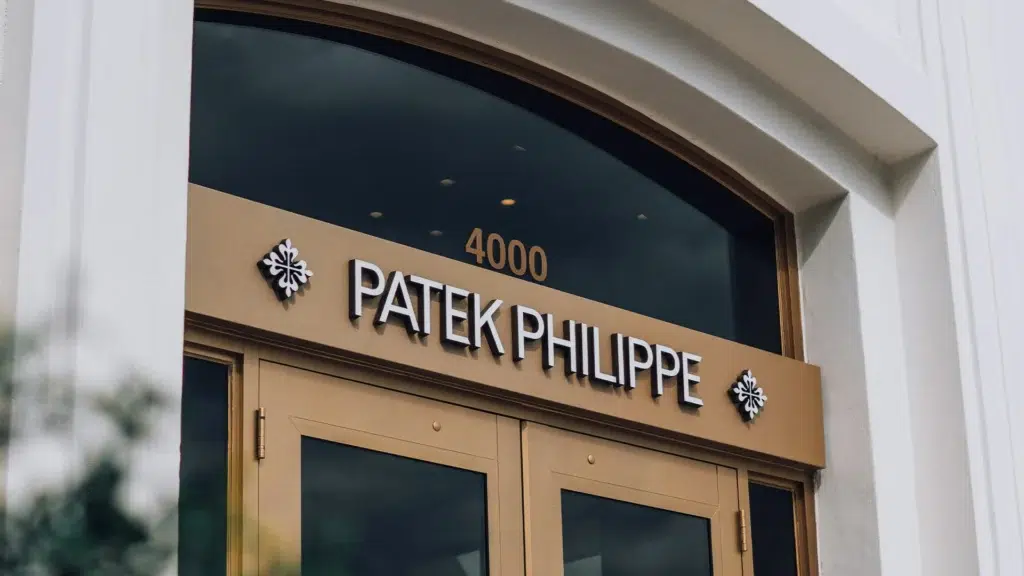
Walk into a Patek Philippe boutique today and you will not find the watch you want on display. You will be politely told that the Nautilus requires a long wait, that the Calatrava needs a purchase history, and that the really special pieces are not discussed in a first meeting. You are expected to earn it.
This is not customer service. This is strategy.
Patek Philippe has been making watches in Geneva since 1839. It produces roughly 72,000 watches per year, a number so small it would take the brand four years to fill a single mid-size football stadium. And yet it crossed $2 billion in annual revenue in 2023, growing steadily from $1.2 billion in 2020. Nine of the ten most expensive watches ever sold at auction carry its name. The most expensive wristwatch ever sold was a Patek, the Grandmaster Chime Ref. 6300A, which went for $31 million in 2019.
None of this happened by accident. It happened because Patek Philippe built a luxury empire on one idea: a watch is not something you own. It is something you look after for the next generation.
The Slogan That Changed Luxury Marketing
In 1996, Patek Philippe fired its previous ad agency and hired London-based Leagas Delaney with a very specific brief: stop advertising the watches. Focus on the people who wear them instead.
The result was the Generations campaign. The first ads ran in October 1996 and showed no watches at all. Just black-and-white photographs of fathers and sons, mothers and daughters, sharing quiet moments. In early 1997, the tagline was added: “You never actually own a Patek Philippe. You merely look after it for the next generation.”
It became the most famous line in luxury advertising history.
What made the Generations campaign work so effectively:
- No product focus: The original ads did not show watches, only families; the emotional hook came first
- Universal truth: The idea of leaving something valuable to your children resonated across cultures, ages, and income levels
- Altercasting psychology: The campaign implied you were already the kind of person who thinks in generations, not one who buys luxury goods to show off
- Consistent execution: The campaign ran without interruption from 1996 to the present, 29 years of the same message with updated imagery
- Family credibility: Because Patek Philippe itself is a family business passed through the Stern family since 1932, the campaign felt authentic rather than manufactured
The campaign has been recognized internationally as one of the greatest advertising efforts ever created. It changed not just Patek’s fortunes but how the entire luxury industry thought about emotional storytelling.
The Stern Family: Living the Tagline
The Generations campaign would not have worked for any other brand. What made it credible is that Patek Philippe has literally been passed from generation to generation since 1839.
In 1932, during the Great Depression, brothers Charles and Jean Stern acquired Patek Philippe after being its dial suppliers for years. Henri Stern followed as Chairman. Philippe Stern took the helm in 1977. In 2009, Thierry Stern became president, the fourth generation of the same family running the same company.
When the ad says you are looking after a watch for the next generation, Patek Philippe’s own boardroom is the proof.
Why family ownership matters to the brand:
- No quarterly pressure: The Stern family optimizes over decades, not earnings cycles
- Brand patience: Decisions like limiting production to 72,000 units are possible only without shareholder pressure to grow volume
- Authentic narrative: The tagline about generational legacy is not a marketing construct; it is literally the company’s operating reality
- Independence: Patek remains one of the last major independent watchmakers not absorbed by LVMH, Richemont, or Swatch Group
How the Campaign Reshaped the Entire Luxury Industry
Before the Generations campaign, luxury advertising was dominated by product shots, close-ups of dials, and celebrity endorsements. Patek Philippe proved that selling the emotion behind ownership was more powerful than selling the object itself.
Every major luxury house studied the campaign. Hermès, Cartier, and Rolex each shifted their advertising language in the years following 1996 toward narrative and heritage storytelling rather than pure product showcase. The idea of a luxury good as legacy rather than status symbol became industry standard. Patek invented the template.
The $2 Billion Math That Defies Logic
The most staggering fact about Patek Philippe luxury is what it earns per unit.
Patek Philippe crossed $2 billion in revenue for the first time in 2023, growing from $1.2 billion in 2020 to $1.5 billion in 2021 to $1.8 billion in 2022. By 2025, Patek aims to produce approximately 72,000 pieces annually, up from 62,000 in 2022.
Do the math. At $2 billion in revenue from 62,000 watches, the average selling price per watch is over $32,000. That is the average across the entire range, including entry-level pieces.
Patek Philippe’s revenue trajectory:
- 2020: $1.2 billion
- 2021: $1.5 billion
- 2022: $1.8 billion
- 2023: $2 billion-plus, first time crossing this milestone
- 2025 target: 72,000 pieces annually, implying continued revenue growth at controlled volume
The controlled growth is deliberate. Thierry Stern has consistently stated that Patek will not rush production to meet demand. The scarcity is the product.
How Patek Prices Its Watches
Entry-level Calatrava dress watches start around $20,000. The Nautilus 5811 in white gold carries a retail price of $89,767. Grande Complications run from $300,000 to over $1 million. And that is before the grey market adds its premium.
The pricing logic is built around complication hierarchy. A simple three-hand dress watch earns its price on finishing and heritage. A minute repeater earns its price on the engineering required to produce a chiming mechanism in a wristwatch. A sky moon tourbillon earns its price because fewer than 40 people on earth can assemble one.
This is not a watch company. It is an asset management firm that happens to make watches.
The Scarcity Multiplier Effect
Production discipline does not just protect brand positioning. It creates a compounding pricing advantage that grows every year.
When Patek limits supply to 72,000 watches while demand grows globally, grey market premiums rise. Rising premiums validate the brand as an investment. Investment perception drives more buyers into showrooms. More buyers competing for fewer watches pushes authorized dealers to increase selectivity. Increased selectivity raises perceived prestige further.
Each link in this chain reinforces the next. The result is a brand that earns more per unit with each passing year without needing to change the product at all.
The Nautilus: How Steel Became the New Gold
In 1976, Patek Philippe did something extraordinary for a house known for formal gold dress watches. It hired Gérald Genta, the same designer who had created the Audemars Piguet Royal Oak, and asked him to design a luxury sports watch in stainless steel.
The brief was deliberately contradictory. Steel was a humble material in fine watchmaking. Patek Philippe was the most prestigious brand in the world. Putting the two together felt like a provocation.
The watch earned early descriptions as “one of the world’s costliest watches made of steel” because the metal had never before been associated with this level of luxury. At launch, it retailed at a price comparable to Patek’s own gold dress watches, causing genuine controversy among collectors.
The Nautilus grey market in 2025:
- Ref. 5811/1G (white gold, retail $89,767): trading at $145,000–$175,000 on secondary markets
- Ref. 5711/1A (discontinued steel, originally ~$35,000 retail): trading at $100,000–$160,000
- Ref. 5711/1A-014 (olive green dial, produced under one year): trades around $200,000
- Ref. 5711/1A-018 (Tiffany blue dial, 170 pieces only): one example sold at auction for $6.5 million in 2021
- Ref. 5712/1A (moonphase): averaging $115,000–$135,000
When a discontinued steel watch that retailed for $35,000 now trades at five times its original price, the grey market is not a problem. It is validation.
Why Discontinuing the 5711 Was a Masterstroke
In 2021, Patek announced it was discontinuing the Nautilus 5711, the most coveted production watch in the world. The announcement triggered chaos in collector markets. Grey market prices doubled overnight.
The replacement, the 5811, arrived in white gold rather than steel, preserving the Nautilus aesthetic but removing the exact specification driving the hysteria. The steel Nautilus became a ghost story: something that existed, was taken away, and now trades at multiples that make equity investors envious.
Patek never publicly explained the decision. That silence was deliberate, and it was perfect.
The Aquanaut: The Nautilus’s Younger Sibling
While the Nautilus commands the headlines, the Aquanaut tells a parallel story about how Patek Philippe Patek Philippe extends scarcity across its sports range.
Introduced in 1997 as a more casual, rubber-strapped alternative to the Nautilus, the Aquanaut initially flew under the collector radar. By 2023, steel Aquanaut references were commanding grey market premiums of 80–120% above retail. The Aquanaut Luce women’s versions in steel trade at two to three times retail on the secondary market.
Patek does not need to create a new icon every decade. It creates the conditions under which existing watches become icons on their own.
Complications: Engineering That Earns Every Dollar
Patek Philippe has registered over 80 patents in its history. It produced the Henry Graves Supercomplication pocket watch in 1933, which held the title of the world’s most complicated watch for 56 years. It unveiled the Calibre 89 pocket watch in 1989 with 33 complications, a piece that took nine years to build. The Grandmaster Chime, released in 2014 and sold at auction in 2019 for $31 million, contains 20 complications in a double-faced case.
These are not watches. They are engineering achievements that happen to fit on a wrist.
Patek Philippe’s key complication categories:
- Minute Repeater: Chimes the time on demand using small hammers and gongs; requires hundreds of hand-finished components and some of the rarest skills in watchmaking
- Perpetual Calendar: Automatically accounts for the varying length of every month and leap years; Patek’s versions require adjustment only once every 100 years
- Split-Seconds Chronograph: Measures two simultaneous events independently; Patek was among the first to achieve this in wristwatch format
- Tourbillon: A rotating escapement cage compensating for gravity’s effect on timekeeping accuracy; purely mechanical, entirely impractical, and deeply coveted
- Sky Moon Tourbillon: Combines a tourbillon with a star chart, perpetual calendar, and minute repeater in a single wristwatch
Every complication adds months or years to assembly time. That is not a cost problem. That is a narrative asset.
The Manufacture: Where the Watches Are Actually Built
Patek Philippe’s Geneva manufacture on Plan-les-Ouates is one of the most controlled facilities in watchmaking. The brand produces its own movements, cases, dials, and hands in-house, giving it a level of vertical integration that even Rolex does not fully match in certain complications.
Watchmakers spend years training before being trusted with minute repeater assemblies. Movement finishing is done by hand even on components never visible to the wearer. Quality control includes acoustic testing for chiming mechanisms, precision timing across six positions, and temperature variation testing.
The Patek Philippe Seal: Higher Than Swiss Made
Since 2009, every Patek Philippe watch carries the Patek Philippe Seal, replacing the Geneva Seal the brand had used for decades. The Geneva Seal already had stricter standards than Swiss Made certification. Patek’s own seal is stricter still.
What the Patek Philippe Seal requires:
- Movement finishing: All visible parts hand-finished to specific surface treatment standards, including components invisible to the wearer
- Chronometric performance: Movements must exceed standard COSC certification accuracy by a measurable margin
- Functional precision: All complications must perform correctly under documented testing conditions
- Permanent serviceability: Patek Philippe commits to maintaining and supplying parts for every watch it has ever produced, with no end date
That last point deserves attention. Patek Philippe guarantees it can service a watch from 1950 today. Most brands cannot service anything more than ten years old. The permanence of service is itself a luxury proposition.
The Auction Market: Nine Records Out of Ten
The auction market for luxury watches is effectively a Patek Philippe show.
As of 2024, nine of the world’s ten most expensive watches ever sold at auction were Patek Philippe watches. The Grandmaster Chime Ref. 6300A holds the record as the most expensive wristwatch ever auctioned at $31 million. The Henry Graves Supercomplication holds the record as the most expensive pocket watch ever auctioned at $24 million.
This is not coincidence. Auction performance is deliberate strategy.
Key Patek auction records:
- Grandmaster Chime Ref. 6300A (2019): $31 million, most expensive wristwatch ever auctioned
- Henry Graves Supercomplication (2014): $24 million, most expensive pocket watch ever auctioned
- Nautilus 5711 Tiffany Blue (2021): $6.5 million for one of 170 pieces
- World Time Ref. 2523 (2021): over $6 million for a 1950s complication piece
Patek Philippe cultivates relationships with major auction houses and produces unique pieces specifically for charity auctions, understanding that charity conditions allow records to be broken in ways regular commercial sales do not. Each record reinforces the perception that Patek watches are investments, not expenses.
How Auction Results Become Free Marketing
Every record-breaking Patek sale generates press coverage worth hundreds of millions in equivalent advertising spend. The brand does not need to buy awareness. It earns it through cultural moments.
When the Tiffany Nautilus sold for $6.5 million in 2021, the story ran in financial newspapers, technology publications, and mainstream media. People who had never heard of a Nautilus reference number learned that a stainless steel watch was worth more than a house in most cities.
That story did more for Patek Philippe luxury’s positioning than any paid campaign could.
The Collector Ecosystem Amplifying the Brand
Unlike Rolex, Patek Philippe does not have a large mainstream collector community built on YouTube tutorials and waitlist strategies. Its collector world is quieter, more insular, and precisely calibrated.
The Patek Philippe Museum in Geneva, which houses over 2,000 timepieces including examples from the 16th century, serves as a physical embodiment of the brand’s permanence. Private collector events, invitation-only exhibitions, and discreet relationships with major watch historians create an ecosystem of advocacy that money cannot manufacture.
The result is that the most influential Patek Philippe collectors actively protect the brand’s mystique rather than commodifying it. They do not post grey market flips. They curate collections and write serious scholarship. The brand benefits from this culture without paying for it.
The Authorized Dealer Network and the Waiting Game
Patek Philippe’s distribution strategy mirrors Rolex’s in principle but is stricter in execution. There is no online retail. The brand maintains a highly selective authorized dealer network, with major cities typically having only one to three points of sale.
In the UK alone, Patek Philippe reduced its authorized dealer count from around 40 at the start of 2023 to just 27, while simultaneously expanding its Bond Street flagship boutique in London. Fewer doors, stronger each.
Clients who want a Nautilus or Aquanaut must build a purchase history with a specific dealer. That means buying other pieces, attending events, and developing a real relationship over months or years. When an allocation arrives, the dealer calls the client they have decided deserves it.
That call is the equivalent of a private invitation.
How the authorized dealer ecosystem works:
- Limited allocations: Major dealers might receive two or three Nautilus pieces per year regardless of how many clients are waiting
- Purchase history requirement: Clients typically need prior Patek purchases before being considered for sports references
- Relationship cultivation: Top dealers hold events, private previews, and collector evenings to build genuine loyalty
- Boutique expansion with dealer reduction: Patek reduces third-party dealer count while investing in directly operated boutiques for tighter brand control
- No discounting, ever: Authorized dealers never reduce prices; doing so risks losing the dealership entirely
The result is that buying a Patek Philippe feels like joining something rather than purchasing something. The transaction is almost incidental to the relationship.
How Patek Controls the Grey Market Without Fighting It
Patek Philippe does not officially acknowledge the grey market. But it does not fight it the way Rolex does.
The grey market serves a purpose. It provides price discovery, showing Patek which models command genuine demand. It creates aspirational content as collectors discuss secondary valuations. And it reinforces the narrative that Patek Philippe luxury watches appreciate rather than depreciate, driving new buyers into authorized channels who want to avoid paying grey market premiums.
When grey market premiums shrink on a particular reference, that is a signal Patek uses internally to adjust production or model planning. The secondary market functions as a real-time demand intelligence system that no survey could replicate.
The Bottom Line
Patek Philippe has built something almost impossible in modern retail: a brand where demand permanently, structurally, and intentionally exceeds supply. Not because of poor planning, but because of philosophy.
The “You Never Actually Own It” tagline is not advertising. It is the operating manual. It explains why Patek keeps production at 72,000 watches per year when demand could absorb five times that. It explains why the Stern family has led the company for four generations without selling to a conglomerate. It explains why every watch comes with a lifetime service guarantee.
Everything points in the same direction: these watches are not for now. They are for later.
What built Patek Philippe’s luxury empire:
- The Generations campaign: Thirty years of the same message redefining the watch as a heirloom rather than a product
- Family ownership: Four Stern generations giving the brand patience that no publicly traded company can match
- Production discipline: 72,000 watches per year despite demand that could absorb multiples of that
- Complications mastery: 80-plus patents and the most complex wristwatches ever made justifying every price tier
- Auction dominance: Nine of ten all-time auction records create perception of permanent investment value
- Nautilus mythology: A discontinued steel sports watch still trading at triple retail four years after discontinuation
- Dealer selectivity: Reducing authorized points of sale while demand grows, tightening scarcity at every level
The challenge ahead is a younger generation that buys differently, questions heritage authenticity, and has been conditioned by startup culture to distrust legacy institutions. Patek Philippe’s response to this has been to do nothing differently. Given what doing nothing differently has produced over 186 years, that may be the most arrogant and most correct strategy in all of luxury.