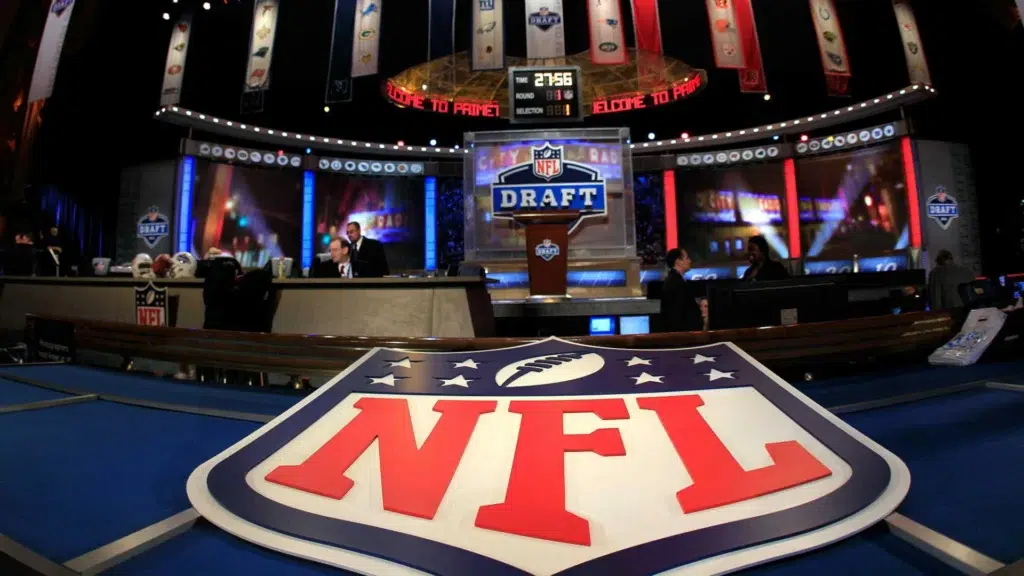
On April 24, 2025, the Green Bay Packers became the smallest market in NFL history to host the NFL Draft. Over three days, 600,000 fans descended on a city with a metro population of just 320,000. Hotels sold out across a 90-mile radius. Restaurants ran out of food. The economic impact reached $104.8 million statewide, with $72.9 million hitting Brown County directly.
Round 1 viewership on ESPN and ABC averaged 13.6 million, making it the second most-watched Day 1 in Draft history. Only 2020’s COVID-restricted virtual Draft, which drew 15.5 million as the only live sports event available, exceeded it. The three-day average of 7.5 million viewers marked the second highest in Draft history across all metrics.
For context, the NFL Draft now outdraws most regular-season games in other sports. The 2025 NBA regular season averaged 1.6 million viewers per game on national TV. NHL games averaged 480,000. MLB postseason games often struggle to reach 5 million. The NFL Draft, an event where no actual football is played, generates television audiences that rival championship games in competing leagues.
ESPN and ABC sold out all advertising inventory across 262 picks over three days. Over 100 brands activated during broadcasts, including Lowe’s as presenting sponsor, Verizon, Bud Light, Pizza Hut, Subway, and Courtyard by Marriott. The 2019 Nashville Draft alone generated $52 million in television advertising value for Disney networks.
From Conference Room to $100 Million Festival
The Early Years: A Room Full of Scouts
The first NFL Draft took place on February 8, 1936, at the Ritz-Carlton Hotel in Philadelphia. Nine teams participated. Heisman Trophy winner Jay Berwanger was selected first overall by the Philadelphia Eagles. He never played a single NFL game, choosing a career in business instead. The entire event lasted a few hours. No television cameras. No fans. No economic impact.
For the next 40 years, the Draft remained an industry event held in hotel ballrooms or league offices. Teams showed up, made selections, and went home. The public learned results through newspapers the following day. ESPN began televising the Draft in 1980, but viewership remained minimal for decades.
The transformation began in 2010 when the NFL moved the Draft from New York to primetime on Thursday night rather than Saturday afternoon. Round 1 viewership jumped from 6.1 million in 2009 to 7.7 million in 2010, a 26% increase. The league realized they had undervalued their product by decades.
Draft Evolution Timeline:
- 1936-1979: Hotel ballrooms, no TV coverage, industry-only event
- 1980-2009: ESPN begins coverage, Saturday afternoon, 6-7M viewers
- 2010: Moved to Thursday primetime, viewership jumps to 7.7M
- 2015: Moved outdoors to Chicago, 275,000 fans attend
- 2020: Virtual Draft during COVID, record 15.5M viewers (only live sports available)
- 2025: Green Bay hosts, 600,000 fans, 13.6M viewers Round 1
The 2015 Chicago Draft marked the inflection point. The league moved the event outdoors for the first time, holding it in Grant Park. Over 200,000 fans attended across three days. The Draft became a festival rather than a television show, with cities bidding aggressively to host.
Why Cities Compete to Host
Host cities invest between $3 million and $5 million to produce the three-day event, covering stage construction, security, fan zones, and infrastructure. The return is extraordinary. Every dollar spent generates $20-50 in economic benefit through hotel occupancy, restaurant spending, transportation, and long-term tourism marketing.
Detroit hosted the 2024 NFL Draft from April 25-27. Anderson Economic Group estimated the event generated $165 million in economic impact. The city spent approximately $4 million on production costs. That represents a 41-to-1 return on investment, higher than most infrastructure projects governments consider.
Detroit 2024 NFL Draft Impact:
- Total attendance: 775,000 fans (NFL official count)
- Economic impact: $165 million (Anderson Economic Group)
- Hotel room nights sold: 19,600 (Visit Detroit)
- City investment: Approximately $4 million
- ROI: 41-to-1 return
- National TV exposure: $52+ million in advertising equivalent value
- Rounds 1-3 average viewership: 10.8 million viewers
Detroit’s hotels were fully booked. The downtown core saw restaurant revenue increases of 300-500% over a typical April weekend. Campus Martius Park, the Draft’s main stage location, hosted over 150,000 fans on Day 1 alone. The event generated international media coverage that tourism bureaus could never afford to purchase directly.
Nashville hosted the 2019 Draft and became the model every subsequent host city attempts to replicate. Total attendance reached 600,000 across three days in a downtown area designed to hold far fewer. Broadway, Nashville’s famous street of honky-tonks and bars, saw foot traffic increases of 800% on Draft weekend.
Nashville 2019 NFL Draft Impact:
- Total attendance: 600,000 fans
- Direct economic impact: $133 million
- Total economic impact (including indirect): $224 million
- Hotel occupancy rate: 98% across metro area
- National TV exposure value: $52 million
- Long-term tourism increase: 15% growth in Nashville visitors the following year attributed partially to Draft exposure
The Nashville Draft is widely credited with establishing the blueprint for future hosts: downtown location, multiple fan zones, free admission, local culture integration, and maximum television exposure for the host city’s landmarks and attractions.
The Television Money: ESPN’s $2.7 Billion NFL Deal
How the Draft Fits Into ESPN’s NFL Rights
The NFL Draft is not sold separately as a media rights package. It is embedded within ESPN’s broader NFL rights deal, which costs the network approximately $2.7 billion annually through 2033. ESPN receives Monday Night Football, international games, Draft coverage, and digital rights as part of this package.
While the NFL does not publicly break out specific Draft rights values, industry analysts estimate the three-day event contributes $50-80 million annually to the overall package value based on advertising sales and viewership. For ESPN, the Draft offers a unique advantage: 100% of advertising inventory is sold months in advance at premium rates because brands know viewership is guaranteed.
In August 2025, the NFL and ESPN announced a landmark deal extending their partnership. The NFL received a 10% equity stake in ESPN, valued at approximately $2.2-2.5 billion based on the network’s overall $22-25 billion valuation. ESPN also acquired NFL Network, integrating all NFL media properties under Disney’s umbrella.
ESPN-NFL Partnership (Extended August 2025):
- Annual rights fee: $2.7 billion through 2033
- NFL equity stake in ESPN: 10% (valued at $2.2-2.5 billion)
- ESPN acquired: NFL Network, NFL+ streaming service
- Draft streaming expansion: Will include Disney+, Hulu, ESPN DTC starting 2026
- International rights: Expanded global distribution included
The 10% equity stake represents a revolutionary shift in sports media. Rather than simply paying rights fees, the NFL now owns a piece of its broadcast partner, aligning financial incentives and ensuring ESPN prioritizes NFL content across all platforms.
Advertising: 100+ Brands, Sold-Out Inventory
The NFL Draft sells advertising inventory differently than regular NFL games. Because the Draft is scheduled a year in advance with guaranteed dates, brands can plan campaigns months ahead. ESPN sells packages covering all three days rather than individual 30-second spots, creating higher commitment and revenue certainty.
Lowe’s serves as the presenting sponsor of the NFL Draft, paying an estimated $20-30 million annually for branding across all broadcasts, on-stage integration, fan zone activation, and digital rights. The home improvement retailer targets the Draft’s audience because it skews male, ages 25-54, with higher household income than average sports viewers.
Major NFL Draft Sponsors (2025):
- Lowe’s: Presenting sponsor, on-stage branding, fan zones
- Verizon: Official wireless partner, 5G activation zones
- Bud Light: Official beer sponsor, hospitality areas
- Pizza Hut: Official pizza sponsor, delivery promotions
- Subway: Quick-service restaurant partner
- Courtyard by Marriott: Official hotel partner
- USAA: Military appreciation segments
- Gatorade: On-stage hydration partner
Over 100 additional brands purchase advertising during Draft broadcasts without official partnership status. A 30-second spot during Round 1 costs approximately $200,000-300,000, significantly cheaper than the $7 million for a Super Bowl ad but delivering similar audience demographics across a three-day period.
The 2019 Nashville Draft generated $52 million in television advertising value for ESPN and ABC networks. Applied to the expanded 2025 format with higher viewership, the advertising value likely exceeds $60-70 million annually across three days.
The Viewership That Justifies Everything
2025 Green Bay: Second-Highest Draft Viewership Ever
The 2025 NFL Draft in Green Bay delivered the second most-watched Draft in history across all three days. Only the 2020 virtual Draft, held during COVID lockdowns when it was the only live sports event available, drew higher numbers.
2025 NFL Draft Viewership (Green Bay):
- Round 1 (Thursday): 13.6 million average viewers on ESPN/ABC
- Rounds 2-3 (Friday): 7.5 million average viewers
- Rounds 4-7 (Saturday): 4.3 million average viewers
- Three-day average: 7.5 million viewers
- Peak viewership: 16.2 million during final minutes of Round 1
Round 1’s 13.6 million viewers represent a 9% increase from 2024’s 12.5 million. More significantly, it marks the fourth consecutive year of viewership growth following a post-COVID decline in 2021-2022. The trend demonstrates that the Draft has established itself as appointment television rather than background sports content.
For comparison, Green Bay’s 13.6 million viewers for Draft Round 1 exceeded:
- The 2025 NBA All-Star Game (4.6 million on TNT)
- The 2025 NHL Winter Classic (2.0 million on TNT)
- The 2025 World Series Game 3 (9.4 million on Fox)
- Most 2024-25 NBA Finals games outside the clinching game
An event where no football is played generates television audiences larger than championship games in other major sports.
The 2020 Anomaly: Why COVID Created the Peak
The 2020 NFL Draft remains the most-watched Draft in history with 15.5 million viewers for Round 1 and an 8.2 million average across three days. These numbers are unlikely to be matched under normal circumstances because they occurred during a unique moment in sports history.
April 2020 represented the absolute nadir of live sports availability. The NBA, NHL, and MLB were all suspended. The Masters, Kentucky Derby, and Indianapolis 500 were postponed. The NFL Draft became the only live professional sports event on American television.
2020 NFL Draft Viewership (Virtual, COVID):
- Round 1: 15.5 million viewers (record)
- Rounds 2-3: 8.2 million viewers
- Rounds 4-7: 4.7 million viewers
- Three-day average: 8.2 million (highest ever)
- Social media engagement: 67 million interactions (700% increase from 2019)
Commissioner Roger Goodell broadcast from his basement. Prospects heard their names called via video conference. Teams made picks from home offices. The makeshift production became culturally significant as a moment when American sports returned, even if no actual games were played.
The 2020 spike created an artificially high baseline that made 2021-2022 appear as declines when in reality they represented returns to trend. The 2025 Green Bay numbers of 13.6 million confirm the Draft’s viewership is growing organically outside COVID conditions.
The Economic Impact: $100-$200 Million Per Host City
How Host Cities Calculate Impact
Economic impact studies for major events follow similar methodologies. Analysts track hotel room nights sold, restaurant revenue increases, transportation spending, retail sales, and entertainment expenditures. They then apply multiplier effects to account for indirect spending as money circulates through the local economy.
Green Bay’s $104.8 million statewide economic impact for the 2025 Draft came from Forward Analytics, Wisconsin’s official economic research organization. The study tracked 600,000 total attendees, with approximately 70% traveling from outside Wisconsin.
Green Bay 2025 Economic Impact Breakdown:
- Total statewide impact: $104.8 million
- Brown County direct impact: $72.9 million
- Hotel room nights sold: 15,200+ rooms across 90-mile radius
- Average visitor spending: $175 per person per day
- Total attendance: 600,000+ over 3 days
- Out-of-state visitors: 420,000 (70% of total)
- City investment: $3.5 million
Hotels sold out across Green Bay, Appleton, and Milwaukee (90 miles south). The Packers coordinated with 40+ hotels across the region to handle overflow. Average hotel rates tripled from $110 to $350 per night. Restaurants reported 400-500% revenue increases compared to normal April weekends.
The smallest market in NFL history hosting the Draft generated the fourth-largest economic impact in Draft history after Nashville ($224 million), Philadelphia ($131 million claimed but disputed), and Detroit ($165 million).
The Kansas City Reality Check
Not every economic impact claim holds up to scrutiny. Kansas City hosted the 2023 NFL Draft and initially claimed $164 million in economic impact. Independent economist analysis later revealed the actual impact was closer to $5-8 million in incremental hotel revenue.
The discrepancy arose because Kansas City’s study counted all economic activity during Draft weekend, including spending that would have occurred anyway. Restaurants were busy, but Kansas City restaurants are always busy in late April. Hotels near the airport filled up, but business travel filled those rooms every week. True economic impact measures only spending that would not have occurred without the event.
Kansas City 2023 Reality vs Claims:
- Official city claim: $164 million economic impact
- Economist analysis: $5-8 million incremental hotel revenue
- Total attendance: 312,000 (verified by NFL)
- Problem: Study counted baseline economic activity that would have occurred anyway
The Kansas City example demonstrates why economic impact studies should be viewed cautiously. Host cities have incentives to overstate benefits to justify public investment. Independent analysis often reveals impacts 50-80% lower than official claims.
That said, even conservative estimates show positive returns. Kansas City spent $4 million hosting the Draft. Even an $8 million impact represents a 2-to-1 return, justifying the investment before accounting for intangible benefits like national TV exposure and long-term tourism marketing.
What Makes the Draft So Valuable
Guaranteed Audience in the Sports Calendar Dead Zone
The NFL Draft occurs in late April, perfectly positioned in the sports calendar to avoid major competition. The NBA and NHL are in playoffs, but those games don’t conflict directly with Thursday-Saturday Draft windows. MLB is in its early season lull when viewership is lowest. College football spring games are over. The Masters and Kentucky Derby bookend the Draft but don’t overlap.
This dead zone positioning gives ESPN guaranteed viewership at a time when sports content is scarce relative to fall and winter. Advertisers pay premium rates because they know 10+ million viewers will tune in with limited alternatives.
The Draft also attracts a unique audience blend. Hardcore NFL fans watch every pick across seven rounds. Casual fans tune in Round 1 for the drama and star players. Fantasy football players watch for player analysis to prepare for the next season. College football fans follow their favorite team’s prospects. Women make up approximately 35% of the Draft audience, higher than regular season games at 30%.
Why Brands Love the NFL Draft:
- Predictable date: Scheduled a year in advance, brands plan campaigns months ahead
- Three-day runway: Multiple days to deliver messaging, not just a single 3-hour game
- Engaged audience: Viewers watch intently for picks, not background noise
- Upscale demographics: Audience skews male 25-54 with above-average household income
- Hope factor: Every team’s fans are optimistic, positive emotional context for advertising
- Off-field content: No game action means more time for commercials and sponsored segments
The Hope Economy: Every Team is Undefeated
The NFL Draft represents the only moment in the sports calendar when every franchise’s fans are equally optimistic. The 2-15 Carolina Panthers picking first overall believe they just selected a franchise quarterback. The 14-3 Kansas City Chiefs picking 32nd believe they just found the missing piece for another championship run. Nobody is eliminated. Nobody has lost yet. Every pick is hope.
This positive emotional environment creates ideal advertising conditions. Brands associate themselves with optimism, potential, and new beginnings rather than the disappointment of losing seasons or playoff eliminations. Beer companies, car manufacturers, and financial services firms all prefer contexts where consumers feel positive emotions rather than frustration or anger.
The “hope economy” is why the Draft generates higher advertising rates per viewer than regular season games despite lower total viewership. A Super Bowl ad reaches 120 million viewers but costs $7 million. A Draft Round 1 ad reaches 13 million viewers but costs $250,000. The cost-per-thousand (CPM) is roughly equivalent once audience engagement quality is factored in.
The Future: International Expansion and Streaming Growth
London, Mexico City, or Toronto: International Draft Coming
The NFL has explicitly stated it will eventually host the Draft internationally as part of its global expansion strategy. Commissioner Roger Goodell mentioned London, Mexico City, and Toronto as potential hosts during a 2024 interview.
Hosting the Draft internationally creates several challenges. Time zones complicate North American television scheduling, the Draft’s core audience. A London Draft would kick off at 1 PM local time to reach U.S. primetime, creating awkward afternoon viewing for British audiences. Fan attendance would skew heavily toward American tourists willing to travel, reducing local economic impact.
Despite challenges, an international Draft is inevitable. The NFL has successfully hosted regular season games in London, Munich, and Frankfurt. Mexico City has hosted multiple games. Toronto hosted the Buffalo Bills for several seasons. The Draft represents the next frontier in the league’s internationalization strategy.
Potential International Draft Timeline:
- 2026-2027: Speculation of announcement
- 2028: Earliest realistic international Draft
- Leading candidates: London (most developed NFL market), Toronto (proximity, language), Mexico City (passionate fanbase)
An international Draft would likely be a one-time event rather than an annual rotation. The NFL would assess economic impact, viewership, and fan reception before committing to future international Drafts.
Streaming: The Disney+ and ESPN DTC Era
Starting in 2026, the NFL Draft will stream simultaneously on Disney+, Hulu, and ESPN’s direct-to-consumer platform alongside traditional ESPN and ABC television broadcasts. This multi-platform distribution reflects Disney’s broader strategy to drive streaming subscriptions through exclusive sports content.
The streaming expansion creates additional revenue opportunities. Disney can sell different advertising inventory on streaming versus television, effectively monetizing the same content twice. Streaming also enables international distribution without traditional broadcasting infrastructure, opening markets where ESPN has limited television presence.
NFL Draft Streaming Strategy (2026 Forward):
- Platforms: ESPN, ABC (traditional TV), Disney+, Hulu, ESPN DTC (streaming)
- International expansion: Available in 200+ countries via Disney+ and ESPN International
- Alternate broadcasts: Multiple camera angles, team-specific streams, analytics-focused streams
- Interactive features: Real-time mock drafts, player scouting reports, fantasy football integration
The NFL and Disney project streaming will account for 30-40% of total Draft viewership by 2028, up from approximately 10% in 2024. Younger audiences prefer streaming while older demographics stick with cable. The multi-platform strategy ensures the Draft reaches both groups.
The Bottom Line
The NFL Draft generates over $100 million in economic impact for host cities, draws 13+ million television viewers for Round 1, and sells out all advertising inventory months in advance across 100+ brands including Lowe’s, Verizon, and Bud Light as presenting and major sponsors.
Green Bay’s 2025 Draft attracted 600,000 fans and generated $104.8 million statewide with just $3.5 million in city investment. Detroit’s 2024 Draft produced $165 million in impact. Nashville’s 2019 event delivered $224 million total. Host cities compete aggressively because returns run 20-50x the investment before accounting for priceless national television exposure.
Why the NFL Draft is a billion dollar spectacle in five numbers:
- 13.6M: Round 1 viewers in 2025 (2nd highest ever)
- $165M: Detroit’s 2024 economic impact (Anderson Economic Group)
- 600,000: Total attendance in Green Bay 2025
- 100+: Brands advertising across 3 days
- $2.7B: ESPN’s annual NFL rights fee including Draft coverage
The Draft sits embedded in ESPN’s $2.7 billion annual NFL contract, with the league gaining a 10% equity stake in ESPN valued at $2.2-2.5 billion as part of their August 2025 partnership extension. Advertising generates an estimated $60-70 million across three days. Economic impacts add another $100-200 million per host city. Combined with streaming rights, international expansion, and long-term sponsorship commitments, the NFL Draft ecosystem exceeds $1 billion in annual value when all revenue streams are totaled.
What began in 1936 as nine teams in a Philadelphia hotel ballroom has transformed into a three-day television event that outdraws playoff games in competing sports, generates nine-figure economic impacts for host cities, and sells advertising inventory at Super Bowl-adjacent rates. Cities now bid years in advance for hosting rights, treating the Draft as they would an All-Star Game or NCAA Final Four.
The 2020 virtual Draft proved the event’s resilience. With no fans in attendance, no host city, and no stage, the Draft still drew record viewership because the product itself, the anticipation and hope of 32 teams building their futures, is valuable enough to carry the event alone. When cities and festivals returned in 2021, viewership remained strong, confirming the Draft had permanently established itself as appointment television.