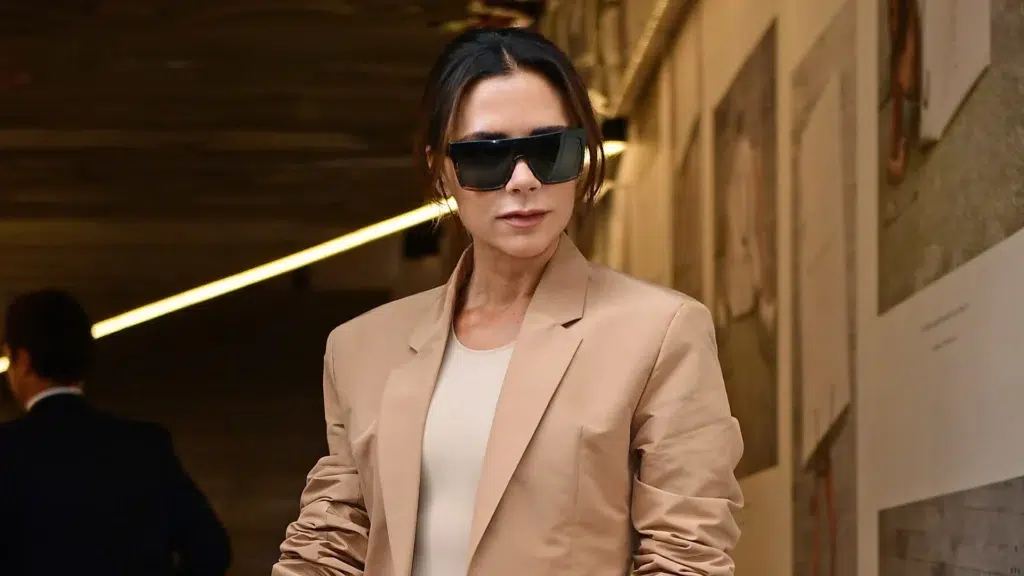
In 2019, Victoria Beckham sat in her London office crying before work every day. Her fashion label, launched with global fanfare in 2008, had accumulated £54 million in debt. The business was losing thousands of pounds daily. David Beckham had already injected millions of pounds of his football earnings into keeping it alive. Auditors were questioning whether the company could survive.
Six years later, Victoria Beckham’s fashion label crossed £112.7 million in revenue for 2024, its fourth consecutive year of double-digit growth, generating positive EBITDA of £2.2 million and reporting its strongest performance since launch. The Satin Kajal Liner, a £26 eyeliner, sells one unit every 30 seconds globally. The brand is expanding into 200 wholesale doors worldwide. A Netflix documentary released in 2025 showed the world exactly how close it all came to ending.
The Victoria Beckham Label Numbers:
- 2024 revenue: £112.7 million ($151.8 million), up 26% year-on-year (WWD, August 2025)
- EBITDA 2024: £2.2 million positive, up 22% from £1.8 million in 2023
- Growth streak: Fourth consecutive year of double-digit revenue growth
- Direct-to-consumer: 62% of net sales via Mayfair flagship and website, both up 26%
- Total historical losses: £68+ million over 12 consecutive loss-making years
- David’s bailout: £30+ million injected from Beckham empire over 15 years
- 2022 debt peak: £54 million in total debt before turnaround
- Hero product: Satin Kajal Liner sells every 30 seconds globally
- Wholesale expansion: 200 doors worldwide by end of 2025
This is not a clean celebrity success story. It is a harder, more honest account of how a former pop star spent 15 years being mocked, losing money, borrowing from her husband, and refusing to quit until a brand that industry insiders once called a vanity project crossed £100 million in annual revenue.
How Victoria Beckham’s Fashion Label Started
From Posh Spice to New York Fashion Week
Victoria Caroline Adams was born April 17, 1974 in Harlow, Essex. She rose to global fame as Posh Spice in the Spice Girls from 1994 to 2001, the group selling over 100 million records worldwide. After the group disbanded and a solo music career failed to gain traction, Victoria spent years building her identity as a style icon rather than a singer.
In September 2008, seven years after leaving music, Victoria Beckham launched her eponymous fashion label at New York Fashion Week. The debut collection featured ten expertly tailored dresses in clean, structured silhouettes. Industry insiders expected a celebrity vanity project. What they saw instead was considered, serious design work that silenced many critics immediately.
Launch Context:
- Founder: Victoria Beckham (born April 17, 1974, Essex)
- Launch date: September 2008, New York Fashion Week
- First collection: 10 tailored dresses, structured silhouettes, no prints
- Industry reaction: Skepticism followed by widespread critical praise
- Celebrity early adopters: Beyoncé, Jennifer Lopez, Kate Winslet wore the debut pieces
- No design training: Victoria taught herself, surrounded herself with industry experts from day one
- Self-description: “I can draw, but badly. No one’s expecting me to do it the normal way”
The First Years: Recognition Without Profit
Despite immediate critical acceptance, the business model created structural problems from the start. High-end fashion is notoriously expensive to produce. Runway shows cost hundreds of thousands of pounds. Samples, fabrics, fittings, wholesale margins, and retail markups all compress profitability. For a brand without the scale of an LVMH or Kering behind it, turning profit on luxury ready-to-wear is genuinely difficult.
Victoria Beckham won Designer Brand of the Year at the British Fashion Awards in 2011, the same year she launched a lower-priced diffusion line, Victoria by Victoria Beckham, to broaden her customer base. By 2012, the brand was assessed as the star performer in the Beckham family’s business portfolio. By 2013, the e-commerce website launched. On the surface, momentum was building. Underneath, losses were mounting.
Early Milestones:
- 2008: Debut collection at New York Fashion Week, critical acclaim
- 2011: Won Designer Brand of the Year, British Fashion Awards
- 2011: Launched Victoria by Victoria Beckham diffusion line
- 2013: E-commerce website launched
- 2014: Won Designer Brand of the Year again, British Fashion Awards; opened first London flagship store
- 2016: Estée Lauder beauty collaboration; opened Hong Kong store
- 2016: David Beckham lends £5.2 million as losses continue
- 2017: NEO Investment Partners buys minority stake for approximately £30 million
The Dark Years: £66M in Losses and David’s Bailout
How Bad Did It Get?
The financial picture that emerged over 2015-2022 was stark. In 2018 alone, the brand lost £12.5 million and turnover fell by 16-18% as Asian department stores, previously a key wholesale channel, reduced their orders significantly. By 2019, losses ballooned to £16.6 million. The pandemic then hit in 2020, closing the Mayfair flagship and reducing group sales by 6% to £36.1 million.
“It was like a snowball that was going down the mountain,” Victoria admitted in her 2025 Netflix documentary. “There was a lot of waste. We were millions of pounds in the red. I didn’t know what to do and I was so desperate to save this business that I cared so much about. I felt, if I’m being completely honest, that I was breaking down myself.”
Loss Timeline (Companies House filings):
- 2016: David lends £5.2 million as losses continue
- 2017: Separate Beckham company owed £12.2 million by Victoria Beckham Ltd
- 2018: £12.5 million annual loss, turnover falls 16%, Asian wholesale collapses
- 2019: £16.6 million loss, David’s DB Ventures injects £6.6 million cash and guarantees £4 million loan
- 2020: £8.7 million pre-tax loss, pandemic closes flagship store
- 2021: £5.8 million loss, improvement but still bleeding
- 2022: £54 million total debt, £66 million cumulative losses since 2008
- Total David Beckham injections: £30+ million from Beckham empire over 15 years
David Beckham, speaking in the Netflix documentary, admitted: “I was panicked by it because I never saw anything coming back. We always agreed that we would support each other no matter what, but it worried me. This isn’t sustainable.”
The brand was losing £4,000 every single day in 2018. In 2019, The Mirror reported a £23 million bailout: £6.6 million cash injection from DB Ventures plus a £4 million loan guarantee. David Belhassen, the Neo Investment Partners founder who came in as investor in 2017, later admitted he had “never seen something as hard as that to fix.”
What Was Going Wrong
The losses stemmed from multiple structural problems that took years to diagnose and fix. Victoria Beckham admitted in the Netflix documentary that people were afraid to tell her no, creating a culture of overspending with insufficient revenue to support it.
Root Causes of Losses:
- Overstaffing: Too many employees for the revenue base, fixed costs too high
- Wholesale dependency: Over-reliance on Asian department stores that cut orders in 2018
- No hero product: No single item driving consistent repeat purchase volume
- Expensive shows: New York Fashion Week costs without commensurate sales return
- Beauty absent: No beauty line until 2019, missing the highest-margin category
- Celebrity inflation: Costs associated with running celebrity-founder brand at luxury level
- Lack of financial oversight: “There was a lot of money being spent that should never have been spent” (Victoria, Netflix documentary)
The Turnaround: Paris, Beauty and the £26 Eyeliner
The Three Decisions That Saved the Brand
The turnaround of Victoria Beckham’s fashion label came from three interconnected decisions made between 2018 and 2022: bringing in experienced leadership, launching Victoria Beckham Beauty, and moving from New York to Paris Fashion Week.
In 2018, fashion industry veteran Ralph Toledano joined as Chairman. His mandate was explicit: rationalise costs, expand direct-to-consumer, and return the company to profitability. Toledano brought 35+ years of luxury fashion experience from Chloé, Rochas, and Karl Lagerfeld. The business began its structural reset.
Three Decisions That Changed Everything:
- Paris Fashion Week (2022): Moving from New York to Paris repositioned the brand at the center of global luxury conversation; collection praised as “slick, grown-up and polished” (Telegraph)
- Victoria Beckham Beauty (2019): Beauty division launched, generating almost £2 million in its first three months; Satin Kajal Liner became bestselling product selling every 30 seconds globally
- Direct-to-consumer pivot: Mayfair flagship and e-commerce now represent 62% of net sales, up from minority share, eliminating wholesale margin compression
Victoria Beckham Beauty: The Hero That Saved the Brand
Launched in 2019, Victoria Beckham Beauty was initially built on Beckham’s signature smoky eye aesthetic. The hero product, the £26 Satin Kajal Liner, became one of beauty’s most consistent sellers, eventually reaching one unit sold every 30 seconds globally by 2025.
Industry analysts have credited the beauty division with saving the wider business. Unlike fashion, beauty operates at dramatically higher margins. A £26 eyeliner with manufacturing costs of £3-6 generates significantly better returns than a £890 handbag manufactured in limited quantities. Beauty also drives repeat purchase in ways fashion rarely achieves.
Victoria Beckham Beauty Performance:
- Launch: 2019, positioned around Beckham’s signature smoky eye
- Hero product: Satin Kajal Liner (£26), sells one unit every 30 seconds globally
- Beauty revenue: Projected to represent 20%+ of total sales by end of 2025
- Three pillars: Makeup, skincare, fragrance (launched 2023)
- Fragrance launch: 21:50 Rêverie, priced in the prestige tier, added in 2024
- First foundation: Launching 2025, entering complexion category for first time
- Wholesale expansion: 200 doors globally by end of 2025
- Investment: £3.9 million of the 2024 £6.9 million cash injection went to beauty inventory
The 2024 Breakthrough: £112M Revenue and What It Actually Means
Reading the Numbers Honestly
The 2024 financial results filed at Companies House and reported by WWD, Business of Fashion, and FashionNetwork in August 2025 require careful reading. The headline is genuinely positive: £112.7 million revenue, up 26%, fourth consecutive double-digit growth year, positive EBITDA of £2.2 million.
But the full picture is more nuanced. Victoria Beckham Holdings, the umbrella company, still reported a net loss of £4.5 million for 2024, worse than the £3 million loss in 2023. This is because EBITDA excludes interest payments, depreciation, and the cost of ongoing debt. The company also required a further £6.2 million cash injection from Victoria, David, and Neo since the start of 2025. Auditors raised concerns about a £4.1 million loan repayment due imminently, with language about “significant doubt on the group’s ability to continue as a going concern” in BDO’s audit notes.
2024 Financial Reality:
- Revenue: £112.7 million, up 26% year-on-year (Companies House, August 2025)
- EBITDA: £2.2 million positive, up 22%
- Net loss (Holdings): £4.5 million (worse than £3 million in 2023)
- Cumulative losses: £68+ million over 12 consecutive loss-making years at Holdings level
- Fresh cash injection: £6.2 million from Victoria, David, and Neo since start of 2025
- Loan concern: £4.1 million bank loan repayment flagged by auditors BDO
- Fashion label: Turned individually profitable (Victoria confirmed to Telegraph)
- Beauty division: Still growing, now central to group performance
The distinction matters. The fashion label itself turned profitable, Victoria confirmed to The Telegraph: “We can really start building the house that I always dreamed of.” But the holding company, carrying years of accumulated debt, interest costs, and the beauty division’s ongoing investment requirements, still records net losses. Sybille Darricarrère Lunel, the new CEO appointed in July 2025 from Christian Dior Couture and Galeries Lafayette, described 2024 as “a pivotal year marked by strategic investment and rightsizing to position the business for long-term, profitable growth.”
What’s Actually Growing
Inside the £112.7 million figure, the growth drivers are specific and verifiable. Direct-to-consumer sales through the Mayfair flagship on Dover Street and the e-commerce site grew 26% and now account for 62% of net sales, the highest proportion in the brand’s history. This shift away from wholesale is structurally significant: it eliminates the 40-50% wholesale margin compression that contributed to years of losses.
Revenue Drivers 2024:
- Fashion bestsellers: Midi and gown-style crêpe dresses in jewel tones, relaunched denim line
- Leather goods: Chain pouch bag (£890, consistently sells out with waiting list), expanded belt category
- Belts: Now represent over 20% of online sales after strategic push
- Beauty makeup: Satin Kajal Liner, Concealer Pen (collaboration with Augustinus Bader)
- Beauty skincare: Double cleansing protocol, expanded skincare range
- Beauty fragrance: 21:50 Rêverie launched 2024, prestige pricing
- Paris Fashion Week: September 2024 show met with strong critical reception, fourth Paris show
- Wholesale additions: New department store accounts in France and Italy
Victoria Beckham vs. Other Celebrity Fashion Brands
A Different Category Entirely
Victoria Beckham’s fashion label sits in a category apart from celebrity beauty brands like Rare Beauty (£430M+ revenue), Kylie Cosmetics ($600M sold for 51% stake), or Fenty Beauty. Those brands generate higher revenue faster precisely because beauty products carry higher margins, require less production complexity, and scale more easily through mass retail.
Luxury ready-to-wear fashion is structurally harder to make profitable. LVMH’s Celine took decades to become profitable. Alexander McQueen’s label operated at losses for years after his death before stabilizing under Kering. Stella McCartney, Paul Smith, and other British designers have all faced similar structural challenges at similar revenue scales. For a celebrity-founded brand without the group infrastructure of LVMH or Kering behind it, Victoria Beckham’s £112.7 million revenue at this stage is a genuine achievement.
Celebrity Fashion vs. Beauty Economics:
- Victoria Beckham fashion: £112.7M revenue, still loss-making at holding level, 15 years to EBITDA positive
- Rare Beauty (Selena Gomez): £430M+ revenue, $2.7B valuation, profitable within 3 years
- Kylie Cosmetics: Sold 51% for $600M in year 4, high margins on D2C model
- Skims (Kim Kardashian): $750M revenue, $4B valuation, shapewear economics closer to fashion
- Pleasing (Harry Styles): $12.2M revenue, self-funded, operating at smaller scale
- Rhode (Hailey Bieber): Sold to e.l.f. for $1 billion, skincare margins vastly better than fashion
The only fair fashion comparison is to Stella McCartney, who spent over a decade losing money before eventually stabilizing, or to emerging luxury brands like Jacquemus, which took years of losses before reaching profitability at comparable scale.
The Bottom Line: What Victoria Beckham’s Label Actually Built
Victoria Beckham’s fashion label is not a conventional celebrity business success story. It is a 17-year story of critical acclaim without commercial returns, near collapse, David Beckham’s financial support, and an eventual structural turnaround driven by beauty products, Paris Fashion Week repositioning, and direct-to-consumer growth. It is also genuinely impressive precisely because it survived.
Why Victoria Beckham’s Label Survived When Others Would Have Closed:
- Creative credibility: Winning British Fashion Awards in 2011 and 2014 was not a celebrity achievement, it was a design achievement, earning respect that kept wholesale doors open through loss years
- David Beckham’s backing: £30+ million in loans, injections, and guarantees over 15 years funded survival that revenue alone could not support
- NEO Investment Partners: £30 million stake acquisition in 2017 brought professional management and financial discipline
- Paris pivot: Moving to Paris Fashion Week in 2022 repositioned the brand at the center of global luxury, driving the most significant sales acceleration in the label’s history
- Beauty launch timing: Victoria Beckham Beauty launching in 2019 diversified revenue into higher-margin categories just before pandemic restructuring accelerated the need for them
- Personal ownership: Victoria’s refusal to sell or license the brand preserved its integrity through financially painful years
Key Lessons from the Turnaround:
- Luxury takes time: Profitable luxury brands are built over decades, not years, Victoria Beckham’s 15-year path to EBITDA positive is not unusual in the category
- Direct-to-consumer is survival: Shifting 62% of net sales to own channels eliminated the wholesale margin compression that drove years of losses
- Beauty saves fashion: The £26 Satin Kajal Liner selling every 30 seconds demonstrably funded the fashion division’s restructuring
- Rightsizing works: Reducing headcount, eliminating wasteful spending, and focusing on bestselling categories produced four consecutive double-digit growth years
- Location signals credibility: Paris Fashion Week generated more commercial return per show cost than New York had across many years
- Patience has a price: £68 million in cumulative losses and £30 million from David Beckham was the price of building a legitimate luxury house without conglomerate backing
Current Reality 2025:
- Revenue: £112.7 million, fourth consecutive year of double-digit growth
- EBITDA: £2.2 million positive (holding company net loss still £4.5 million)
- Fashion label: Individually profitable for first time
- CEO: Sybille Darricarrère Lunel, appointed July 2025, formerly Christian Dior Couture
- Wholesale: 200 doors globally by end of 2025
- Beauty: First foundation launching 2025, projected 20%+ of total sales
- Next milestone: Full group profitability, not just EBITDA, the final target
Victoria Beckham told Fortune in 2025: “This business is everything to me. It’s absolutely who I am. But it’s been a hell of a journey.” The £112.7 million revenue figure and the Netflix documentary together capture that journey: the losses, the bailouts, the tears before work, and the eventual emergence of a brand that no one in 2008 believed a former Spice Girl could build. The house that Victoria dreamed of is still being built. But for the first time in 17 years, the foundations are solid.