In February 2025, Liberty Media released Formula 1’s full-year 2024 financial results. F1 generated a record $3.65 billion in total revenue, a 6% increase from 2023’s $3.22 billion and more than double the $1.78 billion earned in 2017 when Liberty Media completed their acquisition.
Race promotion fees, the technical term for what circuits pay to appear on the World Championship calendar, contributed 29.3% of that $3.65 billion. Across 24 circuits, that translates to approximately $1.07 billion flowing to Liberty Media annually, simply for granting calendar access. Every year, more countries want in. The calendar stays at 24 races. Fees go up.
The story that best illustrates this shift: Monaco, Formula 1’s most famous race since 1929, pays $20 million annually. Qatar, which joined the calendar in 2021, pays $55 million. A race that has existed for less than four years pays nearly three times what the sport’s crown jewel pays. That inversion is not an accident. It is Liberty Media’s deliberate commercial strategy playing out in real time.
How Formula 1 Hosting Fees Actually Work
The Basic Fee Structure
Every circuit on the Formula 1 calendar must pay Formula One Management (FOM), the commercial rights holder owned by Liberty Media, an annual race promotion fee. This fee secures a slot on the World Championship calendar and is negotiated individually between Liberty Media and each circuit or government promoter.
The fee is owed regardless of attendance, weather, or race outcome. If 50,000 fans show up or 300,000 show up, Liberty Media collects the same amount. This makes hosting fees the most predictable and contractually guaranteed revenue stream in F1’s entire financial model.
What circuits receive in return:
- Calendar slot: Official position on the World Championship schedule
- Global broadcasting: Access to 1.6 billion cumulative viewers in 200+ countries
- Track time: 3-4 days of practice, qualifying, sprint (if applicable), and race
- Team access: All 10 F1 teams, 20 drivers, and full technical equipment
- FOM support: Formula 1 marketing, media promotion, and global PR
- FIA management: Certified officiating, timing systems, and race control
Circuits then attempt to recover the fee through ticket sales, corporate hospitality, government subsidies, and the broader economic activity generated during race weekend.
The Escalation Clause Nobody Talks About
Most F1 hosting contracts include annual escalation clauses of approximately 5% per year. This means fees grow automatically without any renegotiation. A circuit that signed a $30 million deal in 2020 is paying approximately $38 million by 2025 under standard escalation.
Escalation Clause Impact (Starting at $25M in 2020):
- 2020: $25.00 million
- 2021: $26.25 million
- 2022: $27.56 million
- 2023: $28.94 million
- 2024: $30.39 million
- 2025: $31.91 million
- Total increase: 27.6% in five years without touching the contract
Multiplied across 24 circuits simultaneously, this automatic compounding is why F1’s hosting fee revenue grows every season even without adding new races. When a circuit returns to negotiate a new deal at expiry, the starting point is not their original fee. It is current market rates, which have risen independently. Both mechanisms compound together.
Liberty Media’s Transformation: $1.78B to $3.65B
The 2017 Acquisition That Changed Everything
Liberty Media, the US-based entertainment conglomerate founded by John C. Malone, acquired Formula 1 from private equity firm CVC Partners in January 2017 for $4.4 billion. CVC had owned F1 since 2006, operating it under Bernie Ecclestone as a tightly controlled product targeting primarily European television audiences.
Liberty immediately changed the commercial direction. American market penetration, social media growth, digital streaming expansion, and premium event experiences became the strategic priorities. The product had to become more valuable before the fees could rise. Liberty spent years building that value before extracting it through higher hosting costs.
F1 Revenue Growth Under Liberty Media:
- 2017: $1.78 billion (acquisition year)
- 2018: $1.80 billion
- 2019: $2.02 billion
- 2020: $1.15 billion (COVID-19, 17-race season)
- 2021: $2.14 billion (fans returned to circuits)
- 2022: $2.57 billion (+20% year-on-year)
- 2023: $3.22 billion (+25% year-on-year)
- 2024: $3.65 billion (+13.4%, record)
Revenue grew 105% from 2017 to 2024. As the platform became more commercially valuable, Liberty Media had the leverage to demand higher fees. Every dollar added to F1’s global value became justification for a higher access price.
Drive to Survive: The American Market Catalyst
The Netflix series “Drive to Survive,” launched in March 2019, was the single most important commercial event in modern F1 history. It created an entirely new demographic for the sport, particularly in the United States where F1 had historically failed to gain meaningful traction.
Before Drive to Survive, F1’s American fanbase was estimated at roughly 4 million people. By 2023, research suggested over 40 million Americans identified as F1 fans. ESPN’s three-year broadcasting deal worth $225 million directly reflected this growth. Three US Grand Prix races now sit on the 2024 calendar: Austin, Miami, and Las Vegas.
How Drive to Survive Transformed F1’s Commercial Value:
- US fans: grew from approximately 4 million (2018) to 40+ million (2023)
- F1 social media following: 70.5 million (2023) to 97 million (2024)
- TikTok views: 50+ billion generated in 2024 alone
- US Grand Prix races: 1 (2018) to 3 (2024)
- ESPN deal value: $225 million over three years
American audiences pay premium prices. Las Vegas Paddock Club hospitality packages sold for tens of thousands per person. Miami’s corporate hospitality sold out months in advance at rates exceeding any European race. This premium pricing environment directly validates higher hosting fees because circuits can generate enough revenue to absorb the cost.
How Much Each Circuit Pays: The Complete Breakdown
Top Tier: $40-55 Million Per Year
The highest-paying circuits are almost entirely newer entrants from the Middle East and former Soviet states. These venues joined the calendar after Liberty Media’s commercial transformation, meaning they negotiated at current market rates with full awareness of F1’s growth trajectory.
Top Tier Hosting Fees (Annual):
- Qatar (Losail): $55 million, 10-year deal (2023-2032)
- Saudi Arabia (Jeddah): $55 million, government-funded via Saudi Motorsport Company
- Azerbaijan (Baku): $55 million, state-operated circuit
- Bahrain (Sakhir): $40-45 million
- China (Shanghai): $40-45 million (extended to 2030)
- Abu Dhabi (Yas Marina): $40-45 million
Qatar’s $55 million annually on a 10-year contract is the highest individual hosting fee on the calendar. Total commitment: $550 million through 2032. Qatar’s government treats this within Vision 2030, the same economic diversification framework behind their $220 billion FIFA World Cup investment. Paying $55 million for access to 1.6 billion global TV viewers per season is, by their calculation, one of the cheapest forms of international nation-branding available in global sport.
Saudi Arabia’s commitment extends further than the hosting fee alone. Saudi Aramco holds a separate global F1 title sponsorship deal entirely independent of the Jeddah circuit’s hosting fee. Combined, Saudi Arabia’s total annual Formula 1 financial commitment exceeds $100 million. The kingdom reportedly considered purchasing F1 outright before Liberty Media completed their acquisition.
Mid Tier: $25-40 Million Per Year
Mid Tier Hosting Fees (Annual):
- Singapore (Marina Bay): $35-40 million
- Australia (Albert Park): $37 million (deal extends to 2035)
- USA (COTA, Austin): $30 million
- Japan (Suzuka): $30-35 million
- Brazil (Interlagos): $25-30 million
- Mexico City: $25-30 million
- Netherlands (Zandvoort): $25 million (until 2026)
- Italy (Monza): $25 million (extended to 2031)
- Spain (Barcelona): $25 million
- Hungary (Hungaroring): $20-25 million
- Belgium (Spa): $25 million (rotational basis)
Singapore’s $35-40 million annual fee is the most studied in sports economics because the documented return is extraordinary. The Singapore Tourism Board co-funds the race and tracks outcomes rigorously. Between 2008 and 2018, the Singapore Grand Prix attracted 450,000 additional visitors and contributed $1.4 billion to the local economy. The 2024 edition generated an estimated $150-200 million in tourism revenue from a single race weekend, a 4x return on the hosting fee before accounting for long-term destination branding.
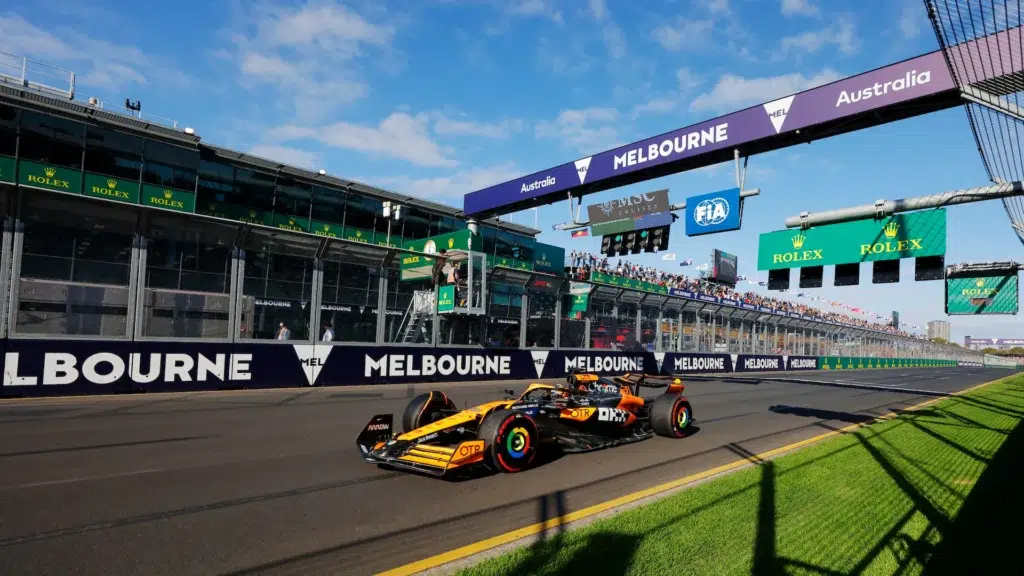
Australia locked in $37 million annually before F1’s recent commercial explosion, making it one of the calendar’s most favorable long-term rates in hindsight. The Australian Grand Prix Corporation estimates the race generates over $150 million in direct annual economic benefit to Victoria. The deal extends to 2035, meaning Melbourne continues paying below-market rates as Liberty Media’s commercial value grows around them.
Historic Tier: Legacy Races Under Pressure
Monaco (Circuit de Monaco): $20 million annually, the lowest fee on the entire calendar. Formula 1’s most prestigious race, contested since 1929, pays less than a third of what Qatar pays. Monaco’s deal expired after the 2025 season with Liberty Media pushing for significant increases. McLaren CEO Zak Brown stated publicly in 2024: “Some of these other venues are driving similar TV ratings and contributing a lot more fiscally. You’ve got the Miamis, the Vegases, the Singapores.” Monaco extended to 2031 at reportedly higher fees than the previous arrangement.
Silverstone (British Grand Prix): approximately $26 million annually. The circuit that hosted Formula 1’s first ever World Championship race on May 13, 1950, faces increasing commercial pressure. Silverstone raised four-day grandstand passes to £600 ($774) in 2024. Lewis Hamilton publicly warned against “pricing out families.” The circuit renewed through at least 2026 with negotiations ongoing.
Special Cases: Miami and Las Vegas
Miami and Las Vegas operate under co-promotion agreements where Liberty Media invests directly rather than charging a standard hosting fee. Liberty chose this model because American expansion was a strategic priority and they wanted direct participation in the financial upside.
Las Vegas Grand Prix 2023 (Debut Weekend):
- Total preparation investment: approximately $500 million
- Economic impact generated: $1.5 billion
- Total attendance: 316,000 fans
- Unique out-of-town visitors: 145,900
- Average visitor spend: $2,800 per person
- Standard F1 visitor average: $800 per person
Las Vegas visitors spent 3.5 times the typical F1 fan average. The $1.5 billion economic impact against $500 million in preparation costs delivered a 3x return in a single debut weekend before any compounding tourism effect. The 2023 Miami Grand Prix generated $449 million in economic impact from 270,000 attendees, a 29% jump from its 2022 debut year.
Why Fees Keep Rising: The Supply and Demand Reality
More Countries Want In Than Can Fit
Formula 1’s calendar is capped at 24 races under the 2021 Concorde Agreement. At any given moment, more governments are actively lobbying for a calendar slot than positions exist. This waiting list is Liberty Media’s most powerful commercial leverage in every hosting fee negotiation.
When any circuit’s deal expires, they do not negotiate as the only viable option for that slot. They negotiate knowing Liberty Media can point to multiple governments prepared to pay more. Every new nation that joins the lobbying queue raises the floor for what existing circuits must pay to hold their position.
Countries Actively Pursuing F1 Grand Prix Slots:
- India: Government discussions ongoing since 2023, 1.4 billion population market
- South Africa: Kyalami circuit, returning to active discussions
- Thailand: Prime Minister personally attended 2024 Emilia Romagna GP to lobby
- Indonesia: Active discussions with Liberty Media
- Vietnam: Previously cancelled race, renewed government interest
- Madrid: Already confirmed to replace Barcelona on rotation from 2026
- Rwanda and Kenya: Preliminary discussions reported
Traditional European circuits without government backing face the hardest commercial reality: compete against sovereign wealth-funded venues with effectively unlimited national budgets, or lose the slot. Netherlands faces renewal in 2026. Belgium already moved to a rotational basis. Historic European venues are paying more, sharing slots, or facing replacement.
The 2025-2027 Renegotiation Cycle
Several significant contracts entered renegotiation in the 2025-2027 period, and every renewal happens at a higher market baseline than the previous deal.
Key Contract Status:
- Monaco: Extended to 2031 at reportedly higher fee than previous $20M
- China: Extended to 2030 after three-year COVID hiatus
- Italy (Monza): Extended to 2031
- Netherlands (Zandvoort): Faces renewal in 2026
- Belgium (Spa): Moved to rotational basis, no longer holds annual slot
- Silverstone: Renewed through at least 2026, ongoing negotiations
- Madrid: Confirmed addition, replacing Barcelona on rotation from 2026
Madrid joining on rotation is particularly instructive. Spain will now pay for two calendar slots on an alternating basis, with Barcelona and Madrid sharing appearances. Rather than one permanent slot at a fixed fee, Spain effectively pays twice for continued calendar presence. Liberty Media increased revenue from Spain without adding a net new race.
F1’s Revenue Model: Why Hosting Fees Are Essential
The Financial Breakdown of $3.65 Billion
F1 Revenue Breakdown (2024):
- Media rights: $1.20 billion (32.8% of total)
- Race promotion fees: $1.07 billion (29.3% of total)
- Sponsorship: $680 million (18.6% of total)
- Other (hospitality, freight, merchandise): $705 million (19.3% of total)
- Total: $3.65 billion
Hosting fees are the most predictable pillar in this model. Media rights fluctuate with broadcast negotiations. Sponsorship can rise or fall with economic conditions and brand priorities. Hosting fees are contractually locked regardless of competitive performance, race-day drama, or championship standings. Ferrari missing the podium does not reduce Singapore’s payment. A rain-affected processional race in Baku does not trigger a refund. That guaranteed predictability is precisely why Liberty Media structures hosting fees as the financial foundation of the model.
Major Sponsorship Benchmarks
Key F1 Sponsorship Deals (Annual Value):
- LVMH partnership (Louis Vuitton, Moët, Tag Heuer): 10-year deal from 2025, most significant in F1 history
- DHL: $40 million annually
- Crypto.com: $20 million annually (extended to 2030)
- Saudi Aramco: Title sponsorship, separate from Saudi Arabia’s hosting fee
- Emirates: Long-term global partnership
The LVMH 10-year partnership beginning in 2025 is the most commercially significant deal in F1 history. Its 10-year duration and scope signals F1’s deliberate positioning as a luxury product. As F1’s luxury brand association strengthens, the implicit cost of accessing that premium platform through a hosting fee rises accordingly. Circuits are not just paying for a race. They are paying for association with one of sport’s most premium global brands.
Who Actually Pays: Governments, Not Race Promoters
The Reality Behind the Fees
The most common misconception about F1 hosting fees is that race promoters or circuit operators fund them independently through ticket revenue. In reality, the vast majority of fees across the calendar are paid or substantially subsidized by national and local governments as part of tourism marketing, economic development, and nation-branding strategies.
Government Funding Models Across the Calendar:
- Qatar: Fully state-funded through government sports organization
- Saudi Arabia: Fully state-funded via Saudi Motorsport Company
- Azerbaijan: Fully state-funded, Baku City Circuit is state-operated
- Abu Dhabi: Government-backed through Yas Marina Circuit ownership structure
- Singapore: Singapore Tourism Board provides direct annual subsidy
- Australia: Victorian state government funds through Tourism Victoria
- Mexico: Government agencies co-fund alongside private promoters
- Texas (COTA): Texas state government provides annual event subsidies
Traditional European circuits including Silverstone, Monza, and Spa receive significantly less government support. They rely heavily on ticket sales and commercial partnerships to cover their fees. This structural difference explains precisely why European venues face disproportionate pressure: they compete commercially against circuits backed by national treasuries.
The Middle East’s Grand Formula
Abu Dhabi, Bahrain, Saudi Arabia, and Qatar collectively host four races on the 2024 calendar and pay among the highest fees. Their motivations extend far beyond sport.
Abu Dhabi’s Yas Island Investment:
- Total construction cost: approximately $40 billion
- Annual Yas Island visitors: 34 million
- Circuit opened: 2009
- Additional attractions: Ferrari World, Yas Waterworld, Warner Bros. World, Yas Mall
- Grand Prix role: Anchor event for entire island’s international tourism identity
Abu Dhabi did not build Yas Island to host a car race. They built an entire island tourism destination and used a Formula 1 Grand Prix as the anchor to drive international awareness and establish the destination globally. The annual hosting fee is a fraction of the broader $40 billion investment the race justified and enabled.
Why Middle Eastern Governments Pay $55 Million Annually:
- Tourism diversification: Moving economic dependency away from fossil fuels
- Global brand building: Attracting international business and investment
- Soft power: Diplomatic visibility through sport association
- Direct returns: Hotel occupancy, tourism spending, business tourism
- Infrastructure: Event requirements justify broader national development
- International perception: Improving global image through premium association
For these governments, $55 million is a marketing line item, not a financial burden. The strategic return, measured in international business attraction, tourism revenue, and global media exposure worth hundreds of millions, justifies current rates and would justify significantly higher rates if Liberty Media demanded them.
The True Cost of Hosting: Beyond the Fee
What the Headline Number Doesn’t Include
The race promotion fee paid to Liberty Media is the headline figure. The total financial commitment for hosting a Grand Prix is dramatically higher when infrastructure, operations, security, and logistics are included.
Full Annual Hosting Cost Breakdown:
- Hosting fee to F1: $20-55 million (varies by circuit)
- Annual circuit maintenance: approximately $18.5 million
- Temporary grandstands (construction and removal): approximately $14 million
- Safety barriers, fencing, track preparation: approximately $8 million
- Pits, media facilities, paddock infrastructure: $5-15 million
- Security and policing: $5-20 million (higher for street circuits)
- Traffic management and transport: $5-10 million
- Medical and emergency services: $3-8 million
- Marketing, promotion, fan zones: $10-20 million
Street circuits carry additional recurring costs. Monaco, Baku, Jeddah, Singapore, and Las Vegas all require annual installation and removal of barriers, grandstands, and track infrastructure that permanent circuits handle with fixed installations. This can add tens of millions to the true annual cost beyond the headline hosting fee.
New circuit construction costs between $200 million and $1 billion before any hosting fees are paid. Circuit of the Americas cost approximately $400 million to build in 2012. Any new nation seeking a Grand Prix slot faces construction costs before Liberty Media will consider a calendar position.
Economic Returns That Justify the Cost
Economic Impact Data by Race:
- Las Vegas 2023: $1.5 billion economic impact, 316,000 fans, $2,800 average visitor spend
- Miami 2023: $449 million economic impact, 270,000 attendees (+29% from year one)
- Singapore (2008-2018 cumulative): $1.4 billion from 450,000 additional visitors
- Melbourne, Australia (annual): $150+ million in direct economic benefit to Victoria
- Mexico City: 12% annual increase in luxury hotel stays on race weekend, $1,730 average visitor spend
Singapore’s documented return remains the most cited case in sports economics. A $35-40 million annual hosting fee consistently generates over $140 million in direct tourism spending, a 3.5-4x return before accounting for media exposure, long-term destination effects, or infrastructure improvements. Singapore’s Tourism Board publishes this data specifically to justify continued government subsidy of the hosting fee year after year.
India, South Africa and the Next Frontier
India: 1.4 Billion Reasons Liberty Media Is Watching
Liberty Media has publicly identified India as a priority expansion market. India’s 1.4 billion population, rapidly growing middle class, and digital-first sports consumption represent a frontier opportunity. Government discussions have occurred at a ministerial level since 2023, and any Indian Grand Prix would command an immediate $40-50 million annual hosting fee based on current market benchmarks.
The challenge is infrastructure. No existing Indian venue meets FIA Grade 1 specifications required for Formula 1. Building a compliant circuit costs $200-500 million before any hosting fees begin. The Buddh International Circuit near Delhi hosted three Indian Grands Prix from 2011-2013 before tax disputes between the state government and circuit operators ended the arrangement. Any return would require a new or significantly upgraded facility.
South Africa: The Heritage Return
South Africa last hosted a Grand Prix in 1993 at Kyalami, outside Johannesburg. With a growing domestic motorsport culture and government appetite for major international events following the 2010 FIFA World Cup and multiple rugby World Cup bids, South Africa is among the most frequently discussed potential returnees.
South Africa’s F1 Return Challenges:
- Circuit construction: $200-500 million for FIA-compliant new venue
- Hosting fee: $30-40 million annually at current market rates
- Government funding: Required for economic feasibility
- Political will: Present, with motorsport federations actively lobbying
- Timeline: Most optimistic projections suggest 2027-2028 at earliest
The Bottom Line: Liberty Media Holds All the Cards
Formula 1 generated $3.65 billion in 2024 with $1.07 billion coming directly from hosting fees. Liberty Media paid $4.4 billion for F1 in 2017 when revenue was $1.78 billion. Seven years of deliberate platform-building later, revenue has more than doubled, the American fanbase grew tenfold, and every circuit on the calendar pays more than they did when Liberty arrived.
The most revealing number in F1’s entire commercial story is not the record revenue. It is the fee gap. Monaco, racing since 1929, pays $20 million. Qatar, racing since 2021, pays $55 million. A venue with 95 years of history pays 36% of what a venue with 3 years of history pays. That is not a legacy discount. That is a demonstration of exactly who holds the negotiating leverage.
Why fees keep rising and won’t stop:
- 24: Fixed race slots under the Concorde Agreement, the hard supply ceiling
- $55M: Current market benchmark set by Qatar, Saudi Arabia, and Azerbaijan
- $1.87B: Revenue Liberty Media added in seven years, justifying every fee increase
- 5%: Annual escalation built into most contracts, compounding automatically
- 7+: Nations actively lobbying for slots that don’t yet exist
The real payers behind these fees are governments and sovereign wealth funds, not race promoters. Singapore’s $35-40 million fee generates $140+ million in annual tourism revenue. Las Vegas spent $500 million on its debut and generated $1.5 billion in impact from one weekend. Abu Dhabi built a $40 billion island around a Grand Prix. Qatar committed $550 million over 10 years as a nation-branding investment. For these governments, the hosting fee is not a cost. It is a down payment on a return that runs into the hundreds of millions.
Traditional European circuits without government backing, Silverstone competing from ticket revenue alone, Monaco negotiating as the smallest territory on the calendar, face a structurally impossible comparison. They are circuits. Their competition is national economies.
As long as India, South Africa, Thailand, and Indonesia are all lobbying simultaneously for 24 positions on a fixed calendar, Liberty Media will keep raising the price. The waiting list has never been longer. The leverage has never been greater.