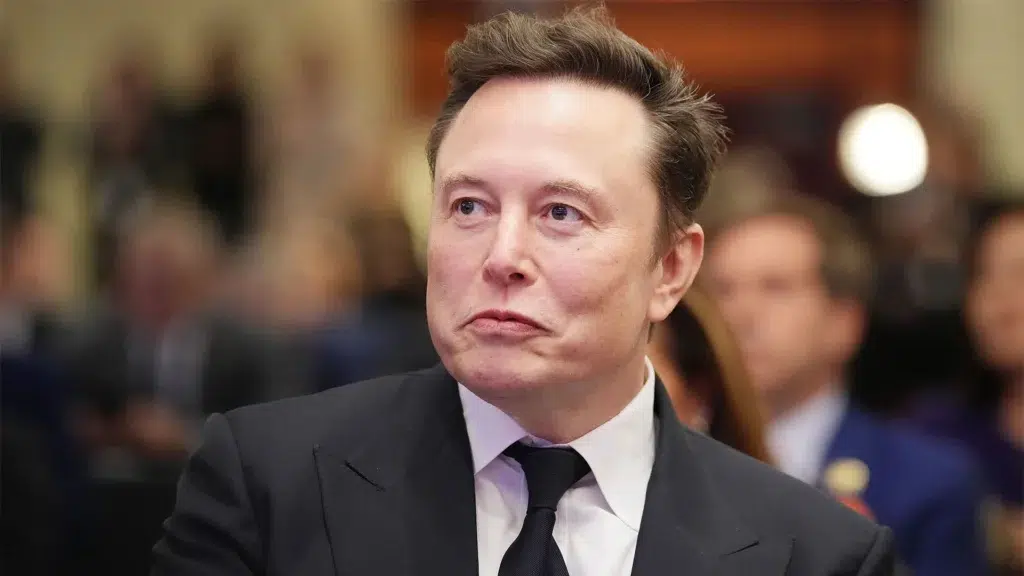
In 2017, when someone suggested on Twitter that Elon Musk should buy the platform, he replied with a simple question: “How much is it?” The response seemed like a joke at the time. By April 2022, it wasn’t. Musk made an unsolicited offer to purchase Twitter for $44 billion, sparking one of the most controversial acquisitions in tech history. The world’s richest man had decided to buy the social media platform rather than build a competing service from scratch.
The decision puzzled many observers. Building a new platform would have cost a fraction of $44 billion and allowed Musk complete freedom to implement his vision without inheriting Twitter’s technical debt or organizational baggage. Competitors like Truth Social launched with minimal investment, proving new platforms could enter the market. Yet Musk chose acquisition over creation, taking on $13 billion in debt and immediately facing advertiser boycotts.
By October 27, 2022, when Musk completed the deal, the numbers told a striking story:
- $44 billion purchase price valued at 9.9x Twitter’s annual revenue
- 229 million daily active users inherited instantly versus building from zero
- 16-year-old brand with cultural centrality as “digital town square”
- Established infrastructure with global data centers and advertising systems operational immediately
The acquisition would prove extraordinarily expensive. Within one year, Fidelity valued Twitter at just $19 billion, a 55% decline. Advertising revenue collapsed by 60% as major brands fled. Yet Musk insisted buying Twitter was necessary, claiming the established platform provided network effects impossible to replicate from scratch.
The Strategic Context Behind Elon Musk Buying Twitter
What Was Really at Stake for Musk’s Social Media Ambitions
Elon Musk had accumulated 80 million Twitter followers by April 2022, making him one of the platform’s most influential users. He tweeted multiple times daily, using Twitter to promote Tesla, SpaceX, cryptocurrency, and his personal opinions. The platform had become essential to Musk’s public persona and business operations, giving him direct access to millions without traditional media filters.
However, Musk grew increasingly frustrated with Twitter’s content moderation, bot problems, and limitations on free speech. His concerns intensified after Twitter’s January 2021 permanent ban of Donald Trump following the Capitol attack.
The stakes forcing decisive action:
- Platform as public utility controlling discourse over democracy and free speech
- Monetization untapped despite 229 million daily users generating just $5.1 billion annually versus Meta’s $117 billion
- Algorithm opacity preventing users from understanding content prioritization
- Bot prevalence Musk claimed exceeded 20% versus Twitter’s stated 5%
Building a competitor seemed viable but insufficient. Truth Social, launched by Trump in February 2022, demonstrated new platforms could attract users but struggled with technical problems and limited growth outside conservative audiences. Musk concluded that capturing Twitter’s existing network effects and cultural relevance was worth paying premium rather than spending years building from zero with uncertain adoption.
When Musk’s Position Shifted from User to Owner
Musk’s relationship with Twitter as acquisition target evolved rapidly through early 2022. On January 31, he began quietly purchasing Twitter shares, accumulating 9.1% of the company by March 14 and becoming its largest shareholder. This represented $2.9 billion invested before any public announcement, revealing deliberate strategy rather than impulsive decision.
The timeline revealed calculated approach:
- April 4, 2022: Musk disclosed his stake to SEC, causing Twitter’s stock to surge 27%
- April 5: Twitter invited him to join board, which would have capped ownership at 14.9%
- April 11: Musk reversed course, freeing himself from restrictions and signaling hostile intentions
- April 14: Made unsolicited offer of $54.20 per share for entire company
- April 25: Twitter’s board unanimously accepted after determining no better alternatives existed
Behind the scenes, Musk had secured $46.5 billion in financing commitments before making public offer. Though characterized as hostile takeover, Twitter’s board had few alternatives. No competing offers emerged from other tech giants. Musk’s committed bank loans made his offer credible. The $54.20 price represented 38% premium above Twitter’s April 1 closing price before his stake disclosure. The company would become private, giving Musk complete control without shareholder or board constraints.
The Options Elon Musk Actually Considered for Platform Control
Option 1: Building X App from Scratch as Competitor
Musk could have channeled resources into creating his envisioned “everything app” called X without acquiring Twitter. Building from ground up would have cost estimated $500 million to $2 billion compared to Twitter’s $44 billion price.
The build-your-own approach offered clear advantages:
- Fresh codebase with no technical debt from Twitter’s 16-year-old infrastructure
- Unrestricted policy control allowing cryptocurrency payments and minimal content moderation
- No acquisition debt avoiding $1.2 billion annual interest burden
- Complete freedom to implement controversial features without legacy constraints
Truth Social demonstrated launching Twitter competitors was possible. The platform launched February 2022 with minimal investment and claimed 600,000 users by May. However, it never achieved mainstream adoption beyond niche conservative audience. Other alternatives like Mastodon existed with decentralized models but struggled to reach scale.
The fundamental challenge was network effects. Twitter had spent 16 years building its user base, cultural relevance, and content library. Users stayed on Twitter because other users were there, creating winner-take-most dynamics. Even with Musk’s resources and 80 million followers, building new platform meant starting with zero users and years of uncertain growth before reaching comparable scale.
Option 2: Partial Ownership and Activist Investor Strategy
Rather than buying Twitter entirely, Musk could have pursued larger ownership stake to force board representation without $44 billion cost. Accumulating 15% to 25% ownership worth $6 billion to $10 billion would have provided board leverage while avoiding full acquisition expense.
This activist investor approach worked for others. Carl Icahn and other activists frequently gained control through strategic share purchases and shareholder pressure rather than expensive buyouts. Twitter’s board had accommodated activist involvement before and might have addressed Musk’s demands to avoid hostile acquisition.
The limitation was that Twitter’s existing management could still resist fundamental changes:
- Public company governance meant persuading other shareholders rather than unilateral action
- Board approval requirements and quarterly earnings scrutiny slowed decision-making
- Fiduciary duties to shareholders limited radical policy changes
- SEC disclosure obligations prevented controversial moves Musk wanted
For someone who valued complete control, as demonstrated at Tesla and SpaceX where he maintained majority influence, shared governance proved unacceptable. Partial ownership meant negotiating every significant decision rather than immediately implementing his vision for platform transformation.
Option 3: Partnering with Decentralized Platforms
Musk expressed interest in blockchain and decentralization, suggesting he could have partnered with decentralized social media projects like Mastodon, Bluesky, or Lens Protocol rather than buying centralized platform.
Decentralized platforms aligned with Musk’s stated principles. No central authority meant resistance to censorship. Open-source code ensured algorithmic transparency. Web3 models potentially gave users ownership of accounts and data. However, decentralized platforms faced severe adoption challenges. Mastodon had just 4.5 million users by 2022 despite existing since 2016. User experience remained technical compared to Twitter’s simplicity. Most importantly, decentralized models prevented the kind of top-down control Musk actually wanted despite his decentralization rhetoric.
Why Elon Musk Ultimately Chose Acquisition Over Building Platform
The Network Effects and Instant User Base
Musk’s final decision favored acquiring Twitter because building competitor could never replicate the platform’s network effects and cultural entrenchment. Social media platforms gain value exponentially as more users join, creating winner-take-most dynamics where established leaders maintain dominance.
Twitter’s network effects provided immediate value that new platforms couldn’t match:
- 229 million daily active users: Built over 16 years versus starting with zero
- Global presence: Operations in 190+ countries rather than building country-by-country
- Celebrity concentration: Politicians, journalists, entertainers with billions of combined followers
- Cultural relevance: Where breaking news appeared first and public conversations happened real-time
Building new platform required attracting users away from established network. Truth Social demonstrated difficulty even with Trump’s massive following. After February 2022 launch, Truth Social struggled to reach 1 million users despite Trump’s claimed 88 million Twitter followers before ban. Users remained on Twitter because their networks stayed there.
Metcalfe’s Law suggests network value grows with square of users, making Twitter’s 229 million mathematically irreplaceable. Facebook took 8 years to reach global scale. TikTok needed 4 years despite ByteDance’s resources. Musk concluded that even paying $44 billion premium was cheaper than spending decade building competitor to similar scale.
The Control and Speed of Implementation
Acquiring Twitter gave Musk immediate control to implement changes rather than gradual influence through other approaches. As sole owner of privatized company, Musk could make unilateral decisions about product, policy, and strategy without board approvals or quarterly earnings pressures.
The control advantages became apparent immediately after October 27, 2022 closing. Musk fired CEO Parag Agrawal, CFO Ned Segal, general counsel Sean Edgett, and head of legal policy Vijaya Gadde within hours. Product changes began shipping within days. Content moderation rules changed immediately with previously banned accounts like Trump reinstated at Musk’s discretion.
The rapid restructuring enabled by privatization:
- Workforce reduced from 7,500 to approximately 1,500 by April 2023, an 80% cut impossible in public company structure
- Layoffs began November 4, just one week after acquisition
- Policy overhauls happened immediately rather than through lengthy review processes
- Financial flexibility from eliminating quarterly earnings calls freed management from short-term revenue optimization
Public companies faced friction implementing controversial changes. Board approval requirements, fiduciary duties to shareholders, SEC obligations, and quarterly scrutiny all slowed decision-making. Musk valued speed and control above financial efficiency. Paying $44 billion premium proved worthwhile if privatization enabled rapid transformation toward “X everything app” that required fundamental changes public markets wouldn’t permit.
The Infrastructure vs Starting from Zero
Twitter’s existing technical infrastructure represented value beyond user base. The company had spent $5 billion annually on operations, accumulating technology and institutional knowledge that new platforms would need years to replicate.
The platform included global data center network enabling low-latency service worldwide. Content delivery systems handled 500 million tweets daily, 6,000 tweets per second during peak events. The advertising platform generated $4.5 billion annually with sophisticated targeting and measurement capabilities developed over 16 years.
Building equivalent infrastructure typically required 5 to 10 years even with unlimited capital:
- Developer APIs supporting thousands of third-party applications and integrations
- Accumulated moderation and trust systems fighting spam, abuse, and illegal content
- International regulatory compliance in 190+ countries with varying laws
- Established relationships with payment processors, cloud providers, and advertising networks
Musk was 50 years old in April 2022 and valued his remaining productive years. Spending 5+ years building Twitter competitor meant delaying his “X everything app” vision until age 55-60. Buying Twitter instantly provided platform to begin transformation, making the $44 billion cost acceptable given time value of immediately starting implementation rather than gradual development from zero.
What Actually Happened After Musk Bought Twitter
The Financial Collapse and Advertiser Exodus
Twitter under Musk’s ownership immediately faced financial crisis that validated concerns about his acquisition strategy. Within weeks of October 27, 2022 closing, major advertisers paused or ceased spending amid concerns about content moderation changes, layoffs affecting brand safety teams, and Musk’s controversial tweets.
The revenue collapse by 2024:
- 60% US advertising decline: Major brands including General Motors, Pfizer, General Mills, Audi suspended campaigns
- $4.4 billion to $2.5 billion: Total revenue dropped 43% from 2022 to 2023 as advertising collapsed
- $19 billion valuation: One year after purchase, Fidelity valued Twitter at $19 billion, 55% below Musk’s $44 billion price
- $1.2 billion debt burden: Annual interest payments consumed nearly double Twitter’s $630 million in operating cash flow at acquisition
The advertiser exodus stemmed from Musk decisions that spooked brand-conscious companies. Laying off trust and safety teams reduced capacity to prevent ads appearing next to hateful content. Relaxing content moderation increased hate speech. Musk’s personal tweets promoting conspiracy theories directly drove advertisers away.
By November 2023, he told departing advertisers to “go f*ck yourself” during DealBook conference, further damaging relationships. Despite revenue collapse, Musk’s cost cutting improved adjusted EBITDA from $682 million in 2021 to $1.25 billion in 2024 by eliminating 80% of workforce. However, this came at cost of service quality and platform stability.
The Operational Degradation and User Exodus
Mass layoffs and rushed changes degraded Twitter’s technical reliability. Engineers warned insufficient staff remained to maintain complex systems handling 500 million daily tweets from 229 million users across global infrastructure. The platform experienced multiple service outages as depleted teams struggled.
Bot and spam activity allegedly increased despite Musk’s promises to “defeat spam bots or die trying.” July 2023 API restrictions broke thousands of third-party apps including disaster alert systems in Japan. User surveys indicated 30% drop in active US users from 2023 to 2024, with usage falling from 27% to 19% of population.
The rebranding and strategic pivot:
- X rebrand: July 23, 2023 replacement of iconic Twitter bird with X logo
- Domain migration: Moved from twitter.com to x.com in May 2024
- Feature expansion: Long-form content, audio/video calling, job search, payment infrastructure preparation
- Subscription push: X Premium offering verification for $8 monthly generated estimated $200 million annually, far below targets needed to offset advertising collapse
By early 2025, situation had partially stabilized. Banks sold acquisition debt in April 2025 at 98 cents on dollar, suggesting some investor confidence recovery. In March 2025, Musk’s xAI announced plan to acquire X for $45 billion, billion more than 2022 purchase price, though independent valuations remained around $19 billion.
What If Musk Had Built New Platform Instead of Buying Twitter
The Alternative Financial and Strategic Outcome
Building new platform would have cost $500 million to $2 billion compared to Twitter’s $44 billion price. This avoided $13 billion debt burden requiring $1.2 billion annual interest and preserved Tesla shares Musk sold to fund acquisition. Most significantly, it would have prevented $25 billion loss from Twitter’s valuation decline within first year.
However, lower financial cost came with enormous opportunity cost:
- New platform launching with zero users requiring years to build audience
- No guarantee of converting Musk’s 80 million Twitter followers to new platform
- Parler, Gettr, Truth Social demonstrated conservative alternatives struggled to achieve mainstream adoption
- Technical freedom but brand disadvantage starting with unfamiliar “X” versus Twitter’s 16-year institution status
The freedom vs recognition trade-off proved decisive. Building from scratch allowed designing architecture for “everything app” vision without adapting legacy codebase. Complete policy control enabled implementing content moderation philosophy without fighting existing expectations. However, starting with unfamiliar brand meant losing Twitter’s embedded role in CNN, BBC, CNBC coverage that shaped narratives even for non-users.
Network effects meant new platform might never achieve Twitter’s cultural centrality regardless of capital invested. For Musk viewing platform as essential to free speech rather than mere business, Twitter’s existing influence justified premium despite poor financial return. The acquisition gave immediate ability to shape public discourse at scale that building from zero couldn’t provide within his lifetime.
Bottom Line: Why Musk’s Twitter Decision Reflected His Strategic Priorities
Elon Musk’s $44 billion Twitter acquisition demonstrated his belief that speed and control justified any financial cost. The purchase gave instant ownership of 229 million users, cultural influence, and infrastructure that building competitor would take decade to replicate. He valued immediate platform control over financial efficiency of gradual development.
The decision required accepting catastrophic costs. Platform value declined $25 billion within first year. Advertising revenue fell $1.9 billion as brands fled. The $13 billion debt consumed nearly all operating cash flow with $1.2 billion annual interest. Yet Musk concluded these costs were acceptable because building from zero couldn’t achieve Twitter’s network effects and cultural centrality within his lifetime.
By 2025, the verdict remained mixed:
- Operational stabilization with headcount at 1,500 and improved EBITDA margins showing financial viability
- Continued value loss with independent valuations around $19 billion versus $44 billion purchase price
- Degraded influence through user declines, advertiser exodus, and reduced cultural relevance
- Unrealized vision with “X everything app” transformation largely incomplete three years after acquisition
The Twitter purchase proved that network effects make acquiring established platforms preferable to building competitors regardless of price. It also showed limits when acquirer lacks operational expertise and destroys value through poor management. Musk got platform control he wanted but at cost far exceeding reasonable valuation with transformation results falling short of goals. For aspiring platform owners, the lesson was clear: buying beats building for instant scale, but overpaying and mismanagement can destroy acquired value faster than network effects create it.