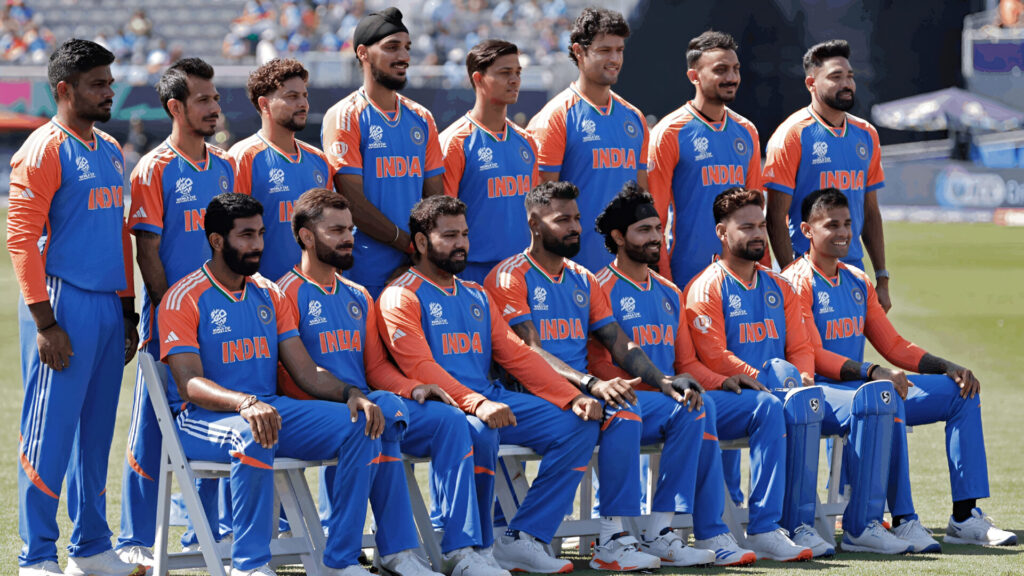
On December 24, 2025, the BCCI announced financial results that confirmed what the cricket world already knew. India’s cricket board had posted a surplus of ₹3,358 crore for FY 2024-25, with projections showing an even larger surplus of ₹6,728 crore for FY 2025-26. Cash and bank balances reached ₹20,686 crore, making BCCI wealthier than most multinational corporations.
Meanwhile, across cricket’s landscape, other boards struggled to maintain financial stability. Cricket South Africa reported that hosting four T20Is against India in November 2024 generated over R150 million ($8.38 million) per match, underlining India’s monetary importance. The England and Wales Cricket Board scheduled five Test matches against India for 2025, knowing Indian series generate higher revenues than Ashes cricket.
In January 2026, Bangladesh withdrew from the T20 World Cup after refusing to play their group matches in India, citing security concerns. The ICC rejected their request to move fixtures to Sri Lanka and replaced Bangladesh with Scotland. BCB president Aminul Islam accused ICC of double standards, pointing to how India played their 2025 Champions Trophy matches in Dubai instead of Pakistan.
The message was clear. Cricket’s financial ecosystem revolves entirely around India. The BCCI generates more revenue than all other cricket boards combined, receives nearly 40% of ICC earnings, and dictates tournament schedules through the IPL’s protected window. Every major cricket decision now connects back to Mumbai’s Wankhede Stadium, where BCCI headquarters sit.
Here’s why cricket boards depend on India more than ever.
BCCI’s Financial Dominance: ₹20,686 Crore vs Everyone Else
The Staggering Revenue Gap
The Board of Control for Cricket in India earned ₹20,686 crore (approximately $2.5 billion) in cash and bank balance for financial year 2024, marking a ₹4,200 crore increase from FY 2023’s ₹16,493 crore.
To understand BCCI’s dominance, compare it to other major cricket boards:
Cricket Board Revenues (FY 2024):
- BCCI (India): ₹20,686 crore ($2.5 billion)
- Cricket Australia: ₹658 crore ($79 million)
- England and Wales Cricket Board: ₹492 crore ($59 million)
- Pakistan Cricket Board: ₹458 crore ($55 million)
- Bangladesh Cricket Board: ₹425 crore ($51 million)
The combined revenue of Cricket Australia, ECB, PCB, and BCB totals just ₹1,608 crore. BCCI alone generates nearly 13 times more than these four boards combined. Even the next five boards (Cricket South Africa at ₹392 crore, Zimbabwe at ₹317 crore, Sri Lanka at ₹166 crore, Cricket West Indies at ₹125 crore, and New Zealand at ₹75 crore) barely register against BCCI’s financial might.
Why the Gap Keeps Widening:
BCCI’s revenue grew ₹4,200 crore year-over-year (25.5% growth), while most other boards saw single-digit percentage increases. The Indian cricket market generates revenue at a scale no other nation can match. With 1.4 billion people, India represents approximately 70-80% of cricket’s total global economy.
IPL: The Engine Driving BCCI’s Wealth
The Indian Premier League alone contributed ₹5,761 crore to BCCI’s revenue in FY 2023-24, representing nearly 60% of the board’s total income from just two months of cricket.
IPL Financial Impact:
- IPL revenue (2024): ₹5,761 crore ($692 million)
- Broadcast rights (2023-2027): ₹48,390 crore over 5 years (₹9,678 crore annually)
- IPL business valuation (2025): ₹1.56 lakh crore ($18.5 billion)
- IPL brand value (2025): $3.9 billion (13.8% year-over-year growth)
- Viewership (2024): 546 million on TV, 620 million on streaming (18% increase from 2023)
The IPL generates more revenue in 8 weeks than most cricket boards earn in entire years. Cricket Australia’s total annual revenue (₹658 crore) is less than what BCCI earns from IPL media rights in one month. The tournament’s ₹48,390 crore broadcast deal with Disney Star and Viacom18 represents the second-most valuable media rights package in all of cricket, behind only ICC’s global events.
For comparison, bilateral series involving India generate higher revenues than most ICC World Cups. When India tours any country, ticket sales skyrocket, television viewership breaks records, and sponsorship values multiply. Cricket boards worldwide now prioritize India tours above all other fixtures.
ICC Revenue Distribution: India Gets 38.5% of Everything
The Big One, Not the Big Three
In July 2023, the ICC approved a revenue-distribution model that gives BCCI approximately 38.5% of ICC’s annual net earnings for the 2024-2027 cycle. This translates to approximately $230 million per year out of ICC’s total $600 million annual earnings.
ICC Revenue Distribution (2024-2027 Annual):
- BCCI (India): $230 million (38.5%)
- ECB (England): $41.33 million (6.89%)
- Cricket Australia: $37.53 million (6.25%)
- PCB (Pakistan): $34.51 million (5.75%)
- Remaining 8 Full Members: $189 million total ($24 million average each)
- 90+ Associate Members: $67.5 million total (shared among all)
India’s $230 million annual share dwarfs all other boards. The ECB, second-highest earner, receives just $41.33 million. No other full member board has a percentage share in double digits. The gap between India and everyone else has never been wider.
How ICC Calculates Distribution:
The revenue model uses four criteria with specific weightings:
- Commercial contribution to ICC revenue: 85.3% weightage (India dominates here)
- Historical membership and cricket history
- Performance in men’s and women’s ICC events over past 16 years
- Equal weightage for being a Full Member
India’s commercial weightage of 85.3% reflects the reality that the Indian cricket economy contributes 70-80% of total global cricket revenue. ICC’s media rights package for 2024-2031 totals $3.2 billion, with $3 billion paid by Disney Star for the Indian market alone. Essentially, Indian viewership bankrolls global cricket.
The Hybrid Model: India’s Ultimate Leverage
When India refused to travel to Pakistan for the 2025 Champions Trophy, citing security concerns and government advice, the ICC created a “hybrid model” allowing India to play all matches in Dubai instead of Pakistan.
Champions Trophy 2025 Hybrid Model:
- Tournament hosted by Pakistan
- India played all matches (including final) in Dubai
- Pakistan traveled to Pakistan for their fixtures
- Other teams played in both Pakistan and Dubai
The ICC Board approved this arrangement through a vote, prioritizing India’s participation over Pakistan’s hosting rights. Why? Because ICC tournaments without India lose 60-70% of their viewership and commercial value. Broadcasters pay premium rates specifically for India matches. Sponsors demand India’s presence.
Bangladesh’s recent T20 World Cup withdrawal exposed the double standard. When Bangladesh cited similar security concerns about playing in India and requested matches be moved to Sri Lanka, ICC rejected the request outright and replaced Bangladesh with Scotland.
BCB president Aminul Islam’s statement: “When a country refused to travel to another country for the Champions Trophy last February, the ICC organized a neutral venue for them. The team played all their Champions Trophy matches in that neutral venue. It was a privilege. We are calling Sri Lanka co-hosts but they are not co-hosts. Sri Lanka is part of the hybrid model where one country is going to play.”
The message: ICC accommodates India because cricket cannot afford to lose Indian viewership. Other boards receive no such consideration.
The 2-Month IPL Window: How BCCI Restructured Cricket’s Calendar
March-May Belongs to IPL
The Indian Premier League runs for approximately 2-2.5 months every year, typically from mid-March through late May. Cricket boards worldwide now structure their entire international calendars around this window, ensuring no major bilateral series or domestic tournaments clash with IPL.
IPL 2025 Schedule:
- Start date: March 22, 2025 (revised from March 14 due to Champions Trophy)
- End date: June 3, 2025 (revised from May 25 due to India-Pakistan tensions)
- Total matches: 74 matches across 10 teams
- Duration: Approximately 2.5 months
- Venues: 13 stadiums initially, reduced to 6 after resumption
The IPL window has become sacred. ICC moved the 2025 Champions Trophy final to March 9 to create a two-week gap before IPL’s March 22 start. Pakistan Super League, typically held February-March, was moved to April-May 2025 to avoid clashing with Champions Trophy, which then clashed with IPL. PSL shifted its schedule entirely to accommodate cricket’s hierarchy.
Why Other Boards Don’t Challenge the Window
Cricket boards worldwide depend on Indian players participating in their domestic T20 leagues. The IPL window ensures franchise owners (many of whom also own teams in other leagues), broadcasters, and sponsors can plan around the cricket calendar’s biggest event.
How IPL’s Window Affects Global Cricket:
- England’s County Championship avoids March-May scheduling
- Australia’s Big Bash League finishes by February
- Pakistan Super League shifted from February-March to April-May
- South Africa’s SA20 runs January-February
- Caribbean Premier League runs August-September
- Bangladesh Premier League runs November-December
Every major T20 league now operates in IPL’s shadow. Foreign players prioritize IPL contracts over international commitments because IPL salaries dwarf national team payments. Rishabh Pant became the most expensive player in IPL history when Lucknow Super Giants paid ₹27 crore ($3.2 million) for his services in 2025.
Compare this to international match fees:
- India Test match fee: ₹15 lakh ($18,000) per match
- India ODI/T20I fee: ₹6 lakh ($7,200) per match
- England Test match fee: £15,000 ($19,000) per match
- Australia Test match fee: AUD $20,000 ($13,000) per match
Top IPL players earn more in 8 weeks than most international cricketers earn in an entire year. This economic reality forces cricket boards to accommodate BCCI’s scheduling preferences.
Bilateral Series With India: The Ultimate Revenue Generator
What Hosting India Actually Means Financially
Cricket South Africa reported that hosting four T20Is against India in November 2024 generated upwards of R150 million ($8.38 million) per match, totaling over R600 million ($33.5 million) for the series.
To put this in perspective, New Zealand Cricket’s entire annual revenue is approximately NZ$98 million ($55 million). A single T20I against India in South Africa generates more revenue than New Zealand’s ICC distribution for an entire year.
Why India Series Generate Massive Revenue:
- Ticket sales: India matches sell out within hours at premium prices
- Broadcasting rights: Indian viewership guarantees massive TV audiences
- Sponsorship: Brands pay premium rates for India match exposure
- Merchandise: Indian team jerseys outsell all others combined
- Hospitality: Corporate boxes command highest prices for India fixtures
England and Wales Cricket Board scheduled five Test matches against India for the 2025 summer, their maximum allocation. ECB’s financial statements noted that hosting India generates significantly higher revenues than Ashes cricket, traditionally England’s most lucrative series.
The Dependency Cycle
Smaller cricket boards now depend on hosting India for financial survival. Bangladesh’s postponed tour to India (originally August 2025, rescheduled to September 2026) represents a major financial hit for BCB.
Bangladesh’s Lost Revenue:
- Estimated gate receipts: $5-8 million for 6-match series (3 ODIs, 3 T20Is)
- Broadcasting revenue: $10-15 million
- Sponsorship activation: $3-5 million
- Total estimated loss: $18-28 million
For Bangladesh Cricket Board with annual revenue of ₹425 crore ($51 million), losing an India series means losing 35-55% of potential annual revenue. This explains why BCB’s T20 World Cup withdrawal, citing security concerns about playing in India, was financially catastrophic. Bangladesh sacrificed ICC participation to avoid playing in India, costing them tournament prize money, ICC development funds, and future bilateral series negotiations.
The Pakistan Security Factor: Why India Cited Government Advice
The 2009 Lahore Attack That Changed Cricket Forever
When India refused to travel to Pakistan for the 2025 Champions Trophy, citing security concerns and government advice, it wasn’t without historical precedent. On March 3, 2009, the Sri Lankan cricket team was attacked by 12 armed terrorists near Gaddafi Stadium in Lahore, Pakistan. The militants fired indiscriminately on the team bus with M4 carbines, AK-47s, grenades, and rocket launchers.
The Attack Details:
- 26 people killed or injured
- 6 Pakistani security officers killed
- 2 civilians killed
- 7 Sri Lankan players injured (Thilan Samaraweera shot in right leg, Kumar Sangakkara, Mahela Jayawardene, Ajantha Mendis, Tharanga Paranavitana, Chaminda Vaas, Suranga Lakmal)
- Match officials’ minivan also attacked
The attack was claimed by Lashkar-e-Jhangvi (LeJ) and Pakistan-based militant groups. ICC immediately stripped Pakistan of 2011 World Cup hosting rights, transferring 14 matches (including one semi-final) to India, Sri Lanka, and Bangladesh. For the next eight years, no major cricket team toured Pakistan. Sri Lanka only returned in October 2017 for a lone T20 match.
Kumar Sangakkara recalled the horror: “I feel something whizz past my ear and a bullet thuds into the side of the seat, the exact spot where my head had been a few seconds earlier.” The Sri Lankan team was airlifted by Pakistani Air Force helicopters and immediately flew to Colombo.
The 2025 Pahalgam Massacre: April 22, Two Months After Champions Trophy
Just two months after the Champions Trophy concluded, India experienced its deadliest civilian terror attack since the 2008 Mumbai attacks. On April 22, 2025, three terrorists armed with M4 carbines and AK-47s entered Baisaran Valley near Pahalgam in Jammu and Kashmir, specifically targeting Hindu tourists.
Pahalgam Attack Details:
- 26 civilians killed (25 Indians, 1 Nepali)
- Militants questioned each person’s religion and shot those identified as Hindu
- Deadliest attack on civilians in India since 2008 Mumbai attacks (26/11)
- The Resistance Front (TRF), proxy of Pakistan-based Lashkar-e-Taiba (LeT), initially claimed responsibility
- India’s Home Minister confirmed attackers were Pakistani nationals (voter IDs recovered)
India launched Operation Sindoor on May 7, 2025, conducting airstrikes on nine terror camps in Pakistan including facilities in Bahawalpur and Muridke. Pakistan retaliated with drone and missile attacks on Indian civilian areas May 7-9. After four days of military confrontation between the nuclear-armed rivals, a ceasefire was brokered on May 10, 2025.
This context explains why India’s government advised BCCI not to send the cricket team to Pakistan for the 2025 Champions Trophy. Pakistan’s history of hosting the 2009 Sri Lankan team attack, followed by attacks on Indian civilians just months after the Champions Trophy, vindicated India’s security concerns.
Bangladesh’s T20 World Cup Exit: The India Factor
What Actually Happened
On January 24, 2026, the International Cricket Council announced that Bangladesh would be replaced by Scotland at the 2026 T20 World Cup after Bangladesh Cricket Board refused to participate in the tournament per the published match schedule.
The Timeline:
- December 2025: Bangladesh raises security concerns about playing group matches in India
- January 2026: BCB requests ICC move their matches from India to Sri Lanka
- January 21, 2026: ICC rejects request, states “no credible or verifiable security threat to Bangladesh national team in India”
- January 23, 2026: ICC gives BCB one final day to decide
- January 24, 2026: Bangladesh confirms refusal to travel to India, ICC replaces them with Scotland
Bangladesh were in Group C and scheduled to play their first three matches in Kolkata and the fourth one in Mumbai. These fixtures will now be played by Scotland instead. This marks the first edition of the ICC Men’s T20 World Cup held without Bangladesh, who have featured in all previous nine editions since the competition’s inception in 2007.
The Geopolitical Context: Bangladesh-India Relations Post-Hasina
Bangladesh’s security concerns arose amid sharply deteriorating India-Bangladesh relations following former Prime Minister Sheikh Hasina’s ouster and flight to India in August 2024 after violent anti-government protests. Bangladesh blames India for supporting Hasina’s 15-year authoritarian rule.
Post-Hasina Violence Against Minorities:
According to India’s Minister of State for External Affairs, Kirti Vardhan Singh, between November 26, 2024 and January 25, 2025, 76 incidents of anti-Hindu violence occurred in Bangladesh. The Bangladesh Hindu Buddhist Christian Unity Council reported that between August 2024 and November 2024, 82 Hindus were killed and 2,673 “atrocities” occurred, with 152 Hindu temples desecrated.
Specific documented incidents included:
- Dipu Chandra Das lynched and burned in Bhaluka Upazila (December 18, 2025) following blasphemy allegations
- House fires targeting minority families in Lakshmipur Sadar (December 19) killing children
- Mob attacks on Hindu homes, businesses, and temples across Khulna Division
- December 2025 riots targeting cultural institutions and Indian diplomatic missions
The interim government led by Muhammad Yunus (which replaced Hasina) has been criticized for failing to curb violence by Islamist groups like Jamaat-e-Islami and Hefazat-e-Islam. The shift in Bangladesh’s foreign policy toward Pakistan, coupled with anti-India rhetoric following the Pahalgam terror attack, has framed Hindus as internal enemies due to perceived ties with India.
Bangladesh’s refusal to play in India came as diplomatic tensions peaked, with Dhaka summoning Indian High Commissioner Pranay Verma five times over various issues in 2025. BCB’s late objection to playing in India (requesting venue changes in January 2026 for a February tournament) stood in stark contrast to India’s early notification (months in advance) about not traveling to Pakistan.
The Double Standard Accusation and ICC’s Response
BCB president Aminul Islam publicly accused ICC of double standards:
“When a country refused to travel to another country for the Champions Trophy last February, the ICC organised a neutral venue for them. The team played all their Champions Trophy matches in that neutral venue. They played in one ground, staying in one hotel. It was a privilege.”
The contrast is stark:
- India refuses to play in Pakistan (citing 2009 Lahore attack, government security advice, April 2025 Pahalgam attack): ICC creates hybrid model, India plays in Dubai
- Bangladesh refuses to play in India (citing diplomatic tensions): ICC rejects request, replaces Bangladesh with Scotland
Former Pakistan captain Shahid Afridi questioned ICC’s decision: “Bangladesh’s players and millions of its fans deserve respect – not mixed standards. The ICC should build bridges, not burn them.”
The incident exposed cricket’s power structure. ICC accommodates India because:
- Indian viewership drives 70-80% of cricket’s commercial value
- India’s security concerns referenced documented terrorist attacks (2009 Lahore, 2025 Pahalgam)
- Bangladesh’s commercial contribution cannot justify similar accommodation
- Bangladesh made last-minute venue change requests for a tournament starting in 4 weeks
The BCCI’s Directive on Mustafizur Rahman
The security issue arose after BCCI, on January 3, 2026, instructed Kolkata Knight Riders to release Bangladesh pacer Mustafizur Rahman from their IPL 2026 squad. Although no official reason was stated, the directive came amid deteriorating India-Bangladesh relations following political tensions and reported violence against Hindu minorities in Bangladesh.
This move signaled BCCI’s willingness to use IPL access as leverage. Foreign players dream of IPL contracts because salaries dwarf international earnings. BCCI’s instruction to release Mustafizur sent a message: geopolitical tensions have consequences for players’ lucrative IPL careers.
The Financial Power Imbalance: Why BCB and PCB Cannot Challenge BCCI
Bangladesh Cricket Board and Pakistan Cricket Board, whether acting individually or together, lack the financial leverage to challenge BCCI’s decisions or force ICC accommodation.
The Numbers Tell the Story:
- BCCI revenue: ₹20,686 crore ($2.5 billion)
- BCB revenue: ₹425 crore ($51 million) – 49x smaller than BCCI
- PCB revenue: ₹458 crore ($55 million) – 45x smaller than BCCI
- Combined BCB + PCB: ₹883 crore ($106 million) – still 23x smaller than BCCI
Even if Bangladesh and Pakistan combined their cricket boards into a single entity, their joint revenue would represent just 4.3% of BCCI’s annual earnings. This financial reality explains why:
- ICC accommodates India’s security concerns with hybrid models
- ICC rejects Bangladesh’s venue change requests
- ICC depends on India for 70-80% of cricket’s commercial value
- Cricket boards worldwide cannot afford to lose Indian bilateral series
- No combination of smaller boards can match BCCI’s financial might
When Pakistan Cricket Board earns $55 million annually and Bangladesh earns $51 million, neither can threaten to boycott tournaments or demand equal treatment. BCCI’s ₹5,761 crore from IPL alone (in just 8 weeks) exceeds the combined annual revenue of Australia, England, Pakistan, Bangladesh, South Africa, Sri Lanka, West Indies, and New Zealand cricket boards.
This is why smaller cricket boards like BCB and PCB have no leverage when BCCI makes decisions based on Indian government security advice. The financial imbalance is so extreme that cricket’s power structure revolves entirely around maintaining India’s participation, not accommodating smaller boards’ concerns.
How Other Boards Accommodate India’s Demands
ECB’s India Strategy
England and Wales Cricket Board’s financial statements for 2024/25 explicitly noted that moving into the 2025 season, there are scheduled to be six men’s Test matches, with five against India and one against Zimbabwe. The statement emphasized India’s importance:
“Despite this, attendance of 2.84m represented our best ever attendance for a non-Ashes or India year.”
ECB generates approximately 75% of its revenue from broadcasting rights. India tours guarantee premium viewership, allowing ECB to command higher rights fees. The board structures its entire summer schedule around India tours, knowing these matches generate more revenue than traditional rivals like Australia.
Cricket Australia’s Balancing Act
Cricket Australia earns ₹658 crore ($79 million) annually, making them the second-richest cricket board. Yet even CA depends heavily on ICC distributions and India tours for financial stability.
CA receives $37.53 million (6.25%) from ICC annually, representing a significant portion of their revenue. A bilateral series against India in Australia generates higher ticket sales, broadcasting revenue, and sponsorship activation than any other opponent, including England in Ashes series.
New Zealand’s ICC Dependency
New Zealand Cricket’s annual revenue is approximately NZ$98 million ($55 million). Their ICC distribution of $24-28 million represents nearly 50% of total revenue. For comparison, ECB’s annual revenue is $388 million, making ICC’s $41 million distribution just 11% of total income.
This dependency creates vulnerability. When ICC revenue declines (as could happen if India-Pakistan matches don’t occur), smaller boards face immediate financial crises. BCCI, by contrast, generates so much revenue internally that ICC distributions represent a small percentage of total income.
The Bottom Line
The Board of Control for Cricket in India earned ₹20,686 crore in FY 2024, nearly 13 times more than Cricket Australia, ECB, PCB, and BCB combined. BCCI receives 38.5% of ICC’s $600 million annual revenue ($230 million), more than the next 11 full members combined.
Why Every Board Depends on India:
The Indian Premier League generated ₹5,761 crore (60% of BCCI’s revenue) in just 8 weeks, more than most cricket boards earn annually. Cricket boards worldwide structure international calendars around the 2-month IPL window (March-May), ensuring no major fixtures clash with cricket’s most valuable property. Rishabh Pant’s ₹27 crore IPL salary dwarfs international match fees, forcing boards to accommodate BCCI’s scheduling preferences.
India’s Ultimate Leverage:
Bilateral series against India generate massive revenue. South Africa earns over $8 million per T20I when hosting India, more than New Zealand’s entire annual ICC distribution. England schedules five Tests against India (maximum allocation) because Indian series generate higher revenue than Ashes cricket.
When India refused to travel to Pakistan for the 2025 Champions Trophy, ICC created a hybrid model with India playing in Dubai. When Bangladesh refused to play in India at the 2026 T20 World Cup, ICC rejected their request and replaced them with Scotland. The double standard is clear: cricket cannot afford to lose Indian viewership.
The Numbers Don’t Lie:
- BCCI revenue: ₹20,686 crore vs combined CA, ECB, PCB, BCB: ₹1,608 crore
- India’s ICC share: $230M vs second-place ECB: $41M
- IPL business valuation: $18.5 billion (larger than most cricket boards’ combined worth)
- Indian cricket economy: 70-80% of total global cricket revenue
Bangladesh’s T20 World Cup withdrawal after refusing to play in India cost them ICC participation, tournament prize money, and future bilateral negotiations. BCCI directed Kolkata Knight Riders to release Mustafizur Rahman from IPL 2026, demonstrating India’s willingness to use IPL access as leverage.
The Dependency Hierarchy:
Small boards like Bangladesh, Sri Lanka, and West Indies depend on ICC distributions (representing 40-50% of revenue) and India tours for survival. Mid-tier boards like South Africa and Pakistan rely on India series to generate significant annual revenue. Even wealthy boards like England and Australia structure schedules around India tours because Indian viewership guarantees premium broadcasting rights.
The 2-month IPL window has become cricket’s immovable object. Pakistan Super League shifted from February-March to April-May to avoid clashing. ICC moved the 2025 Champions Trophy final to March 9 to create space. Every T20 league worldwide operates in IPL’s shadow.
Cricket’s financial ecosystem revolves entirely around India. BCCI generates more revenue than all other boards combined, receives nearly 40% of ICC earnings, and dictates tournament schedules through IPL. The gap keeps widening as BCCI’s revenue grows 25% annually while other boards see single-digit growth.
Twenty years ago, cricket was controlled by England and Australia. Today, India doesn’t just dominate cricket financially. India is cricket. Every major decision, every tournament schedule, every broadcasting deal ultimately depends on Indian viewership and BCCI’s approval.
Cricket boards depend on India more than ever because there is no alternative. Without Indian viewership, cricket loses 70-80% of its commercial value. Without IPL, foreign players lose their highest earnings. Without India tours, smaller boards face financial collapse.
The BCCI didn’t just become cricket’s richest board. It became cricket’s only superpower.