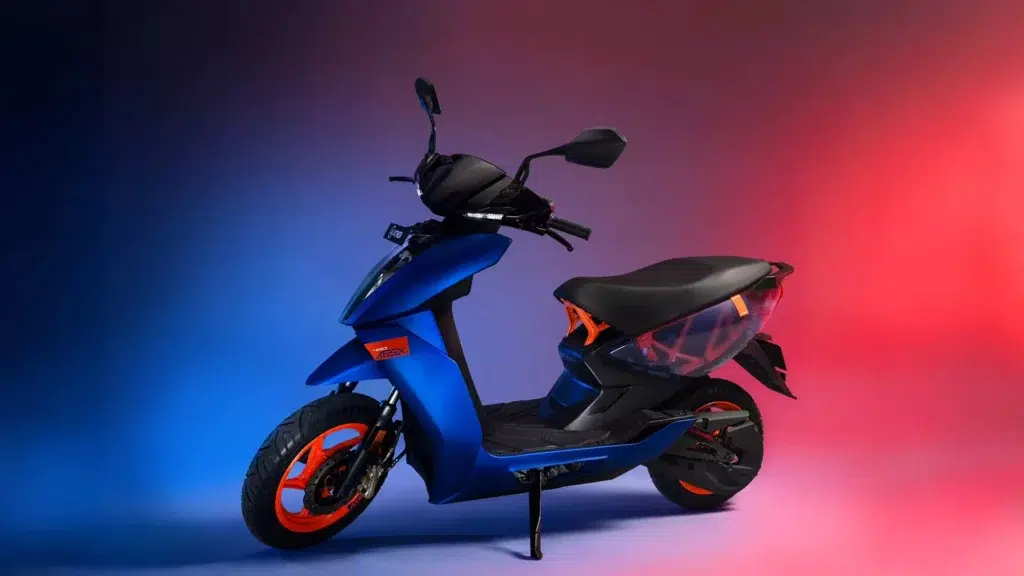
In 2013, when Tarun Mehta and Swapnil Jain left their IIT Madras dorms to build electric scooters, India’s two-wheeler market was controlled by legacy players like Hero MotoCorp, Bajaj, and TVS who’d perfected the dealer-distributor model over decades. Every scooter sold went through multi-layer distribution networks with dealers taking cuts, offering inconsistent service, and controlling customer relationships.
Ather Energy ignored this entirely. They built company-owned experience centers instead of dealerships. They created India’s largest private fast-charging network instead of relying on third parties. They delivered over-the-air software updates that improved scooters after purchase, something unimaginable in traditional two-wheelers.
Ten years later, Ather Energy strategy has created Rs 3,100+ crore valuation, 150,000+ scooters sold, 1,800+ charging points across 100+ cities, and forced legacy players like TVS, Bajaj, and Hero to rethink their entire go-to-market approach. This is the story of how two engineers disrupted India’s second-largest vehicle segment by controlling every customer touchpoint from purchase to charging to service.
Why Ather Energy Rejected Traditional Dealership Models
The Indian two-wheeler industry operates on a dealer-distributor model perfected over 40+ years. Manufacturers sell to distributors who sell to dealers who sell to customers. Each layer takes margins, dilutes brand experience, and creates information asymmetry between manufacturer and end user.
For traditional motorcycles and petrol scooters, this model works. The product is mature, servicing is standardized, and customers understand what they’re buying. But for electric vehicles requiring customer education, charging infrastructure, and software integration, the traditional model breaks fundamentally.
Problems with Traditional Dealership Model for EVs
- Dealer incentives misaligned: dealers profit from spare parts and servicing, EVs need minimal maintenance
- Knowledge gaps: traditional mechanics don’t understand battery management systems or software diagnostics
- Infrastructure requirements: charging stations need capital investment dealers won’t make
- Customer education: EVs require explaining range, charging time, total cost of ownership that dealers can’t articulate
- Brand inconsistency: 200 independent dealers create 200 different customer experiences
Tarun Mehta realized early that replicating Hero MotoCorp’s 6,000+ dealer network would destroy Ather’s value proposition. Traditional dealers made money selling spare parts and doing engine overhauls. An electric scooter with 95% fewer moving parts than petrol equivalents would cannibalize dealer revenues.
Traditional dealers also lacked capability to explain electric vehicle benefits convincingly. Range anxiety, charging infrastructure, battery life, total cost of ownership compared to petrol scooters, these concepts required trained staff with technical knowledge that typical motorcycle showrooms didn’t possess.
The Company-Owned Experience Center Model Explained
Instead of dealerships, Ather Energy built company-owned Ather Space experience centers in premium locations across major cities. These aren’t traditional showrooms where you walk in, see vehicles, and negotiate prices. They’re experiential spaces designed to educate customers and build brand affinity.
Ather Space centers typically span 1,500-2,500 square feet in high-footfall areas like malls and commercial districts. The interiors feature minimalist design with vehicles displayed like consumer electronics rather than automobiles. Large screens show software features, battery technology, and charging infrastructure maps.
Company ownership of retail spaces creates consistency impossible with independent dealers. Every Ather Space has identical staff training, pricing transparency, test ride protocols, and post-purchase service commitments. Customers in Mumbai get the same experience as Bangalore or Delhi, building brand trust that fragmented dealer networks can’t replicate.
Strategic advantages of company-owned retail:
- Direct customer relationships: Ather owns data on preferences, usage patterns, pain points
- Brand consistency: standardized training ensures uniform messaging across locations
- Pricing transparency: no dealer negotiations or regional price variations
- Software integration: centers demonstrate over-the-air updates and connected features
- Faster iteration: customer feedback flows directly to product teams
- Service quality control: company-managed service centers maintain standards
The capital intensity is significant. Each Ather Space requires Rs 1-2 crore investment versus zero for traditional dealer models where dealers fund showrooms. But this capital buys something invaluable: complete control over customer journey from first touchpoint to post-purchase relationship.
Customer Education as Competitive Moat
Ather Energy strategy centers on education rather than selling. Staff members spend 30-45 minutes with prospects explaining electric vehicle economics, demonstrating smartphone connectivity, and addressing range anxiety through data and testimonials.
This education-first approach converted customers who initially came curious about EVs into brand advocates who understood why Ather cost Rs 30,000-50,000 more than budget electric competitors. The price premium made sense once customers understood build quality differences, software capabilities, and charging network access that cheaper alternatives lacked.
Building India’s Largest Private Fast-Charging Network
Ather’s most audacious move was building charging infrastructure when no one else would. In 2017, when they launched the Ather 450, public EV charging barely existed in India. Instead of waiting for government or third parties, Ather invested capital into creating the Ather Grid network.
The Ather Grid started with 30 charging points in Bangalore. By 2024, it expanded to 1,800+ charging points across 100+ cities, making it India’s largest private fast-charging network for two-wheelers. Each charging point costs Rs 3-5 lakh to install and operate, representing massive capital deployment that traditional dealers would never undertake.
Fast-charging capability differentiates Ather from competitors using slower charging speeds. Ather’s charging points deliver 1.5 km range per minute of charging, meaning a 15-minute charge adds 20-25 km range. This matches quick refueling convenience that petrol scooters offer, reducing range anxiety significantly.
Network Effects from Charging Infrastructure
- Grid access barrier: competitors can’t easily replicate 1,800+ charging points built over 7 years
- Switching costs: Ather owners invested in knowing Grid locations, unlikely to switch brands
- Data collection: charging patterns reveal usage insights informing product development
- Customer retention: free charging at Grid points (initially) created loyalty that paid marketing couldn’t achieve
- Partnership opportunities: malls and commercial complexes wanted Grid points for customer attraction
The charging network also created geographic advantages. Ather expanded city-by-city based on Grid coverage density. They wouldn’t launch in a new city until 15-20 charging points were operational, ensuring customers had charging confidence from day one.
This disciplined expansion contrasted with competitors flooding markets without infrastructure support. Ola Electric sold 100,000+ scooters but faced backlash over inadequate charging access and service capacity. Ather’s slower expansion meant better customer experiences that drove word-of-mouth more effectively than aggressive marketing.
Over-the-Air Updates Creating Software-Hardware Integration
Ather Energy treats its scooters as software products that happen to have hardware attached. Every Ather scooter ships with 4G connectivity enabling over-the-air (OTA) software updates that improve performance, add features, and fix issues post-purchase.
This concept, standard in smartphones and Tesla vehicles, was revolutionary in Indian two-wheelers. Traditional scooters never improved after purchase. An Activa bought in 2020 performed identically in 2024. But Ather scooters literally got better over time through software updates.
Post-purchase improvements delivered via OTA:
- Range optimization: battery management algorithms improved real-world range by 8-12%
- Performance modes: added Sport mode increasing acceleration post-launch
- Navigation updates: integrated Google Maps and improved route planning
- Security features: added geofencing and theft alerts through software
- User interface upgrades: dashboard display improvements based on customer feedback
- Ride analytics: detailed trip statistics and efficiency tracking
The psychological impact was profound. Customers felt they were getting more value over time rather than watching their vehicle depreciate. OTA updates also reduced service center visits for software issues, lowering operating costs while improving customer satisfaction.
Data Advantages from Connected Vehicles
Every connected Ather scooter generates usage data flowing back to engineering teams. This telemetry reveals how customers actually ride, where they charge, what range they achieve, and which features they use most. Traditional manufacturers never had this granular feedback.
Ather used this data to optimize battery performance, predict maintenance needs before failures occurred, and identify design improvements for future models. The data advantage compounds over time as more scooters accumulate more riding hours, creating insights competitors can’t replicate without their own connected fleet.
Vertical Integration Controlling Supply Chain and Manufacturing
Ather Energy strategy extends beyond go-to-market into manufacturing and supply chain. The company manufactures in-house at their Hosur facility near Bangalore, unusual for Indian startups that typically outsource production to contract manufacturers.
The Hosur factory has 400,000 unit annual capacity with plans for 1 million unit expansion. Ather controls critical components like battery packs, motor controllers, and vehicle control units, integrating hardware and software in ways outsourced manufacturing couldn’t achieve.
Vertical integration benefits:
- Quality control: direct oversight of production ensures consistency
- Faster iteration: engineering teams sit adjacent to production lines enabling rapid prototyping
- Cost optimization: eliminating middlemen improves margins as scale increases
- Intellectual property protection: core technology stays in-house rather than shared with contract manufacturers
- Supply chain resilience: less dependence on external suppliers during component shortages
The capital requirements are substantial. Building manufacturing capacity required Rs 600+ crore investment that many EV startups couldn’t afford. But this investment created competitive moats that capital-light competitors struggled to replicate.
Battery Pack Manufacturing as Core Competency
Ather manufactures its own battery packs rather than sourcing from third-party suppliers. This vertical integration allows custom battery management system (BMS) optimization that generic batteries can’t offer.
The in-house BMS extends battery life through intelligent charge-discharge management, predicts degradation patterns, and enables OTA improvements that third-party batteries couldn’t support. Battery packs represent 40-45% of electric scooter costs, so controlling this component impacts both margins and customer value proposition significantly.
How Ather Energy Challenged Legacy Two-Wheeler Giants
When Ather launched, legacy players like Hero MotoCorp, Bajaj Auto, and TVS Motor dismissed electric scooters as niche products lacking infrastructure and customer acceptance. They focused on petrol vehicles that generated 95%+ of revenues and profits.
Ather Energy strategy proved that premium electric scooters could capture urban commuters willing to pay Rs 1.3-1.7 lakh for superior performance, connected features, and lower operating costs. The success forced legacy players to respond, but their responses revealed how fundamentally Ather had disrupted traditional playbooks.
TVS launched the iQube, initially through traditional dealerships with inconsistent charging support. Customer experiences varied wildly based on dealer capability. TVS eventually shifted toward company-owned charging and direct service, essentially copying Ather’s model.
Bajaj entered through Chetak, initially priced at Rs 1+ lakh but positioned as premium electric scooter. However, Bajaj used traditional dealer networks creating service quality issues that plagued early adopters. They struggled to educate dealers on EV technology and charging infrastructure.
Why Legacy Players Struggled with DTC Transition
- Dealer network lock-in: existing dealer agreements prevented direct sales experimentation
- Margin structure conflicts: EVs needed lower dealer margins than petrol vehicles, causing distributor resistance
- Mindset differences: decades of manufacturing-focused thinking versus customer-experience focus
- Infrastructure investment: legacy players hesitated to fund charging networks at scale
- Software capabilities: traditional manufacturers lacked software talent for connected vehicle features
Hero MotoCorp, India’s largest two-wheeler manufacturer, announced electric scooter plans in 2019 but didn’t launch until 2022 with Vida V1. Even then, initial city launches were limited and charging infrastructure sparse compared to Ather’s established network.
The delayed responses gave Ather Energy strategy a multi-year head start building brand equity, refining products through customer feedback, and establishing charging infrastructure moats that competitors couldn’t easily overcome.
The Subscription and Service Revenue Model
Beyond vehicle sales, Ather pioneered subscription-based revenue streams uncommon in Indian two-wheelers. The Ather Connect subscription offered extended warranty, roadside assistance, and unlimited charging at Grid points for annual fees.
Traditional two-wheelers generated post-sale revenues through spare parts and service labor. But electric scooters with 95% fewer moving parts eliminated most spare parts revenues. Ather needed new monetization models for post-purchase relationships, hence subscriptions.
Subscription revenue benefits:
- Recurring revenue: annual subscriptions created predictable cash flows beyond one-time sales
- Customer retention: active subscriptions reduced brand switching
- Data insights: subscription usage patterns revealed customer preferences
- Charging network monetization: Grid access fees offset infrastructure operating costs
- Service bundling: prepaid maintenance packages locked customers into Ather service centers
The subscription model also aligned incentives correctly. Ather profited by keeping vehicles running optimally rather than selling spare parts when things broke. This incentive alignment improved vehicle reliability and customer satisfaction simultaneously.
Software Features as Premium Tiers
Ather experimented with software feature paywalls where certain capabilities required subscription upgrades. Advanced navigation, premium dashboard themes, and performance mode unlocks tested willingness to pay for digital features post-purchase.
This approach, common in software products, was novel in vehicles. The experiments revealed customer price sensitivity and helped Ather understand which features justified subscription costs versus which should be standard. These learnings informed product positioning for future models.
Challenges Facing Ather Energy’s DTC Model
Despite successes, Ather Energy strategy faces significant challenges as they scale. The capital intensity of company-owned retail and charging infrastructure becomes unsustainable at national scale. India has 600+ cities with two-wheeler markets, but Ather operates in only 100+.
Reaching tier-2 and tier-3 cities requires rethinking the pure DTC model. These markets can’t support company-owned experience centers with Rs 1-2 crore investments and may need hybrid models with local partners. But hybrid models risk inconsistency that pure DTC avoids.
Operational challenges at scale:
- Service capacity constraints: company-owned service centers can’t match legacy dealer network coverage
- Capital requirements: expanding to 300+ cities needs Rs 2,000-3,000 crore for retail and charging
- Profitability pressure: DTC operating costs exceed dealer models, requiring higher prices or volumes
- Competition intensification: legacy players now matching charging infrastructure and connected features
- Customer acquisition costs: direct sales require higher marketing spend than dealer word-of-mouth
The path to profitability remains unclear. Ather reported Rs 1,100+ crore revenue in FY23 but continues burning cash on infrastructure expansion and customer acquisition. The company needs 300,000+ annual sales to reach breakeven, requiring 2x growth from current volumes.
Balancing Control with Scale
Ather faces the classic startup dilemma: maintain strict control ensuring quality or compromise control achieving scale. Pure DTC works brilliantly for 150,000 customers but becomes operationally complex for 500,000+ customers spread across diverse geographies.
The solution likely involves hybrid models with carefully selected franchise partners in smaller cities, similar to how Tesla eventually added franchised service centers. But any partner model risks diluting the brand consistency that made Ather successful initially.
The Bottom Line
Ather Energy’s direct-to-consumer strategy fundamentally challenged how India sells and services two-wheelers. By eliminating dealers, building charging infrastructure, and treating vehicles as software products, they created customer experiences that traditional manufacturers couldn’t replicate through existing distribution.
The approach required massive capital investment that traditional dealer models avoid. But this capital bought competitive moats that continue paying dividends as the EV market expands. Charging network density, customer data, and brand consistency aren’t easily replicated even with more capital.
What makes Ather Energy strategy distinctive:
- Company-owned retail: direct control of customer journey from first interaction
- Charging infrastructure: 1,800+ Grid points create switching costs for customers
- OTA updates: vehicles improve post-purchase through software rather than depreciating
- Vertical integration: in-house manufacturing enables hardware-software optimization
- Data advantages: connected vehicles generate insights improving products continuously
- Subscription revenue: recurring income streams beyond one-time sales
The financial and operational challenges are real. Ather needs massive scale to justify DTC operating costs and infrastructure investments. Legacy competitors now copy successful elements while leveraging manufacturing scale Ather lacks. The next phase requires balancing control with scalability.
For Indian mobility, Ather Energy proved that direct-to-consumer models could work in two-wheelers despite 70 years of dealer-dominated distribution. They demonstrated that customers value brand consistency, charging access, and connected features enough to pay premiums over budget alternatives. And they forced every legacy player to rethink their go-to-market strategies, accelerating India’s electric vehicle adoption in ways traditional players never would have.
The question isn’t whether Ather Energy’s DTC approach works, the last decade proved it does. The question is whether they can scale fast enough to dominate the market before well-capitalized competitors replicate their advantages. That race will determine whether Ather becomes India’s Tesla or gets absorbed by legacy players who learned from their playbook.