In 2010, when Peyush Bansal quit his cushy Microsoft job in the US to start Lenskart, most people thought he was crazy. The Indian eyewear market was dominated by local opticians and a few traditional players like Titan Eye+. Buying glasses meant visiting a cramped shop, limited choices, and paying inflated prices. Online eyewear shopping seemed impossible, nobody wanted to buy prescription glasses without trying them on first. But Bansal saw what others missed: India had over 500 million people needing vision correction, yet only 25% actually wore spectacles.
A decade later, Lenskart stands as India’s largest eyewear retailer with Rs 6,652 crore revenue, 2,700+ stores globally, and a $5.6 billion valuation heading into its 2025 IPO. The company achieved what seemed impossible: making Indians comfortable buying eyewear online while simultaneously building a massive physical retail presence. This wasn’t about choosing between online and offline, it was about creating a seamless experience across both. The omnichannel Lenskart strategy became the blueprint for retail in India, proving that understanding local consumer behavior matters more than copying Western D2C playbooks like Warby Parker.
The Broken Eyewear Market
Before Lenskart, India’s eyewear market was chaotic and unorganized. Traditional opticians controlled 90% of the market, charging 500% markups on basic frames. Walk into any neighborhood optical shop and you’d find the same story: dusty displays with outdated designs, pushy salespeople, and prices that seemed arbitrary. Consumers had limited choices, mostly boring designs that looked clinical rather than fashionable. Branded eyewear from Rayban or Oakley cost a fortune, affordable options looked cheap and broke easily, and the middle ground barely existed.
The bigger problem was awareness and access. Over 150 million Indians needed spectacles but didn’t know it. No culture of regular eye check-ups, no understanding that blurry vision wasn’t normal, and acute shortage of optometrists meant people went years without correcting vision problems. Even those who knew they needed glasses often couldn’t afford them or lived in areas without proper optical shops. This created a massive opportunity for someone willing to solve the entire value chain from awareness to distribution to affordability.
Market gaps Bansal identified:
- 500 million+ people needing vision correction
- Only 25% actually wearing spectacles
- Traditional opticians: 500% markups, limited choices
- Branded eyewear unaffordable for most Indians
- 150 million unaware they needed glasses
- Acute optometrist shortage across country
- Tier 2/3 cities virtually underserved
Peyush Bansal experienced this frustration firsthand. As someone who wore glasses since childhood, he understood the pain of overpaying for outdated designs and the hassle of getting prescriptions updated. His Microsoft background taught him that technology could solve distribution problems and eliminate unnecessary middlemen. His return to India in 2007 came with a mission: build something that genuinely improved lives at scale.
From Multiple Ventures to Singular Focus
After experimenting with multiple e-commerce ventures including Watchkart, Bagskart, and Jewelskart under parent company Valyoo Technologies, Bansal realized eyewear had the biggest opportunity. The market was large, underserved, and ripe for disruption. By 2014, he shut down all other verticals and focused entirely on Lenskart. This singular focus would prove crucial to executing the complex omnichannel strategy that followed, as building both online and offline simultaneously required resources and attention that multi-vertical companies couldn’t sustain.
Building the Omnichannel Foundation
Lenskart started in 2010 as an online-only platform selling contact lenses. The initial thesis was simple: cut out middlemen, offer better prices, deliver to doorstep. But Bansal quickly realized that pure online wouldn’t work for eyewear in India. Unlike books or electronics where specifications are straightforward, glasses are deeply personal. People need to see how frames look on their face, ensure the fit is comfortable on their nose and ears, and trust that prescriptions are accurate. One wrong measurement and glasses become unwearable.
The Indian consumer psychology added another layer of complexity. Trust in online shopping was low in 2010. People wanted to touch products, examine quality, and have someone to yell at if something went wrong. Eyewear, being a health product, faced even more skepticism. What if the prescription is wrong? What if frames don’t suit my face? What if I waste money? These fears kept people away from online eyewear shopping even as they bought books and electronics online without hesitation.
Early innovations addressing barriers:
- Home trials: order 4-5 frames, try at home five days, pay for what you keep
- Home eye check-ups: Rs 99 trained optometrists visiting homes
- Virtual try-on: AR showing frames on your face
- 14-day no-questions return policy
- Free delivery and repairs
The omnichannel Lenskart strategy emerged from understanding these barriers intimately. Rather than fighting consumer behavior, Bansal decided to work with it. If people wanted to try before buying, give them that option. If they wanted physical stores, build them. If they wanted home service, provide it. The key was making all these channels work together seamlessly rather than competing with each other for budget and management attention.
The Home Trial Revolution
The first innovation was home trials. Customers could order 4-5 frames online, try them at home for five days, and only pay for what they kept. This addressed the biggest barrier to online eyewear shopping, the uncertainty of fit and appearance. Suddenly, the convenience of online browsing combined with the tactile experience of physical shopping. You could try frames in your own mirror, get family opinions, test them with different outfits, all without stepping into a store or dealing with pushy salespeople.
The second breakthrough was home eye check-ups at Rs 99. Trained optometrists would visit customers’ homes with portable equipment, conduct comprehensive eye tests, help select frames from tablets showing the full catalog, take measurements, and process orders. This solved two problems simultaneously: it reached people who didn’t know they needed glasses through proactive outreach in schools and offices, and it provided the personalized service that Indians expected from traditional opticians without the inconvenience of visiting shops.
The Physical Store Gambit
But the masterstroke was recognizing that online alone would never scale to the mass market in India. By 2013, Lenskart opened its first physical store. This wasn’t admitting defeat or pivoting away from e-commerce, it was doubling down on omnichannel. The stores weren’t competitors to the website; they were extensions of the same experience designed to work together. Customers could browse online, try in-store, and order for home delivery. Or try in-store, compare online, and decide later. The flexibility removed decision pressure that traditional retail created.
The Phygital Experience
The omnichannel Lenskart strategy wasn’t just about having both online and offline presence. Dozens of brands tried that and failed. Urban Ladder burned cash on expensive stores without operational integration. Pepperfry opened experience centers but couldn’t connect them to online ordering smoothly. The difference with Lenskart was genuine integration where channels enhanced each other rather than existing separately with different P&Ls competing for resources.
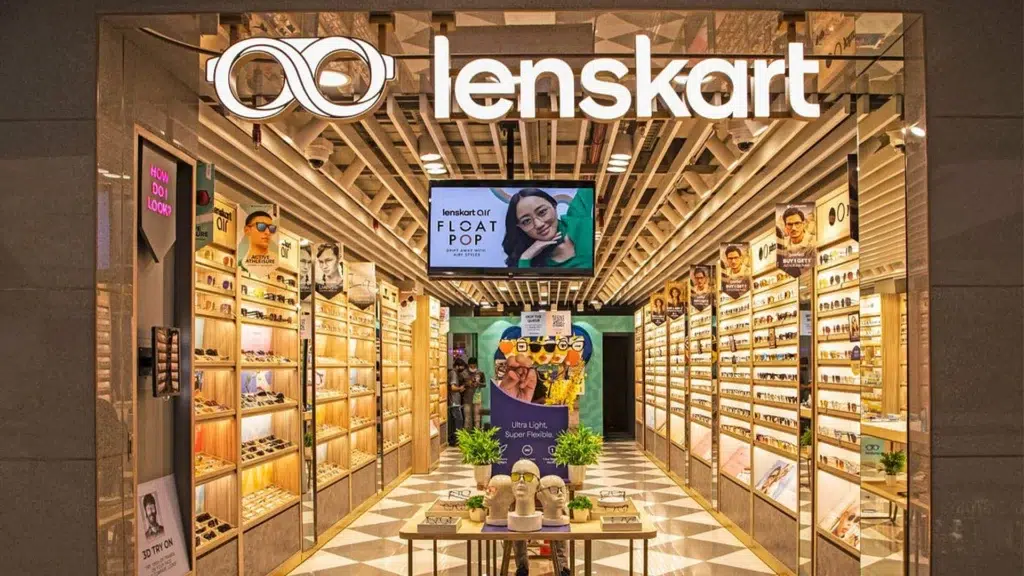
Walk into any Lenskart store today and you’ll see tablets mounted throughout for browsing the full catalog of 10,000+ frames. Most stores stock only 1,000-2,000 popular styles due to space constraints, but customers can browse everything online in-store. QR codes on displays link to product reviews, specifications, and styling tips. Staff carry tablets showing customer purchase history and preferences from online browsing, enabling personalized recommendations even if it’s your first store visit. The technology created a unified customer view that made every interaction feel personalized.
Phygital integration features:
- Tablets in stores accessing full 10,000+ frame catalog
- Real-time inventory across all 2,700+ stores
- Unified customer profiles tracking browsing and visits
- Staff seeing preferences and past purchases
- Book appointments through app
- Chat with store staff while browsing online
The integration worked both ways. Someone browsing online could locate nearby stores, check inventory in real-time, book appointments with optometrists, reserve frames for in-store trial, and even chat with store staff before visiting. Want to try a frame but not sure if your local store has it? The app tells you instantly. Ordered online but need urgent adjustments? Any Lenskart store will service your glasses regardless of where purchased. This service commitment built trust that pure online players couldn’t match.
Removing Customer Journey Friction
This technology didn’t replace human interaction; it enhanced it. Store staff became consultants rather than salespeople, using data to suggest frames that matched customer face shapes, past purchases, and browsing patterns. The experience felt personal because it genuinely was, your history traveled with you across channels. The genius of this approach was removing friction from customer journeys. Want to browse at night when stores are closed? Do it online. Want to try frames but hate crowded stores? Order home trial. Want immediate purchase? Visit store. Started browsing online but want expert advice? Book store appointment. Every customer could shop their preferred way, and Lenskart captured the sale regardless of path taken.
Aggressive Geographic Expansion
While competitors like Titan Eye+ stayed focused on metros and large cities, Lenskart aggressively expanded into Tier 2 and Tier 3 cities where organized eyewear retail barely existed. Towns like Kota, Ranchi, Vadodara, Mysore, Nashik got modern Lenskart stores offering the same experience as Delhi or Mumbai outlets. This geographic expansion strategy captured market share before competition woke up to the opportunity in smaller cities where consumers had disposable income but limited shopping options.
The franchise model accelerated growth exponentially. Lenskart partnered with local entrepreneurs who understood their markets, provided them with inventory, training, technology systems, and marketing support, and created a network of brand ambassadors across small-town India. These franchise partners had skin in the game, their success depended on customer satisfaction, aligning incentives perfectly. The franchise approach also required less capital than company-owned stores while scaling faster across geography.
Expansion milestones:
- 2013: first physical store launched in Delhi
- 2017: first mobile app launched, first in eyewear
- 2018: international expansion began with Singapore
- 2020: crossed 750 stores during COVID
- 2022: acquired Owndays for $400 million
- 2025: 2,700+ stores globally, 2,067 in India
By 2025, Lenskart operated 2,700+ stores globally including 2,067 in India and 633 internationally, absolutely dwarfing Titan Eye+’s approximately 900 stores. This physical footprint combined with online presence created the omnichannel Lenskart strategy’s moat. Competitors couldn’t match the convenience of shopping anywhere, anytime, any channel without investing billions and waiting years to build similar infrastructure.
Multi-Purpose Store Economics
The store economics worked because of omnichannel thinking. Unlike traditional retailers whose stores had to generate all revenue and profit, Lenskart stores served multiple functions simultaneously. They acted as showrooms for online orders where customers could see products before buying, fulfillment centers for home deliveries reducing logistics costs, service centers for adjustments and repairs building loyalty, and brand experience hubs in malls creating visibility. This multi-purpose model made each store more profitable than standalone retail while supporting online growth rather than competing with it.
Manufacturing Control and Supply Chain
Lenskart didn’t just sell eyewear; it manufactured most of its inventory in-house. The company built state-of-the-art automated factories in Delhi and Rajasthan using robotic technology called MechOptics that greatly reduced human error in lens cutting and frame assembly. Combined capacity reached 50 million glasses annually, making Lenskart one of Asia’s largest eyewear manufacturers. This vertical integration gave Lenskart control over quality, costs, and supply chains that retail-only competitors could never achieve.
While competitors relied on third-party manufacturers with inconsistent quality and long lead times, Lenskart could customize products, maintain consistent standards, achieve margins traditional retailers couldn’t match, and respond to trends quickly. The in-house manufacturing also enabled the omnichannel Lenskart strategy operationally. Fast turnaround times meant customers ordering custom prescriptions online received glasses within 3-5 days rather than 2-3 weeks that traditional opticians required. This speed advantage drove customer satisfaction and repeat purchases.
Manufacturing advantages:
- Delhi and Rajasthan automated factories
- 50 million glasses annual capacity
- MechOptics robotic technology
- Fast turnaround: custom prescriptions in 3-5 days
- Quick replenishment based on demand data
- Test new designs cheaply
Store inventory could be replenished quickly based on real-time demand data flowing from POS systems and online analytics. New designs could be tested cheaply without committing to large production runs, enabling Lenskart to stay ahead of fashion trends. The supply chain optimization was equally impressive. Algorithms predicted demand patterns for different frame styles across regions, ensuring popular designs stayed in stock while slow movers didn’t tie up inventory. Hub-and-spoke distribution centers strategically located across India enabled next-day delivery to most cities.
Technology Infrastructure
Technology powered every aspect of the omnichannel Lenskart strategy, but it never felt gimmicky or overwhelming. The virtual try-on feature using augmented reality technology let customers see how frames looked on their face through the mobile app. Point your phone camera at yourself, browse frames, and see real-time rendering showing exactly how each style suits your face shape, skin tone, and features. This wasn’t just cool tech; it solved the genuine problem of visualizing fit before purchase, driving higher conversion rates and lower returns.
The backend technology was even more impressive and complex. Real-time inventory management across 2,700+ stores meant customers browsing online could see exactly which nearby store had their preferred frame in stock, its color variations, and availability status. Unified customer profiles tracked purchases, preferences, prescriptions, and browsing behavior across all channels, so staff could provide personalized recommendations whether someone visited a store, called customer service, or chatted online.
Customer-Centric Innovation Culture
Every major feature at Lenskart came from customer feedback rather than boardroom assumptions. The home trial program emerged because early customers expressed anxiety about online purchases in surveys and reviews. Free eye check-ups addressed concerns about prescription accuracy that showed up repeatedly in customer service calls. The 14-day return policy with no questions asked built confidence among skeptical buyers whose main objection was “what if I don’t like them?” This obsessive focus on solving actual customer problems rather than theoretical ones drove every product and service decision.
Peyush Bansal personally read customer reviews and complaints, using them to guide product development and policy changes. This customer focus extended beyond policies to culture. Store staff were trained to be helpful rather than pushy, understanding that a customer visiting today might buy next month online or vice versa. Success metrics focused on customer lifetime value across all channels rather than individual transaction optimization. This long-term thinking allowed Lenskart to invest in customer satisfaction even when it temporarily reduced short-term profits.
Customer-first principles:
- Innovations driven by actual pain points
- Peyush Bansal personally reading reviews
- Staff trained to help not push sales
- Generous policies building trust
- Lifetime value focus across channels
The omnichannel Lenskart strategy worked because everyone from warehouse workers to app developers understood they were part of one unified customer experience. There was no “online team” vs “offline team” competing for credit or budget. Compensation structures rewarded overall company performance, not channel-specific metrics. This organizational alignment made the strategy executable where many companies struggled with internal silos that prevented true omnichannel coordination.
Building Trust Through Service
Lenskart also built services addressing unmet needs beyond just selling glasses. Partnerships with schools provided free eye check-ups for children, identifying vision problems early and building brand affinity with families. Insurance tie-ups made eyewear affordable for corporate employees. These initiatives positioned Lenskart as a vision care company rather than just eyewear retailer, creating deeper customer relationships that extended beyond individual transactions to long-term health partnerships.
Profitability and IPO Journey
Unlike many startups that burn cash indefinitely, Lenskart achieved profitability proving the omnichannel model was sustainable. The company posted Rs 297 crore profit in FY25 after years of strategic losses during expansion, demonstrating unit economics worked. Revenue of Rs 6,652 crore in FY25 showed impressive scale, with growth coming from both new customers and repeat purchases. This revenue far exceeded Titan Eye+’s Rs 796 crore, cementing Lenskart’s market leadership and proving that the omnichannel approach could win against traditional retail focused players.
The profitability came from the omnichannel Lenskart strategy’s inherent efficiencies. Online channels had relatively low customer acquisition costs as happy customers referred friends and family organically through word-of-mouth and social media sharing. Physical stores generated high-value transactions as customers buying in person typically purchased premium frames and add-ons like anti-glare coatings and blue light protection. Manufacturing integration maintained healthy margins of 60-70% compared to 30-40% for retailers buying from third parties.
Financial strength:
- Rs 6,652 crore revenue FY25
- Rs 297 crore profit FY25
- 2,700+ stores vs Titan Eye+ ~900
- $5.6 billion valuation at IPO
- $1.08 billion funding across 19 rounds
- SoftBank, TPG, Temasek investors
In 2025, Lenskart filed for an IPO at $5.6 billion valuation. The Draft Red Herring Prospectus revealed Rs 320 crore allocated for brand building, Rs 591 crore for store expansions, and plans for a new Rs 200 million manufacturing facility. The company was preparing methodically for the next phase of growth with the same disciplined approach that built its omnichannel foundation, balancing expansion with profitability rather than choosing one over the other.
The Shark Tank Effect
Peyush Bansal’s appearance as a judge on Shark Tank India created unexpected windfall benefits for Lenskart. Suddenly, the founder became a household name across India. Customers wanted to wear the same frames Peyush wore on TV, driving specific product sales. The show humanized the brand, transforming it from just another retailer into a trusted friend with a recognizable face. This founder-led branding amplified the omnichannel Lenskart strategy by adding emotional connection to functional benefits. Bansal’s straight-talking, data-driven approach on the show reflected Lenskart’s own culture of transparency and customer focus.
The Bottom Line
Lenskart’s success proves that omnichannel isn’t about technology platforms, store counts, or marketing buzzwords. It’s about understanding how customers actually behave and building systems that match those behaviors seamlessly. Indians wanted the convenience of online shopping but the reassurance of physical stores. They wanted affordable prices but quality products. They needed personalized service but on their own schedule without pushy salespeople. The omnichannel Lenskart strategy delivered all of this simultaneously without compromise, creating a retail experience that felt natural to Indian consumers.
The playbook Lenskart created extends far beyond eyewear. Omnichannel isn’t optional; it’s essential for success in Indian retail where consumer behaviors blend online convenience with offline trust-building. Western D2C models that worked in US or Europe won’t copy-paste here because Indian consumers have different trust thresholds and shopping behaviors shaped by decades of traditional retail. Understanding these nuances and building for them rather than trying to change consumer behavior proved to be Lenskart’s sustainable competitive advantage.
Key strategic lessons:
- Deep understanding of Indian consumer psychology
- Seamless integration between channels
- Aggressive Tier 2/3 expansion
- Vertical integration through manufacturing
- Technology enhancing human touch
- Customer feedback driving innovation
- Organizational alignment around experience
As Lenskart expands internationally with the Owndays acquisition in Southeast Asia and prepares for public markets, the core lesson remains: understand your customer deeply, solve their real problems, and build infrastructure that delivers on promises. The omnichannel approach wasn’t just strategy, it was their entire business philosophy integrated across every function from manufacturing to marketing to customer service. For entrepreneurs building in India, Lenskart demonstrates that patient capital combined with customer obsession can defeat even the most established competitors.