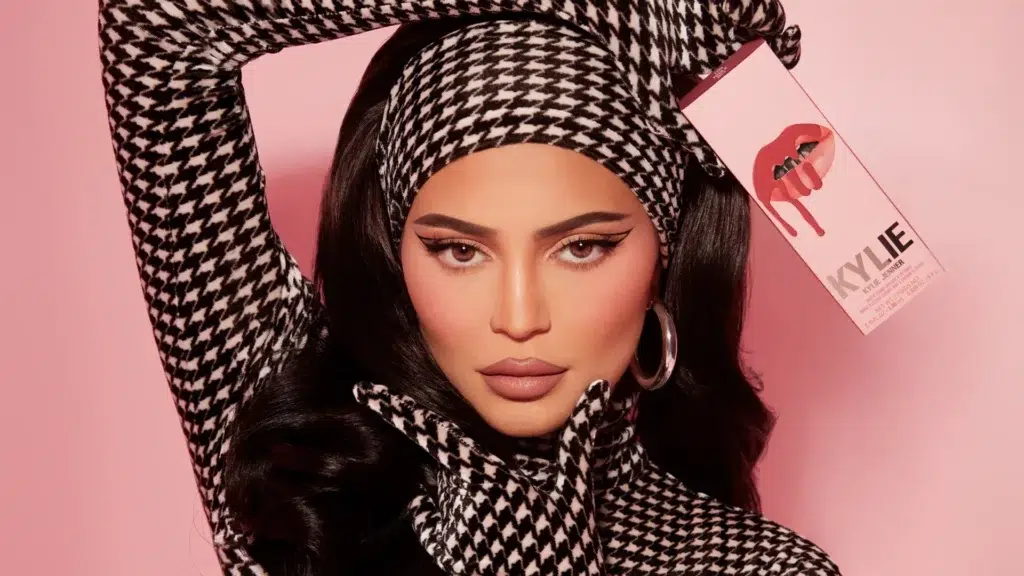
When Kylie Jenner was 18 years old in November 2015, she invested $250,000 of her modeling earnings into producing 15,000 lip kits. They sold out in under one minute. Four years later, Kylie Cosmetics became one of the most talked-about beauty brands in the world when Coty Inc. paid $600 million cash for 51% ownership, valuing the company at $1.2 billion.
But how did Kylie Cosmetics grow so fast? How did a teenage reality TV star build a beauty brand worth over a billion dollars in just four years? And what really happened after the Coty deal when Forbes accused the company of inflating its numbers?
The Kylie Cosmetics Story:
- Launch: November 2015 with $250,000 investment
- First product: 15,000 Kylie Lip Kits sold out in under 1 minute
- Year 1 revenue (2016): Over $300 million
- Coty acquisition: $600 million for 51% stake (November 2019)
- Company valuation: $1.2 billion at time of sale
- Trailing revenue: $177 million verified at acquisition
- Current status (2026): Operating under Coty, sold in 50+ countries
- Distribution: Ulta, Sephora, Harrods, Selfridges, Douglas, Mecca
The story of Kylie Cosmetics reveals how a celebrity-founded beauty brand disrupted the industry through social media marketing, direct-to-consumer sales, and strategic partnerships, while also exposing the gap between public perception and business reality.
How Kylie Cosmetics Started: From Insecurity to Empire
The Teenage Insecurity That Inspired a Beauty Brand
The answer to “how did Kylie Cosmetics start” begins with teenage insecurity. Born August 10, 1997, Kylie grew up on reality TV after Keeping Up with the Kardashians premiered in 2007 when she was just 10 years old. As she entered her teens appearing on the show, Kylie became obsessed with her lips, feeling they were too small compared to her sisters.
“I had really small lips, and it was like one of my first insecurities,” Kylie told Complex magazine in 2015. “I would overline my lips with lip liner just to create the illusion of bigger lips. One day I got filler, and I loved it.”
The Transformation That Changed Everything:
- 2014-2015: Began getting temporary lip fillers, sparking massive social media speculation
- #KylieJennerChallenge: Fans created viral challenge trying to replicate her plump lips
- Business insight: Realized millions of followers wanted her lip look but couldn’t afford cosmetic procedures
- Market opportunity: Identified gap for affordable products creating similar aesthetic effect
The $250,000 Investment That Started It All
In 2014, 17-year-old Kylie partnered with her mother Kris Jenner (who takes 10% management fee from all her children’s ventures) and Seed Beauty to launch Kylie Cosmetics. Kylie personally funded the first production run with $250,000 from modeling earnings, primarily from campaigns with brands like Seventeen Magazine, Teen Vogue, and fashion collaborations.
On November 30, 2015, Kylie launched the “Kylie Lip Kit”, a $29 set containing one liquid lipstick and matching lip liner in three colors. The first 15,000 kits sold out within one minute of launching online.
Launch Day Success:
- Investment: $250,000 for initial 15,000 units
- Sell-out time: Under 1 minute
- Revenue: $420,000 (estimated first day)
- Profit margin: Approximately 60-70% gross margin on D2C sales
- eBay resale: Sold for $500-1,000 (10-30x retail price)
- Social media impact: 40+ million Instagram followers providing zero-cost marketing
By February 2016, the company rebranded from “Lip Kit by Kylie” to “Kylie Cosmetics” and increased production to 500,000 units. By year-end 2016, the company generated over $300 million in revenue, an astronomical figure for a one-year-old celebrity beauty brand.

✨ Shop Kylie Cosmetics Cosmic Eau de Parfum 50ml – Ambery Floral Fragrance
🛒 Shop Now on AmazonKylie Cosmetics Growth: 2016-2019
The Direct-to-Consumer Model That Changed Beauty
The key to understanding how Kylie Cosmetics grew so fast lies in the business model. Unlike traditional beauty brands selling through department stores at wholesale (keeping only 40-50% of retail price), Kylie Cosmetics operated almost exclusively through KylieCosmetics.com for its first three years.
This direct-to-consumer approach generated gross margins of 60-70%, meaning every $29 lip kit generated approximately $17-20 in gross profit after manufacturing costs, fulfillment, and minimal marketing expenses. With Kylie’s massive social media following providing free advertising, profit margins far exceeded typical beauty industry standards.
Revenue Growth Timeline:
- 2016: Over $300 million (year one)
- 2017: $330-360 million claimed / $68.7 million e-commerce verified
- 2018: $360 million claimed / ~$125 million per Coty documents
- 2019 TTM: $177 million verified in Coty acquisition filings
- Forbes valuation (March 2019): $900 million estimated company value
The Ulta Partnership and Product Expansion
In November 2018, Kylie Cosmetics made its first major retail move, launching in 1,100+ Ulta Beauty stores nationwide. This partnership validated the brand beyond online-only status and provided access to mainstream shoppers who didn’t follow Kylie on social media.
The Ulta deal represented strategic expansion: geographic reach across all major U.S. markets, impulse purchase opportunities from walk-in traffic, brand legitimacy through established beauty retailer association, and revenue diversification beyond direct-to-consumer sales.
Product Categories Expanded:
- Lip products: Liquid lipsticks, matte lipsticks, lip glosses (Gloss Bomb competitors), lip blushes, lip liners
- Face: Concealers, highlighters, blushes, bronzers, setting powders
- Eyes: Eyeshadow palettes (9-20 pan), eyeliners, mascaras
- Collaborations: Limited editions with Kim, Khloé, Kourtney, Kris driving massive single-day sales
- Kylie Skin: Launched May 2019 claiming $100M revenue in 1.5 months (later disputed)
By late 2019, Kylie Cosmetics had become a genuine beauty industry player with national retail distribution, diversified product categories, and hundreds of millions in annual revenue. The question was: how much was it actually worth?
The $600 Million Coty Deal: How Kylie Cosmetics Reached $1.2 Billion Valuation
Why Coty Wanted Kylie Cosmetics
On November 18, 2019, Coty Inc. announced it was acquiring 51% of Kylie Cosmetics for $600 million in cash, valuing the company at $1.2 billion. For struggling beauty conglomerate Coty, which owns CoverGirl, Clairol, OPI, and other legacy brands, Kylie represented potential salvation from years of declining revenue.
Coty had been hemorrhaging value since its 2016 acquisition of P&G beauty brands for $12.5 billion. Its stock price had fallen 50% between 2016 and 2019. Traditional beauty brands were losing market share to digital-first upstarts like Glossier, Fenty Beauty, and Kylie Cosmetics that leveraged social media and influencer marketing.
Coty’s Strategic Rationale:
- Social media access: Kylie’s 270+ million combined followers provided built-in marketing channel
- Millennial/Gen Z appeal: Kylie’s brand resonated with younger consumers abandoning legacy brands
- Revenue verification: $177 million trailing twelve months demonstrated real business
- Global expansion potential: Coty’s international distribution could take Kylie Cosmetics to Europe, Asia, Latin America
- Manufacturing infrastructure: Coty’s R&D and production capabilities could accelerate new product launches
- Valuation multiple: 6.8x revenue ($1.2B / $177M) reflected growth potential and celebrity premium
The deal structure gave Coty 51% controlling stake for $600 million cash, with closing expected by Q3 2020. Kylie retained 44% ownership (Kris Jenner owned 5-10% as manager/partner) and would remain creative lead and brand face while Coty handled manufacturing, distribution, and global expansion.
How Much Did Kylie Make from the Coty Sale?
This is the most frequently searched question about Kylie Jenner net worth. The math is straightforward but often misreported:
Sale Breakdown:
- Gross proceeds: $600 million cash for 51% stake
- Capital gains tax: Estimated 35-40% effective rate
- Net proceeds after tax: Approximately $340 million
- Remaining stake value: 44% of $1.2B = $528 million on paper
- Total Kylie Cosmetics wealth: $868 million estimated
- Forbes billionaire status: Achieved March 2019 (before Coty deal closed)
Important note: Kylie didn’t pocket the full $600 million. After capital gains taxes estimated at 35-40%, she netted approximately $340 million in actual cash. Her remaining 44% stake was worth $528 million on paper (based on $1.2B valuation), bringing her total wealth from Kylie Cosmetics to approximately $868 million, not quite billionaire status from cosmetics alone.
Forbes declared her a billionaire by adding real estate, endorsement income, and other assets to reach $1 billion total net worth. However, as we’ll see, this calculation would soon be challenged.
The Forbes Controversy: The Billion-Dollar Lie?
“Inside Kylie Jenner’s Web of Lies”
In May 2020, six months after the Coty deal closed, Forbes published a devastating investigation with the headline “Inside Kylie Jenner’s Web of Lies, and Why She’s No Longer a Billionaire.” The article accused Kylie and the Jenner-Kardashian family of systematically inflating revenue figures, fabricating tax returns, and misleading Forbes for years to manufacture billionaire status.
The investigation centered on glaring discrepancies between numbers Kylie’s team provided Forbes versus figures revealed in Coty’s SEC filings after the acquisition. The differences weren’t small accounting variations, they were massive, impossible-to-explain gaps.
The Revenue Discrepancies:
- 2018 revenue claimed by Kylie: $360 million
- 2018 revenue per Coty documents: ~$125 million (calculated from 40% growth to $177M in 2019)
- Difference: $235 million (188% overstatement)
- Kylie Skin claimed (first 1.5 months): $100+ million
- Kylie Skin actual (full year projection): $25 million
- Difference: $75 million (300% overstatement)
Forbes also discovered Kylie likely didn’t own 100% of the company as claimed. Kris Jenner owned at least 10% as manager/partner, meaning Kylie’s actual ownership was closer to 90% before the Coty sale and 44% after (not 49% as widely reported).
Additional Discrepancies:
- Company size: Kylie claimed 100-200 employees / Likely fewer than 15 full-time staff
- Tax returns: Forbes alleged likely forged documents showing inflated revenue
- Profit margins: Originally reported at 44% / Industry standard 15-20% more realistic
- E-commerce sales: Peaked at $68.7M in 2017, declined to $36.2M by 2022 (not hundreds of millions claimed)
The Response and Aftermath
Kylie responded on Twitter: “what am i even waking up to. i thought this was a reputable site.. all i see are a number of inaccurate statements and unproven assumptions lol. i’ve never asked for any title or tried to lie my way there EVER. period.”
Her attorney Michael Kump issued a stronger statement calling Forbes’ accusations “outright lies” and demanding immediate retraction, specifically denying the allegation of forged tax returns. However, neither Kylie nor Coty provided alternative documentation refuting Forbes’ calculations.
The Financial Impact:
- Forbes revision (May 2020): Recalculated net worth to $900 million, stripping billionaire status
- Further revision (October 2020): Dropped to $700 million accounting for economic factors
- Coty stock crash: Shares fell 60% in months after deal as analysts questioned overpayment
- Brand value decline: Kylie’s remaining 44% stake worth far less than paper valuation
- Current estimate (2026): Kylie Jenner net worth $700-750 million
The controversy revealed that while Kylie undoubtedly built a successful business generating hundreds of millions in revenue, the $1.2 billion valuation was likely inflated, possibly by Coty’s desperation to acquire a social media powerhouse, possibly by the Jenners’ aggressive self-promotion, or both.

💄 Get the Original Kylie Lip Kit – Bare (Liquid Lipstick + Lip Liner Matte)
🛒 Shop Now on AmazonKylie Cosmetics in 2026: Life After Coty
How Kylie Cosmetics Performs Under Coty Ownership
As of January 2026, Kylie Cosmetics operates as part of Coty’s Prestige portfolio alongside brands like Burberry, Gucci, and Marc Jacobs. The brand has expanded significantly from its direct-to-consumer roots to global retail distribution in over 50 countries.
Kylie Cosmetics Performance 2026:
- Ownership structure: Coty owns 51%, Kylie owns 44%, Kris Jenner ~5%
- Distribution: 50+ countries through Ulta, Sephora, Harrods, Selfridges, Douglas, Mecca
- Product range: 400+ SKUs across lips, eyes, face, fragrance categories
- E-commerce: $251 million estimated annual online sales (2024-2025)
- Recent revenue: $8.1 million in last 6 months online (April-October 2025)
- Best-selling product: Cosmic Kylie Jenner 2.0 Eau de Parfum ($64)
- Market position: Part of Coty’s Prestige portfolio showing 13% growth (FY2024)
- Social media: 25+ million Instagram followers for @kyliecosmetics account
How Kylie Cosmetics Makes Money Today
Beyond the core cosmetics line, the Kylie Cosmetics brand has evolved under Coty’s ownership with new product categories and revenue streams:
Kylie Cosmetics Revenue Streams:
- Direct-to-consumer sales: KylieCosmetics.com generating $251M+ annually
- Retail partnerships: Ulta Beauty (1,100+ US stores), Sephora, international retailers
- Fragrance line: Cosmic and Cosmic 2.0 generating $3.1M media value in one week (February 2025)
- Limited edition drops: Seasonal collections, family collaborations driving sales spikes
- Hair & Body Mists: Dessert-inspired gourmand collection launched November 2025
- International expansion: European, Asian, Latin American markets through Coty distribution
- Travel retail: Available in duty-free shops and airports globally
Current Product Portfolio 2026:
- Lip products: Matte Lip Kits, liquid lipsticks, lip liners, lip glosses (original hero category)
- Face: Concealers, highlighters, blushes, bronzers, setting powders
- Eyes: Eyeshadow palettes, eyeliners, Kylash Volume Mascara
- Fragrance: Cosmic perfume line, Hair & Body Mists
- Clean beauty: Reformulated 2021 as vegan, cruelty-free, paraben-free (1,600+ banned ingredients)
- SKU count: 400+ products across all categories
The Bottom Line: What Makes Kylie Cosmetics Successful?
Kylie Cosmetics journey from $250,000 startup to $1.2 billion Coty acquisition in just four years demonstrates how celebrity-founded brands disrupted the traditional beauty industry through social media, direct-to-consumer sales, and strategic timing.
Why Kylie Cosmetics Succeeded:
- Perfect timing: Launched November 2015 when Instagram influencer brands were disrupting traditional beauty
- Authentic origin story: Kylie’s lip insecurity and transformation created genuine emotional connection
- Zero-cost marketing: 270M+ social media followers at time of Coty sale provided free advertising worth $50M+ annually
- Direct-to-consumer advantage: 60-70% gross margins exceeded traditional beauty retail economics of 30-40%
- Founder involvement: Kylie personally tested products, appeared in campaigns, maintained creative control
- Strategic exit timing: Selling 51% for $600M in November 2019 captured peak valuation before controversies
The Coty acquisition remains one of the largest celebrity beauty brand deals in history, comparable to L’Oréal’s acquisition of IT Cosmetics for $1.2 billion and Estée Lauder’s acquisition of Too Faced for $1.45 billion. The $600 million cash payment for 51% validated Kylie Cosmetics as a legitimate business generating substantial revenue, not just celebrity hype.
Key Lessons for Beauty Brands:
- Social media is the new retail: Kylie Cosmetics proved brands could build massive businesses without traditional advertising or department store distribution
- Direct relationships win: D2C model with customer data ownership provided better economics than wholesale
- Celebrity founder matters: Active involvement from recognizable founder drove authenticity and trust
- Scarcity creates demand: Limited edition drops and “sold out” messaging generated urgency
- Know when to partner: Coty deal provided global distribution and manufacturing scale Kylie couldn’t achieve alone
- Clean beauty matters: 2021 reformulation as vegan/cruelty-free aligned with Gen Z values
The Forbes controversy that stripped Kylie of billionaire status revealed significant revenue discrepancies: 2018 revenue claimed at $360M versus actual ~$125M per Coty documents represents 188% overstatement. While accusations of forged tax returns remain unproven, the revenue gaps were too large to explain through accounting differences.
Current Reality 2026:
- Brand valuation: Estimated $900M-1B (down from $1.2B at acquisition)
- Global distribution: 50+ countries through Coty partnerships
- Annual revenue: $250M+ estimated across all channels
- E-commerce performance: Declined from peak but stabilized around $250M annually
- Retail presence: Ulta, Sephora, international luxury retailers
- Product innovation: Clean/vegan reformulation, fragrance expansion, new categories
Despite controversy, Kylie Cosmetics remains a significant player in the beauty industry operating under Coty’s ownership. The brand’s reformulation as clean, vegan, and cruelty-free in 2021 positioned it for continued relevance with Gen Z consumers who prioritize ingredient transparency.
The Forbes investigation that revealed revenue discrepancies (2018 revenue claimed at $360M versus actual ~$125M per Coty documents) didn’t erase the fundamental achievement: building a beauty brand from $250,000 investment to hundreds of millions in annual revenue in under five years through social media mastery and direct-to-consumer innovation.
Whether Kylie Cosmetics can maintain momentum as Kylie Jenner launches competing ventures (Khy fashion, Sprinter beverages) and ages out of her core Gen Z demographic remains to be seen. However, the brand’s first decade established Kylie Cosmetics as a case study in how celebrity founders can disrupt established industries through social media leverage and direct customer relationships, while also demonstrating the importance of distinguishing between valuation hype and verified business fundamentals.