For 30 years, FIFA wasn’t just a video game. It was the video game that defined football for generations. From 1993 to 2023, Electronic Arts built a $20+ billion empire around four letters on a box. But when FIFA demanded double its licensing fee, EA walked away from the most recognizable name in sports gaming.
Here’s how EA turned a simple football simulator into a $7 billion annual money machine and why they didn’t need FIFA’s name to keep printing cash.
The Birth of Gaming’s Most Profitable Franchise
From 1993 Launch to 325 Million Copies Sold
When FIFA International Soccer launched on the Sega Mega Drive in 1993, nobody predicted it would become the best-selling sports video game franchise in history. Over three decades, the FIFA series sold over 325 million copies worldwide, cementing its position as EA’s flagship series alongside Madden NFL.
The franchise’s growth accelerated dramatically in the 2010s. By fiscal year 2023, EA posted total annual revenue of $7.426 billion, with FIFA contributing the majority of its sports gaming revenue. FIFA 23, released in September 2022, became the most successful launch in franchise history, surpassing FIFA 22’s lifetime sales in just six months.
Ultimate Team: The $1.6 Billion Secret Weapon
The Feature That Changed Everything
The real story isn’t game sales. It’s what happens after you buy the game.
In 2009, EA introduced FIFA Ultimate Team, a card-collecting game mode where players build custom teams by purchasing randomized player packs. This single feature transformed FIFA from a $60 annual purchase into a perpetual revenue machine that generates more money than selling the actual game.
The Numbers That Changed Everything
By fiscal year 2021, Ultimate Team across all EA Sports franchises generated $1.62 billion annually, with FIFA Ultimate Team contributing a substantial portion of that total. By fiscal year 2025, that figure had grown to approximately $4.4 billion across all EA sports games.
Ultimate Team Dominance:
- 2020: Ultimate Team represented 29% of EA’s entire company revenue
- 2023: Live services (mostly Ultimate Team) generated $5.5 billion, representing 74% of EA’s total revenue
- 2024: Live services accounted for 73% of the company’s $7.56 billion in total revenues
Only 25% of EA’s revenue comes from selling actual games. The other 75% comes from selling virtual player cards, in-game currency, and digital content after you’ve already bought the game.
How FIFA Ultimate Team Actually Works
Ultimate Team operates like a casino wrapped in a football game. Players purchase FIFA Points with real money, then use those points to buy randomized player packs. These packs might contain superstar players worth millions in the game’s internal market, or they might contain nothing but low-rated substitutes.
The psychology is brilliant. Every pack opening triggers the same dopamine rush as a slot machine. Players chase the dream of packing a Cristiano Ronaldo or Lionel Messi card, spending hundreds or thousands of dollars in the process.
Ultimate Team Engagement:
- December 2020: Record high of 6 million daily active players
- FIFA 22: 177% year-over-year growth in Ultimate Team engagement
- EA CFO Blake Jorgensen (2021): Openly stated live services were built for longevity
The mode became so profitable that Ultimate Team alone generates more revenue than most entire video game franchises.
The $150 Million Licensing Deal That Went Sour
Three Decades of Payments
For nearly three decades, EA paid FIFA an annual licensing fee to use its name and branding. That fee started modestly but grew to $150 million per year by the 2010s, making it FIFA’s single biggest commercial partnership and the largest earner in FIFA’s expected $7 billion total revenue from 2019-2022.
Why FIFA Wanted More Money
FIFA looked at EA’s financial reports and did the math. EA was generating $7+ billion annually while paying FIFA just $150 million for the naming rights. That’s barely 2% of EA’s total revenue.
FIFA president Gianni Infantino saw an opportunity. In 2021, FIFA demanded substantial changes:
FIFA’s Demands:
- Licensing fee: At least double the annual payment to $300 million per year
- Alternative reports: Some suggested FIFA wanted over $1 billion for a multi-year renewal
- Revenue sharing: Share of lucrative in-game purchases generating over $1 billion annually
- Licensing restrictions: Restrict EA’s license to just video game simulation, preventing use of FIFA name for other digital products
- Non-exclusivity: Right to license FIFA name to other game developers, breaking EA’s exclusivity
Why EA Said No
In a leaked internal meeting, EA CEO Andrew Wilson revealed the company’s thinking: “Basically, what we get from FIFA in a non-World Cup year is the four letters on the front of the box.”
EA’s Math:
- Paying FIFA: $150 million annually for branding only
- Retaining separate deals with: Premier League, La Liga, Bundesliga, UEFA Champions League, and over 700 teams
- Maintaining relationships with: FIFPRO (player likenesses) and 19,000 individual athletes
- Owning: Game engine, technology, and 150+ million player base
EA realized the FIFA name was the least valuable part of the equation. Players didn’t buy FIFA for the governing body’s logo; they bought it for real teams, real players, and Ultimate Team.
The $7 Billion Decision: EA Sports FC
May 10, 2022: The Announcement
On May 10, 2022, EA announced the partnership would end after FIFA 23. The new franchise would be called EA Sports FC, launching in July 2023.
Industry analysts predicted disaster. Losing the FIFA brand after 30 years seemed like commercial suicide. The name FIFA had become synonymous with football gaming worldwide. For millions of players, saying “I’m playing FIFA” meant playing a football video game, not supporting a governing body.
Did Dropping FIFA Hurt EA?
The data tells a surprising story.
FIFA 23 (The Last FIFA Game):
- Most successful launch in franchise history
- Surpassed FIFA 22 lifetime sales in six months
- 10.3 million players in first week
- Q4 bookings up 31% year-over-year
- Generated record live services revenue
EA Sports FC 24 (The First Rebrand):
- 14.5 million active accounts in first four weeks
- Double-digit growth in new players
- Physical sales down 30% in UK market
- Ultimate Team revenue hit record $1.71 billion in Q3
- Overall revenue up 7% despite name change
EA sold 5% fewer physical copies of FC 24 compared to FIFA 23, but Ultimate Team revenues grew to record levels. The company saved $150 million in licensing fees while spending heavily on marketing to establish the new brand.
Michael Pachter, analyst at Wedbush Securities, summarized it perfectly: “The clear takeaway is that they are saving more from not paying FIFA a license fee than they had to spend to drive awareness of the re-branded EA Sports FC game.”
The Marketing Blitz
EA didn’t just rebrand. It launched the biggest marketing campaign in gaming history.
The EA Sports FC logo appeared on:
- Premier League pitch hoardings
- Champions League broadcast graphics
- Sponsorship deals with major clubs
- Celebrity endorsements and influencer campaigns
- Massive advertising during every major football broadcast
The campaign cost hundreds of millions but worked. EA Sports FC 24 became unavoidable for anyone who watched football in late 2023.
EA Sports FC 25: The Post-FIFA Reality
Year Two Without FIFA
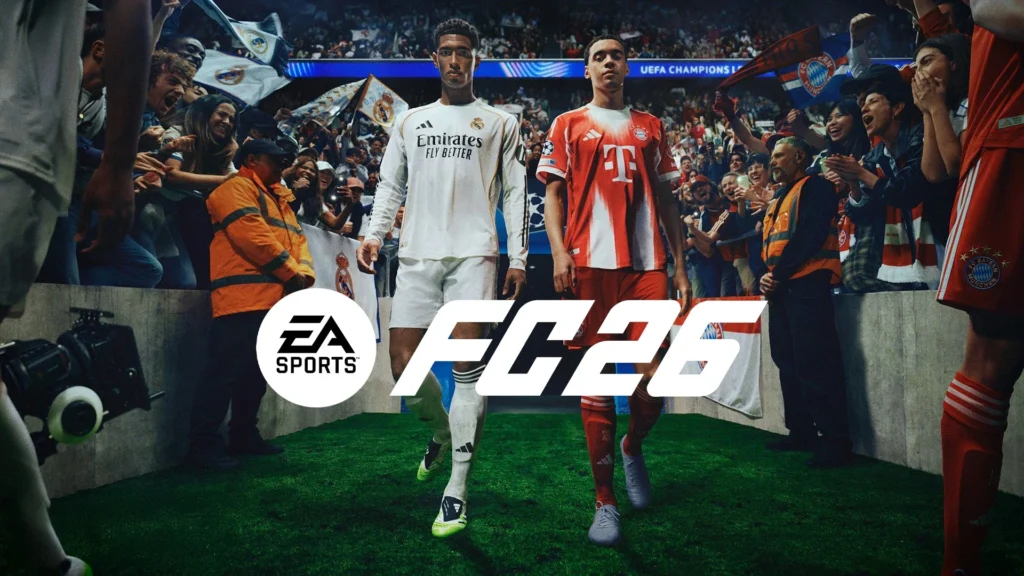
By December 2024, EA had released its second FIFA-free title, EA Sports FC 25. The results were mixed but telling.
Performance Metrics:
- Fiscal year 2025 net revenue: $7.463 billion
- Live services segment: Still 73%+ of total revenue
- FC 25 sales: Projected to decline mid-single digits year-over-year
- Metacritic user scores: 2.5-2.6 (down from FIFA 22’s 3.6-3.7)
The drop in quality ratings and sales momentum led to EA slashing its full-year revenue guidance in January 2025, causing the stock to sink. The company admitted FC 25 underperformed expectations, particularly in live services growth.
Still Massively Profitable Despite Struggles
Even with declining performance, EA Sports FC remains massively profitable. The company announced plans for a $1 billion accelerated share repurchase in February 2025, bringing total stock buybacks to $2.5 billion within the first year of its $5 billion authorization.
The ability to execute billion-dollar stock buybacks while experiencing sales declines shows how profitable the EA Sports FC franchise remains even without the FIFA name.
What FIFA Lost
$150 Million Annual Payment Gone
When EA walked away, FIFA lost its most lucrative commercial partnership. That $150 million annual payment was essentially passive income, requiring FIFA to do nothing except allow its name to be used.
FIFA president Gianni Infantino promised “the only authentic, real game that has the FIFA name will be the best one available for gamers and football fans.” He claimed FIFA would launch new games with third-party developers, leveraging a non-exclusive licensing model.
FIFA’s Gaming Strategy Post-EA
As of December 2025, FIFA has announced partnerships with:
Football Manager 26 (Sports Interactive/SEGA):
- Partnership announced October 2024
- Official 2026 World Cup branding only
- Does not replace FIFA football simulation game
FIFA Rivals (Mythical Games):
- Free-to-play mobile game
- Planned for summer 2025 release
- Not a direct competitor to EA Sports FC
Neither comes close to replacing EA’s $150 million annual payment or the cultural dominance FIFA the game provided to FIFA the organization.
The Ultimate Team Controversy
Legalized Gambling Targeted at Children?
While EA celebrates record profits, critics continue calling Ultimate Team legalized gambling targeted at children.
Several European countries have investigated or banned loot box mechanics:
- Belgium: Banned FIFA’s loot boxes in 2018
- Netherlands: Ordered EA to remove Ultimate Team packs
- UK Parliament: Investigated but stopped short of regulation
EA maintains Ultimate Team packs are “surprise mechanics” similar to Kinder Surprise eggs, not gambling. The company successfully defended this position in British court, despite widespread criticism from parents, addiction experts, and regulators.
The ethics remain hotly debated, but the revenue keeps flowing. EA shows no signs of changing the Ultimate Team model that generates 73% of company revenue.
Why EA’s Gamble Paid Off
EA’s decision to dump FIFA came down to three fundamental truths about their business.
1. Players Don’t Buy FIFA for FIFA
Surveys showed gamers bought FIFA games for real teams and players, not for FIFA branding. As long as EA retained Premier League, La Liga, UEFA, and player likenesses, the FIFA name added minimal value.
The FIFA organization provided nothing except a logo. The actual content came from separate licensing deals EA maintained with leagues, clubs, and players through FIFPRO.
2. Ultimate Team Is the Actual Product
With 73% of revenue from live services, EA isn’t really selling a football simulator. They’re selling a card-collecting platform that happens to use football as its theme. The FIFA name was irrelevant to that business model.
Players don’t spend $1,000 on Ultimate Team packs because the game says FIFA on the box. They spend because they’re addicted to opening packs and building teams with their favorite players.
3. The Player Base Is Locked In
EA controlled 150+ million registered accounts. Those players had invested years building Ultimate Team squads, learning the mechanics, and integrating the game into their social lives. They weren’t leaving because the logo changed.
Ultimate Team creates switching costs that traditional games don’t. Players who spent $500 building their FIFA 23 team aren’t abandoning that investment to play a competitor’s game. They migrate to FC 24 and keep spending.
The $7 Billion Business Model Revealed
How EA Generates $7+ Billion Annually
Revenue Streams:
- Base game sales: ~$1.9 billion (25% of total)
- Ultimate Team microtransactions: ~$1.6-2 billion annually
- FIFA Mobile: ~$320 million quarterly
- Season passes and battle passes: ~$500 million
- Esports partnerships and licensing: ~$200 million
- EA Play subscription service: Undisclosed but growing
Cost Structure:
- Game development: ~$200-300 million per title
- League and team licensing: ~$800 million-1 billion annually (Premier League alone cost $600 million for six years)
- Marketing: ~$300-500 million for major releases
- Player operations and servers: ~$400 million
- FIFA licensing (historical): $150 million annually until 2023
Even without FIFA’s name, EA’s profit margins remain enormous. The company generates approximately $4-5 billion in operating profit annually from the EA Sports FC franchise and related services.
What’s Next for EA Sports FC?
$7.6-8 Billion Projected for Fiscal 2026
EA projects net bookings of $7.6-8 billion for fiscal year 2026, showing confidence in continued growth despite losing the FIFA brand.
The company’s strategy focuses on:
- Expanding mobile gaming: FIFA Mobile saw double-digit growth in FC 25
- Growing EA Play subscription ecosystem: Recurring revenue from subscription services
- Adding more live service content: Seasonal events and limited-time modes
- Integrating FC into EA’s broader entertainment platform: Cross-promotion with other EA titles
CEO Andrew Wilson described the vision as creating “the largest and most impactful football club in the world, at the epicenter of football fandom.”
Meanwhile, FIFA scrambles to prove its name still matters without EA’s technology, distribution, or player base.
The Bottom Line: EA Proved FIFA Was Just a Logo
EA Sports didn’t just survive losing the FIFA name. They proved the FIFA brand was never the source of their $7 billion empire.
The 30-Year Partnership:
- EA paid FIFA $150 million annually for four letters on a box
- FIFA got to associate its scandal-plagued organization with the world’s most popular football game
- The partnership rehabilitated FIFA’s image with millions of young fans
When FIFA Demanded More:
- FIFA wanted $300 million annually plus revenue sharing from Ultimate Team
- FIFA demanded non-exclusive licensing to sell its name to competitors
- EA called their bluff and walked away
The Results:
- FIFA 23: Most successful FIFA game ever made
- EA Sports FC 24: Proved fans would follow EA regardless of branding
- EA saved: $150 million per year in licensing fees
- EA retained: Every meaningful licensing deal (leagues, teams, players)
Even with FC 25’s struggles in late 2024, EA remains the undisputed king of football gaming with 73% of revenue from Ultimate Team microtransactions, $7+ billion in annual revenue, and 150+ million registered players who aren’t going anywhere.
The $7 billion question was never whether EA needed FIFA. It was whether FIFA needed EA.
The answer is now painfully clear. FIFA lost its biggest commercial partner and gained nothing but empty promises about future game releases that may never match EA’s dominance. EA turned a football simulator into a microtransaction empire worth billions and proved the FIFA name was just marketing overhead they no longer needed to pay.