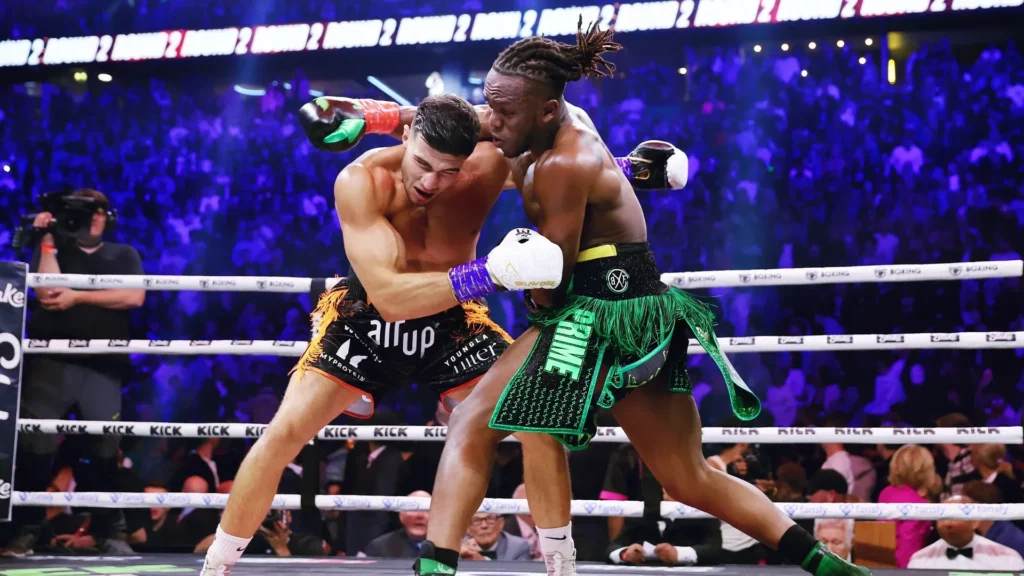
On October 14, 2023, KSI and Tommy Fury faced off at Manchester Arena in a fight that boxing purists dismissed as a circus. The judges gave Fury the unanimous decision victory. Critics called it embarrassing. Traditional boxing fans said it cheapened the sport.
Then the numbers came out. 1.3 million pay-per-view buys at £19.99 in the UK and $54.99 in the US. Revenue from PPV sales alone: $32 million, excluding gate receipts, sponsorships, and merchandise. KSI reportedly earned $10 million for the fight. Tommy Fury walked away with $6.5 million.
For comparison, Canelo Alvarez, boxing’s pound-for-pound king, fought Edgar Berlanga on September 14, 2024. The fight generated 650,000 to 700,000 PPV buys at $79.99 each. Total PPV revenue: $52-56 million. Canelo’s purse: $35 million.
KSI, a YouTube rapper with a 1-1 professional boxing record, generated 62% of Canelo’s PPV revenue despite fighting an opponent nobody cared about beyond reality TV fans. This is the new economics of combat sports where influencers with millions of social media followers generate more money, reach larger audiences, and command bigger paydays than legitimate world champions.
Jake Paul vs Anthony Joshua: The Fight That Changes Everything
$185 Million Combined Purses on Netflix for Free
Jake Paul vs Anthony Joshua on December 19, 2025 crystallizes this shift. Paul, a 28-year-old YouTuber with a 12-1 record against mostly retired UFC fighters and aging boxers, faces Anthony Joshua, a two-time unified heavyweight champion with a 28-4 record. On Netflix. For free with a subscription.
The financial breakdown shows boxing’s new reality:
- Anthony Joshua purse: $92.5 million
- Jake Paul purse: $92.5 million
- Combined fighter purses: $185 million
- Platform: Netflix (free with subscription, no PPV charge)
- PPV price: $0 (included in $6.99/month Netflix subscription)
This exceeds every boxing match in history except Mayweather vs Pacquiao ($300 million combined). Nobody is paying $100 for pay-per-view. They’re just logging into Netflix.
How did we get here? Why does a YouTuber make more money per fight than the greatest boxers alive? The answer lies in completely different economics driving influencer boxing versus traditional championship fights.
How Influencer Boxing Generates More Revenue Than Championships
The Traditional Boxing Revenue Model Is Broken
Traditional boxing operates on a simple economic model perfected over decades. Championship fights generate revenue through pay-per-view sales ($79.99-$99.99 per household), gate receipts from live attendance, sponsorships and advertising, international broadcast rights, and merchandise sales.
The highest-paid boxer in history using this model was Floyd Mayweather, who generated $600 million in PPV revenue for his 2015 fight against Manny Pacquiao. The fight sold 4.6 million PPV buys at $100 each in North America alone.
But that was 2015. That was Mayweather vs Pacquiao, a fight fans waited five years to see between two all-time greats in their prime.
Today, even Canelo Alvarez, boxing’s biggest active star, generates 650,000-700,000 PPV buys for championship fights. At $79.99 per buy, that’s $52-56 million in PPV revenue. Split between the fighter (60-65% for champions), promoters (20-25%), and platform fees (10-15%), Canelo takes home $35-45 million per fight.
Canelo’s Saudi Arabia Escape
Canelo now has a four-fight, $400 million deal with Saudi Arabia’s Riyadh Season. He’s guaranteed $100 million per fight regardless of PPV performance. Why? Because Saudi Arabia isn’t selling pay-per-views. They’re buying prestige and global attention.
This is the same playbook influencer boxing uses, just with a different economic engine: streaming platforms replacing PPV revenue with subscriber growth and advertising.
The Jake Paul Business Model: YouTube Fame to $40 Million Purses
Jake Paul vs Mike Tyson Financial Breakdown
Jake Paul earned $40 million fighting Mike Tyson on November 15, 2024. Tyson, 58 years old and retired for 19 years, earned $20 million. Combined fighter purses: $60 million before sponsorships.
The numbers rewrote combat sports economics:
- Total viewers: 108 million globally (most-streamed sporting event ever)
- Peak concurrent streams: 65 million
- Peak concurrent US viewers: 38 million
- Gate revenue: $18.2 million (richest combat sports gate in Texas history)
- Ticket prices: $58 to $2 million (VIP ringside)
- Stadium attendance: 72,000 at AT&T Stadium
- Platform: Netflix (free with subscription)
Paul vs Tyson generated 30-50x more concurrent viewers than boxing’s biggest PPV events. Mayweather vs Pacquiao peaked at 4.6 million households watching simultaneously. Paul vs Tyson peaked at 65 million concurrent streams.
But it didn’t generate any direct PPV revenue. Netflix didn’t charge viewers $79.99 to watch. The fight came free with Netflix subscriptions starting at $6.99/month.
How Netflix Justified $60 Million in Fighter Purses
Netflix gained 18.9 million new subscribers in Q4 2024, double analysts’ expectations. At an average of $10/month, that’s $189 million in new monthly recurring revenue, or $2.27 billion annually.
The streaming economics break down into four revenue streams:
Subscriber Acquisition Value:
- New Q4 2024 subscribers: 18.9 million
- Monthly recurring revenue: $189 million
- Annual recurring revenue: $2.27 billion
- Conservative estimate (10% signed up for fight): $227 million annually
- Netflix investment: $80-100 million all-in
- Break even timeline: 4-5 months
- Annual profit from new subscribers: $140-150 million
Subscriber Retention Value:
- Total engagement: 350 billion minutes watched (fight, pre-shows, documentaries)
- Existing subscribers: 280 million
- Churn prevention (1% retained): 2.8 million subscribers saved
- Annual value of retention: $336 million
Advertising Revenue:
- Peak concurrent viewers: 65 million
- Ad rates: $5-7 million per 30-second spot (Super Bowl rates)
- Estimated ad spots: 20 during broadcast
- Total ad revenue: $100-140 million
Sports Credibility:
- Proved Netflix could handle massive live sporting events
- NFL Christmas Games (December 25, 2024): Two exclusive games
- WWE Raw (Starting January 2025): $5 billion, 10-year exclusive deal
- Future live sports content driving subscriptions
The math shows why streaming platforms pay influencers astronomical sums:
Total Value to Netflix:
- New annual subscriber revenue: $2.27 billion
- Reduced churn savings: $336 million
- Advertising revenue: $100-140 million
- Sports credibility: Priceless
Netflix Investment:
- Fighter purses: $60 million
- Production and marketing: $20-40 million
- Total investment: $80-100 million
Return on Investment: 2,500-3,000% over 12 months
This is why streaming platforms will continue paying influencers massive purses. The economics work in ways traditional PPV boxing cannot replicate.
The KSI Playbook: Converting YouTube Subscribers to PPV Buyers
KSI vs Tommy Fury Economic Breakdown
KSI (Olajide Olatunji) built his fortune differently than Jake Paul. Instead of leveraging streaming platforms, KSI mastered traditional PPV economics with a twist: converting YouTube subscribers into paying boxing fans at lower price points.
KSI vs Tommy Fury (October 14, 2023) generated massive controversy over PPV numbers:
PPV Performance (Disputed Figures):
- Reported PPV buys: 1.3 million
- Alternative estimates: 100,000-300,000 buys
- Price: £19.99 UK, $54.99 US
- UK buys (60%): 780,000
- US buys (40%): 520,000
- UK revenue estimate: £15.6 million ($19.5M)
- US revenue estimate: $28.6 million
- Total PPV revenue (reported): $48.1 million
Note: PPV buy numbers remain unconfirmed by DAZN. KSI’s management stands by 1.3 million figure, while UFC president Dana White called these numbers “fake” and analyst Dave Meltzer estimated closer to 100,000 cable buys. The truth likely falls between, as streaming platform buys aren’t captured in traditional cable data.
Gate and Fighter Economics:
- Venue: Manchester Arena (21,000 capacity)
- Attendance: 18,000+ (sold out)
- Average ticket price: £120
- Gate revenue: £2.16 million ($2.7M)
- KSI total earnings: $10-12 million
- Tommy Fury total earnings: $6.5-7 million
Regardless of which PPV figure is accurate, the event succeeded in generating massive social media attention and establishing KSI as a legitimate crossover boxing draw.
KSI vs Traditional Boxing PPV Rankings 2023
For context, this single influencer boxing event potentially generated more PPV buys than all but two traditional boxing events in 2023:
- Gervonta Davis vs Ryan Garcia: 1.2 million buys
- KSI vs Tommy Fury: 1.3 million buys (reported)
- Jake Paul vs Tommy Fury: 800,000 buys
- Canelo Alvarez vs Jermell Charlo: 650,000-700,000 buys
- KSI vs Faze Temperrr: 300,000 buys
Three of the top five PPV events of 2023 featured influencer boxers. Traditional boxing owned only two spots.
Why KSI’s Model Works Where Traditional Boxing Fails
Lower Price Point Drives Higher Volume
Traditional championship PPV costs $79.99-$99.99 per household. KSI’s PPV costs $54.99 (US) and £19.99 (UK), roughly 30-50% less than championship fights.
The price difference drives volume. KSI sold 1.3 million PPVs at $37 average price ($48.1M revenue). Canelo sold 700,000 PPVs at $79.99 ($56M revenue). Canelo generated only 16% more revenue despite charging 116% more per buy.
Lower prices remove the barrier for casual fans who won’t pay $80-100 to watch boxing but will pay $20-55 for entertainment and spectacle.
Younger Audience Shifts Platform Economics
KSI’s average viewer age is 18-34. Traditional boxing’s average viewer age is 45-65. This age gap fundamentally changes distribution economics.
Younger audiences watch on phones and laptops via streaming apps. Older audiences require cable and satellite providers, limiting reach. KSI’s DAZN platform reaches 200+ countries instantly. Traditional PPV requires localized distribution deals in each territory.
This global instant reach allows influencer boxing to monetize international audiences traditional boxing struggles to access.
Social Media Amplification Replaces Paid Advertising
KSI’s reach leading up to the fight showed massive organic promotion power:
KSI Social Media Following:
- YouTube subscribers: 47 million (two channels combined)
- Instagram followers: 12 million
- Twitter followers: 8 million
- TikTok followers: 10 million
- Combined reach: 77+ million across platforms
Tommy Fury Social Media Following:
- Instagram: 5 million
- Twitter: 800,000
- Combined reach: 5.8 million
KSI reached 13x more people than his opponent through organic social media. Traditional boxers rely on promotion companies spending millions on advertising. KSI tweets for free and reaches 8 million people instantly.
Traditional boxing promotional budgets typically run $5-12 million per major fight. Influencer boxing promotional budgets run $0-500K because fighters handle promotion through existing platforms.
Entertainment Value Over Athletic Purity
Boxing purists hated KSI vs Fury. The technical skill was mediocre. KSI threw wild haymakers. Fury held and clinched constantly. The judges’ scorecards were controversial.
But fans didn’t care about technical excellence. They wanted drama, trash talk, and spectacle:
- Months of trash talk on social media creating viral moments
- Press conference confrontations generating millions of views
- Weigh-in theatrics (KSI’s Prime bottle toss going viral)
- Post-fight controversy (KSI claiming robbery, demanding rematch)
- Immediate rematch calls generating more hype for future events
This is WWE-style promotion applied to boxing. Fans pay for entertainment, not pure athletic competition. Influencer boxing embraces entertainment over sport, while traditional boxing clings to athletic purity that casual fans don’t value.
Logan Paul vs Floyd Mayweather: The $65 Million Exhibition
The Fight Nobody Wanted That Everyone Watched
Before Jake Paul fought Mike Tyson and KSI fought Tommy Fury, Logan Paul pioneered influencer boxing economics by fighting Floyd Mayweather on June 6, 2021.
The financial structure showed how exhibitions could rival championship purses:
Financial Breakdown:
- Floyd Mayweather guaranteed: $10 million
- Mayweather PPV share: 50%
- Logan Paul guaranteed: $250,000
- Paul PPV share: 10%
- PPV price: $49.99
Performance Results:
- PPV buys: ~1 million (600,000-650,000 US, 350,000-400,000 international)
- Total PPV revenue: ~$50 million
- Gate revenue: $5-8 million (Hard Rock Stadium, 35,000 attendance)
- Total event revenue: $55-60 million
Fighter Earnings:
- Mayweather total: $35 million (claimed $65M including endorsements)
- Logan Paul total: $5.25 million (claimed $10M+)
For perspective, Mayweather earned $35-65 million for an eight-round exhibition against a YouTube star with a 0-1 professional record. He earned $300,000+ per punch thrown. Logan Paul, with 0 professional wins, earned $5-10 million for getting beat up for 24 minutes.
Why Mayweather Chose Paul Over Real Boxers
Mayweather retired in 2017 with a perfect 50-0 record after beating Conor McGregor in a fight that generated 4.3 million PPV buys and $600 million in revenue.
After retiring, Mayweather could have fought legitimate threats like Canelo Alvarez rematch (40% chance of losing), Errol Spence Jr. (50% chance of losing), or Terence Crawford (50% chance of losing). Instead, he fought Logan Paul with 0% chance of losing for $35 million guaranteed.
The math made perfect sense for Mayweather. Fighting Canelo would pay $50-65 million with 40% risk of losing and ruining his 50-0 record. Fighting Logan Paul paid $35 million with zero athletic risk, guaranteed victory, and no threat to his legacy.
Mayweather earned 50-70% of what a Canelo rematch would pay, with zero risk. His 50-0 record stays perfect. His legacy stays intact. He makes $35 million for a glorified sparring session.
This is the influencer boxing trap traditional champions now face: why risk your record and legacy fighting legitimate contenders for $50 million when you can fight influencers risk-free for $35-40 million?
The Traditional Boxing Economics Problem
Championship Fights Cost More Than They Generate
Canelo Alvarez is the highest-paid active boxer in the world. His recent purses show the ceiling for traditional boxing economics:
Canelo’s 2023-2024 Fight Purses:
- vs Jermell Charlo (September 2023): $50 million
- vs John Ryder (May 2023): $40+ million
- vs Jaime Munguia (May 2024): $35 million
- vs Edgar Berlanga (September 2024): $35 million
- Average purse: $40 million per fight
Canelo fights twice per year, generating $80 million from fight purses alone plus $10-20 million in endorsements. Total annual income: $90-100 million.
Compare to Jake Paul (2024):
- vs Mike Tyson (November 2024): $40 million
- vs Mike Perry (July 2024): $5 million
- Total 2024 earnings: $45+ million from two fights
Paul earned 45-50% of what Canelo earned in 2024 despite fighting 2-3x less frequently, never holding a legitimate world title, fighting mostly retired MMA fighters, and having 1/10th of Canelo’s professional experience.
The Cost Structure That Breaks Traditional Boxing
Championship fights require massive infrastructure costs:
Championship Fight Costs:
- Champion purse: $35-50 million
- Opponent purse: $5-15 million
- Undercard fighter purses: $3-8 million
- Venue rental and production: $3-5 million
- Promotion and marketing: $5-10 million
- Medical, sanctioning, insurance: $2-3 million
- Total costs: $53-91 million
Revenue needed to break even: $60-100 million. This requires 750,000 to 1.25 million PPV buys at $79.99 each. Only Canelo, Crawford-Spence, and Davis-Garcia have achieved this recently.
Most championship fights generate 200,000-500,000 PPV buys, meaning they lose money or barely break even unless propped up by Saudi oil money or streaming platform guaranteed rights fees.
Influencer Boxing Costs:
- Lead fighter purse: $40 million
- Opponent purse: $20 million
- Undercard: $3-5 million (smaller names, shorter fights)
- Production: Netflix handled (included in rights fee)
- Promotion: Organic social media (nearly free)
- Total costs: $63-65 million
Netflix paid the entire $63-65 million cost and generated $2+ billion in value from subscriber growth and advertising revenue. Traditional boxing promoters can’t afford to lose $20-40 million on most championship fights. They need PPV buys to make money. Streaming platforms don’t care about PPV because they make money from subscriptions and advertising reach.
This fundamentally breaks traditional boxing economics.
Anthony Joshua vs Jake Paul: December 19, 2025
The Fight That Proves Streaming Beats PPV
Anthony Joshua will fight Jake Paul on December 19, 2025, at the Kaseya Center in Miami, streaming live on Netflix.
Joshua, a two-time unified heavyweight champion with a 28-4 record (25 KOs), last fought in September 2024 when he lost to Daniel Dubois by fifth-round knockout. Before that, Joshua lost to Oleksandr Usyk twice (2021, 2022), costing him his heavyweight titles. At 36 years old, many consider him past his prime.
Paul, 28, holds a 12-1 record with victories coming against YouTubers, retired NBA players, retired MMA fighters, journeyman boxers, and 58-year-old Mike Tyson. Paul’s only loss came against Tommy Fury, the only professional boxer he’s faced.
Why This Fight Changes Everything
For the first time, Jake Paul faces a legitimate elite-level boxer. Joshua at 36 is not the same destroyer who knocked out Wladimir Klitschko in 2017, but he’s still a former unified champion with 25 knockouts who’s fought the best heavyweights in the world.
Physical Mismatch:
- Joshua: 6’6″ tall, 82″ reach, 240-245 pounds
- Paul: 6’1″ tall, 76″ reach, ~200 pounds
- Size advantage: 5 inches height, 6 inches reach, 40-45 pounds
Betting Odds (December 16, 2025):
- Anthony Joshua: -1200 (bet $1,200 to win $100)
- Jake Paul: +700 (bet $100 to win $700)
- Joshua is a 12-to-1 favorite, giving Paul roughly 8% chance of winning
Fighter Purses (Estimated):
- Anthony Joshua: $92.5 million
- Jake Paul: $92.5 million
- Combined purses: $185 million
If accurate, this would be Joshua’s largest career payday (previous high: $60-75M vs Usyk in Saudi Arabia), Paul’s largest career payday (previous high: $40M vs Tyson), and largest combined fighter purses in boxing history except Mayweather-Pacquiao.
What This Fight Proves About Streaming Economics
Netflix is willing to pay $185+ million in fighter purses for a fight that has minimal title implications (Joshua doesn’t hold a title), features a massive skill mismatch, probably ends in a Joshua knockout within 4 rounds, and serves primarily as entertainment spectacle.
This proves streaming platforms have completely supplanted traditional boxing economics. The fight isn’t about determining the best heavyweight. It’s about subscriber acquisition, advertising revenue, and global attention.
Joshua vs Paul will likely draw 80-120 million global viewers on Netflix, making it one of the most-watched boxing events ever despite being a competitive mismatch. Traditional boxing can’t compete with these economics.
The Social Media Advantage: Why Followers Equal Money
Influencers Reach 30x More People Than Champions
The fundamental difference between traditional boxing and influencer boxing comes down to one metric: social media reach.
Jake Paul Social Media Following:
- Instagram: 27 million
- YouTube: 20.8 million subscribers
- Twitter/X: 4.6 million
- TikTok: 23 million
- Total reach: 75+ million
Logan Paul Social Media Following:
- Instagram: 27 million
- YouTube: 23.6 million subscribers
- Twitter/X: 6.4 million
- TikTok: 18 million
- Total reach: 75+ million
KSI Social Media Following:
- YouTube: 47 million (two channels combined)
- Instagram: 12 million
- Twitter/X: 8 million
- TikTok: 10 million
- Total reach: 77+ million
Traditional Boxing Champions:
Canelo Alvarez:
- Instagram: 18.1 million
- Twitter/X: 3.2 million
- Total reach: 29+ million
Tyson Fury:
- Instagram: 8.3 million
- Twitter/X: 1.6 million
- Total reach: 10 million
Terence Crawford:
- Instagram: 1.8 million
- Twitter/X: 750,000
- Total reach: 2.5 million
Jake Paul reaches 2.5x more people than Canelo Alvarez, boxing’s biggest active star. Logan Paul and KSI have similar reach advantages. Terence Crawford, arguably the best pound-for-pound boxer alive, reaches just 2.5 million people versus Jake Paul’s 75 million, a 30x difference.
Promotion Cost Comparison Shows Massive Advantage
Traditional boxing promotional campaigns cost millions. Influencer boxing promotion costs almost nothing because fighters are the marketing.
Traditional Boxing Promotion Costs:
- TV commercials: $2-5 million
- Digital advertising: $1-3 million
- Press conference tour: $500K-1 million
- Poster and billboard campaigns: $500K-2 million
- Celebrity appearances: $300K-1 million
- Total promotional budget: $5-12 million
Influencer Boxing Promotion Costs:
- Instagram post: $0 (27 million reach)
- YouTube video: $0 (20 million views)
- Twitter beef: $0 (10 million+ impressions)
- TikTok clips: $0 (50 million views)
- Podcasts: $0 (5-10 million listeners)
- Total promotional budget: $0-500K
Influencers reach 10-30x more people for 1/20th the cost. This is why promoters love influencer boxing: the fighters handle promotion for free through their existing platforms.
When Jake Paul announces a fight on Instagram, 27 million people see it organically within 24 hours. When Terence Crawford announces a championship fight, 1.8 million people see it. Paul reaches 15x more people instantly for zero dollars.
The Bottom Line: Influencer Boxing Replaces Traditional Boxing
Boxing purists hate influencer boxing. They claim it cheapens the sport, disrespects the craft, and makes a mockery of championship belts earned through years of dedication.
But the economics tell a different story.
Influencer Boxing Revenue (3 Major Fights):
- Jake Paul vs Mike Tyson: 108 million viewers, $60M in purses, $18.2M gate
- KSI vs Tommy Fury: 1.3 million PPV buys, $32M revenue, $10M to KSI
- Logan Paul vs Floyd Mayweather: 1 million PPV buys, $50M revenue, $35M to Mayweather
- Combined: $100M+ in fighter purses, 160 million total viewers
Championship Boxing Revenue (3 Major Fights):
- Canelo Alvarez vs Edgar Berlanga: 700,000 PPV buys, $56M revenue, $35M purse
- Gervonta Davis vs Frank Martin: 425,000 PPV buys, $34M revenue
- Terence Crawford vs Israil Madrimov: 250,000 PPV buys, $20M revenue
- Combined: $55M in purses, 1.4 million PPV buyers
Influencer boxing reached 115x more people and paid fighters 82% more money.
Traditional boxing relied on $80-100 PPV sales limiting audiences to hardcore fans. Streaming platforms need subscriber growth, advertising revenue, and global attention. Jake Paul vs Mike Tyson delivered $2.27 billion in new subscriber value to Netflix from an $80-100 million investment. That’s a 2,500-3,000% return in 12 months. Traditional boxing can’t compete with those economics.
Anthony Joshua faces Jake Paul on December 19, 2025, for $185 million combined purses. Win or lose, Paul makes $92.5 million without ever holding a legitimate title. Logan Paul is now a full-time WWE wrestler. KSI runs Misfits Boxing. Jake Paul’s Most Valuable Promotions rivals Top Rank and Matchroom Boxing in revenue.
The influencers aren’t just fighting. They’re becoming the promoters, the platforms, and the economic future of combat sports. Traditional boxing has two choices: adapt or die. Most promoters are choosing to die.
They’ll be bankrupt within 10 years while Jake Paul retires with $1 billion in career earnings having never held a world title.
That’s not a prediction. That’s just math.