When Nike’s Spanish operations failed to return Jorge Messi’s phone calls in 2005, they probably didn’t think much of it. The father of an 18-year-old Barcelona prospect wanted some extra tracksuits. It seemed like a minor request from a minor player’s family. Nike said they’d get back to him. They didn’t.
That oversight cost Nike approximately $10 billion in market value and handed Adidas one of the most lucrative athlete partnerships in sports history. Today, Lionel Messi’s lifetime deal with Adidas reportedly worth $1 billion has become the cornerstone of the brand’s football identity, driving everything from product innovation to cultural relevance in ways that transcend traditional endorsement mathematics.
Partnership Evolution:
- 2005: Nike ignored Jorge Messi’s request for extra tracksuits
- 2006: Adidas signed 18-year-old Messi for $1M annually
- 2017: Lifetime deal estimated at $1B total (only footballer with such deal)
- 2022 World Cup: $424M event-related sales in Q4 alone
- 2023 Inter Miami: Stock jumped 10%, predicted $10B market cap boost
- Adidas market cap: $10B (2006) → $31.59B (2024), 216% growth
This is the story of how Adidas built its modern football empire around one of the two greatest players of all time. Not through outbidding competitors. Not through aggressive contract negotiations. But through answering the phone when it rang, and then spending 19 years proving they made the right call.
The $10 Billion Phone Call Nike Missed
The Request Nike Ignored
In 2005, Lionel Messi was still wearing Nike boots. The 18-year-old Argentine had just broken into Barcelona’s first team and was showing flashes of the genius that would define his career. But he wasn’t yet Messi. He was a prospect, talented but unproven, one of many young players Barcelona was developing.
Jorge Messi, Leo’s father and agent, had a simple request for Nike: send some extra athletic gear for his son. Training clothes, tracksuits, the basics. Leo was growing. He needed more stuff. It wasn’t a complicated ask. It definitely wasn’t worth millions of dollars.
The Fatal Oversight:
- 2005: Jorge Messi requested extra athletic gear for 18-year-old Leo
- Simple ask: Training clothes, tracksuits, the basics
- Neither Nike Iberia nor Nike South America returned calls
- Request went unanswered, then ignored
- Relationship soured over “a few hundred bucks worth of tracksuits”
- Meanwhile, Adidas was paying attention
The Response That Changed Everything
According to the book “Messi vs. Ronaldo: One Rivalry, Two GOATs, and the Era That Remade the World’s Game” by Jonathan Clegg and Joshua Robinson, neither Nike Iberia nor Nike South America bothered getting back to Jorge Messi. The request went unanswered. Then ignored. The relationship soured over what one source described as “a few hundred bucks worth of tracksuits.”
Meanwhile, Adidas was paying attention. When contract renewal discussions came up ahead of the 2006 World Cup, Adidas made an offer: $1 million per year for a young player who had barely established himself in European football. Nike could have matched. They chose not to.
Nike’s position was that they wouldn’t get into a bidding war over an 18-year-old. They had bigger fish to fry. They were preparing their 2006 World Cup campaign featuring established stars. Messi seemed like someone they could always circle back to later if he panned out.
Nike’s Fatal Decision:
- Adidas offered $1M annually (2006 World Cup)
- Nike could have matched, chose not to
- Position: Won’t bid for 18-year-old over tracksuits
- Had bigger fish (2006 World Cup established stars)
- Figured they could circle back later
- February 2006: Spanish judges ruled Messi free to join Adidas
The Legal Battle Nike Lost
Nike actually tried to prevent Messi from signing with Adidas. They took him to court in Spain, claiming breach of contract. The case hinged on what kind of agreement Messi had signed when he first joined Nike as a 14-year-old at Barcelona’s La Masia academy.
In February 2006, Spanish judges ruled in Messi’s favor. The document Nike presented wasn’t a binding agreement. It was a “commitment letter” that Messi had signed promising to wear Nike boots. But it had no legal enforcement mechanism. Messi was free to join Adidas. And he did, officially switching to the Three Stripes in February 2006.
Building the Messi Sub-Brand
The F50 and Beyond
Adidas didn’t just sign Messi to wear their boots and appear in ads. They built an entire ecosystem around him. The “Messi” became a sub-brand within Adidas Football, complete with signature boot lines, training equipment, apparel collections, and lifestyle products.
Messi’s first signature boot line was the F50 adiZero, launched in 2006. The boot was designed for speed and agility, perfectly matching Messi’s playing style. But Adidas went further. They created limited edition colorways for major tournaments. They released special packs tied to Messi’s milestones. They made the boot itself part of Messi’s story.
Messi Boot Evolution:
- 2006-2014: F50 adiZero (speed-focused, lightweight)
- 2015-2019: Messi sub-brand boots (specialized for his playing style)
- 2019-Present: X Speedflow, Nemeziz (performance innovation)
- 2023: F50 relaunch featuring Messi prominently
- Each generation told story of Messi’s evolution as player
From Athlete to Lifestyle Brand
Adidas understood something crucial about Messi that Nike had missed: his appeal extended far beyond football performance. They developed Messi clothing lines that people could wear off the pitch. Casual apparel. Training gear. Lifestyle collections.
In 2024, Adidas launched a revamped Essentials apparel range starring Lionel Messi and his wife Antonela Roccuzzo. This wasn’t about football. It was about Messi as a lifestyle figure, a family man, someone whose aesthetic extended into everyday life. The campaign contributed to double-digit growth in Sportswear product divisions.
Lifestyle Integration:
- Developed Messi clothing lines for off-pitch wear
- 2024: Essentials apparel range with wife Antonela Roccuzzo
- Positioned as lifestyle figure, not just football endorser
- Became pillar of Adidas’ entire brand architecture
- Appeared across multiple product categories and demographics
- Double-digit growth in Sportswear divisions
The 2017 Lifetime Deal That Shocked the Industry
Making History with Lifetime Contract
In February 2017, Adidas made a move that signaled just how valuable Messi had become. They signed him to a lifetime contract, making him the only footballer in history with such a deal from a major sportswear brand. The terms weren’t publicly disclosed, but industry experts estimated the deal at $25 million annually with the potential to exceed $1 billion over Messi’s lifetime.
The lifetime deal wasn’t just about paying Messi more money. It was about locking in exclusivity for his entire post-playing career. When Messi retires from professional football, he’ll still be an Adidas athlete. His coaching ventures, business projects, media appearances, all of it will feature the Three Stripes.
Lifetime Deal Details:
- February 2017: Lifetime contract signed (only footballer with such deal)
- Estimated $25M annually, potential $1B+ over lifetime
- Includes base salary, performance bonuses, product royalties, profit-sharing
- Exclusivity for entire post-playing career
- Coaching, business projects, media appearances all Adidas
- Similar to Nike-Jordan, but while Messi still actively playing
Betting on the Unfinished Story
This mirrored what Nike had done with Michael Jordan, though with one crucial difference: Jordan’s deal came after he’d already won six NBA championships and established himself as the greatest basketball player ever. Messi’s came while he was still actively playing and chasing the one trophy that had eluded him, the World Cup.
Adidas was betting that Messi’s story wasn’t finished. That the best chapters might still be ahead. That investment paid off spectacularly five years later in Qatar.

🥇 Adidas Unisex F50 Messi Pro Firm Ground – Professional Football Boots
🛒 Shop Now on AmazonThe 2022 World Cup: When Everything Aligned
The Trophy That Changed Everything
On December 18, 2022, Lionel Messi lifted the FIFA World Cup trophy in Qatar. Argentina had beaten France in one of the greatest finals in tournament history. Messi had scored twice. He had finally won the only major trophy that had eluded him. Within hours, Adidas couldn’t keep Messi jerseys in stock anywhere in the world.
The World Cup victory transformed Messi from one of the greatest players of his generation into an undisputed legend. And Adidas had exclusive rights to every piece of merchandise, every campaign, every celebration that followed.
2022 World Cup Impact:
- $424M event-related sales: Q4 2022 alone
- 30% growth: Soccer merchandise first nine months 2022
- Argentina jerseys: Sold out globally before final
- Resale market: $500 for Messi jerseys on StockX
- Match-worn jerseys: Six sold at Sotheby’s for $7.8M (third-highest sports memorabilia)
- Only Jordan’s 1998 Finals jersey ($10.1M) and Maradona’s “Hand of God” ($9.28M) sold for more
The Numbers Behind the Frenzy
Six of Messi’s match-worn jerseys from the 2022 World Cup later sold at Sotheby’s for $7.8 million, the third-highest price ever paid for sports memorabilia. Only Michael Jordan’s 1998 NBA Finals jersey ($10.1 million) and Diego Maradona’s “Hand of God” jersey ($9.28 million) had sold for more.
The numbers validated everything Adidas had bet on. The lifetime deal. The sub-brand investment. The patient building of Messi’s cultural icon status. When the moment finally arrived, Adidas was positioned to capture every dollar of value it created.
The Inter Miami Effect: Conquering America
The Move That Shocked the World
When Messi announced he was joining Inter Miami in Major League Soccer in June 2023, rejecting a $1.6 billion offer from Saudi Arabia and turning down a return to Barcelona, Adidas’ stock jumped. Analysts at Bernstein upgraded Adidas from “Market Perform” to “Outperform,” citing Messi’s move as a catalyst for U.S. market share growth.
They predicted the Messi effect could boost Adidas’ market cap by $10 billion. They weren’t wrong. The stock price rose nearly 10% in the weeks following the announcement. But the financial impact went far beyond share price movement.
Inter Miami Impact:
- June 2023: Rejected $1.6B Saudi offer, chose Inter Miami MLS
- Adidas stock jumped 10% in weeks following announcement
- Bernstein predicted $10B market cap boost
- 60% increase in Messi microsite visits (YoY)
- 40%+ increase in kids’ soccer section visits
- Inter Miami Instagram: 1M → 8.1M followers in days
The American Football Revolution
Messi’s arrival in MLS represented something unprecedented in American sports marketing. This wasn’t just a star athlete joining a league. This was arguably the most famous athlete on the planet choosing America over astronomical Saudi money at a moment when U.S. soccer culture was exploding.
Inter Miami Instagram followers jumped from 1 million to 8.1 million in days, more than any NFL, MLB, NHL, or MLS team. Inter Miami jersey became highest-selling jersey across North America. Secondary market ticket prices increased 1,034% for Messi’s debut match, with lowest-listed resale price jumping from $30 to $810.
U.S. Market Penetration:
- Inter Miami jersey: Highest-selling across North America
- Secondary ticket prices: 1,034% increase for debut ($30 → $810)
- Adidas included profit-sharing on ALL MLS jersey sales (not just Inter Miami)
- Similar to Nike-Jordan royalties structure
- Messi became partner in entire North American soccer business
- Timing perfect: 18 months before U.S. co-hosts 2026 World Cup
Adidas reportedly included a profit-sharing arrangement in Messi’s Inter Miami contract, giving him a percentage of all MLS jersey sales across the league, not just Inter Miami. This was similar to Nike’s deal with Michael Jordan, where he received royalties on every pair of Air Jordans sold.
Why This Partnership Works When Others Don’t
Authentic Product Development
The sports marketing landscape is littered with failed athlete endorsements. Brands pay huge sums for athletes who never move the needle. The Adidas-Messi partnership has avoided all these pitfalls. Adidas doesn’t just slap Messi’s name on existing products. They involve him in actual product development.
Messi tests boots. He provides feedback on fit, touch, traction. His playing style directly influences design choices in ways that make the products genuinely better for high-level footballers. This authenticity matters. When professional and amateur players buy Messi boots, they’re buying products refined through feedback from one of the two greatest players ever.
Why This Succeeds:
- Authentic product development: Messi tests boots, provides feedback on fit/touch/traction
- Cultural relevance beyond football: Modest, hardworking, family man, avoided scandal
- The Ronaldo factor: Rivalry drives massive engagement (Adidas vs Nike, Messi vs Ronaldo)
- Long-term consistency: 19 years with same brand, no switching
- Partnership not sponsorship: Profit-sharing, lifetime commitment, aligned incentives
Cultural Relevance Beyond Football
Messi’s appeal extends into lifestyle, fashion, and popular culture in ways that transcend sports. He’s modest, hardworking, dedicated, a family man who avoided scandal throughout his career. These qualities make him marketable across demographics that might not care about football.
Adidas has leveraged this by positioning Messi in campaigns alongside his wife Antonela, in lifestyle contexts, in product categories having nothing to do with performance football. They’ve made him part of Adidas’ broader cultural narrative rather than siloing him in the sports segment.
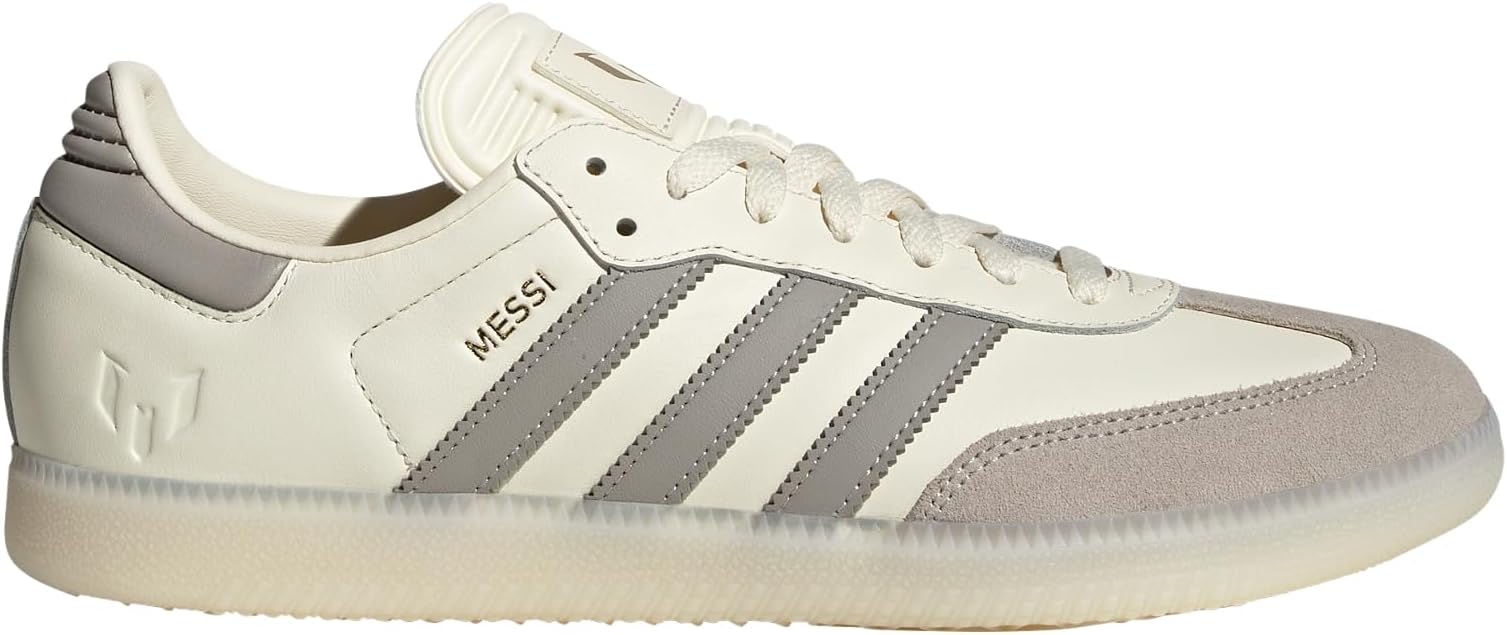
⚽ adidas Lionel Messi x Samba Indoor Men’s Sneakers – Signature Collection
🛒 Shop Now on AmazonThe Financial Reality Check
The Actual Numbers
Let’s talk actual numbers. How much value has Messi actually created for Adidas? Adidas market cap in 2006 when Messi signed was $10 billion. By 2024, it reached $31.59 billion, a growth of $21.59 billion representing 216% increase. Obviously, Messi isn’t solely responsible for this growth, but analysts estimate that Messi’s influence on Adidas’ football business alone justifies his lifetime contract many times over.
One Bernstein analyst estimated in 2023 that Messi’s move to MLS could increase Adidas’ market cap by $10 billion just from improved U.S. market positioning. That’s 10x the estimated value of his lifetime deal from a single move he made.
Market Value Growth:
- 2006 (Messi signed): $10B market cap
- 2024: $31.59B market cap
- Growth: $21.59B (216% increase)
- Bernstein estimate: MLS move alone could add $10B market cap
- That’s 10x his estimated $1B lifetime deal value
The Opportunity Cost Nike Paid
Let’s look at it from Nike’s perspective. They chose not to match Adidas’ $1 million annual offer in 2006. They refused to enter a bidding war over tracksuits and gear for an 18-year-old’s family. That decision has likely cost Nike tens of billions in lost revenue over the past 19 years when you factor in Messi jersey sales (hundreds of millions annually), signature boot sales (major percentage of football boot market), brand association with World Cup victory, and U.S. market penetration through MLS.
Nike had Messi. They just didn’t value him correctly when it mattered. By the time they realized their mistake, he was gone. And Adidas had built the kind of relationship that money alone couldn’t break.
Nike’s Lost Opportunity:
- Chose not to match $1M annual offer over tracksuits
- Lost Messi jersey sales (hundreds of millions annually)
- Lost signature boot sales (major football boot market percentage)
- Lost World Cup victory brand association
- Lost U.S. market penetration through MLS
- Tens of billions in lost revenue over 19 years
What This Means for Brand Building
Five Lessons from the Greatest Partnership
The Adidas-Messi partnership offers several lessons that extend far beyond sports marketing. First, small details matter. Nike lost Messi over unreturned phone calls and a few hundred dollars in tracksuits. Adidas won him by being responsive and treating Jorge Messi’s requests seriously even when Leo was just a prospect.
Second, think lifetime, not campaign cycles. Most brands approach athlete partnerships as 3-5 year deals tied to specific campaigns. Adidas took a different approach with Messi, building a relationship designed to span his entire career and beyond. This longer time horizon allowed them to accumulate compound value.
Five Key Lessons:
- Small details matter: Lost over unreturned calls, won by being responsive
- Think lifetime not cycles: 19-year relationship vs typical 3-5 year deals
- Authenticity beats production: Genuine campaigns feel true to who Messi is
- Cultural timing creates exponential value: MLS 2023, 18 months before 2026 World Cup
- Partnership beats sponsorship: Profit-sharing and aligned incentives drive different behavior
Third, authenticity beats production value. The most successful Messi campaigns aren’t the ones with biggest budgets. They’re the ones that feel genuine to who Messi is: humble, hardworking, family-oriented. Fourth, cultural timing creates exponential value. Messi joining MLS happened 18 months before the U.S. co-hosts the 2026 World Cup, as soccer culture was exploding among American youth.
Fifth, partnership beats sponsorship. The profit-sharing arrangements, the lifetime commitment, the authentic product development create alignment of incentives that drives different behavior than pure spokesperson relationships.
The Legacy That’s Still Being Written
The Post-Playing Years Ahead
Lionel Messi is 38 years old as of 2025. His playing career is entering its final chapters. But his Adidas partnership? That’s just getting started in some ways. The lifetime deal means Adidas has Messi for his coaching career, his punditry, his business ventures, his foundation work, every chapter of his post-playing life.
Michael Jordan retired from basketball in 2003. Twenty-two years later, Jordan Brand revenue exceeded $6 billion annually. The post-playing years can be more valuable than the playing years if managed correctly. Adidas is positioning Messi to be their Jordan.
The Jordan Model:
- Lifetime deal locks in post-playing career
- Jordan retired 2003, 22 years later Jordan Brand revenue $6B+ annually
- Post-playing years can be MORE valuable than playing years
- Adidas positioning Messi as their Jordan
- Sub-brand structure, cultural positioning, profit-sharing
- Multi-generational brand asset strategy
Early Signs of Success
Will it work? The early signs are promising. Messi’s World Cup victory in 2022 cemented his legacy in ways that transcend football. His move to MLS opened the massive U.S. market. His continued relevance despite age shows the power of his brand extending beyond pure athletic performance.
Adidas market cap growth, football revenue increases, U.S. market penetration, and cultural relevance in soccer all trace back to decisions they made in 2006 when they chose to answer the phone that Nike ignored.
The Bottom Line
The Adidas-Messi partnership will be studied for decades as a masterclass in long-term brand building through authentic athlete relationships. It generated over $424 million in event-related sales during Q4 2022 alone, drove 216% market cap growth from $10B to $31.59B, and positioned Adidas to dominate the U.S. soccer market ahead of the 2026 World Cup.
Why This Matters:
- Nike lost $10B+ opportunity over unreturned calls about tracksuits
- Adidas signed 18-year-old for $1M annually when Nike wouldn’t match
- Built 19-year relationship, only footballer with lifetime deal
- 2022 World Cup victory cemented legacy, Adidas captured all merchandise
- Inter Miami move predicted to add $10B market cap
- Partnership not sponsorship: profit-sharing on ALL MLS jerseys
But the deeper story is about how Nike lost this partnership. In 2005, they ignored Jorge Messi’s phone calls about extra tracksuits for his 18-year-old son. They refused to match Adidas’ $1 million annual offer. They figured they could circle back later if he panned out. That decision cost Nike tens of billions in lost revenue over 19 years.
Adidas won by answering the phone. By being responsive when it mattered. By making a $1 million bet on an unproven teenager when the world’s biggest sports brand thought he wasn’t worth it. And then by spending 19 years building a relationship that transcended traditional sponsorship into genuine partnership.
Key Takeaways:
- Small details create billion-dollar consequences
- Long-term relationship building beats short-term campaigns
- Authentic product development matters more than marketing budgets
- Cultural timing (MLS 2023, 2026 World Cup) multiplies value
- Profit-sharing structures align incentives for genuine partnership
- Post-playing years potentially more valuable than playing career
The 2017 lifetime deal estimated at $1 billion might be Adidas’ greatest bargain. One analyst estimated Messi’s MLS move alone could add $10 billion to Adidas’ market cap. The World Cup victory in 2022 generated $424 million in Q4 sales. The boot lines, the lifestyle collections, the cultural relevance, all of it traces back to answering a phone call Nike ignored.
Nike had Messi. They just didn’t value him correctly. Adidas did. And for 19 years, they’ve been proving it was the right call.