In 2006, yoga guru Baba Ramdev and his associate Acharya Balkrishna founded Patanjali Ayurved, initially selling herbal medicines and personal care products to Ramdev’s yoga followers. Within a decade, Patanjali became India’s fastest-growing FMCG company, reaching Rs 10,000+ crore revenue by 2016-17 and disrupting categories dominated by multinationals for decades. The company didn’t just compete with Colgate, Nestle, and Hindustan Unilever, it positioned them as foreign exploiters selling harmful chemicals while Patanjali swadeshi marketing offered natural Indian alternatives supporting indigenous economy and national pride.
Patanjali swadeshi marketing disruption combined multiple factors: Baba Ramdev’s massive following and credibility as yoga guru, nationalist messaging positioning Indian products as superior to foreign alternatives, aggressive pricing 10-30% below multinationals, Ayurvedic positioning promising natural safety versus chemicals, and rapid distribution expansion reaching 5,000+ exclusive stores plus modern retail chains. The company launched 500+ products across categories from toothpaste to noodles to jeans, challenging multinationals everywhere.
The Swadeshi Positioning That Challenged Multinationals
Patanjali disrupted Indian FMCG through explicit nationalist marketing that positioned multinationals as foreign exploiters and Patanjali as patriotic alternative. Baba Ramdev’s messaging was direct and provocative: buying foreign brands meant sending profits overseas while Patanjali swadeshi marketing kept money in India, supporting swadeshi economy and self-reliance. This nationalist appeal resonated strongly with middle-class Indians who resented paying premiums for foreign brands and questioned why India needed foreign companies for basic products like toothpaste and shampoo.
The swadeshi positioning wasn’t just marketing but ideology. Baba Ramdev positioned Patanjali as economic nationalism movement, not just business. He claimed multinationals sold harmful chemicals while Patanjali offered natural Ayurvedic alternatives safer for Indian consumers. This narrative tapped into anxieties about Western products, chemical ingredients, and loss of traditional knowledge. Patanjali swadeshi marketing promised to revive Indian formulations and practices that multinationals had displaced, making product purchases feel like political statements supporting Indian economy and heritage.
The nationalist positioning strategy:
- 2006: Patanjali Ayurved founded by Baba Ramdev and Acharya Balkrishna
- Initially selling herbal medicines and personal care to yoga followers
- 2016-17: Reached Rs 10,000+ crore revenue
- India’s fastest-growing FMCG company
- Positioned multinationals as foreign exploiters selling harmful chemicals
- Patanjali as natural Indian alternatives supporting swadeshi economy
- Buying foreign brands sent profits overseas
- Patanjali kept money in India supporting self-reliance
- Middle-class Indians resented paying premiums for foreign brands
Patanjali Dant Kanti toothpaste exemplified this strategy. Launched against Colgate’s 50%+ market share dominance, Dant Kanti was positioned as natural alternative using traditional ingredients (neem, clove, basil) versus chemical fluoride in Western toothpastes. Priced Rs 40-60 versus Colgate’s Rs 80-100, Dant Kanti captured significant market share, forcing Colgate to launch herbal variants defending its position. This single product demonstrated Patanjali’s formula: nationalist positioning + natural ingredients + lower pricing versus entrenched multinational.
The Post-Independence Swadeshi Revival
Patanjali swadeshi marketing revived nationalist economic themes from India’s independence movement when leaders urged boycotting British goods for swadeshi alternatives. Though decades had passed, these sentiments remained latent, and Patanjali successfully reactivated them for 21st-century FMCG market. The timing was strategic: rising nationalism under Modi government, growing middle-class purchasing power, and social media enabling rapid message spread created perfect conditions for swadeshi brand to disrupt multinationals that had seemed invincible post-liberalization.
Corporate philosophy messaging:
- Profits funded Patanjali Trust social work
- Yoga education, healthcare, rural development
- Positioned purchases as contribution to India’s development vs. foreign dividends
- Powerful messaging for values-aligned consumers
- Every purchase supporting swadeshi economy and heritage
- Product purchases feeling like political statements

Patanjali Cow’s Ghee, 1L (1 kg)
🛒 Shop Now on AmazonBaba Ramdev: The Celebrity Founder as Brand
Patanjali’s disruption was inseparable from Baba Ramdev’s personal brand. Unlike typical FMCG founders who stay behind scenes, Ramdev was front-and-center celebrity endorser, appearing in ads, holding press conferences attacking competitors, and using yoga camps to promote products. His credibility as yoga guru who taught millions for free made Indians trust his commercial ventures as extensions of wellness mission rather than pure profit-seeking.
Ramdev’s marketing advantage:
- Massive following: yoga camps attracted millions
- TV shows reached tens of millions
- Social media direct access to consumers
- Built-in audience providing free marketing reach
- Worth hundreds of crores traditional startups couldn’t match
- Endorsed products during yoga sessions and TV appearances
- Trusted guru recommending vs. celebrity endorsement
- Authentic connection traditional advertising rarely achieves
Ramdev’s following was massive. His yoga camps attracted millions, his TV shows reached tens of millions, and his social media presence gave him direct access to consumers without traditional advertising dependence. This built-in audience provided free marketing reach worth hundreds of crores that traditional FMCG startups couldn’t match. When Ramdev endorsed Patanjali products during yoga sessions or TV appearances, it wasn’t celebrity endorsement but trusted guru recommending products he genuinely believed in (or appeared to), creating authentic connection traditional advertising rarely achieves.
The Balkrishna Strategic Partnership
While Baba Ramdev was public face, Acharya Balkrishna, an Ayurvedic expert and Ramdev’s childhood friend, managed operations and product development. Balkrishna owns 94% of Patanjali Ayurved (Ramdev owns none directly due to his spiritual vows), making him one of India’s wealthiest individuals. This partnership combined Ramdev’s marketing power with Balkrishna’s operational execution and Ayurvedic knowledge, creating formidable combination.
Provocative messaging strategy:
- Publicly criticized Colgate, Nestle, other multinationals
- Called products harmful, urged Indians to boycott
- Generated massive media coverage
- Free publicity worth crores
- Positioned as fearless challenger fighting for Indian consumers
- Competitors couldn’t respond aggressively without attacking beloved yoga guru
- Asymmetric advantage in messaging war
Aggressive Pricing and Distribution Expansion
Patanjali disrupted FMCG through aggressive pricing 10-30% below multinationals, made possible by lower marketing costs (Ramdev provided free celebrity endorsement), simpler packaging, and willingness to accept lower margins initially to gain market share. A Patanjali toothpaste priced Rs 40 versus Colgate’s Rs 80 offered compelling value, especially when combined with Patanjali swadeshi marketing messaging that foreign brands overcharged Indians for chemical products while Patanjali offered natural alternatives at fair prices.
The pricing disruption:
- Aggressive pricing: 10-30% below multinationals
- Lower marketing costs from Ramdev’s free endorsement
- Simpler packaging
- Lower margins initially to gain market share
- Patanjali toothpaste: Rs 40 vs. Colgate Rs 80
- Patanjali Dant Kanti: Rs 40-60 vs. Colgate Rs 80-100
- Forced multinationals into difficult choices
- Matching prices meant slashing margins
- Maintaining premium pricing risked losing market share
This pricing forced difficult choices for multinationals. Matching Patanjali’s prices meant slashing margins, but maintaining premium pricing risked losing market share to aggressive upstart. Most multinationals initially ignored Patanjali, dismissing it as niche brand that couldn’t sustain low pricing. But as Patanjali’s revenue reached Rs 5,000 crore, then Rs 10,000 crore, multinationals responded with defensive moves: launching herbal variants (Colgate Herbal), reducing prices selectively, and increasing promotional spending.
Distribution Infrastructure
Distribution expansion was equally aggressive. Patanjali opened 5,000+ exclusive Patanjali Chikitsalaya and Arogya Kendra stores selling only Patanjali products, creating captive distribution that modern retail chains couldn’t match for exclusivity. The stores resembled medical dispensaries more than FMCG shops, reinforcing health and wellness positioning. Patanjali also entered modern retail (Big Bazaar, Reliance Fresh, DMart), kirana stores, and e-commerce, ensuring products were available wherever Indians shopped.
Distribution strategy:
- 5,000+ exclusive Patanjali Chikitsalaya and Arogya Kendra stores
- Selling only Patanjali products
- Captive distribution modern retail couldn’t match
- Stores resembling medical dispensaries
- Reinforcing health and wellness positioning
- Modern retail: Big Bazaar, Reliance Fresh, DMart
- Kirana stores and e-commerce
- Products available wherever Indians shopped
- Rapid expansion requiring enormous investment
- Complex logistics managing thousands of stores
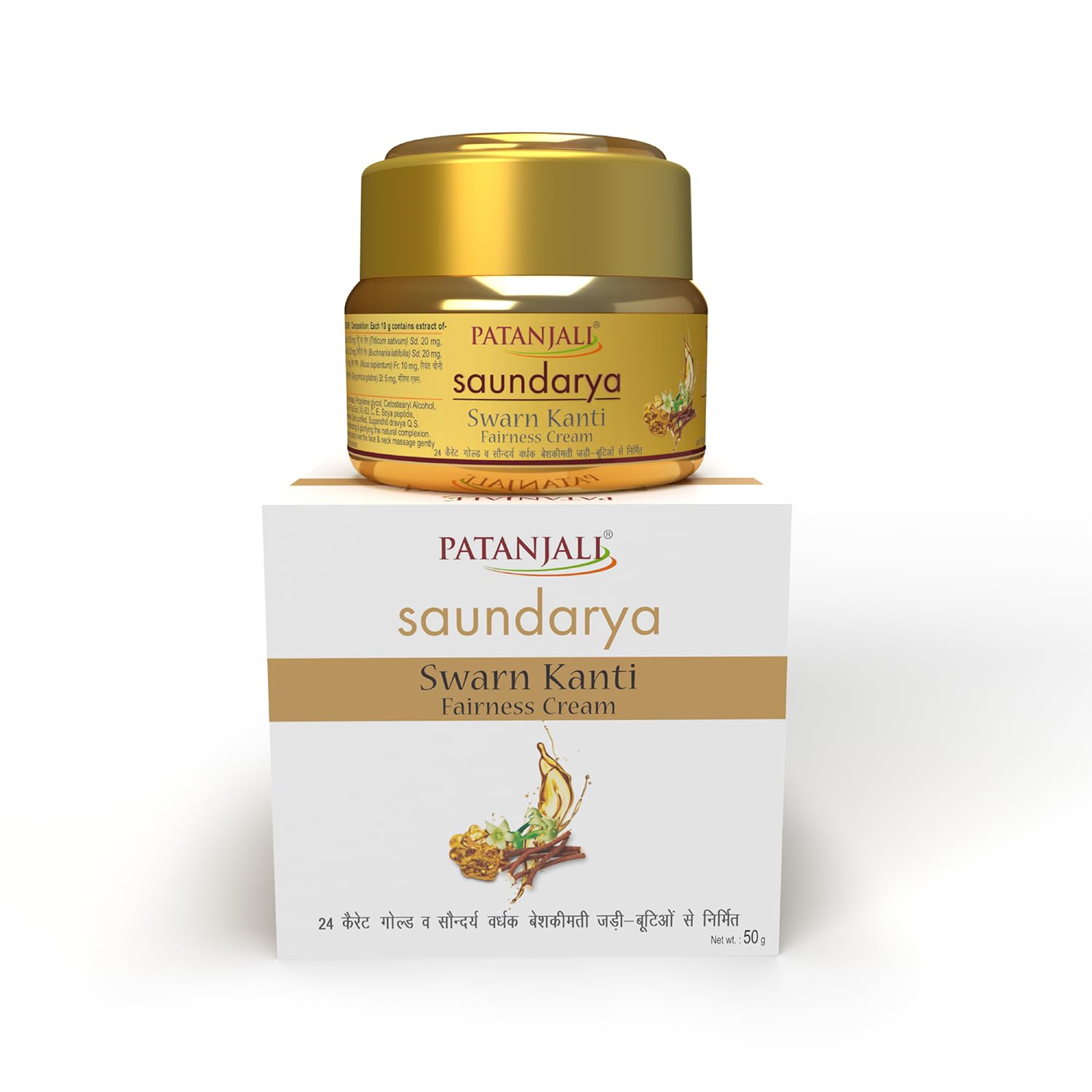
Patanjali Swarna Kanti Cream 50g For Soft & Glowing Skin, Moisturizer For Dry Skin
🛒 Shop Now on AmazonThe Ayurvedic Quality Promise
Patanjali swadeshi marketing positioned all products as Ayurvedic and natural, implying superior safety and efficacy versus chemical-based alternatives. This positioning worked until quality controversies emerged: FDA actions against certain products, consumer complaints about efficacy, and questions about how Patanjali could maintain Ayurvedic standards while manufacturing at massive scale. These controversies damaged credibility that was central to Patanjali’s positioning, showing that quality claims require rigorous validation and consistency that rapid scaling often compromises.
Product portfolio expansion:
- Launched 500+ products across categories
- Toothpaste, noodles, jeans, biscuits, ghee, atta
- Too many categories too quickly
- Ayurvedic positioning weak in noodles, biscuits, jeans
- Ramdev’s credibility didn’t transfer to distant categories
- Initial curiosity but weak repeat purchases
- Products didn’t match quality or taste of established alternatives
- Nationalist messaging alone insufficient if products disappointed
The Growth Plateau and Challenges
Patanjali’s growth slowed dramatically after 2017, with revenue stagnating around Rs 8,000-9,000 crore versus earlier Rs 10,000+ crore peak. Multiple factors contributed: quality concerns eroding brand trust, multinationals responding aggressively with herbal variants and pricing, distribution complexity becoming unmanageable, and overexpansion into too many categories diluting focus and stretching capabilities.
The slowdown factors:
- Post-2017: Growth slowed dramatically
- Revenue stagnating: Rs 8,000-9,000 crore vs. Rs 10,000+ crore peak
- Quality concerns eroding brand trust
- FDA actions against certain products
- Consumer complaints about efficacy
- Questions about Ayurvedic standards at massive scale
- Distribution complexity unmanageable
- 500+ products overexpansion consuming resources
- Management attention without proportionate returns
The company entered 500+ products too quickly, launching items in categories where Ayurvedic positioning was weak (noodles, biscuits, jeans) and Ramdev’s credibility didn’t transfer. These launches generated initial curiosity but weak repeat purchases because products didn’t match quality or taste of established alternatives, and consumers realized nationalist messaging alone wasn’t sufficient if products disappointed.
Multinational Counterattacks
Multinationals responded more effectively than expected. HUL, Colgate, ITC, and others launched herbal and natural variants, adopted Indian ingredients and positioning, reduced prices strategically, and increased marketing spend defending categories. These responses from well-resourced competitors with superior operations, supply chains, and product development capabilities made competing harder. Patanjali swadeshi marketing could disrupt through surprise and novelty initially, but sustained competition against multinationals deploying full capabilities proved difficult.
Competitive responses:
- Multinationals responded aggressively
- HUL, Colgate, ITC launched herbal and natural variants
- Adopted Indian ingredients and positioning
- Reduced prices strategically
- Increased marketing spend defending categories
- Well-resourced competitors with superior operations
- Better supply chains and product development
- Disruption through surprise initially
- Sustained competition against full capabilities difficult
Internal operational challenges:
- Quality control issues at scale
- Distribution inefficiencies
- Organizational growing pains
- Family-run venture scaling to multi-thousand-crore enterprise
- Delayed payments to suppliers
- Inventory management problems
- Operational issues growth-focused culture couldn’t address
- Combined with external competitive pressures
- Ended Patanjali’s hypergrowth phase
The Bottom Line
Patanjali disrupted Indian FMCG by proving nationalist swadeshi positioning combined with aggressive pricing and celebrity founder credibility could build Rs 10,000 crore business challenging multinational dominance in core categories. The company’s rise forced multinationals to Indianize products, adopt natural ingredients, and respect consumer desires for authentic Indian alternatives, permanently changing FMCG competitive dynamics even as Patanjali’s own growth slowed.
The swadeshi disruption achievement:
- 2006 founding to Rs 10,000+ crore by 2016-17
- India’s fastest-growing FMCG company
- Challenged Colgate, Nestle, Hindustan Unilever dominance
- 500+ products across categories
- 5,000+ exclusive Patanjali stores
- Modern retail: Big Bazaar, Reliance Fresh, DMart
- Pricing 10-30% below multinationals
- Forced multinationals to launch herbal variants (Colgate Herbal)
The Patanjali swadeshi marketing pillars:
- Baba Ramdev: massive following from yoga camps and TV shows
- Credibility as yoga guru teaching millions for free
- Nationalist messaging: buying foreign sent profits overseas
- Patanjali kept money in India supporting swadeshi economy
- Ayurvedic positioning: natural safety vs. harmful chemicals
- Traditional ingredients: neem, clove, basil vs. chemical fluoride
- Aggressive pricing: Rs 40-60 vs. Rs 80-100 competitors
- Celebrity founder model: Ramdev appearing in ads, press conferences
- Acharya Balkrishna: 94% ownership, operational execution, Ayurvedic knowledge
Key lessons from Patanjali:
- Nationalist positioning resonates powerfully with consumers
- Combined with tangible benefits: lower prices, natural ingredients
- Can disrupt entrenched competitors
- Disruption requires sustained operational excellence
- Quality consistency and strategic focus
- Converting initial success into enduring market position
- Marketing alone, however powerful, cannot substitute for operational fundamentals
- Quality issues undermining credibility central to value proposition
- Overexpansion diluting focus and stretching capabilities
What enabled the disruption:
- Post-independence swadeshi revival
- Rising nationalism under Modi government
- Growing middle-class purchasing power
- Social media enabling rapid message spread
- Patanjali Trust social work: yoga education, healthcare, rural development
- Purchases as contribution to India’s development
- Patanjali Dant Kanti capturing share from Colgate 50%+ dominance
- Built-in audience worth hundreds of crores in free marketing
- Publicly criticized multinationals generating massive media coverage
- Asymmetric advantage: competitors couldn’t attack beloved yoga guru
The permanent FMCG impact:
- Proved swadeshi brands could compete against multinationals
- Legitimized Ayurvedic and natural positioning in mainstream FMCG
- Demonstrated Indian consumers would try domestic alternatives
- Forced multinationals to Indianize products
- Adopt natural ingredients and respect consumer desires
- Opened doors for other Indian brands using similar strategies
- Nationalist sentiment remains powerful force in consumer markets
- Post-liberalization India: swadeshi marketing builds billion-rupee businesses
But Patanjali’s trajectory also reveals limits of disruption based primarily on positioning and pricing versus sustainable operational excellence. The company succeeded in creating market entry and initial growth through powerful messaging and aggressive tactics, but couldn’t sustain momentum when multinationals responded and operational challenges mounted. Quality issues undermined credibility that was central to value proposition, and overexpansion diluted focus and stretched capabilities beyond organizational capacity.
For Indian businesses, Patanjali demonstrates that nationalist positioning resonates powerfully with consumers when combined with tangible benefits (lower prices, natural ingredients) and can disrupt even entrenched competitors. But disruption requires sustained operational excellence, quality consistency, and strategic focus to convert initial success into enduring market position. Patanjali swadeshi marketing created opening through brilliant positioning and aggressive execution, but couldn’t build organizational capabilities matching ambitions, showing that marketing alone, however powerful, cannot substitute for operational fundamentals that sustain businesses long-term.