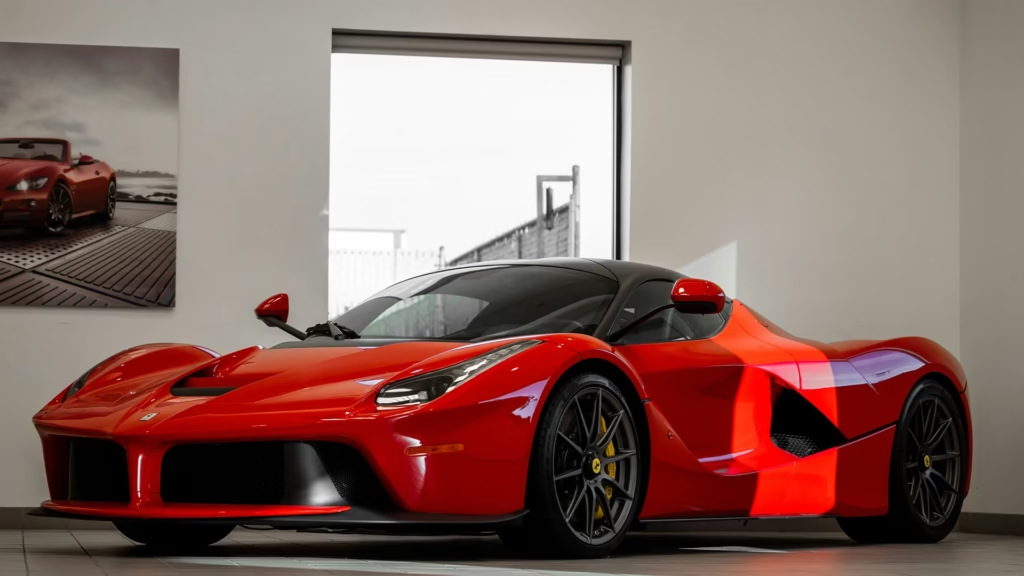
Ferrari has never been about mass appeal. Unlike most car manufacturers chasing volume, Ferrari deliberately produces fewer cars than the market demands. This decision is not a weakness but a defining strength. By embracing scarcity, the company has transformed its cars into coveted symbols of wealth, exclusivity, and status. For buyers, owning Ferrari limited production is not just about driving speed or technology, it is about being part of an elite group with access to something rare.
This approach reflects the fundamentals of the luxury market. In a world where abundance is common, scarcity drives desire. Ferrari’s careful balance of demand and supply ensures that its vehicles remain aspirational, fueling both prestige and long-term value. The strategy represents one of the purest examples of how limiting availability can amplify desirability, creating a brand that operates by completely different rules than conventional automotive manufacturers.
Exclusivity as a Brand Pillar
Ferrari’s strategy of limiting production ensures that owning one of its cars feels like a rare accomplishment rather than just another purchase. Customers are not simply walking into a showroom and driving away in a new Ferrari; often, they must wait months or even years. This scarcity builds anticipation and amplifies the emotional value of finally receiving the car, making ownership itself an achievement.
The long waiting lists are not just a byproduct of demand but a deliberate part of Ferrari limited production philosophy. By producing fewer cars than the market could absorb, Ferrari positions each model as an exclusive reward. Even loyal buyers often need to prove their dedication to the brand before gaining access to the latest releases, creating a sense of prestige tied directly to loyalty and commitment.
Exclusivity fundamentals:
- Never about mass appeal vs. most car manufacturers chasing volume
- Deliberately produces fewer cars than market demands
- Not weakness but defining strength
- Embracing scarcity transforming cars into coveted symbols
- Wealth, exclusivity, status symbols
- Part of elite group with access to something rare
- Abundance common: scarcity drives desire
- Careful balance: demand and supply ensuring vehicles remain aspirational
- Customers not walking into showroom and driving away
This approach separates Ferrari from conventional automakers. While most car companies sell products meant for convenience and accessibility, Ferrari limited production is selling aspiration and status. The limited production not only allows the company to command some of the highest prices in the industry but also strengthens its identity as a global luxury icon, where scarcity enhances both desire and long-term brand power.
The Waiting List Psychology
The psychology behind Ferrari’s waiting lists creates powerful emotional dynamics. When customers know they cannot have something immediately, it becomes more valuable in their minds. The anticipation period transforms the purchase from a transaction into a journey, where finally receiving the car feels earned rather than bought. This emotional investment creates deeper attachment and loyalty than any marketing campaign could achieve.
Protecting Value Over Time
One of the strongest effects of Ferrari limited production is the way it protects long-term value. Because so few cars are released each year, the market is never oversupplied, which helps prevent depreciation. Owners can feel confident that their Ferrari will hold its worth better than most vehicles, and in many cases, rare or special-edition models increase in value over time.
This transforms the act of buying a Ferrari from a luxury purchase into a financial investment that carries both emotional and monetary rewards. This cycle strengthens the brand’s prestige and desirability. Buyers are not simply paying for high performance or luxury craftsmanship; they are also gaining access to an asset with enduring significance.
Value protection:
- Must wait months or even years
- Scarcity building anticipation, amplifying emotional value
- Ownership itself an achievement
- Waiting lists: deliberate part of philosophy
- Producing fewer than market could absorb
- Each model positioned as exclusive reward
- Loyal buyers proving dedication before accessing latest releases
- Prestige tied to loyalty and commitment
- Selling aspiration and status vs. convenience
The assurance that Ferrari limited production will maintain or even grow in value deepens loyalty and ensures that demand remains strong, generation after generation. This balance between scarcity and retained value is one of the reasons Ferrari continues to stand at the top of the luxury automotive market. Unlike mass-market vehicles that depreciate rapidly, Ferraris often appreciate, particularly limited editions and special models.
The Investment Dimension
The investment aspect of Ferrari ownership creates a unique market dynamic. Collectors view certain models as appreciating assets, driving demand beyond those who simply want to drive the cars. Auctions regularly see vintage and limited-edition Ferraris selling for multiples of their original prices, validating the investment thesis and reinforcing the brand’s prestige. This secondary market strength feeds back into new car demand, as buyers understand they’re purchasing something with enduring financial value.
Focus on Craftsmanship and Innovation
Ferrari’s refusal to mass-produce allows it to focus on creating vehicles that embody the highest level of craftsmanship. Each model goes through a rigorous design and engineering process where no detail is overlooked. From the sculpted curves of the exterior to the intricate stitching of the leather interiors, every element is carefully considered and executed with precision.
This approach ensures that no Ferrari limited production feels ordinary; each one carries the signature of artistry and expertise that elevates it far above conventional luxury cars. By limiting production, Ferrari can allocate more time and resources to perfecting each vehicle. Unlike mass-market automakers that prioritize efficiency and output, Ferrari emphasizes quality and individuality.
Craftsmanship excellence:
- Few cars released annually: market never oversupplied
- Preventing depreciation
- Holding worth better than most vehicles
- Rare or special-edition models: increasing value over time
- Luxury purchase transformed into financial investment
- Emotional and monetary rewards
- Gaining access to asset with enduring significance
- Maintaining or growing in value: deepening loyalty
- Demand remaining strong generation after generation
This philosophy creates cars that are not only powerful machines but also works of art, reinforcing their rarity and appeal to collectors and enthusiasts worldwide. The attention to detail in Ferrari limited production extends to every aspect, from the sound of the engine to the feel of the steering wheel, creating a sensory experience that mass production could never replicate.
Innovation Backed by Heritage
While tradition plays a vital role in Ferrari’s identity, innovation is equally central. The company continually integrates advanced technologies, from hybrid engines to aerodynamic breakthroughs, ensuring its cars remain at the cutting edge of performance. Yet these innovations are never at the expense of heritage; instead, they complement Ferrari’s long-standing reputation for excellence on and off the racetrack.
Ferrari’s ability to innovate without losing its soul adds to the allure of ownership. Customers know they are driving something that represents both decades of legacy and the future of automotive performance. This balance of heritage and forward-thinking design strengthens Ferrari limited production standing as a true icon in the luxury market, where craftsmanship and innovation must exist side by side.
The Bottom Line
Ferrari’s approach to limited production is not just about selling fewer cars, it is about protecting the very essence of the brand. By carefully controlling supply, Ferrari limited production ensures that every model feels rare and desirable, elevating ownership beyond a purchase into a symbol of exclusivity. This scarcity reinforces the prestige of the marque and maintains its ability to command premium prices, while also safeguarding long-term value for customers.
The strategy success:
- Rigorous design and engineering process: no detail overlooked
- Sculpted curves, intricate leather stitching
- Every element carefully considered and executed with precision
- Signature of artistry and expertise
- Allocating more time and resources to perfecting each vehicle
- Quality and individuality vs. efficiency and output
- Powerful machines also works of art
- Advanced technologies: hybrid engines, aerodynamic breakthroughs
- Cutting edge performance
What makes this strategy powerful is that it goes hand in hand with uncompromising quality and innovation. Ferrari limited production is not only selling performance and luxury; it is selling a dream that has been nurtured for decades. In doing so, it has created a blueprint for success in the luxury market, proving that true desirability comes from rarity, craftsmanship, and emotional connection rather than volume.
This balance is why Ferrari stands as one of the most enduring icons in the world of luxury. The brand has demonstrated that in premium markets, less truly can be more, that scarcity creates value beyond what mass production could ever achieve, and that maintaining exclusivity requires discipline and long-term thinking that resists short-term volume temptations. Ferrari limited production strategy offers lessons for any luxury brand: protect your scarcity, never compromise on quality, and understand that true prestige comes from being unattainable to most while remaining aspirational to all.